
Against the backdrop of the global healthcare industry’s accelerated transition to sustainable development, **biodegradable polylactic acid (PLA) spunbond fabric** is becoming a revolutionary material in the field of disposable medical products due to its bio-based origin, compostability, and excellent mechanical properties.
This material not only solves the “white pollution” problem of traditional polypropylene (PP) spunbond fabric but also achieves a balance between environmental protection and functionality through technological innovation, propelling medical waste management into a low-carbon circular era. The following analysis focuses on four aspects: material characteristics, technological breakthroughs, application scenarios, and industry prospects.
Full Life Cycle Advantages from Bio-based to Environmentally Friendly
1. Material Innovation Driven by Renewable Resources
PLA spunbond fabric is made from lactic acid produced by fermenting crops such as corn and sugarcane through a ring-opening polymerization process. Its production process consumes approximately 20% less energy than traditional PP spunbond fabric, and each ton of PLA produced reduces carbon dioxide emissions by approximately 1.5 tons. Companies such as Suzhou Yisheng have already achieved thousand-ton-level lactide production lines, increasing the lactic acid conversion rate to over 98% through optimized fermentation processes.
2. Controllable Degradation Performance and Environmental Safety
Under industrial composting conditions (58℃, 98% humidity), PLA spunbond fabric can completely decompose into carbon dioxide and water within 3-6 months. The degradation products have no toxic effects on soil microorganisms and plant growth (germination rate ≥90%, biomass difference ≤50%), meeting the EU EN 13432 certification standard. Even in conventional landfill environments, PLA can naturally degrade within 3-5 years, while traditional PP spunbond fabric takes hundreds of years to decompose.
3. Medical-Grade Biocompatibility and Safety
PLA is a polymer of lactic acid, an endogenous substance in the human body. Skin patch tests show a sensitization rate of less than 0.5%, and it has passed the ISO 10993 biocompatibility test. Its hydrophobic surface properties (contact angle approximately 85°) effectively reduce bacterial adhesion, with a natural antibacterial rate of over 60%, making it suitable for direct contact with sensitive skin and wounds.
Multi-Dimensional Upgrades from Basic Performance to Functionality
1. Mechanical Property Optimization and Processing Technology Innovation
Molecular Structure Modification: Through copolymerization (e.g., copolymerization with butylene adipate (PBA)) and crystallization control, the elongation at break of PLA spunbond fabric has been increased from the conventional 30% to 80%, and the tensile strength reaches 1.2 kN/m, meeting the toughness requirements of surgical gowns, protective clothing, etc.
Spinning Process Adaptation: The melt spinning technology developed by Suzhou Yisheng can stably produce PLA fibers (diameter 1.5-2.5 dtex) at 180-200℃, and the weight can be flexibly controlled from 20-80 g/m² through hot rolling process, with over 90% compatibility with existing PP spunbond fabric production lines.
2. Sterilization Compatibility and Functional Expansion
Sterilization Stability: Gamma-ray sterilization (25kGy) and ultraviolet (UVC) treatment have no significant impact on PLA fiber morphology, with mechanical property retention exceeding 95%. Ethylene oxide (EO) sterilization, however, may increase fiber crystallinity by 28%, requiring careful selection of sterilization methods.
Functional Integration: Nano-coating technology (such as titanium dioxide/zinc oxide composite films) can endow PLA spunbond fabric with photocatalytic antibacterial properties, achieving inhibition rates of over 99% against Staphylococcus aureus and Escherichia coli. Embedding thermosensitive phase change materials (such as polyethylene glycol) enables dynamic temperature regulation of surgical gowns within the 28-32℃ range.
3. Cost Optimization and Large-Scale Production
With the expansion of PLA resin production capacity (global capacity is projected to reach 3 million tons by 2025), its price has decreased from RMB 35,000/ton in 2018 to RMB 18,500/ton in 2025, narrowing the price difference with PP spunbond fabric from 150% to 40%. Domestic companies have further reduced costs by approximately 2000 RMB/ton through copolymer modification (such as polylactic acid-caprolactone PLCL), while simultaneously improving hygroscopicity (moisture regain from 0.4% to 1.2%) and heat resistance (melting point from 160℃ to 185℃).
Comprehensive Coverage from Basic Protection to Precision Medicine
1. Safety Protection in High-Infection Risk Scenarios
Surgical Packs and Dressings: Surgical drapes made of PLA spunbond fabric have passed the GB 19083-2010 synthetic blood penetration test (pressure ≥1.67kPa), and their moisture permeability reaches 3000g/(m²·24h), superior to the 2000g/(m²·24h) of traditional PP materials, reducing postoperative skin stuffiness. 1. Protective Clothing and Masks: Meltblown PLA fibers (25-50 g/m²) achieve a filtration efficiency of 95% for 0.3 μm particles, and retain over 90% of their filtration performance after 125℃ moist heat sterilization. They have been used for emergency protection during the COVID-19 pandemic.
2. Innovative Carriers for Chronic Wound Management
Smart Bandages
Integrating PLA spunbond fabric with graphene sensors, these bandages can monitor the pH, lactic acid concentration, and temperature changes of wound exudate in real time. A prototype developed by Caltech showed in animal experiments that it can provide infection warnings up to 48 hours in advance, shortening the healing period by 20%.
Antibacterial Dressings
PLA/chitosan composite nanofiber membranes (fiber diameter 200-500 nm) prepared through electrospinning can slowly release silver ions and antibiotics. They achieve a 99.9% inhibition rate against methicillin-resistant Staphylococcus aureus (MRSA), and retain over 85% of their performance after 20 washes.
3. Sustainable Replacement of High-Value Medical Consumables
Surgical Sutures
Poly-L-lactic acid (PLLA) sutures completely degrade in vivo within 6-12 months, retaining 70% of their tensile strength at 2 weeks post-surgery. They have been FDA-approved for use in cardiovascular and orthopedic surgeries.
Tissue Engineering Scaffolds
3D-printed porous PLA scaffolds (70-80% porosity) promote osteoblast adhesion and proliferation. In a rabbit femoral defect model, the new bone formation rate reached 85% after 6 months, superior to the 60% of titanium alloy scaffolds.
From Technological Breakthroughs to the Construction of a Circular Economy
1. Policy-Driven Growth and Market Demand
The EU’s New Battery Regulation and China’s Restricted Use Catalogue of Disposable Medical Products clearly require that medical packaging materials be 100% recyclable or biodegradable by 2030. According to Grand View Research, the global market for biodegradable medical materials will grow at a CAGR of 12.8%, reaching $12.7 billion by 2030, with PLA accounting for over 40%. 2. Innovative Practices in Circular Economy Models
Closed-Loop Recycling System
Companies like Good Biopak have established a circular chain of “PLA products – industrial composting – biomass power generation.” The biogas produced from composting can meet 30% of the energy needs of the production line, reducing the carbon footprint by 50%.
Chemical Recycling Technology
Through supercritical water degradation, PLA waste can be converted into lactic acid monomers with a purity of 99.5%, used to produce high-end pharmaceutical intermediates. The recycling cost is 40% lower than traditional mechanical recycling.
3. Challenges and Future Development Directions
Technological Bottleneck Breakthrough
Further improvements are needed in the hydrolysis resistance (currently, the half-life in a pH 7 buffer solution is about 6 months) and UV resistance of PLA spunbond fabrics (adding 0.5% nano-zinc oxide can extend weather resistance from 3 months to 1 year). Standardization System Improvement: It is recommended to establish dedicated standards for medical PLA materials (such as a revised version of YY/T 0698.5-2009) to clarify its pretreatment requirements in infectious waste management (e.g., autoclaving at 121℃ for 30 minutes followed by composting).
Business Model Innovation
Explore the “Materials as a Service” (MaaS) model, where medical institutions can lease reusable PLA surgical packs, with third-party companies responsible for cleaning, sterilization, and recycling, reducing the total life-cycle cost by 25%.
Conclusion
The emergence of biodegradable PLA spunbond fabric marks a shift in the medical industry from “end-of-pipe treatment” to “source reduction.” Its technological breakthroughs are not only reflected in improved material performance but also in driving the entire industry chain towards bio-based, low-carbon, and circular development. With large-scale production and cost reduction, PLA is expected to replace 60% of traditional PP disposable medical supplies by 2030, contributing significantly to the achievement of global “dual carbon” goals. In the future, through deep integration with intelligent sensing and nanotechnology, PLA spunbond fabric will unleash greater potential in fields such as personalized medicine and remote monitoring, truly ushering in a new era of “green healthcare”.
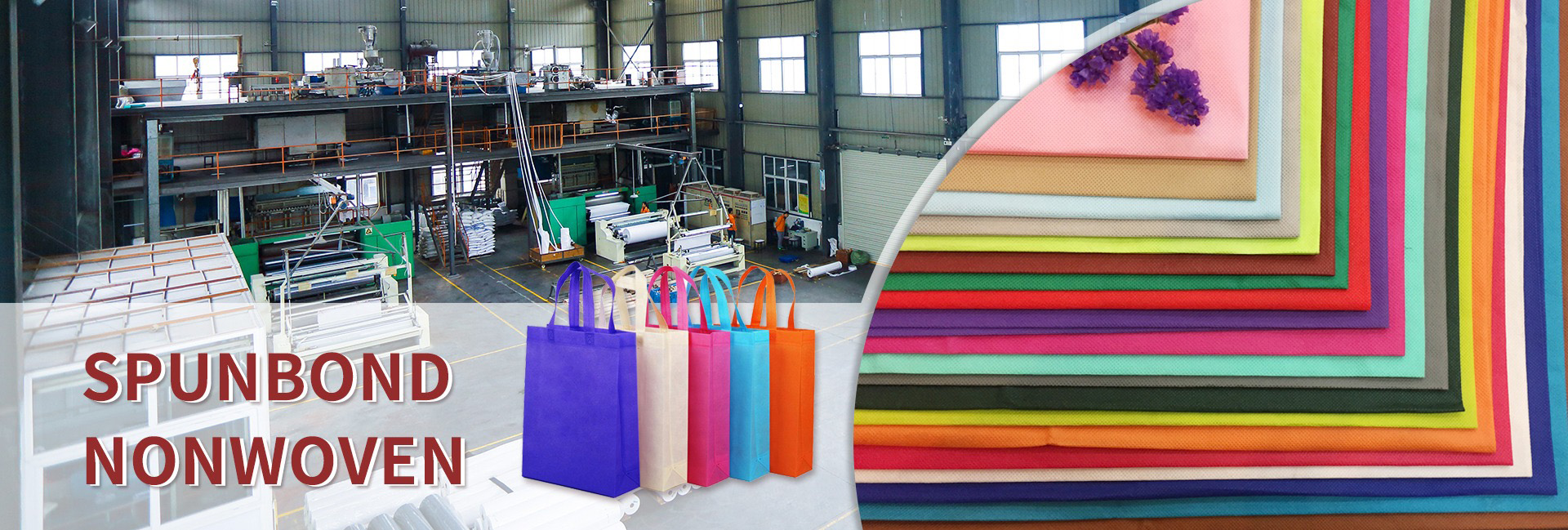
Dongguan Liansheng Non woven Technology Co., Ltd. was established in May 2020. It is a large-scale non-woven fabric production enterprise integrating research and development, production, and sales. It can produce various colors of PP spunbond non-woven fabrics with a width of less than 3.2 meters from 9 grams to 300 grams.
Post time: Nov-07-2025