
In daily life and industrial production, the static electricity problem of PP non-woven fabric often gives people a headache. Pick up a roll of PP non-woven fabric, and a “sizzling” static sound will be produced at the touch of your fingertips. The fabric will also stick tightly to your hands, clothes, and even absorb dust and hair in the air. In fields such as packaging, electronics, and healthcare, static electricity can cause even more trouble, as it may adsorb impurities and affect product purity. In severe cases, it can also cause static sparks and pose safety hazards.
In fact, PP non-woven fabric is naturally prone to static electricity, which is closely related to its material properties. Polypropylene itself is an insulating material with extremely high surface resistance. During friction, it is easy to accumulate static charges, which are difficult to dissipate. Over time, problems such as “electrostatic adhesion” and “dust adsorption” may occur. To address this pain point, various anti-static modification solutions have emerged in the industry, among which the most mainstream are three.
These three solutions each have their own advantages and disadvantages, and are suitable for different application scenarios and cost requirements. Today, we will comprehensively analyze these three mainstream modification solutions and see which one is more suitable for your usage needs, helping you completely bid farewell to the static electricity problem of PP non-woven fabric.
Solution 1: Surface coating modification is an emergency choice with low cost and quick effect
Surface coating modification is the most basic and commonly used anti-static modification method. The core logic is to cover a layer of anti-static agent on the surface of PP nonwoven fabric, so that static charges can be quickly conducted and dissipated, thereby achieving anti-static effect. The operation process of this scheme is very simple, without the need to modify existing production equipment. Only after the non-woven fabric is formed into a mesh and before shaping, the anti-static agent is evenly applied to the surface of the fabric through spraying, dipping and rolling, and then dried to complete the modification.
The biggest advantage of surface coating modification is low cost, minimal use of anti-static agents, and flexible construction. It can be used for both mass production and small batch customization, making it very friendly for scenarios with limited budgets and the pursuit of quick results. At the same time, this solution has minimal impact on the performance of PP non-woven fabric itself, and will not change the core indicators such as breathability and toughness of the fabric, making it suitable for most conventional usage scenarios.
But its shortcomings are also very obvious, and the durability of its anti-static effect is poor. Due to the fact that the anti-static agent only adheres to the surface of the fabric and does not bind with the PP molecular chain, over long-term use, the anti-static agent on the surface will gradually peel off after friction, washing, or exposure to sunlight and rain, and the anti-static effect will decrease accordingly. Normally, surface coated modified PP non-woven fabric can only maintain its anti-static effect for 1 to 3 months, making it suitable for short-term use or disposable products.
In addition, the uniformity of the anti-static effect of this scheme is poor, and it is prone to uneven local application during spraying or rolling, resulting in static electricity in some areas. At present, this solution is mainly applied in short-term use products such as disposable mask inner layers and ordinary packaging non-woven fabrics.
The mainstream preferred method for durable and stable modification of masterbatch blending in Scheme 2
Masterbatch blending modification is currently the most widely used anti-static modification solution in the industry, and it is also the most cost-effective choice. Its core principle is to mix anti-static masterbatch with PP substrate slices in a certain proportion, and through a series of processes such as melt spinning, web forming, and shaping, the anti-static components are evenly dispersed inside the PP fibers, improving the anti-static performance of the fabric from the source.
Antistatic masterbatch is a high concentration functional masterbatch made by fusing antistatic agents, carrier resins, and other auxiliary components. It has excellent compatibility with PP substrates and does not affect spinning and molding effects after mixing. The biggest advantage of this modification method is its long-lasting and stable anti-static effect. As the anti-static components are dispersed inside the fibers, they will not fall off due to friction, washing, and other factors. The service life can be comparable to PP non-woven fabric itself, usually reaching 1 to 2 years.
At the same time, the anti-static effect of masterbatch blending modification is uniform, and the anti-static components are evenly distributed inside the fibers without local static residue. The surface resistance can be stably controlled at 10 ^ 8 to 10 ohms, which can meet the needs of most industrial and civilian scenarios. In addition, the operation of this scheme is relatively simple, only requiring the addition of a masterbatch mixing step in the existing production process, without the need for large-scale equipment modification, making it suitable for mass industrial production.
Its main shortcomings are that the cost is slightly higher than surface coating modification, the price of anti-static masterbatch is relatively high, and the mixing ratio of masterbatch and PP substrate needs to be strictly controlled. If the ratio is too high, it will increase the cost, and if the ratio is too low, it will affect the anti-static effect. At present, this solution is widely used in electronic packaging, medical consumables, industrial dust-proof cloth and other products that require high static electricity control and long-term use.
Solution Three: A High end Choice for High Performance Scenarios with Grafting Modification
Grafting modification is the most technically difficult and anti-static solution among the three options, mainly targeting high-end scenarios with extremely high requirements for electrostatic control. Its core principle is to graft polar groups with anti-static properties onto PP molecular chains through chemical methods, changing the structure of PP molecules and enabling PP non-woven fabrics to have conductivity, thereby achieving long-term anti-static properties.
The operation process of graft modification is relatively complex, requiring the use of initiators to initiate grafting reactions between PP molecular chains and polar monomers under specific temperature and pressure conditions, allowing anti-static groups to form stable chemical bonds with PP molecular chains. The advantages of this modification method are very prominent, with extremely strong anti-static performance and permanent effectiveness, not affected by external factors such as friction, washing, and sun exposure. The surface resistance can be controlled at 10 ^ 6 to 8 ohms, which can effectively prevent the accumulation of static electricity and the generation of static sparks.
At the same time, graft modification can also enhance the hydrophilicity and compatibility of PP non-woven fabric, improve the feel of the fabric, reduce the phenomenon of “sticky hands”, and improve the printing and bonding properties of the fabric. This solution is suitable for scenarios with extremely high requirements for electrostatic control, such as electronic component packaging, precision instrument protection, and non-woven fabrics used in flammable and explosive environments.
But the shortcomings of graft modification are also obvious, with high technical barriers, requiring professional production equipment and technical teams, long production cycles, and much higher costs than the first two schemes, making it the most expensive of the three schemes. In addition, strict control of reaction conditions is required during the grafting reaction process, otherwise it may affect the toughness and strength of PP spunbond non woven fabrics. Therefore, it is currently mainly used in high-end industrial fields, with less application in civilian scenarios.
Summary of Three Core Solutions: Choose More Efficiently on Demand
There is no absolute superiority or inferiority among the three anti-static modification schemes mentioned above. The core lies in adapting to different usage scenarios, cost budgets, and performance requirements. Simply put, if pursuing low cost and short-term use, surface coating modification is the optimal choice; If pursuing cost-effectiveness and long-term stability, masterbatch blending modification is suitable for most scenarios; If high performance, permanent anti-static, and sufficient budget are required, graft modification is the first choice.
With the continuous upgrading of industry technology, anti-static modification technology is also continuously optimized. For example, in the blending modification of masterbatch, the emergence of new and efficient anti-static masterbatch not only reduces costs, but also further enhances the durability of anti-static effects; The technical threshold for graft modification is gradually decreasing, and it is expected to be popularized in more scenarios in the future.
For enterprises and producers, choosing appropriate anti-static modification solutions can not only solve the pain point of “electrostatic sticking”, improve product quality, but also reduce production costs and enhance product competitiveness. For ordinary consumers, understanding the differences between different modification schemes can also help them choose more suitable PP non-woven fabric products based on their own needs, avoiding problems caused by static electricity.
Conclusion: Static electricity was once a major weakness in the application of PP non-woven fabrics, but with the popularization of three mainstream anti-static modification schemes, this problem has been effectively solved. Different solutions have their own focuses and are suitable for different scenarios, whether it is low-cost emergency or high-end high-performance requirements, corresponding solutions can be found. In the future, with the continuous breakthrough of modification technology, it is believed that the anti-static performance of PP non-woven fabric will be further improved, and the application scenarios will be more extensive.
Interactive question: Have you ever been troubled by static electricity sticking to your hands when using PP non-woven fabric? Which anti-static solution do you think is more suitable for your usage needs? Welcome to leave comments and discuss in the comment section.
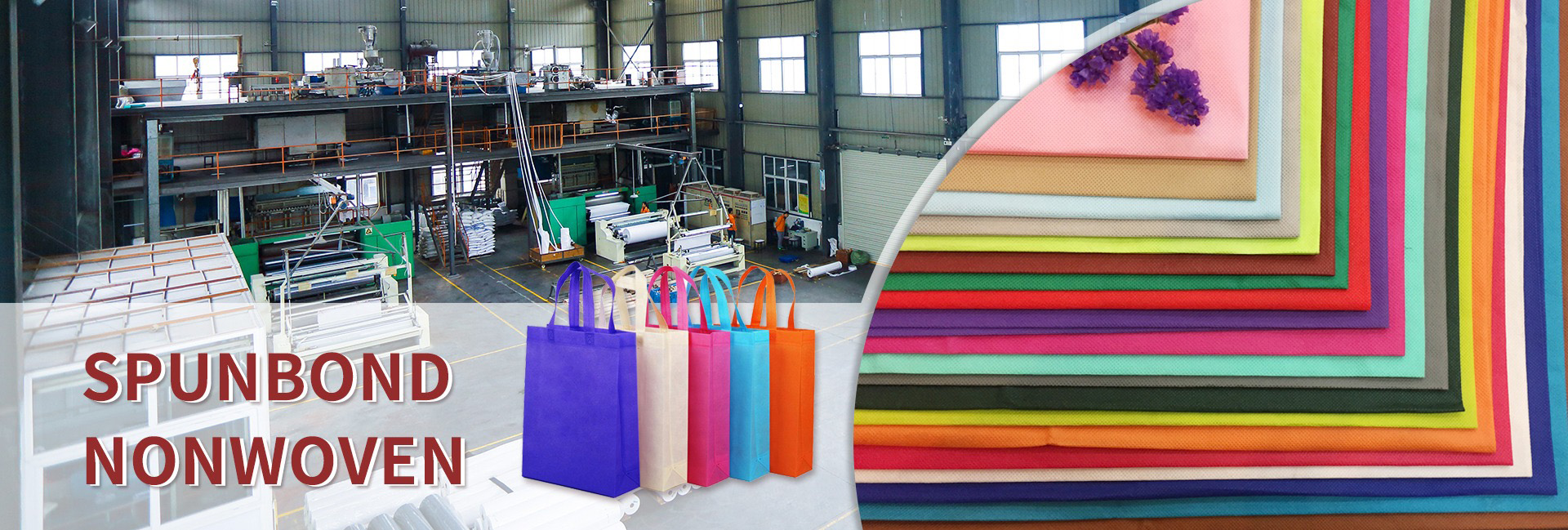
Dongguan Liansheng Non woven Technology Co., Ltd. was established in May 2020. It is a large-scale non-woven fabric production enterprise integrating research and development, production, and sales. It can produce various colors of PP spunbond non-woven fabrics with a width of less than 3.2 meters from 9 grams to 300 grams.
Post time: May-23-2026