
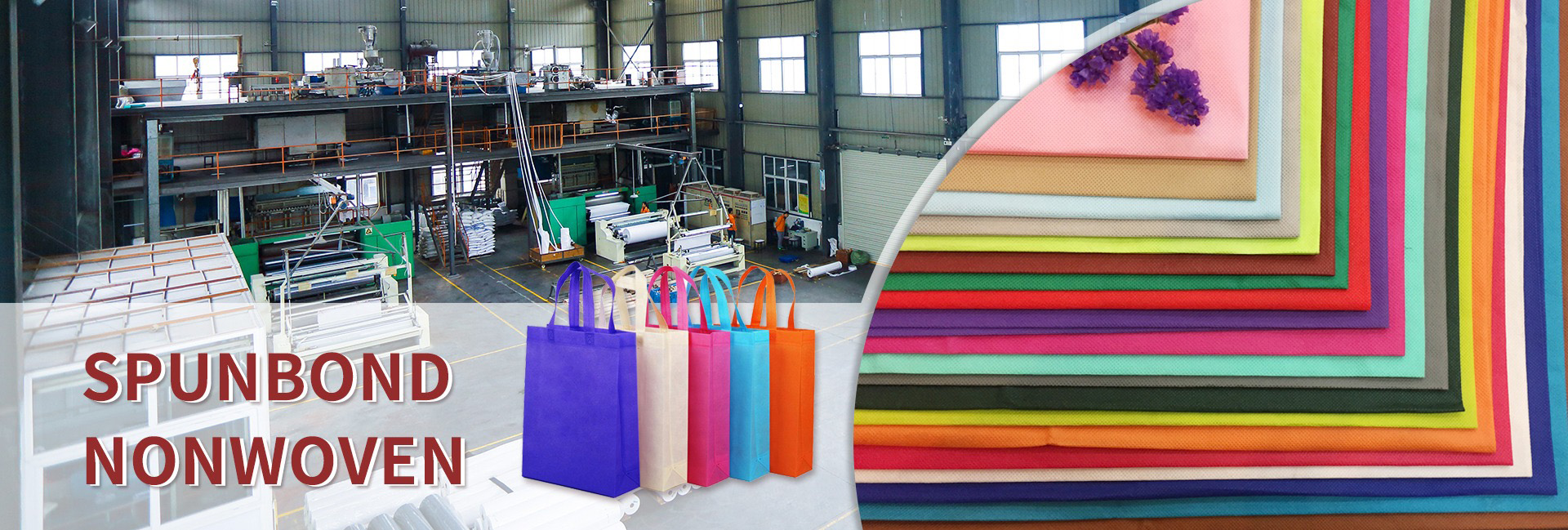
The outbreak of COVID-19 acted as a sudden stress test, exposing the shortcomings of my country in the field of high-performance medical protective materials. Among these, high-end medical spunbond nonwoven fabric, a core material for protective clothing and isolation gowns, once faced a “bottleneck” situation. This material needs to possess excellent barrier properties, comfort, and strength, and its production technology has long been monopolized by a few international chemical giants. However, every crisis presents an opportunity; this very “pain point” has spurred a deep integration of domestic **industry-academia-research collaboration, propelling technological breakthroughs onto an unprecedented fast track.
The Technological Barriers of High-End Medical Spunbond Fabric
“Bottleneck” technologies refer to those crucial core technologies that we do not possess ourselves and are difficult to obtain from external sources. For high-end medical spunbond fabric, the barriers are mainly reflected in:
1. The “Heart” Material—Special Resin:High-end spunbond fabric requires the use of a high melt flow rate polypropylene special resin with a melt index of around 1500. The synthesis and modification technology of this raw material has extremely high barriers to entry.
2. The “Nervous System”—Equipment and Processes:From precise melt delivery and fine spinning technology (reaching 1-2 denier) to high-speed, uniform hot rolling reinforcement, the entire process demands extremely high equipment precision, automated control, and process know-how.
3. The “Soul”—Functional Finishing: Achieving key indicators such as antistatic, alcohol-resistant, blood-resistant, and synthetic blood-penetration-resistant properties requires complex finishing technologies, involving a perfect combination of formulation, processes, and equipment.
How to Enter the “Fast Lane”?
“A single thread cannot make a line, a single tree cannot make a forest.” Overcoming such complex technical challenges cannot be achieved by any single entity—enterprise, university, or research institute—working alone. Deep integration of industry, academia, and research constitutes the key engine for breaking the deadlock:
Enterprises as the Leader, Clearly Defined Market Demands: Medical device and textile companies, as the frontline of the market, are most aware of the product performance requirements and application scenarios. They articulate clear technological needs and invest funds, facilities, and engineering resources, serving as the “endpoint” and “litmus test” for the transformation of technological achievements.
Universities and Research Institutes as the Source, Providing Theoretical Innovation: Universities (such as Donghua University and Tianjin University of Technology, both strong in textiles) and research institutions like the Chinese Academy of Sciences possess profound theoretical foundations and cutting-edge research capabilities in fields such as polymer materials science, fluid mechanics, and textile machinery. They are responsible for tackling fundamental scientific problems, conducting principle verification, and developing prototypes.
Collaborative Research, Breaking Down Institutional Barriers:Through projects such as jointly building joint laboratories and technology innovation centers, researchers delve into the front lines of enterprises, and engineers participate in early-stage research and development. This “you in me, me in you” model greatly accelerates the process from “laboratory samples” to “production line products.”
Dual-Engine Drive of Policy and Capital: The National 14th Five-Year Plan lists high-end medical devices and key basic materials as key development directions. Various science and technology special funds and industry guidance funds provide strong support for industry-university-research cooperation, reducing the research and development risks and costs for enterprises.
Significant Achievements on the “Fast Track”
Driven by the deep integration of industry, academia, and research, my country has achieved remarkable success in the field of medical spunbond fabrics:
1. Breakthrough in Core Raw Materials: Large state-owned enterprises such as Sinopec have successfully developed high melt index polypropylene special materials, achieving a leap from “reliance on imports” to “self-reliance and control,” ensuring the security of the upstream industrial chain.
2. Accelerated Localization of Equipment: Domestic spunbond nonwoven fabric equipment manufacturers, through digestion, absorption, and reinnovation, are now able to manufacture most key equipment. Although there is still a gap with top-tier levels in terms of extreme fineness and operational stability, they can already meet most high-end medical needs.
3. Product Performance Comparable to International Standards: Leading domestic companies produce three-resistant (blood-resistant, alcohol-resistant, and antistatic) SS/SMS medical protective clothing materials, whose key indicators have reached or approached international advanced levels. These materials are widely used in domestic medical institutions and even exported overseas.
From “Running Alongside” to “Leading the Way”
Although we have entered the “fast lane,” we must remain clear-headed:
Continuous Innovation, Consolidating Advantages: We need to make forward-looking plans for next-generation technologies such as material comfort (moisture permeability) and biodegradability.
Standard Leadership, Brand Building: Actively participate in the formulation of international standards to create a globally influential Chinese medical textile brand.
Full Industry Chain Collaboration: Extend industry-academia-research cooperation from breakthroughs at specific “points” to the entire industry chain, from resin synthesis and equipment manufacturing to end-use applications, forming a powerful industrial cluster effect.
Conclusion
The rapid breakthrough in the “bottleneck” technology of medical spunbond fabrics is a vivid demonstration of the effectiveness of China’s unique science and technology innovation system. It proves that as long as we are guided by national strategic needs and driven by market applications, effectively pooling the efforts of enterprises, universities, and research institutions, we have the ability to break through in key areas, firmly grasp core technologies, and lay a solid foundation for ensuring national public health security and building a manufacturing powerhouse. This “fast track” not only leads to independent and controllable technology, but also to a future of high-quality development.
Dongguan Liansheng Non woven Technology Co., Ltd. was established in May 2020. It is a large-scale non-woven fabric production enterprise integrating research and development, production, and sales. It can produce various colors of PP spunbond non-woven fabrics with a width of less than 3.2 meters from 9 grams to 300 grams.
Post time: Nov-09-2025