
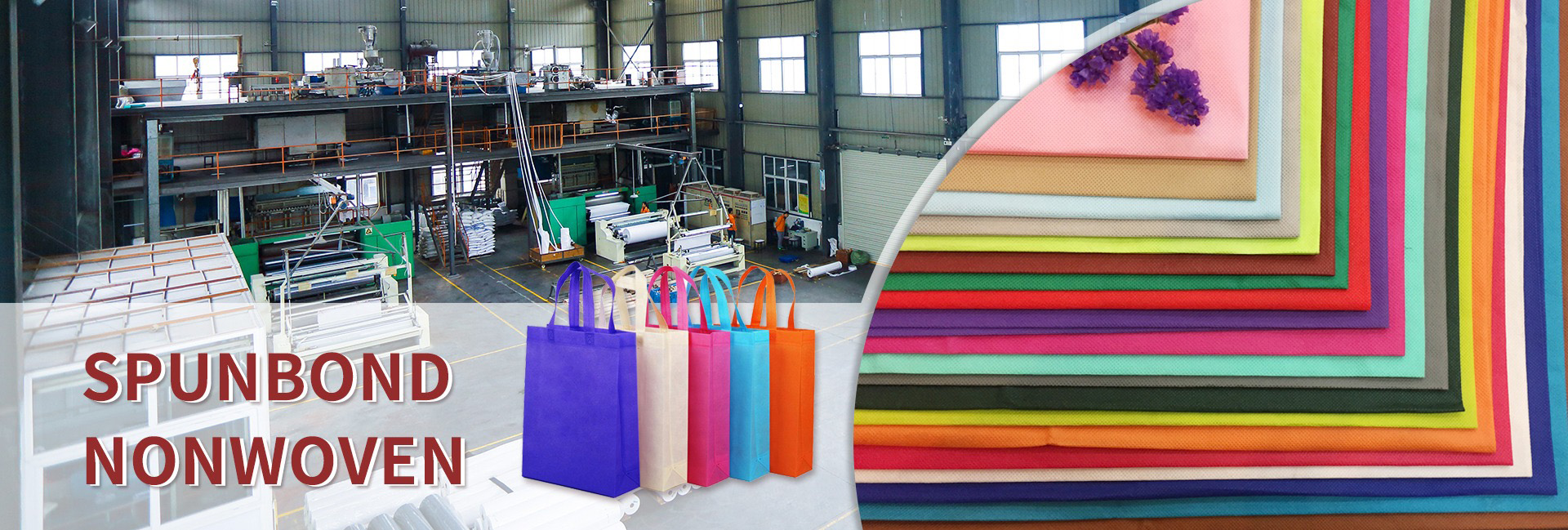
Modifiers for spunbond nonwoven fabric raw materials can be categorized by function into toughening and tear resistance, antistatic, antibacterial, flame retardant, and biodegradable types. Precise matching is required based on the core performance requirements of each application scenario.
Toughening and Tear Resistance Modifiers
Polyolefin Elastomers (POE)
Core Function: Improves fiber toughness and elongation at break, reducing instantaneous breakage during tearing without affecting the heat resistance of the substrate.
Applicable Scenarios: Medical sterilization packaging (requiring resistance to ethylene oxide sterilization and repeated folding), instrument liner edges (preventing puncture and tearing), disposable surgical gowns (resistant to wearing and tearing).
Thermoplastic Elastomers (TPE)
Core Function: Balances elasticity and rigidity, improving the impact resistance of nonwoven fabrics, suitable for dynamic stress scenarios.
Applicable Scenarios: Drainage bag fixing straps (requiring stretching and rebound), mobile medical equipment outer packaging (preventing damage from transport collisions), children’s medical protective equipment (tear resistance). Ethylene-vinyl acetate copolymer (EVA)
Core function: Reduces the crystallinity of the matrix, improves fiber flexibility, and maintains tear resistance even at low temperatures.
Applicable scenarios: Packaging for medical devices stored at low temperatures (such as vaccine packaging for cold chain transportation), and emergency medical protective equipment for outdoor use in northern regions.
Inorganic filler modifiers
Nano-calcium carbonate (particle size 50-100nm)
Core function: Acts as a “cross-linking point” in the molecular chain, enhancing the cohesion between fibers and improving tear resistance and rigidity.
Applicable scenarios: High-temperature steam sterilization packaging (requiring resistance to 250℃ without deformation), and rigid instrument linings (such as orthopedic instrument support pads).
Talc (particle size 1-5μm)
Core function: Optimizes fiber crystal morphology, reduces internal weak points, and improves aging resistance and dimensional stability.
Applicable scenarios: Packaging for medical consumables stored for long periods (such as surgical instrument packaging with a shelf life of more than 2 years), and frequently used medical wipes.
Nano-silica (particle size 20-50nm)
Core function: Enhances fiber surface roughness, increases inter-fiber friction, and improves high-temperature resistance.
Applicable scenarios: Precision instrument packaging (e.g., anti-slip packaging for endoscopes), instrument linings after high-temperature sterilization (maintaining structural stability).
Antistatic Modifiers
Carbon Nanotubes (CNTs)
Core function: Reduces the surface resistance of nonwoven fabrics to below 10^8 Ω, providing long-lasting antistatic effects without affecting barrier properties.
Applicable scenarios: Packaging for electronic medical devices (e.g., monitor accessories), operating room instrument linings (antistatic adsorption of dust and bacteria).
Quaternary ammonium salt antistatic agents
Core function: Achieves antistatic properties through ionic conductivity, also possesses mild antibacterial effects, and is skin-friendly.
Applicable scenarios: Medical linings in contact with skin (e.g., infusion patch substrate), inner nonwoven fabric of disposable medical gloves (antistatic fit to the hand).
Polyether-based antistatic agents
Core function: Long-lasting antistatic effect, washable, suitable for scenarios requiring repeated sterilization.
Applicable scenarios: Reusable medical protective pads (e.g., ICU bed protective pads), inner layers of sterilized instrument packaging (resistant to ethanol wipes).
Antibacterial Modifiers
Silver ion antibacterial agent (nano-silver particle size 10-20nm)
Core function: Disrupts bacterial cell membranes, providing long-lasting antibacterial effects (≥99% inhibition rate against Staphylococcus aureus and Escherichia coli), with no drug resistance.
Applicable scenarios: Wound drainage tube linings, inner layers of surgical instrument packaging (preventing bacterial growth during storage), and protective equipment specifically for infectious disease departments.
Graphene antibacterial agent
Core function: Dual sterilization through physical puncture and oxidative stress, improving antibacterial durability by 30%, and also possessing thermal conductivity.
Applicable scenarios: Postoperative warming pads (antibacterial + temperature control), high-end medical dressing substrates, and dental instrument packaging.
Chlorine Dioxide Slow-Release Antibacterial Agent
Core Function: Slowly releases chlorine dioxide gas, achieving three-dimensional antibacterial properties within the packaging without contacting contaminated medical devices.
Applicable Scenarios: Packaging for implantable devices requiring long-term storage (e.g., artificial joint packaging), and sealed packaging for sterile consumables (extending sterile shelf life).
Flame Retardant Modifiers
Magnesium Hydroxide / Aluminum Hydroxide (Halogen-Free Flame Retardant)
Core Function: Decomposes at high temperatures, absorbing heat and providing flame retardancy without releasing toxic gases, making it environmentally friendly and safe.
Applicable Scenarios: Protective curtains in medical equipment rooms, fireproof packaging materials for operating rooms (e.g., packaging for oxygen equipment accessories).
Phosphorus-Nitrogen Flame Retardants (e.g., Ammonium Polyphosphate APP)
Core Function: High flame retardant efficiency; adding 5%-8% achieves V0 flame retardancy without affecting the toughness of the substrate.
Applicable Scenarios: Packaging for medical consumables in laboratories, and disposable protective equipment in high-risk areas (e.g., operating rooms).
Biodegradable Modifiers
Polylactic Acid (PLA) Blending Modifier
Core Function: Improves the toughness and processing fluidity of PLA substrates; fully compostable.
Applicable Scenarios: Biodegradable medical mask ear loop substrates, disposable sampling swab packaging, environmentally friendly medical care pads.
Polybutylene Adipate (PBA)
Core Function: Improves degradation rate and tear resistance when blended with PP/PLA.
Applicable Scenarios: Biodegradable medical packaging films (e.g., infusion set packaging), disposable medical waste packaging (reducing environmental impact).
Dongguan Liansheng Non woven Technology Co., Ltd. was established in May 2020. It is a large-scale non-woven fabric production enterprise integrating research and development, production, and sales. It can produce various colors of PP spunbond non-woven fabrics with a width of less than 3.2 meters from 9 grams to 300 grams.
Post time: Nov-10-2025