
Against the backdrop of increasingly stringent global safety regulations, the safety level of materials has become the core benchmark for measuring product competitiveness. From battery pack protection for new energy vehicles, to insulation material coating for high-rise buildings, to insulation layers and interior parts for electronic appliances, every application scenario has put forward unprecedented stringent requirements for the combustion performance of materials.
Polypropylene non-woven fabric has become the preferred substrate in many industrial fields due to its lightweight, high strength, good chemical stability, and cost advantages. However, the fatal weakness of PP’s inherent flammability has always constrained its large-scale application in high safety demand scenarios. A technological upgrade centered around “self extinguishing” and “no melt droplets” is reshaping the performance boundaries of PP non-woven fabrics, and the passing of UL94 V-0 certification marks that this flame retardant technology has entered a new mature stage.
The safety dilemma of a flammable soft ribbed PP non-woven fabric
Polypropylene is a linear polymer material composed of carbon hydrogen bonds, with a limiting oxygen index of only 17.4, much lower than the oxygen concentration of 21 in air. This means that once exposed to a fire source, PP not only burns rapidly, but also continues to spread even after removing the fire source. Even more tricky is that PP does not form a char layer during combustion, but rather melts and drips in large quantities. These high-temperature droplets carry the ignition source and easily ignite surrounding flammable materials, causing secondary disasters. The combustion of PP is a low smoke type, although the smoke volume is not large, it is accompanied by the phenomenon of melting droplets and casting fires, and produces a large amount of unsaturated combustible gases, which in turn further fuel the fire, forming a vicious cycle of accelerated combustion.
This feature poses significant security risks in practical applications. PP non-woven fabric is commonly used in car cabins for soundproofing felt, seat covers, and roof lining. Once the wiring inside the car is short circuited or encounters an external fire source, ordinary PP non-woven fabric will quickly burn, and high-temperature droplets will fall into the gaps between the seats or floor mats, which may cause the fire to spread rapidly before passengers evacuate. In the field of building insulation, PP non-woven fabric serves as the coating layer for insulation materials, and its combustion characteristics directly affect the fire safety level of the entire building. In electronic and electrical products, even a small short-circuit spark can ignite the PP non-woven insulation layer inside, causing the equipment to catch fire or even explode. Therefore, transforming PP non-woven fabric from a “flammable material” to a “flame-retardant material” is a technological high ground that must be overcome.
The working principle of flame retardant PP non-woven fabric from combustion to barrier
To achieve the two major goals of “self extinguishing from fire” and “no melting droplets”, simply coating a layer of flame retardant coating on the surface of the material is far from enough. The real technological breakthrough comes from the deep reconstruction of the internal flame retardant system of PP non-woven fabric. The current mainstream halogen-free expansion flame retardant technology follows a sophisticated path of “carbon based fire prevention”.
Phosphorus nitrogen based flame retardants are the protagonist of this technological upgrade. When the flame touches the flame-retardant PP non-woven fabric, the flame retardant will quickly trigger a series of chemical reactions. The acid source in flame retardants decomposes upon heating to produce phosphoric acid or polyphosphoric acid. These strong acids promote dehydration and carbonization reactions of PP molecular chains, rapidly forming an expanded honeycomb like carbon layer on the surface of the material.
This charcoal layer is not ordinary ash, but a dense and fluffy thermal barrier, with a thickness several times that of the original material, which can establish a solid “firewall” between the flame and the unburned matrix. This carbon layer isolates oxygen and blocks heat conduction, while effectively suppressing the release of combustible gases. After the fire source is removed, the combustion reaction automatically terminates due to the lack of combustion aids and heat supply, thus achieving self extinguishing upon ignition.
As for the key performance of “no droplets”, another set of technical means is needed to achieve it. PP has extremely strong fluidity at high temperatures, and during combustion, PP molecular chains are easily broken to form liquid melt and drip. To address this issue, engineers have introduced crosslinking agents or carbonization accelerators into the flame retardant system. Common crosslinking agents such as triallyl triisocyanate or diisopropyl peroxide can promote the formation of crosslinked networks between PP molecular chains at high temperatures.
The cross-linked PP matrix no longer has the characteristic of free flow, and during combustion, the material surface only undergoes local carbonization rather than overall melting, thus completely eliminating the generation of high-temperature droplets. The mechanism of synergistic effect between cross-linking into carbon and expansion barrier is the underlying logic of the current flame-retardant PP non-woven fabric technology, which can simultaneously meet the dual standards of “self extinguishing upon ignition” and “no melt droplets”.
What does the three pole safety UL94 V-0 certification mean
UL94 V-0 is not an easily obtainable label. It is one of the highest levels of vertical combustion testing in the flammability standards for plastic materials developed by Underwriters Laboratories in the United States. To achieve V-0 level, the material must pass a series of extremely rigorous tests.
In the standard vertical combustion test, the tester fixes the long strip sample vertically on the fixture and places a piece of degreased cotton under the sample. Apply a flame to the bottom of the sample using a standard Bunsen lamp for 10 seconds, then quickly remove it. At this moment, the operator closely watches the stopwatch, recording the residual flame time from the departure of the flame to complete extinguishing of the material. This process does not end in one go.
After the first extinguishing, the tester will apply a flame for another 10 seconds for the second round of testing. To obtain V-0 rating, the residual flame time of the material after two flame applications shall not exceed 10 seconds each time, and the total residual flame time of the five test samples shall not exceed 50 seconds. At the same time, during the combustion process, there must not be any burning droplets dripping and igniting the degreased cotton below. This test not only tests the self extinguishing ability of the material, but also its resistance to molten droplets in the most challenging vertical state.
From the actual test results, it can be seen that the optimized flame-retardant PP non-woven fabric has been able to stably reach this level. After adding flame retardant masterbatch with a dosage as low as 4% to 6%, thin products of PP non-woven fabric with a thickness less than 0.25 millimeters can pass UL94 VTM-0 or vertical combustion V-0 certification. This addition amount is very friendly for the spinning process of non-woven fabrics, as it can endow the material with excellent flame retardant properties without affecting fiber forming, ensuring production efficiency and controlling cost increments.
The Four Zero Halogen Road Upgrades from Traditional Flame Retardant to Environmentally Friendly
In the development process of flame retardant technology, halogen containing flame retardants have long dominated. Adding bromine based flame retardants to PP only requires a small amount to pass UL94 V-0 testing, with good results, low cost, and mature process. The working principle of halogen flame retardants is very direct. They can capture the free radicals generated by combustion in the flame and directly interrupt the chain reaction of combustion, making them a simple and efficient flame retardant solution.
However, halogenated flame retardants have two inherent shortcomings. One reason is that the amount of smoke emitted is large, and when halogenated materials are burned, a large amount of thick smoke is produced. The visibility drops sharply in the rolling black smoke, which seriously hinders the evacuation and rescue of the fire scene. The second is the release of corrosive gases. The gases produced by halogen combustion become acidic substances when they come into contact with water, which not only corrode precision electronic components, but also cause irritation and injury to the human respiratory tract. In enclosed spaces such as car cabins, high-speed rail carriages, or building interiors, this invisible threat is particularly deadly.
Therefore, halogen-free environmentally friendly flame retardant technology has become the mainstream direction in the industry. Phosphorus nitrogen based flame retardants are replacing traditional halogen containing systems comprehensively due to their low smoke, non-toxic, and non corrosive characteristics. During combustion, the smoke density of halogen-free flame-retardant PP is much lower than that of halogenated materials, and it does not release acidic gases such as HCl, resulting in minimal secondary harm to personnel and equipment.
From a policy perspective, the EU REACH regulation has become increasingly strict in restricting halogenated flame retardants, and China’s 14th Five Year Plan has also listed flame retardant materials as a strategic emerging industry. Market data for 2025 shows that the proportion of environmentally friendly flame retardants used in overall flame retardant materials has significantly increased to 42%. Major material companies have successively laid out halogen-free flame-retardant PP non-woven fabric product lines, and environmental protection has become a necessary option for upgrading flame-retardant materials, rather than an optional one.
Five New Blue Ocean Applications: From New Energy Batteries to Aviation Interiors
The technological upgrade of flame-retardant PP non-woven fabric has directly given rise to a wide range of application scenarios. The market with the fastest growth rate and the most urgent demand at present is undoubtedly the field of new energy vehicles. When the power battery loses thermal control during charging or collision, the speed of flame spread directly affects the rescue timing and personnel safety. Flame retardant PP material has reached V-0 level in UL94 vertical combustion test, and can quickly extinguish itself in the event of fire without dripping. It emits less smoke and can effectively limit the spread of flames inside the power battery pack, striving for a critical window period for safety rescue.
The application of this material in power battery systems covers key components such as battery module housings, output electrode protection covers, connector protection covers, battery brackets, etc. It also has high rigidity and toughness mechanical properties and excellent electrical safety. In the energy storage system, the battery box made of flame-retardant PP material has passed 1000 high and low temperature cycle tests and 1000 hours of double 85 experiments, and still meets the strict UL94 V-0 standard, which can meet the long-term operation requirements in high-pressure complex environments.
In the field of automotive interior, the application of flame-retardant PP non-woven fabric is also rapidly expanding. Automakers are using non-woven fabrics for door panels, ceilings, seat covers, soundproofing felt, trunk linings, and other areas to enhance passenger comfort, reduce noise and vibration, and improve thermal management. In order to meet fuel efficiency and emission regulations, the automotive industry is shifting towards lightweight materials on a large scale. PP non-woven fabric helps reduce the total weight of vehicles without affecting performance, while the improvement of flame retardant levels further meets the strict requirements for fire safety of vehicle interior materials.
In the construction industry, flame-retardant PP spunbond non-woven fabric is widely used as a coating layer for building insulation materials, which can effectively prevent the spread of flames at the beginning of a fire and buy valuable time for personnel evacuation. In the fields of high-speed rail systems, aviation interiors, electronic equipment packaging, and industrial wiping, flame-retardant PP non-woven fabric is gradually replacing traditional materials due to its comprehensive advantages of low smoke, halogen-free, lightweight, and easy processing. According to the latest market data, the global flame retardant non-woven fabric market size has exceeded 12 billion US dollars by 2025, with a stable compound annual growth rate of 8.3%. China’s market share has increased to 35%, making it the world’s largest producer and consumer country.
Six challenges and the next stop for future flame retardant technology
Although flame retardant PP non-woven fabric technology has made significant progress, challenges still exist. Firstly, there is the issue of narrow processing windows. Halogen free flame retardants are sensitive to temperature, and the processing temperature of PP needs to be precisely controlled. If the temperature is too high, the flame retardant may decompose and fail prematurely; The temperature is too low and the flowability of the material is not sufficient to complete the spinning process. If the craftsmanship is not careful, the entire batch of products may be scrapped. This places high demands on the process control capability of non-woven fabric production enterprises.
The second issue is the balance of mechanical properties. The addition of a large amount of flame retardants will inevitably have a certain degree of impact on the original toughness and strength of PP. How to find the optimal balance between flame retardancy and mechanical properties without significantly increasing costs is still a direction that modification technology needs to continuously tackle. In addition, with the continuous tightening of environmental regulations, the environmental friendliness of flame retardants themselves is also facing higher requirements. The research and development of bio based flame retardants and recyclable non-woven fabrics are accelerating.
Looking ahead to the future, the next stop for flame retardant technology will be multifunctional integration. Antibacterial and flame-retardant PP non-woven fabric, anti-static and flame-retardant PP non-woven fabric, thermal insulation and flame-retardant PP composite materials and other products are constantly emerging. Nanocomposite flame retardant technology and recyclable non-woven fabric projects have become the focus of capital attention. Under the macro policy support of listing flame retardant materials as a strategic emerging industry in China’s 14th Five Year Plan, the technological iteration of flame retardant PP non-woven fabric will continue to accelerate. From “extinguishing fires” to “preventing combustion”, from “post response” to “pre prevention”, every technological upgrade of flame-retardant PP non-woven fabric is contributing to a safer living environment. Behind this lightweight non-woven fabric lies the profound mission of continuously pursuing excellence in the fields of materials science and public safety.
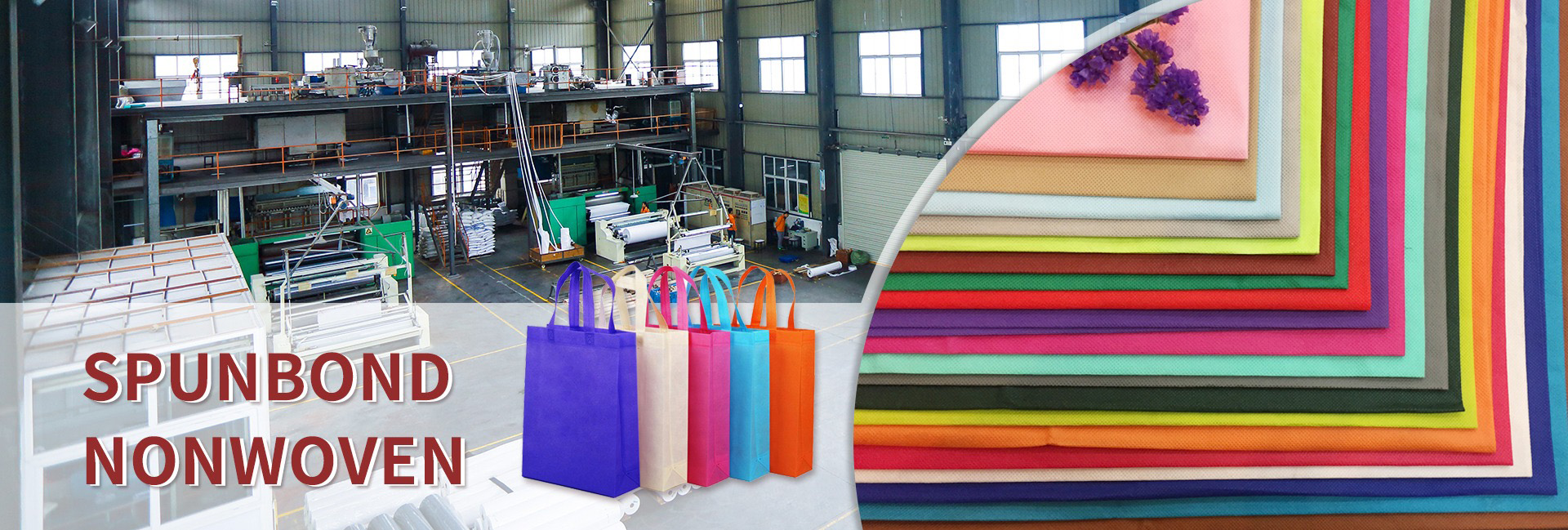
Dongguan Liansheng Non woven Technology Co., Ltd. was established in May 2020. It is a large-scale non-woven fabric production enterprise integrating research and development, production, and sales. It can produce various colors of PP spunbond non-woven fabrics with a width of less than 3.2 meters from 9 grams to 300 grams.
Post time: May-24-2026