
Those who have planted fruit trees know that the most laborious task throughout the year is not watering and fertilizing, but weeding.
During the dog days of summer, while others are eating watermelons in air-conditioned rooms, fruit farmers have to endure the scorching sun and bend down in the orchard, hoeing and weeding. Just finished hoeing once, a rain fell and the grass jumped up to knee height again. I say hoe three or four times a year, and the labor cost is several thousand yuan. I’m so tired that I can’t even straighten my waist.
What’s even more infuriating is that these weeds are not just an eyesore – they will crazily compete with fruit trees for water and fertilizer. The nutrients in the field have been eaten by the grass, and the fruits naturally do not grow much and their sweetness cannot increase.
Is there a way to make weeds stand aside, save farmers labor, and make fruits sweeter?
have The answer is – PP grass proof cloth.
Don’t think it’s plastic just because you hear ‘PP’. In the agricultural circle, this thin layer of black non-woven fabric has become a “wealth weapon” for many orchards. Today, let’s take a good look at it. Why is it so amazing.
The ‘core secret’ of weed proof fabric: making weeds invisible to light
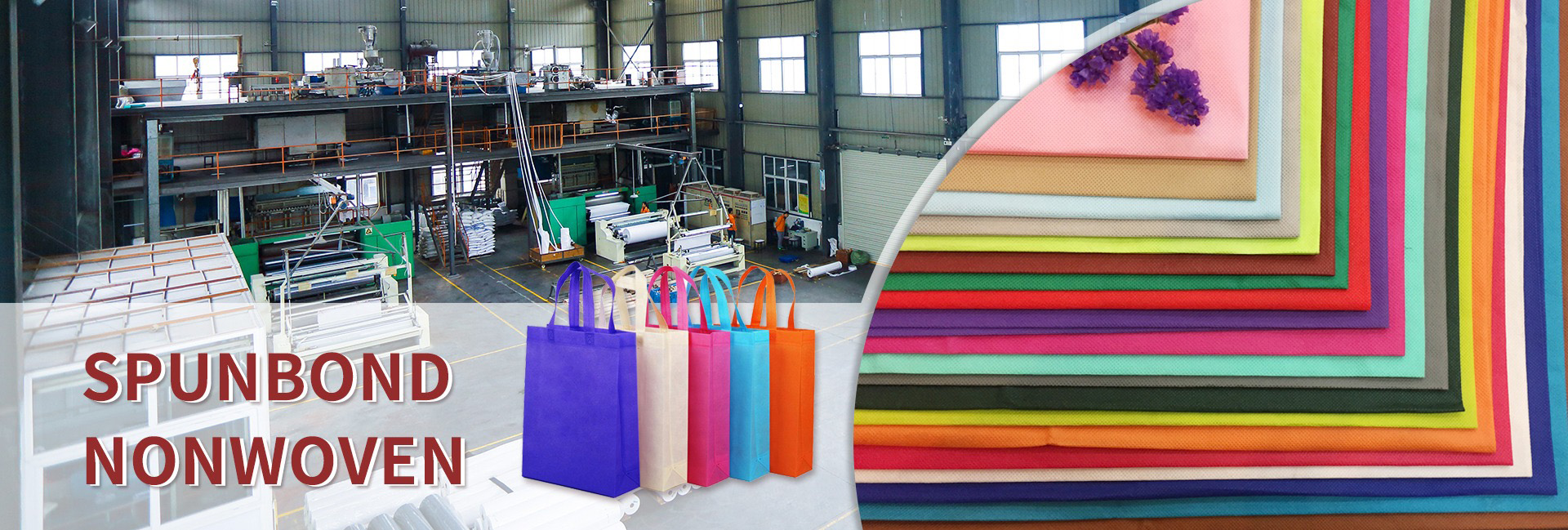
PP anti grass cloth, in other words, is a type of polypropylene (PP) spunbond non-woven fabric, usually black in color. Its principle is extremely simple and crude: physical barrier .
Weeds cannot grow without three things: sunlight, water, and air. When PP anti grass cloth is laid on the ground, it feels like a tightly wrapped “black blanket” covering the ground, with almost zero light transmittance. Weed seeds cannot germinate in the dark, and even if a few stubborn individuals occasionally emerge, they will starve, turn yellow, and shrink due to the lack of sunlight.
Unlike traditional plastic mulching films, PP grass proof cloth is a non-woven fabric structure with a surface densely covered with micropores. Rainwater and irrigation water can easily infiltrate, and the air in the soil can be exchanged normally, without rotting roots or mold like ordinary plastic film. But do weeds want to burrow out? There are no doors.
With such a simple principle of “shading”, over 95% of the weeds in the orchard can be effectively controlled.
Save 3 manual weeding times a year, I’ll show you the accounting
Let’s calculate an account.
A medium-sized orchard, such as 20 acres of land. Under traditional methods, weeding should be done at least three times a year:
-Once in spring: After the beginning of spring, grass sprouts grow wildly and cannot work until they fall off.
-Once in summer: There is a lot of rain, and grass grows faster than chives, covering saplings without hoeing.
-Once in autumn : Before picking fruits, it is necessary to clean them again for easy harvesting.
Hiring a worker costs 120-150 yuan per day, and it takes at least half a day (or half a day for skilled workers) to hoe one acre of land. A 20 acre plot of land costs 10 jobs and ranges from 1200 to 1500 yuan. After three rounds, it’s 3600-4500 yuan.
This is just the labor cost. If it is a larger orchard or if local labor is more expensive, weeding alone can cost one to two thousand yuan per year.
And what about laying PP grass proof cloth? One time installation, with a lifespan of 2-3 years. The cost of grass proof cloth for one acre of land is approximately 500-800 yuan (depending on the quality), with an investment of 10000 to 16000 yuan for 20 acres of land. It seems that the first year’s investment and labor costs are similar, but in the second and third years, there is no need to spend money on hiring someone to weed. In three years, labor costs alone can save tens of thousands of yuan.
More importantly, the fruit farmers themselves no longer have to bear that guilt. In the words of a cherry farmer in Shandong, “I used to have a sore wrist when weeding and hoeing, but now when I lay a cloth, the fields are clean all year round, and I have time to drink tea
Are fruits sweeter? This is not mysticism, it’s science
Many people think that weed control cloth only covers weeding, but they didn’t expect it to have an unexpected benefit: * * Orchard with weed control cloth has noticeably sweeter, larger, and better looking fruits.
This is not a psychological effect, there is a solid scientific principle behind it.
**Firstly, reduce competition and allocate all nutrients to fruit trees. Weeds are the most savage ‘robbers’. How much nutrients can the root system of a wild grass absorb from the soil in a year? The data may surprise you: the annual consumption of nitrogen, phosphorus, and potassium per square meter of weeds is equivalent to applying 20% less compound fertilizer. After laying the weed proof cloth, the weeds starved to death, and all the fertilizer that was stolen was left to the fruit trees. Nutrients are abundant, and the fruit is naturally large in size and accumulates a lot of sugar.
Secondly, maintain water and soil moisture to reduce drought stress. Although PP non-woven fabric is permeable, it can effectively reduce soil moisture evaporation. Especially in summer, the water in bare soil plots evaporates quickly, causing fruit trees to become thirsty and stop accumulating sugar as soon as they lack water. The soil moisture under the grass proof cloth is more stable, and the fruit trees are always in a “comfortable” state, able to focus more on converting nutrients into sugar.
Thirdly, reflecting light promotes coloring and sweetness. The black grass proof cloth also has a hidden function: it absorbs solar heat and slowly releases it at night, which can slightly increase ground temperature and promote root activity. At the same time, the scattered light reflected by the clean black ground shines on the lower leaves and fruits of the fruit tree, increasing the area of photosynthesis. A comparison was made in a macaque orchard in Sichuan: fruit trees covered with anti grass cloth had an average increase of 1.5 degrees in soluble solids (roughly understood as sugar content) in the fruit, and consumers could taste the difference as soon as they ate it.
Fourth, reduce rotten and fallen fruits. In traditional orchards, fruits that fall to the ground come into direct contact with the soil and are prone to decay and insect infestation. After laying the grass proof cloth, the fallen fruits can be picked up and sold on a clean and dry surface. Many fruit farmers have reported a significant decrease in the rate of rotten fruits after spreading, while the commodity rate has increased.
How to lay it? These key points need to be remembered
Although PP anti grass cloth is useful, if the laying method is not correct, the effect will be compromised. A few practical suggestions:
1. Leveling the land: Before laying, clean up the weeds and stones on the ground and level the ground. Otherwise, the ground will be uneven, and the cloth will easily be lifted or accumulate water.
2. Overlap should overlap: The overlap between two pieces of cloth should be at least 5-10 centimeters, and the edges should be compacted with soil or fixed with ground nails to prevent wind from lifting. Weeds are very clever and specialize in finding crevices to drill.
3. Leave a space around the trunk: Do not stick the base of the trunk too tightly, leaving a gap of 10-15 centimeters for easy watering and fertilization, and also to avoid long-term dampness of the bark causing diseases.
4. Purchase carefully: Choose brand new PP spunbond grass proof fabric , with a recommended thickness of 90-120 grams per square meter. Thin ones are not durable and will shatter into pieces within a year or two; Recycled materials contain impurities and are prone to aging and cracking.
Not only orchards, but also vegetable fields and gardens can be used
In fact, the use of PP grass proof cloth is far beyond orchards. Planting watermelons, strawberries, and tomatoes in greenhouses can prevent the fruits from getting dirty; In urban green belts and courtyard gardens, covering them with stones or tree bark is both beautiful and worry free.
What’s even more interesting is that some smart growers will use it in reverse – covering with white PP non-woven fabric to increase temperature and promote early maturity in spring, and changing to black grass proof cloth to control grass and sun protection in summer. One piece of cloth, suitable for two seasons, with excellent cost-effectiveness.
Conclusion
From the weeding laborers who face the yellow soil and back to the sky, to the “lazy agriculture” that can be easily managed with just a piece of cloth, PP weed proof cloth not only saves labor and money, but also upgrades the concept of orchard management.
It makes weeds stand aside and returns all sunlight, water, and nutrients to fruit trees. The ultimate reward for you is sweeter, bigger, and more attractive fruits, and a less tiring harvest season.
The next time you eat a particularly sweet peach or a bunch of sparkling grapes, you may want to think about it – behind that, there may be a contribution from the “invisible hero” PP grass proof cloth.
(If you are also a grower or have an orchard or vegetable field at home, please feel free to share it with friends who need it. Let more people know that there are smarter ways to deal with weeds than just herbicides and hoes.)
Dongguan Liansheng Non woven Technology Co., Ltd. was established in May 2020. It is a large-scale non-woven fabric production enterprise integrating research and development, production, and sales. It can produce various colors of PP spunbond non-woven fabrics with a width of less than 3.2 meters from 9 grams to 300 grams.
Post time: Jun-09-2026