
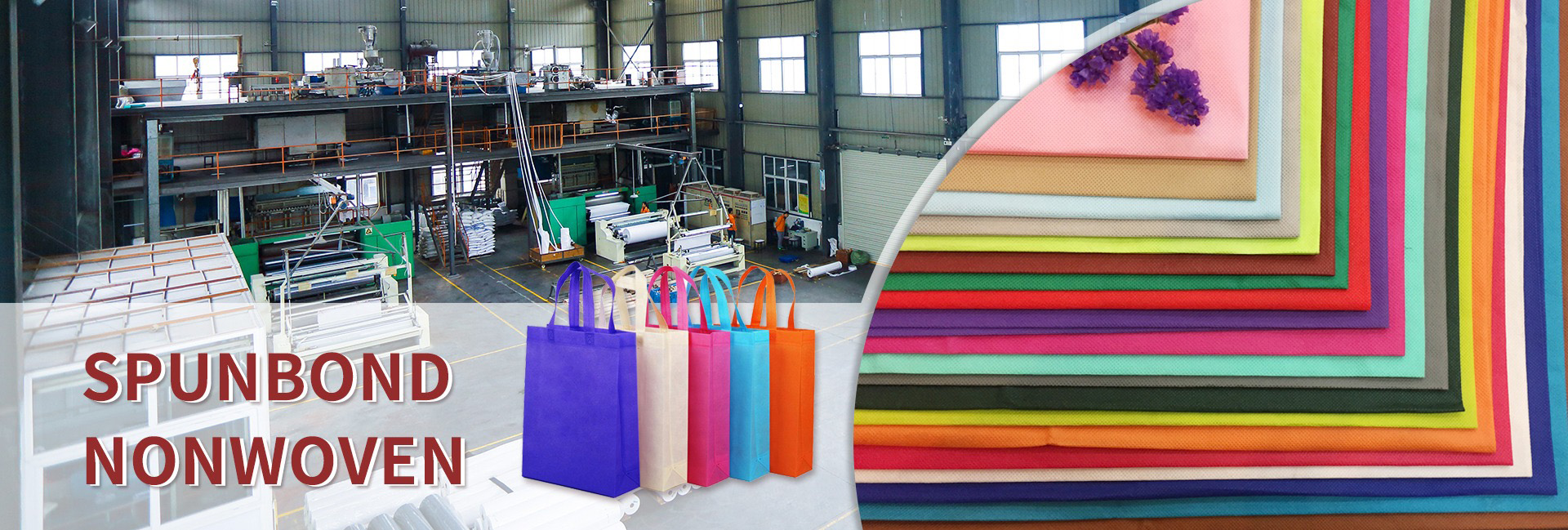
Stitch Bond Non-Woven Fabric is a new type of non-woven fabric made from synthetic fibers such as polyester, nylon, polypropylene, etc., processed through multiple processes. It not only has the softness and breathability of textiles, but also has the waterproof and weather resistance of plastic films, which can be said to have the advantages of multiple materials. In recent years, with the increasing global awareness of recycling and people’s emphasis on sustainable development and environmental protection, woven non-woven fabric as an environmentally friendly material is gradually receiving widespread attention and application.
Key Features
Structure: It is made by mechanically interlocking fibers using stitching or knitting techniques, creating a fabric-like material without the need for weaving.
Strength: The stitching process provides good tensile strength and durability.
Versatility: It can be made from various fibers, including polyester, polypropylene, nylon, or blends, depending on the desired properties.
Breathability: The open structure allows for good air permeability, making it suitable for applications requiring ventilation.
Lightweight: It is generally lighter than traditional woven fabrics.
Customizability: The fabric can be engineered to have specific properties, such as water resistance, flame retardancy, or softness.
Production Process
Fiber Preparation: Fibers are laid out in a web or sheet form.
Stitching/Knitting: The fibers are bonded together using stitching or knitting machines, which interlock the fibers mechanically.
Finishing: The fabric may undergo additional treatments, such as coating, laminating, or dyeing, to enhance its properties.
Applications
Firstly, stitch bond non-woven fabric are widely used in the textile industry. Due to the interweaving of its fibers through processes such as needle punching and hot melt, it has excellent tear resistance and strength, greatly meeting people’s requirements for textiles. In terms of home fabric, sewn non-woven fabric can be used to make curtains, sofa covers, carpets, etc. Its softness and comfortable touch make the home environment more warm and comfortable. In addition, woven non-woven fabrics are widely used in clothing, shoes, hats and other fields, providing convenience and comfort for people’s lives.
Secondly, stitch bond non-woven fabric have a wide range of applications in the agricultural field. Agriculture is an important pillar of the national economy, and how to improve crop yield and quality has become a focus of attention for agricultural technology workers. Stitching non-woven fabric, due to its superior breathability and moisturizing properties, can be used as a greenhouse covering material and an excellent protective layer for fruit and vegetable growth. It can effectively control temperature and humidity, create favorable environmental conditions for crop growth, and thus increase yield. Meanwhile, sewn non-woven fabrics can also be used to make agricultural tools, plant bags, etc., providing convenience for farmers’ labor.
Once again, stitch bond non-woven fabric play an irreplaceable role in the field of healthcare. In medical supplies, sewn non-woven fabric can be used to make disposable masks, medical surgical gowns, and other protective equipment. Its material has waterproof and antibacterial properties, which can provide good protective effects and protect the lives of medical personnel and patients. In addition, sewn non-woven fabric can also be used to make wound dressings, sanitary napkins, etc. It has good moisture absorption and breathability, which can effectively prevent bacterial infections and maintain hygiene and comfort.
Finally, stitch bond non-woven fabric have applications in other fields. It can be used to make filter materials and soundproofing materials, widely used in industrial production and construction fields. In the industrial field, woven non-woven fabrics can be used for environmental protection projects such as oil-water separation and dust filtration. In the field of architecture, sewn non-woven fabrics can be used for roof waterproofing, soundproof walls, etc., providing a safer and more comfortable building environment.
Summary
In summary, sewn non-woven fabric, as an innovative and environmentally friendly material, has a wide range of application prospects. Stitch bond non-woven fabric not only plays an important role in fields such as textiles, agriculture, and healthcare, but also has unique application value in industrial production and construction. I believe that with the continuous enhancement of people’s environmental awareness and the advancement of technology, the application fields of sewn non-woven fabrics will become more extensive, making greater contributions to people’s lives and social progress.
Dongguan Liansheng Non woven Technology Co., Ltd. was established in May 2020. It is a large-scale non-woven fabric production enterprise integrating research and development, production, and sales. It can produce various colors of PP spunbond non-woven fabrics with a width of less than 3.2 meters from 9 grams to 300 grams.
Post time: Feb-21-2025