
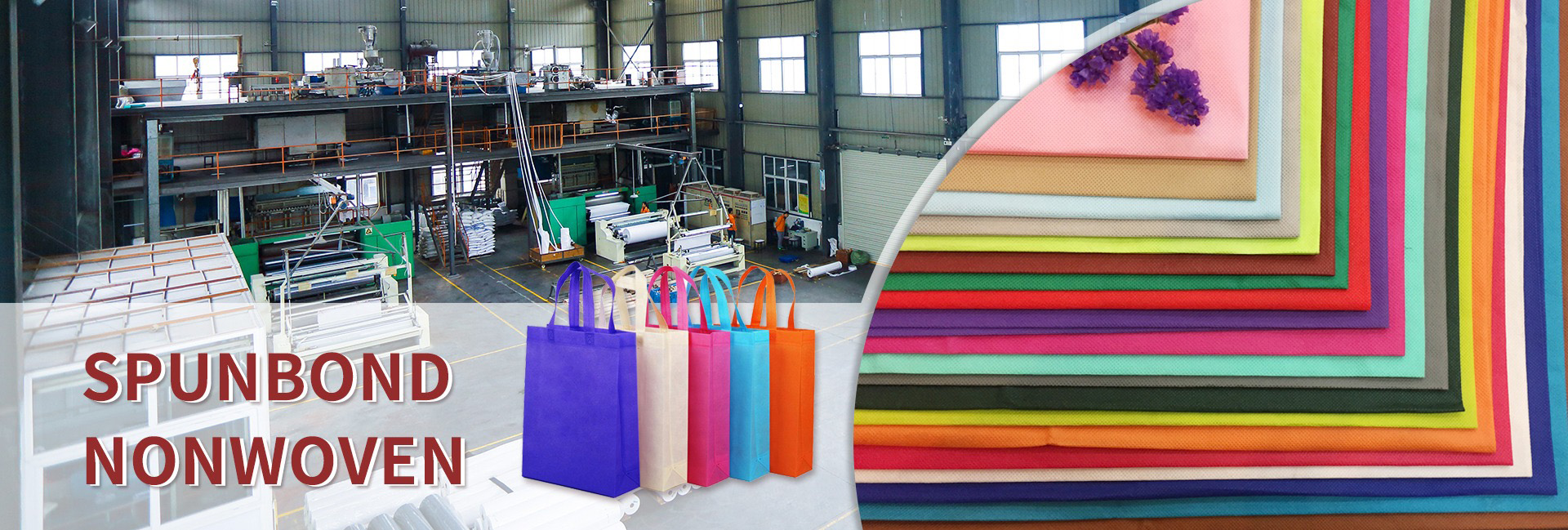
Driven by the dual goals of global “dual carbon” and circular economy policies, the recycled PET industry has formed a complete chain from the recycling system to terminal applications. The market size of China’s recycled PET spunbond nonwoven fabric has reached 3.8 billion yuan by 2025, and continues to expand at a compound annual growth rate of 9.7%.
However, the inherent flammability of native PET poses a barrier to entry for recycled PET materials in areas such as automotive interiors, building insulation, medical packaging, which have rigid requirements for flame retardancy. Whether it is possible to break through technological bottlenecks and produce qualified flame-retardant recycled non-woven fabrics has become a key proposition for expanding the application boundaries of recycled PET.
The necessity and feasibility of flame retardant modification of recycled PET non-woven fabric
Recycled PET non-woven fabric (also known as RPET fabric) is made by sorting, cleaning, and melt spinning discarded PET bottles, which can reduce 6 tons of carbon emissions per ton of product and is one of the core carriers of environmental transformation. However, PET resin is essentially a flammable material with a limit oxygen index of only 20.6%. It is prone to combustion and accompanied by molten droplets when exposed to fire, posing serious safety hazards in high temperature or open flame environments.
Although traditional post finishing flame retardant processes can initially improve flame retardancy, they generally have two major drawbacks: first, poor compatibility between flame retardants and fibers, which can easily precipitate and lead to a decrease in flame retardant effect. After washing with water for 5 times, the flame retardant grade decreases by more than 50%; Secondly, chemical agents erode the fiber structure, reducing the tensile strength of non-woven fabrics by 15% -20%, which cannot meet the requirements of industrial applications.
The feasibility foundation has gradually been consolidated: on the one hand, the breakthrough in the purification technology of recycled PET provides high-quality raw materials for flame retardant modification. Hengtian Jiahua and other enterprises have increased the purity of PET to 99.9% through near-infrared sorting technology, significantly reducing the breakage rate during the spinning process and creating conditions for the uniform addition of flame retardant components; On the other hand, the global annual production of recycled flame-retardant polyester staple fibers has exceeded 1 million tons, of which 40% are made from PET bottle sheets, proving that the flame-retardant modification of recycled PET substrates has an industrial basis.
The core path and innovative solution of flame retardant modification
The current industry has formed a technical route of “pre modification as the main approach, and post finishing as the auxiliary approach”. Through material formula innovation and process optimization, the synergistic improvement of flame retardancy and mechanical properties has been achieved. Representative breakthroughs include the following three categories:
Inorganic organic synergistic enhancement of performance
In response to the problem of insufficient effectiveness of traditional single flame retardants, a new composite formula achieves dual flame retardancy of “gas phase condensed phase” through the coordination of multiple components. A certain technical solution uses 70-80 parts of recycled polyester bottle as the substrate, combined with 6-10 parts of ternary hydrotalcite containing rare earth elements and 10-20 parts of regenerated keratin, to form a unique synergistic system: ternary hydrotalcite is dehydrated and absorbs heat, releasing non combustible gases.
The alkaline metal oxide formed after decomposition adsorbs toxic smoke, and the introduction of rare earth elements increases the density of the carbon layer by 30%; Keratin binds to polyester fibers through hydrogen bonds, and its disulfide bonds not only enhance fiber toughness, but also release nitrogen gas to enhance gas-phase flame retardancy during combustion. The ultimate oxygen index of the non-woven fabric produced by this scheme can reach over 32%, meeting the UL94 V-0 flame retardant standard, and the tensile strength is increased by 25% compared to traditional processes.
Dual optimization of environmental protection and compatibility
In response to the EU REACH regulation’s restrictions on harmful substances, halogen-free flame retardant masterbatch has become the mainstream choice. The PET special halogen-free flame retardant masterbatch launched by Jurong Network adopts a composite structure of “fine isolation molecules+high crystalline resin”, and the addition amount only needs 8% -12% to make the recycled non-woven fabric pass the vertical combustion test. Its core advantages lie in: firstly, the use of silane coupling agent modification treatment, which refines the particle size of flame retardant particles to below 500nm, improves dispersion uniformity by 40%, and avoids the occurrence of flame retardant blind spots; Secondly, it has excellent high temperature resistance, with a thermal decomposition rate of less than 2% at a spinning temperature of 280 ℃, which perfectly matches the melting processing window of recycled PET. The recycled PET non-woven fabric produced by a certain automotive interior enterprise using this masterbatch has passed the German Automotive Industry Association VDA 278 combustion test, with a smoke density level controlled below 50.
Full chain control from spinning to molding
The application of chemical recycling technology further breaks through performance bottlenecks, and some enterprises adopt the “alcoholysis polymerization” process to degrade waste PET. During the polymerization stage, phosphorus containing flame-retardant monomers are introduced to covalently bind flame-retardant elements with PET molecular chains, achieving permanent flame-retardant effects. After 50 washes, this chemically modified recycled PET fiber still maintains V-0 flame retardancy and has no significant decrease in the ultimate oxygen index when made into non-woven fabric.
In the spinning process, the segmented temperature control design of the twin-screw extruder (feeding section 240 ℃, melting section 260 ℃, homogenization section 250 ℃) can avoid high-temperature decomposition of flame retardants and increase the retention rate of flame retardant components to over 95%.
Application Scenario Implementation and Industrialization Cases
Qualified flame-retardant recycled non-woven fabrics have been commercially applied in multiple fields, verifying the feasibility of the technical route:
-In the field of automotive interior, a joint venture car company uses flame-retardant recycled PET non-woven fabric to make seat cushions. By adding halogen-free flame-retardant masterbatch, the material meets the GB 8410-2006 automotive interior material combustion standard, with a combustion rate of ≤ 100mm/min. At the same time, the cost per ton of material is reduced by 800 yuan, and the annual consumption reaches 5000 tons, reducing carbon emissions by 30000 tons.
-In the field of packaging and filtration, a flame-retardant recycled PET printed bag produced by a packaging company in Zhejiang has passed SGS non-toxic certification and EU EN 13501-1 B-S1, d0 level flame-retardant certification. When used for packaging flammable materials such as coffee powder, 500000 units are shipped in a single month, and the repurchase rate of EU customers reaches 90%. In the field of industrial filtration, filter bags made of flame-retardant recycled non-woven fabric can be used in an environment of 120 ℃ with a filtration efficiency of 99.2%, and have been applied in coal mine ventilation systems.
-In the field of architecture and home textiles, flame-retardant recycled PET non-woven fabric is used as the base material for building insulation layer. It has passed the GB 8624-2012 B1 level flame retardant standard and has been widely applied in a certain affordable housing project in the Yangtze River Delta, reducing construction costs by 30% compared to traditional glass wool materials; Home textile companies use it as curtain fabric to achieve a combination of flame retardancy and environmental friendliness, with a product premium of up to 20%.
Current challenges and breakthrough directions
Although key technological breakthroughs have been achieved, large-scale applications still face three major challenges: firstly, cost control difficulties. Flame retardant masterbatch accounts for 20% -30% of raw material costs, and the composite flame retardant system containing rare earths increases the ton cost by 1200-1500 yuan; Secondly, the adaptability of the recycling system is insufficient. Currently, 80% of recycled PET is physically recycled, and each melting of the molecular chain breaks, resulting in a 5% -8% decrease in molecular weight.
After multiple recoveries, it is difficult to meet the requirements of flame retardant modification for substrate viscosity; Thirdly, the standard system is not unified, and there are significant differences in the requirements for flame retardant grade, smoke density, and toxicity indicators among different industries, which increases the difficulty of developing universal products.
The targeted solution path is clear: in terms of cost optimization, the development of waste biomass flame retardants such as regenerated keratin can reduce the cost of flame retardant components by 40% and improve material degradability; In terms of upgrading recycling technology, although the chemical recycling method currently has a high cost, it can completely regenerate PET molecular chains, and the product performance is on par with raw materials.
With the implementation of 1.2 million tons of chemical recycling capacity by Zhejiang Petrochemical and other companies, the cost per ton is expected to drop to below 8000 yuan; In terms of standard construction, the China National Textile and Apparel Council has initiated the development of a group standard for “Recycled Flame Retardant PET Non woven Fabric”, which aims to unify 12 indicators including ultimate oxygen index, vertical combustion, and mechanical properties. It is expected to be implemented in 2026.
A feasible and scalable new way out
Based on the comprehensive maturity of technology, industrialization cases, and policy environment, recycled PET is fully capable of producing qualified flame-retardant non-woven fabrics, and has formed a complete technical chain from raw material purification, flame-retardant modification to terminal applications. Its core value lies in not only solving the safety shortcomings of recycled PET applications, expanding the high-end markets such as automobiles and construction, but also enhancing the benefits of circular economy through the conversion of “waste high-value materials”.
With the domestication rate of flame retardant masterbatch increasing from the current 60% to 85% by 2027, and the environmental premium of 200-300 yuan per ton granted by the green credit policy, flame retardant recycled non-woven fabric is expected to become the next billion level growth point of the recycled PET industry, promoting the transformation of polyester circular economy from “environmental substitution” to “value upgrading”.
Dongguan Liansheng Non woven Technology Co., Ltd. was established in May 2020. It is a large-scale non-woven fabric production enterprise integrating research and development, production, and sales. It can produce various colors of PP spunbond non-woven fabrics with a width of less than 3.2 meters from 9 grams to 300 grams.
Post time: Dec-06-2025