
Adjustment method of carding machine process parameters in the production of non-woven fabrics with different weights (to ensure the uniformity of the fiber web)
The uniformity of fiber web is the core indicator of non-woven fabric product quality, which is influenced by multiple parameters such as carding machine spacing, speed ratio, and fiber load. When producing non-woven fabrics of different weights, it is necessary to adjust the process parameters according to the weight requirements (light weight 30-80g/㎡, medium weight 80-200g/㎡, heavy weight 200g/㎡ or more), while taking into account the fiber characteristics and equipment operation stability, to achieve a balance between combing effect and uniformity.
Core parameter adjustment: spacing setting
The spacing refers to the gap distance between the various working parts of the carding machine (such as the cylinder, work roller, doff, and carding roller), which directly determines the fiber carding strength, transfer efficiency, and fiber web uniformity. Excessive spacing can lead to insufficient combing, residual fiber bundles, cloud spots, and streaks; If it is too small, it will excessively damage the fibers, increase equipment load, and even cause traffic congestion, affecting production continuity. The adjustment should follow the principle of “light weight fine comb, heavy weight moderate looseness”, and be fine tuned according to the fiber length characteristics.
1. Lightweight and heavy-duty non-woven fabric (30-80g/㎡)
This type of product requires high uniformity and fineness, and needs to strengthen the single fiber combing effect, with the overall spacing controlled within a small range. The spacing between the work roll and the tin box decreases gradually in the direction of fiber advancement, achieving progressive fine combing. The spacing in the front area can be set to 0.2-0.3mm, and gradually adjusted to 0.15-0.2mm in the back area to ensure that the fiber bundle is fully loosened into a single fiber state. The distance between Dove and Tin Forest is based on the principle of “small and uniform”, controlled at 0.12-0.18mm, to improve fiber transfer efficiency, reduce fiber residue on the surface of Tin Forest, and avoid local thickening of the fiber web. The spacing between the combing roller and the feeding needle roller is set to 0.3-0.4mm, which can ensure the combing strength and prevent short fibers from excessively winding the combing roller, reducing defects such as hemp grains.
2. Medium weight non-woven fabric (80-200g/㎡)
Balance the combing effect and fiber flow rate, and increase the weight appropriately when the spacing is shallow. The distance between the work roll and the tin forest is 0.3-0.4mm in the front area and 0.2-0.3mm in the back area to avoid excessive combing and increase in short fiber rate, while ensuring that the fiber bundles are fully opened. The spacing between Dove and Tin Forest is adjusted to 0.18-0.25mm, suitable for medium fiber loads, ensuring that fibers are evenly transferred to the Dove surface and reducing the fluctuation of fiber web quantity. The spacing between the combing roller and the feeding needle roller is maintained at 0.4-0.5mm to reduce the damage of combing strength to fiber length and avoid fiber accumulation and blockage.
3. Heavy weight non-woven fabric (200g/㎡ or more)
The fiber feeding amount is large, and the spacing needs to be increased to improve the fiber throughput and avoid equipment overload. The distance between the work roll and the tin forest is 0.4-0.5mm in the front area and 0.3-0.4mm in the back area, which reduces the combing strength of fibers per unit area and prevents excessive fiber breakage from affecting the interweaving performance. The distance between the Dove and the Tin Forest is increased to 0.25-0.35mm to ensure the smooth transfer of a large amount of fibers, while reducing the Dove load and avoiding the problem of thick edges and thin middle of the fiber web. The spacing between the combing roller and the feeding needle roller is set to 0.5-0.6mm to reduce the combing strength, lower the risk of fiber entanglement, and ensure stable fiber flow feeding into subsequent processes.
Core parameter adjustment: speed ratio
The ratio of the speed of each component of the carding machine (such as the cylinder, work roll, doff, feeding roller, etc.) directly affects the fiber load, transfer rate, and web orientation. The speed of Xilin is limited by the equipment structure and is usually stable at 160-200r/min. When adjusting, the Xilin speed is used as the reference, and the speed of other components is changed to optimize the speed ratio, achieving uniform fiber distribution and quantitative stability of the fiber web.
1. Lightweight and heavy-duty non-woven fabric (30-80g/㎡)
Need to reduce fiber orientation, improve web uniformity, and control yield to avoid overload. Slow down the feeding speed of the roller and control it at 5-8m/min to ensure uniform fiber feeding and reduce instantaneous feeding fluctuations; The ratio of work roll speed to cylinder speed is controlled at 1:8-1:10, reducing the speed difference to reduce cotton knots, while increasing the fiber load of the work roll to enhance the combing effect. The speed of Dove is adjusted to 10-15m/min according to the weight requirement, with a ratio of 1:12-1:15 compared to the speed of Xilin, ensuring uniform fiber stripping and forming a thin and uniform fiber web. If you need to improve the difference in longitudinal and transverse strength, you can turn on the chaotic roller and set the speed of the chaotic roller to 2-3 times the speed of the Dove. By using airflow vortices to randomly distribute fibers, the orientation can be reduced.
2. Medium weight non-woven fabric (80-200g/㎡)
Optimize the speed ratio to balance yield and uniformity, adjust the feeding roller speed to 8-12m/min, and adapt to medium fiber flow rates. The speed ratio between the work roll and the cylinder is set to 1:7-1:9, and the speed difference is appropriately increased to improve the combing strength. At the same time, the speed difference between the work roll and the stripping roll is controlled to reduce fiber damage. The corresponding adjustment of the Dove speed is 15-25m/min, with a ratio of 1:10-1:12 compared to the Xilin speed, to ensure stable fiber transfer efficiency and web quantification. The laying process can use cross laying, controlling the speed of the reciprocating trolley to match the speed of the doffer, adjusting the fiber angle between layers, and further optimizing the uniformity and longitudinal and transverse strength ratio of the fiber web.
3. Heavy weight non-woven fabric (200g/㎡ or more)
It is necessary to increase the fiber throughput while avoiding the accumulation and wrinkling of the fiber web. The feeding speed of the roller is increased to 12-18 m/min, combined with a dual feeding cotton box structure. The fiber capacity is monitored by a photoelectric tube to ensure stable feeding pressure and reduce uneven feeding. The speed ratio of the work roll to the cylinder is adjusted to 1:6-1:8, increasing the speed difference to meet the combing demand of a large number of fibers, while reducing the speed of the main cylinder and work roll to reduce equipment load and fiber breakage. The speed of Dove is increased to 25-35m/min, with a ratio of 1:8-1:10 compared to the speed of Xilin, ensuring fast fiber transfer and avoiding uneven fiber web caused by fiber overload on the surface of Xilin. If air flow is used as a web aid, the fibers can be arranged in a disorderly manner by adjusting the air flow velocity (accelerating first and then decelerating) to improve the uniformity of the thick fiber web.
Collaborative adjustment of auxiliary parameters
1. Load control of Xilin fiber
The fiber load is positively correlated with the weight demand, with a control range of 0.05-0.1g/cm ² for light weight, 0.1-0.2g/cm ² for medium weight, and 0.2-0.3g/cm ² for heavy weight. Excessive load can easily lead to insufficient combing and the appearance of fiber network cloud spots; If it is too small, it will reduce production efficiency. By adjusting the feeding amount and the Dove speed in coordination with the self leveling device, the feeding unevenness can be reduced to below 3% to ensure stable load of Xilin fiber.
2. Needle fabric adaptation and maintenance
The type of needle cloth should match the weight and fiber characteristics: for light weight, fine tooth and small working angle needle cloth should be selected (such as Xilin using a straight line with negative angle tooth surface double fold line tooth shape), and the combing should be strengthened; Heavy weight uses coarse toothed and large working angle needle cloth to enhance fiber grip and transfer ability. Regularly check the condition of the needle cloth. If there is wear or lodging of the needle teeth, they should be replaced in a timely manner to avoid defects such as uneven combing and longitudinal stripes caused by needle cloth problems.
3. Environment and fiber pretreatment
The environmental humidity is controlled at 40% -60%, and the moisture content of natural fibers is maintained at 8% -12%. Synthetic fibers can be appropriately humidified to reduce static electricity and avoid uneven accumulation of fibers due to electrostatic adsorption. Fiber pretreatment needs to adjust the degree of loosening according to the weight: for light weight, it needs to be loosened 2-3 times to ensure that the fiber mixing uniformity is ≥ 95%; The weight can be appropriately reduced to avoid excessive short fibers affecting the strength and uniformity of the fiber web.
Common Problems and Parameter Fine tuning Techniques
1. Cloud spots and white spots appear on the fiber web: It is often caused by fiber accumulation due to insufficient spacing, or fluctuations in feeding amount. It is necessary to appropriately increase the spacing between the work roll and the tin box, adjust the stability of the feeding roller speed, and check whether the air pressure in the cotton box is balanced.
2. Longitudinal streaks: It may be caused by damage to the needle cloth, deviation in the parallelism of the roller, or misalignment of the speed ratio. The damaged needle cloth needs to be replaced, the parallelism of the roller needs to be calibrated, and the speed ratio between the working roller and the cylinder needs to be fine tuned.
3. There is a large difference in longitudinal and transverse strength: for light and medium weight, the speed of the disorderly rollers can be increased, and for heavy weight, cross laid mesh can be used to adjust the fiber orientation, so that the longitudinal and transverse strength ratio is controlled within 3-4:1.
4. Thin in the middle and thick on both sides of the fiber web: This is often due to uneven spacing between the doff and tin layers or abnormal reciprocating speed of the web. It is necessary to calibrate the doff spacing, adjust the maximum reciprocating speed of the web, and optimize the stacking effect of the fiber web.
Summary
The core of adjusting the parameters of the carding machine for non-woven fabrics of different weights is the dynamic matching of spacing and speed: light weight achieves fine carding with “small spacing and low speed difference”, medium weight balances carding strength and flow rate, and heavy weight ensures fiber flow and uniform transfer with “large spacing and adaptive speed ratio”. In actual production, it is necessary to continuously adjust the fiber type (natural fiber/synthetic fiber), equipment model, and online detection data (weight deviation ≤± 3%), while doing a good job in daily equipment maintenance and environmental control, in order to stably produce non-woven fabric products with uniformity standards.
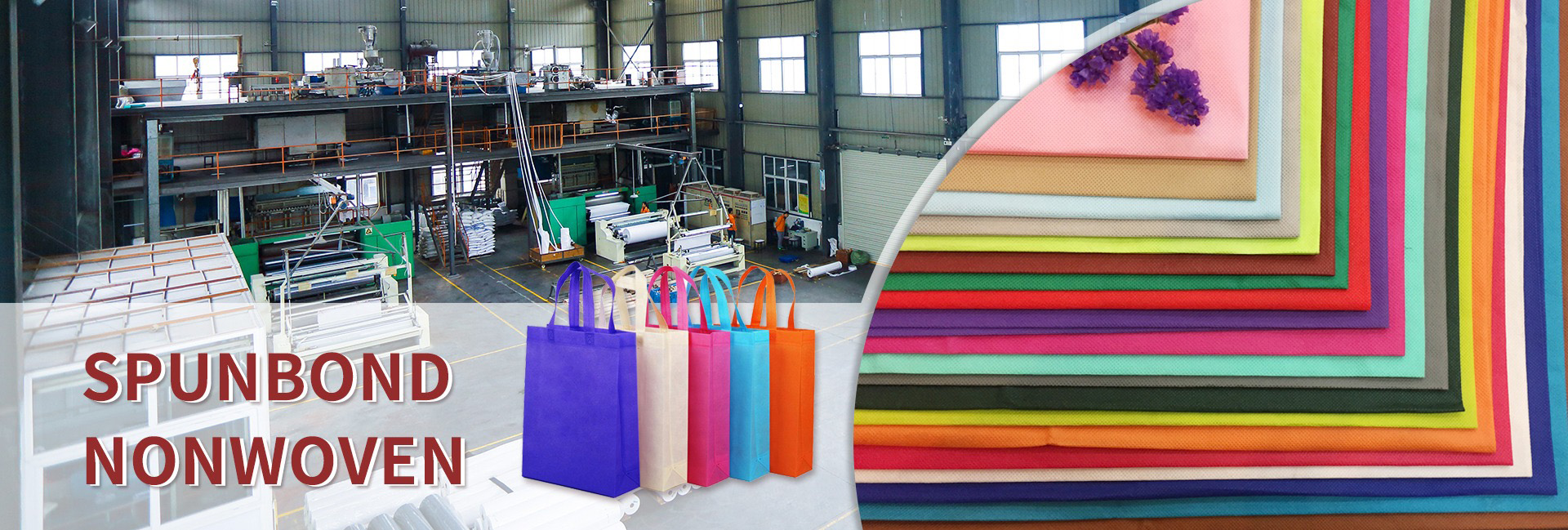
Dongguan Liansheng Non woven Technology Co., Ltd. was established in May 2020. It is a large-scale non-woven fabric production enterprise integrating research and development, production, and sales. It can produce various colors of PP spunbond non-woven fabrics with a width of less than 3.2 meters from 9 grams to 300 grams.
Post time: Jan-14-2026