
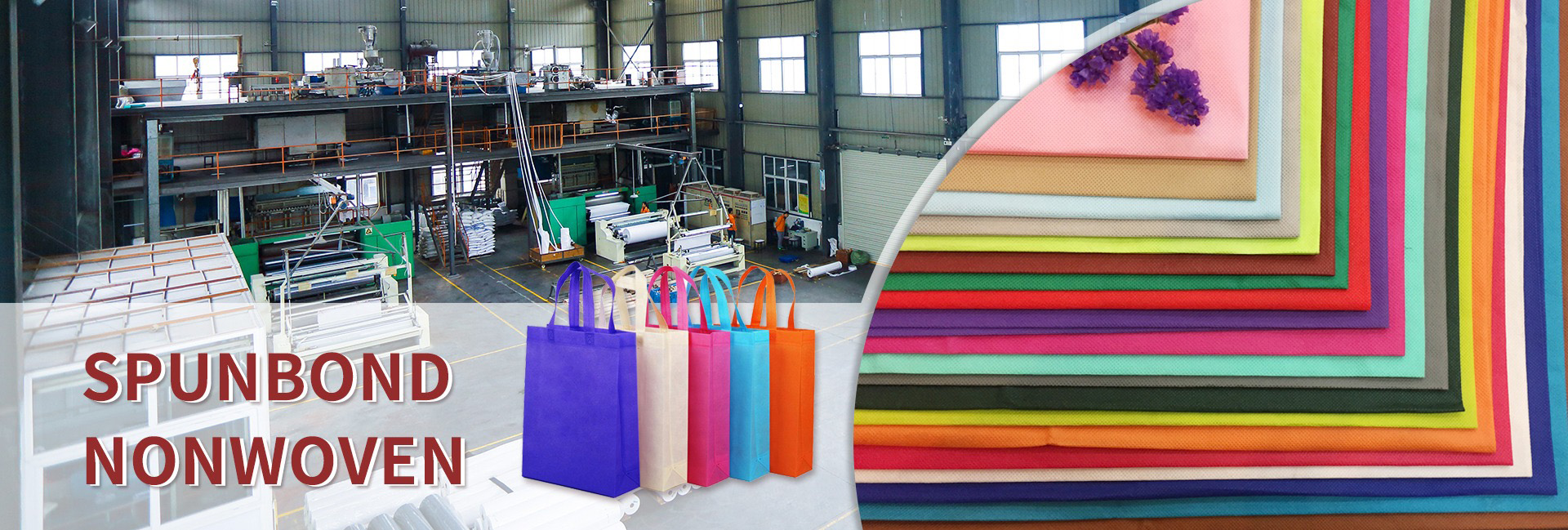
Polyester spunbond hot-rolled nonwoven fabric is widely used in various fields such as hygiene products, geotechnical materials, packaging protection, etc. due to its high strength, good temperature resistance, and good breathability. As the core of product competitiveness, appearance quality directly determines its market acceptance – even if the physical performance meets the standard, once defects, color differences, abnormal patterns and other problems occur, they will be judged as unqualified products, resulting in raw material waste and increased production costs.
Many friends on the production line have this problem: even though the parameter settings have not changed, there are frequent issues with the fabric surface, making troubleshooting time-consuming and laborious. Today, based on the standards of the textile industry and years of practical production experience, we will sort out the six most common appearance quality problems of polyester spunbond hot-rolled non-woven fabrics, dismantle the causes, and provide practical solutions that can be directly implemented. Even beginners can quickly get started and reduce the rate of unqualified products.
Fabric defects (clumping, flying, pinholes)
Fabric defects are the most frequent problem in production and a major area of customer complaints. They are mainly divided into three categories: clumping, flying flowers, and pinholes. Although they may seem similar, their causes are completely different and require targeted treatment.
1. Agglomeration (melt): Hard block like polymer appears on the fabric surface, with a stiff touch, and in severe cases, it can pierce the fabric surface, affecting the practicality of the product. According to the textile industry standard FZ/T 01153-2019, such defects are mainly caused by melt dripping during the spinning process or hard lumps carried in the raw materials. In addition, the high temperature of the screw extruder can cause excessive melting and carbonization of polyester chips, which can also form clumps and enter the hot rolling process with the fiber web, ultimately solidifying on the fabric surface.
Solution: First check the raw materials, screen out polyester chips with hard lumps and impurities, and strictly control the dryness of the chips to avoid excessive moisture causing abnormal melting; Adjust the temperature of each section of the screw extruder, lower the temperature in the melting zone, and reduce the carbonization of the melt; Regularly clean the spinneret and filter to prevent residual melt from blocking the spinneret holes and avoiding the formation of lumps due to melt dripping.
2. Feihua: Scattered short fibers attached to the fabric surface are prone to falling off, affecting the cleanliness and aesthetics of the product, and often appearing in the mesh forming process. The main reason is that the carding equipment experiences cotton jamming or roller winding, and the high temperature generated by high-speed operation carbonizes the fibers, or the fiber carding process is improper, causing short fibers to detach from the fiber web and adhere to the fabric surface. In addition, excessive dust in the workshop environment can also lead to the attachment of flying flowers.
Solution: Regularly inspect the carding machine, clean the fibers around the rollers in a timely manner, adjust the carding speed and needle cloth spacing, and reduce the production of short fibers; Optimize the dust removal system in the workshop, control the concentration of dust in the workshop, and avoid dust adhering to the fabric surface; Add a suction device in the net forming process to promptly remove free short fibers and reduce flying debris residue.
3. Pinholes: Small holes on the fabric surface that are transparent and fiber free, often occurring during the hot rolling process, can seriously affect the barrier properties of the product. According to industry standards, these types of defects are mainly caused by abnormal spinning temperature, melt melting shrinkage, or breakdown of polarizable current . In addition, impurities and needle like protrusions on the surface of the hot rolling mill can also cause pinholes to be pressed out on the fabric surface during pressing.
Solution: Adjust spinning temperature, stabilize melt viscosity, and avoid uneven melt shrinkage; Check the surface of the hot rolling mill, clean impurities in a timely manner, polish the protruding parts, and ensure that the roller surface is smooth; Adjust the polarization current parameters to avoid excessive current from penetrating the fabric surface; Simultaneously control the uniformity of fiber web thickness and reduce pinholes caused by local thinning.
Color difference and color distortion
Color difference is a common problem in colored polyester spunbond hot-rolled non-woven fabrics, manifested as uneven color distribution, varying shades, or significant color differences within the same batch of products; Colored patterns refer to irregular color spots and stripes on the fabric surface, both of which can directly lower the product grade and even lead to customer returns.
Core causes: Firstly, poor quality of color masterbatch, poor dispersion of color masterbatch, or significant color difference between different batches of color masterbatch, resulting in uneven mixing with polyester chips; Secondly, the unstable melting temperature leads to uneven dispersion of color masterbatch particles in the melt, resulting in localized color concentration and fading; The third issue is uneven web formation, with significant differences in web thickness and varying shades of color after hot rolling; The fourth reason is improper dyeing process, unreasonable control of dyeing temperature and time, resulting in uneven color adhesion.
Solution: Use color masterbatch with good dispersibility and stable color, and use the same batch of color masterbatch for the same batch of products to avoid mixing; Optimize the mixing ratio of color masterbatch and polyester chips, extend the mixing time, and ensure uniform mixing; Stabilize the melting temperature of the screw extruder to avoid uneven dispersion of color masterbatch caused by temperature fluctuations; Adjust the mesh process to ensure uniform thickness of the fiber mesh and reduce color difference caused by thickness differences; Standardize the dyeing process, strictly control the dyeing temperature and time, and ensure uniform color adhesion.
Abnormal fabric patterns (stripes, blurred rolling points)
The abnormal texture of the fabric is mainly manifested as stripes and blurred rolling points. Although it does not affect the basic use of the product, it will reduce the aesthetic appearance. Products commonly used in high-end fields (such as the surface of sanitary products and packaging materials) will be directly judged as unqualified.
1. Stripes: Random or regular strip-shaped marks appear on the fabric surface, divided into “sparse stripes” and “dense stripes”. According to industry standards, there are many causes of such defects, mainly due to improper adjustment of spinning equipment or processes, resulting in continuous strip-shaped sparse nets or fiber accumulation; The change in air permeability at the joint of the mesh belt causes a change in fiber density; Or lay mesh curtains to adhere fiber bundles, causing the aggregation of strip-shaped fibers .
Solution: Adjust the spinning process, optimize the spinning speed and stretching airflow, and avoid fiber accumulation or mesh thinning; Check the mesh belt joints, promptly repair damaged areas, and ensure even ventilation of the mesh belt; Regularly clean the mesh curtain to avoid fiber bundle adhesion, and adjust the mesh laying speed to ensure even fiber laying.
2. Blurred rolling points: Embossed products have weak unevenness on the fabric surface and unclear rolling points, mainly due to low temperature and insufficient pressure of the hot rolling rolls, resulting in insufficient bonding of the fiber web and inability to present the rolling points clearly; In addition, the surface pattern wear and uneven thickness of the fiber mesh on the hot rolling mill can also lead to blurred rolling points.
Solution: Properly increase the temperature and pressure of the hot rolling rolls to ensure that the fiber web is fully bonded and the rolling points are clear; Regularly inspect the surface patterns of hot rolling rolls and promptly replace severely worn hot rolling rolls; Adjust the mesh forming process to ensure uniform thickness of the fiber mesh and avoid uneven depth of the rolled points caused by local thickness or thinness.
Damaged fabric surface and uneven edges
Damaged fabric (tearing, holes) and uneven edges are fatal appearance problems that are essentially irreparable and can only be disposed of as waste, significantly increasing production costs.
1. Fabric damage: mainly manifested as tearing and holes on the fabric surface, with three main causes: firstly, insufficient strength of the fiber web, uneven fiber laying during web formation, and insufficient fibers in some areas, leading to easy tearing under stress; The second reason is that the hot rolling temperature is too high, which leads to excessive melting of the fibers, making them brittle and prone to damage; Thirdly, during the production process, the fabric surface is scratched by sharp parts of the equipment, resulting in holes.
Solution: Optimize the web forming process, improve the uniformity and strength of the fiber web, and avoid local fiber shortage; Adjust the hot rolling temperature to avoid fibers becoming brittle due to excessive temperature; Inspect production equipment, polish sharp areas, and avoid scratching the fabric surface; Simultaneously adjust the fabric tension to avoid tearing caused by excessive tension.
2. Irregular edges: The edges of the fabric are rough and uneven, mainly due to insufficient precision of the cutting equipment, severe wear of the cutting blade, or a mismatch between the cutting speed and the running speed of the fabric; In addition, uneven fiber laying at the edges during mesh formation can also lead to uneven edges after slitting.
Solution: Regularly inspect the slitting blades, replace severely worn blades in a timely manner, and adjust the accuracy of the slitting equipment; Match the cutting speed with the fabric running speed to avoid edge tearing and burrs caused by speed differences; Optimize the web forming process to ensure even distribution of edge fibers and reduce burrs after slitting.
Key points for daily production control
Many appearance quality issues are better prevented in advance than dealt with afterwards. Combining the production process of polyester spunbond hot-rolled non-woven fabric [3], implementing the following three control measures can significantly reduce the occurrence of appearance problems:
1. Raw material control: Strictly screen polyester chips and masterbatch to prevent impurities and hard lumps from entering; Control the dryness of the slices to ensure that the moisture content does not exceed 0.003%, avoiding abnormal melting caused by moisture [3]; The same batch of products uses the same batch of raw materials to avoid appearance problems caused by differences in raw materials.
2. Equipment control: Regularly inspect core equipment such as spinnerets, carding machines, hot rolling rolls, and slitting machines, promptly clean up equipment residues, repair worn parts, and ensure stable equipment operation; Regularly calibrate equipment parameters to ensure precise and controllable parameters such as temperature, pressure, and speed.
3. Environmental and process control: Keep the workshop clean, control dust concentration, and avoid flying flowers and impurities from adhering to the fabric surface; Stable production process, avoiding frequent fluctuations in parameters such as temperature, pressure, and speed; Strengthen the inspection of the production process, promptly identify and handle minor appearance issues, and avoid the problem from escalating.
Summary
The appearance quality of polyester spunbond hot-rolled non-woven fabric depends on three major factors: raw materials, equipment, and process. Most appearance problems (such as defects, abnormal patterns, and color differences) can be solved through standardized operations and precise adjustments. There is no need to overly rely on experience in production. By comparing the above problems, investigating the causes one by one, and implementing corresponding solutions, the rate of non-conforming products can be effectively reduced.
For friends on the production line, reducing appearance issues can not only lower production costs but also enhance product competitiveness. If you encounter any appearance issues not mentioned above during production, please feel free to leave a message in the comment section and discuss solutions together!
Dongguan Liansheng Non woven Technology Co., Ltd. was established in May 2020. It is a large-scale non-woven fabric production enterprise integrating research and development, production, and sales. It can produce various colors of PP spunbond non-woven fabrics with a width of less than 3.2 meters from 9 grams to 300 grams.
Post time: Mar-26-2026