
Technological upgrading and innovation
Nanotechnology and Intelligent Non woven Fabric
With the continuous emergence and application of emerging technologies such as nanotechnology and biotechnology, the performance of non-woven fabrics will be further improved and their application scope will become more extensive. The application of nanocomposites endows non-woven fabrics with excellent properties such as high strength, high modulus, high toughness, flame retardancy, and antibacterial properties, which can be applied in high-end fields such as aerospace, automotive, and medical. The research and development of intelligent non-woven fabrics (such as temperature sensing materials) is also accelerating, and it is expected that the market size of related technologies will reach 20 billion yuan by 2030.
Biobased biodegradable materials
Biobased biodegradable materials such as PLA and PBAT will enter the stage of large-scale production in 2025, and the profit margin of high-end products will be significantly higher than that of traditional non-woven fabrics. These materials have advantages such as environmental friendliness and biodegradability, which are in line with global environmental trends and market demand. For example, Hengtian Group has successfully developed a new type of hydroentangled non-woven fabric, which degrades 30% faster than traditional products and reduces costs by 10%.
Intelligent Manufacturing and Digitization
By 2025, top global enterprises will fully implement automated production lines and the Industrial Internet of Things (IIoT), resulting in a 20% -30% increase in production efficiency. The technological gap between small and medium-sized enterprises may further widen. Through the application of intelligent manufacturing technology, enterprises can achieve automation, intelligence, and informatization of the production process, improve production efficiency and product quality, and reduce production costs.
Environmental policies promote green development
Against the backdrop of increasing global environmental awareness, the non-woven fabric industry will pay more attention to the greening and environmental friendliness of its products. Environmental policies promote the growth of demand for biodegradable non-woven fabrics, and the market share of biodegradable products is expected to increase to 15% by 2025.
The policy support will be increased, and the production capacity plan for 2025 will exceed 1 million tons. At the same time, non-woven fabric recycling technologies such as melt regeneration and chemical decomposition will be piloted in 2024 and initially commercialized in 2025, and the European market may take the lead in forming a closed-loop industrial chain.
The Rise of Emerging Markets
The rapid economic growth in regions such as Asia, the Middle East, and Africa has led to an increase in consumer purchasing power, and the demand for non-woven fabrics and other products will continue to grow. These regions will become important growth points for the non-woven fabric market.
Chinese non-woven fabric enterprises can actively expand their international market, enhance their global influence through international non-woven fabric exhibitions, event sponsorship, and other means, and promote the Chinese non-woven fabric industry to leap from a “manufacturing power” to a “brand power”. For example, there has been a significant increase in demand in Southeast Asia and the Middle East, with exports accounting for 25% of the total; The demand for hygiene products in Africa and Latin America is rapidly increasing with population growth.
Prediction and Analysis of Future Development Trends in the Non woven Fabric Industry
The market size continues to grow
With the continuous development of the Chinese economy and the further improvement of people’s living standards, the market demand for non-woven fabrics as a new type of fiber product will increase year by year. It is expected that by 2030, the size of China’s non-woven fabric market will reach a new peak. At the same time, the global non-woven fabric market will also maintain a growth trend, especially driven by the demand in emerging markets.
Continuous improvement and integration of the industrial chain
In the future, the non-woven fabric industry chain in China will be further improved. Upstream, the supply of raw materials will become more diversified and stable; In the midstream, non-woven fabric manufacturing enterprises will increase their investment in technology research and development, improve product quality and performance, and focus on brand building and marketing to enhance brand awareness and reputation; In the downstream, the application field of non-woven fabrics will continue to expand, and market demand will become more diversified.
In addition, the trend of industrial chain integration will become more apparent. Top enterprises will enhance their economies of scale and market competitiveness through mergers and acquisitions, while small and medium-sized enterprises will seek development space in segmented markets through specialized and distinctive operations.
Upgrading and diversification of consumer demand
Consumers’ demand for non-woven fabrics will become increasingly diversified, not only pursuing the basic functions of products, but also emphasizing the personalization, comfort, and environmental friendliness of products. For example, in the field of healthcare, consumers have increasingly high requirements for the safety, comfort, and functionality of medical non-woven fabric products; In the field of household goods, consumers have increasingly strict requirements for the aesthetics, practicality, and environmental friendliness of non-woven products.
In order to meet the diverse needs of consumers, non-woven fabric products will show a trend of diversification. In addition to traditional non-woven fabric products, there will be more non-woven fabric products with special functions, personalized designs, and environmental characteristics. For example, antibacterial non-woven fabric, waterproof non-woven fabric, biodegradable non-woven fabric, etc. will be favored by consumers.
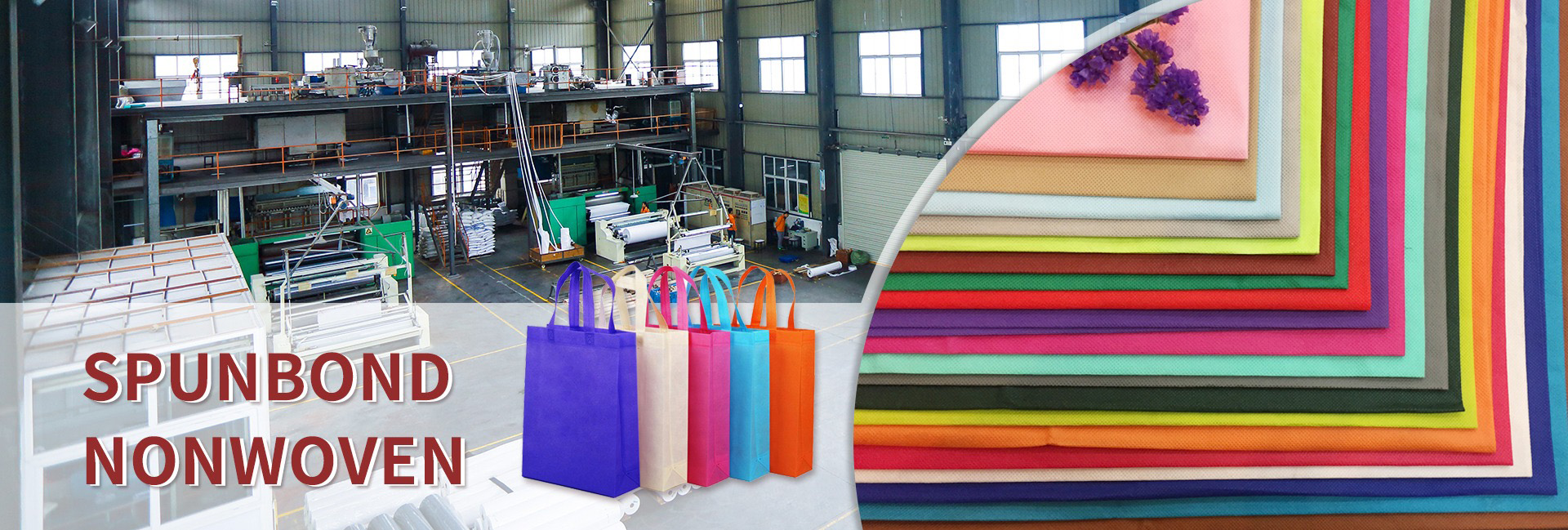
Dongguan Liansheng Non woven Technology Co., Ltd. was established in May 2020. It is a large-scale non-woven fabric production enterprise integrating research and development, production, and sales. It can produce various colors of PP spunbond non-woven fabrics with a width of less than 3.2 meters from 9 grams to 300 grams.
Post time: Jan-31-2026