
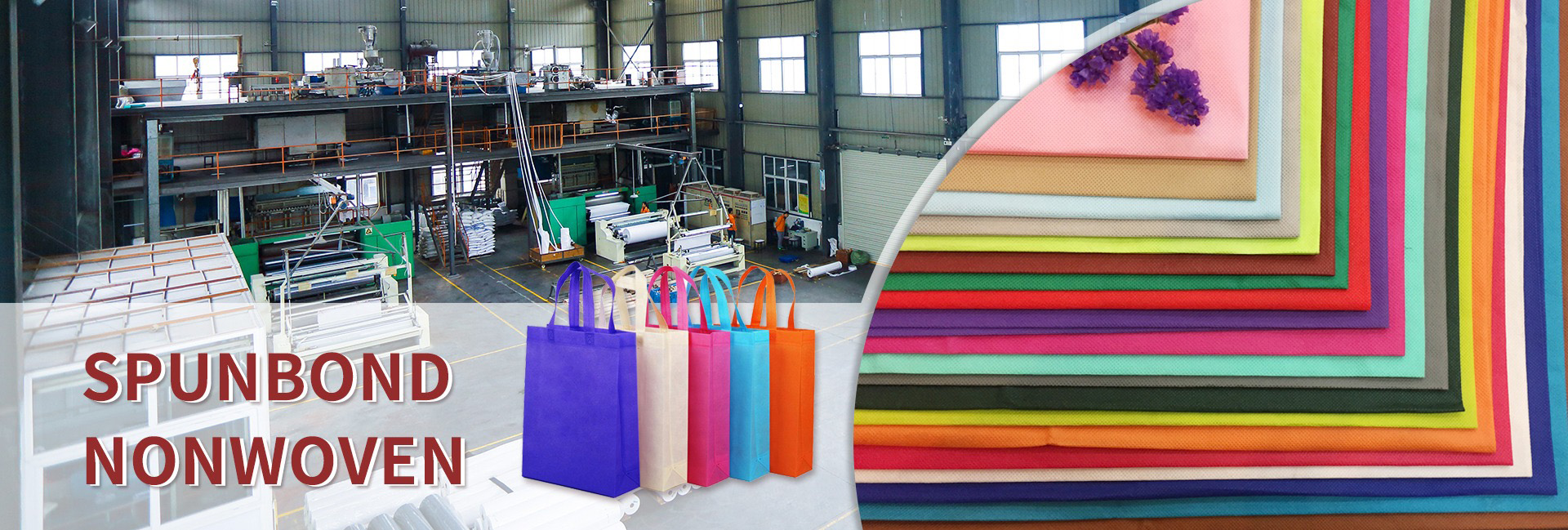
With the continuous improvement of people’s health awareness and the increasingly refined demand for hygiene protection in fields such as home, medical, and daily use, new textile materials that combine functionality and practicality have become a hot research and development topic in the industry. Anti mite and antibacterial spunbond fabric, as an innovative category in the field of spunbond nonwoven fabric, has broken through the limitations of traditional spunbond fabric that only has basic protection through process improvement and functional modification.
While ensuring the core performance of textile materials, it is endowed with the key value of long-term anti mite and high-efficiency antibacterial. It is widely used in home textiles, medical care, maternal and child care, daily protection and other fields, injecting new impetus into the green and functional development of the textile industry.
Core Process Classification
Spunbond fabric is made from high molecular weight polymers such as polypropylene (PP) as the core raw material, through processes such as melt extrusion, spinning, and hot rolling reinforcement. With its advantages of high strength, breathability, controllable cost, and high production efficiency, it has become one of the most widely used categories in non-woven fabrics.
The core breakthrough of anti mite and antibacterial spunbond fabric lies in the integration of functional treatment technology into the traditional spunbond fabric production process, which adds dual protection functions of anti mite and antibacterial while retaining the original excellent characteristics of spunbond fabric. At present, the core processes for achieving anti mite and antibacterial functions are mainly divided into three categories:
The first is the co blend spinning method, which integrates functional additives such as silver ions, nano zinc oxide, and quaternary ammonium salt antibacterial and anti mite agents into the polymer melt before spinning. Through the spinning process, the functional components are evenly distributed inside the fibers. The fabrics prepared by this process have strong durability, washability, and friction resistance, and are suitable for repeated use scenarios;
The second is the post finishing method, in which functional additives are attached to the surface of spunbonded fabric by means of dip rolling, coating, spray, etc. The process flow is simple, the cost is low, and it is suitable for one-time or short cycle products, but the function durability is relatively weak;
The third method is composite reinforcement, which combines anti mite and antibacterial spunbond layers with meltblown layers to construct multi-layer structures such as SMS and SMMS. This not only enhances the barrier and protective properties of spunbond fabrics, but also strengthens their anti mite and antibacterial effects. It is widely used in medical fields with high protection requirements.
Mechanism of action
From the perspective of its mechanism of action, the protective effect of anti mite and antibacterial spunbond fabric is both scientific and targeted. On the antibacterial level, functional additives can effectively inhibit common pathogenic bacteria such as Escherichia coli, Staphylococcus aureus, and Candida albicans by disrupting the integrity of bacterial cell membranes, inhibiting enzyme system activity in bacteria, and blocking bacterial reproductive metabolic pathways.
The antibacterial rate can generally reach over 90%, and high-quality products can even exceed 99%; At the level of mite prevention, on the one hand, the chemical repellent effect of functional additives is used to keep dust mites and other pests away from the surface of fabrics. On the other hand, the dense fiber structure of spunbond fabric forms a physical barrier to reduce dust mite attachment and living space, while inhibiting the decomposition of dust mite excrement, reducing allergen production from the source, effectively solving the pain points of dust mite breeding and bacterial pollution in traditional textile materials.
Safety and performance standards
In terms of safety and performance standards, the quality of high-quality anti mite and antibacterial spunbond fabric needs to be rigorously tested and verified. The mite prevention performance must comply with national standards such as GB/T 24253, and the repellent or inhibition rate must reach 90% or above; The antibacterial performance needs to be tested according to standards such as GB/T 20944 and AATCC 100, and the inhibition rate against common pathogenic bacteria should not be less than 90%; Safety performance is a core indicator that needs to meet OEKO-TEX requirements ® Standard 100 skin contact level standard ensures that no harmful chemicals dissolve and avoids irritation to human skin.
In addition, washability is also a key factor in measuring product quality. High quality blended spunbond fabrics can maintain a functional retention rate of over 80% after multiple ISO 6330 standard water washes, while low-quality post finishing products are prone to functional degradation.
Application scenarios
In terms of application scenarios, the value of anti mite and antibacterial spunbond fabric has penetrated into multiple livelihood and industrial fields. In the field of home textiles, it is an ideal raw material for mattress covers, pillowcases, duvet covers, dust covers and other products, especially suitable for people with allergies and mother and baby families, which can effectively reduce the impact of dust mites and bacteria on health.
In the field of healthcare, it can be used to make surgical gowns, isolation gowns, disposable bed sheets, medical dressings, etc., providing basic hygiene protection for the medical environment and reducing the risk of cross infection; In the field of daily protection and storage, it can be made into dust-proof storage bags, air conditioning filters, automotive interior fabrics, etc., balancing practicality and protection; In addition, in areas with strict hygiene requirements such as maternal and child products, pet products, etc., anti mite and antibacterial spunbond fabric has also become one of the core raw materials due to its safe and reliable characteristics.
Conclusion
Currently, with the deepening of the concept of healthy consumption and the iteration of textile industry technology, anti mite and antibacterial spunbond fabrics are developing towards a more efficient, safer, and environmentally friendly direction. R&D personnel are constantly exploring new environmentally friendly functional additives to replace traditional chemical additives and reduce the impact of materials on the environment.
At the same time, by optimizing the process, the breathability and softness of spunbond fabric are improved, achieving a better balance between functionality and comfort. In the future, anti mite and antibacterial spunbond fabrics will further expand their application boundaries, unleash their potential in emerging fields such as smart wearables and agricultural protection, and become an important benchmark for the functional transformation of textile materials, providing solid support for building a healthier and more sustainable living and production environment.
Dongguan Liansheng Non woven Technology Co., Ltd. was established in May 2020. It is a large-scale non-woven fabric production enterprise integrating research and development, production, and sales. It can produce various colors of PP spunbond non-woven fabrics with a width of less than 3.2 meters from 9 grams to 300 grams.
Post time: Mar-16-2026