
Polylactic acid fiber is warm and smooth, with good elasticity, good biocompatibility, softness and skin friendliness, excellent core absorption effect and moisture conductivity. The processed products have a silky luster and comfort, and excellent drape. Polylactic acid fibers not only have good mechanical properties, smooth and breathable properties, but also possess biodegradability and biocompatibility that general chemical fibers do not have. Compared with traditional natural fibers such as polyester and cotton, polylactic acid PLA fiber has environmentally friendly degradation, non-toxic and mite resistant properties, antibacterial and health benefits, fire and moisture resistance, and anti allergy properties; Superior skin friendly and UV resistant properties.
Polylactic acid fiber has excellent physical properties and a wide range of applications. Its fabric size stability is good, and it combines the comfort of cotton, the drape of adhesive, the strength of polyester, and the hand feel of real silk. It has excellent wearability and is widely used in clothing, decoration, sanitary materials, and industries. It is currently the most promising “green fiber” for development.
Mask filter material
Meltblown nonwoven materials have the characteristics of ultra-fine fibers, small pore size, and high porosity. They are used as filter materials for protective equipment such as masks, which can effectively filter out harmful substances such as dust and bacteria in the air, ensuring the health of the wearer. At present, most of the filter materials available on the market are non degradable petroleum based polymers such as polypropylene (PP), which will inevitably lead to energy scarcity and environmental pollution problems after being widely used and discarded. The use of polylactic acid (PLA) to prepare melt blown nonwoven materials for air filtration can alleviate energy scarcity and environmental pollution to a certain extent.
The most researched and developed polylactic acid (PLA) melt blown nonwoven materials abroad are in Europe, America, and Japan. Japanese manufacturers such as Xinghe, Zhongfang, Unijica, and Toyo have all conducted research. The University of Bremen and the University of Tennessee were the first to conduct research, but due to limitations in raw materials and process conditions, the prepared polylactic acid (PLA) nonwoven materials do not have the ability to be applied. In 2009, NatureWorks developed a new type of IngeoTM biobased PLA slice, which can be applied to traditional melt blown processes. The prepared polylactic acid (PLA) nonwoven material can be used in the field of air filtration. Due to the late start of melt blown technology research in China and various technological constraints, the large-scale production of polylactic acid melt blown nonwoven fabrics has not been achieved in the industry. Some enterprises are in the experimental research stage. However, due to China’s support for environmentally friendly product policies, the preparation and application of PLA melt blown materials have gradually become a research hotspot for domestic scholars.
The main reason why polylactic acid (PLA) melt blown nonwoven materials have not been able to achieve large-scale commercial production and widespread application is due to obstacles in melt blown equipment, processes, and material characteristics, which make it difficult to overcome technical challenges and result in high research and development costs.
Environmentally friendly filter materials
In recent years, the steady expansion of China’s industrial scale has led to a rapid increase in demand for filtration and separation markets, as well as a flourishing market size, new products, and new technologies. As one of the important fields of industrial textiles, textiles for filtration and separation have broad markets in gas filtration fields such as industrial dust filtration, air purification, personal protection, as well as liquid filtration and separation fields such as liquid-solid separation and drinking water purification. The main theme for the future of the industry is to deeply implement the new development concept, actively comply with the requirements of the “dual carbon” target, vigorously promote industrial transformation and upgrading, and achieve green development of the environmental protection filter industry. Polylactic acid (PLA), due to its properties as a polymer material, can be widely used as a raw material for environmental filtration, water filtration, air filtration, and other filter materials. It also has biodegradable and environmentally friendly characteristics, which meets the “dual carbon” goal and brings significant opportunities and broad prospects for the development of the environmental filter industry.
(1) Bag dust removal filter material
Bag dust removal filter material, as a key material for ultra-low emission of smoke and dust, includes multiple varieties and models such as needle punched felt, water punched felt, and woven fabric. It plays an important role in industrial smoke and dust control in various industries such as coal-fired power plants, steel metallurgy, cement kilns, waste incineration, and petrochemicals. Driven by the mandatory environmental standards and policies of the country, the leadership of supply side structural reform, and the support of the huge industrial market scale in China, bag dust filter materials have shown a development state of strong supply and demand in recent years. According to statistics, the market size of bag dust removal filter material in 2020 is about 9 billion yuan, with a growth rate of 5% in output value, a growth rate of 10% to 15% in output, a profit margin of about 10%, and a filter material export of nearly 1 billion yuan. In the future, filter materials for carbon capture processes, high-temperature resistant filter materials for coking processes, dual effect filter materials for dust removal/degassing, new structural filter units, and high-temperature resistant and highly corrosive filter units will become the key directions for innovation and development of bag dust removal filter materials.
(2) Air filtration material
Many years ago, the air quality situation in many parts of China was severe. In recent years, although the haze has eased to some extent, the overall situation is still not optimistic. The market for fresh air systems and central air conditioning purification still maintains a rapid growth trend. The demand for air purification filter materials in the HVAC field, driven by industrial, transportation, and rapidly developing infrastructure construction, is also growing rapidly. In addition, heavy fog weather shortens the service life of air purification materials and increases the frequency of replacement. Building fresh air, clean rooms, car filters, and machine intake purification systems are affected by air quality, resulting in shorter replacement times. In the future, the innovation and development of filter media for air purification will focus on density gradient large dust capacity coarse efficiency filtration, membrane surface high-efficiency filter media, and melt blown fiber filter media.
(3) Liquid filtration material
Liquid filtration materials are used in mineral processing to recover minerals from liquids and for liquid-solid separation in wastewater treatment. They are mainly woven, knitted, and woven fabric filter materials, and the proportion of non-woven applications continues to increase. Electrospinning, meltblown, and membrane materials have excellent filtration performance and are receiving widespread attention in the industry. In 2020, the liquid filtration material market was around 5.5 billion yuan, with a growth rate of 15% and a profit margin of 15% to 20%. As the main force in liquid filtration, the membrane material industry has entered a period of rapid growth. Membrane technologies such as microfiltration, ultrafiltration, nanofiltration, and reverse osmosis have been widely applied in fields such as seawater desalination, water treatment, sewage treatment, and reuse. Domestic related technologies such as hollow fiber membranes have made significant progress. High performance membrane materials can achieve selective chemical separation, enabling high-throughput and high selectivity chemical separation. In the future, innovation in non-woven and membrane filtration materials will continue to be a hot topic in the industry.
Cigarette filter tips
The filter is an easily overlooked part of cigarette composition. Many consumers believe that filters are unremarkable. In fact, the emergence of filters itself is a progress in cigarette production technology, playing a role in reducing coke and harm. With the help of filters, tobacco products can achieve their own unique taste. Filter flavor makes tobacco products more recognizable and can also meet the increasingly personalized needs of consumers. At present, with the trend of declining sales of traditional cigarettes and increasing sales of new tobacco products, filter manufacturers are also seeking more business opportunities in new segmented markets.
With the continuous progress of the times, people are paying more attention to healthy lifestyles, and smokers are no exception.
Reducing the harm of smoking while meeting the needs of smokers is the cornerstone of the development of contemporary electronic cigarettes. In the current situation where electronic cigarette regulatory standards have not yet been announced in China, product quality varies, e-liquid quality is not good or bad, and there are potential risks in material application and safety. This undoubtedly brings many risks that cannot be ignored and transferred to consumers. From a hardware perspective, all current electronic cigarette products suffer from issues such as oil leakage, condensate overflow, and poor hygiene during use, and have become the most difficult technical bottleneck to overcome in this category. Most of these issues are due to the lack of filtration systems or incomplete solutions to related technical functions in electronic cigarettes.
Future application prospects
Polylactic acid (PLA), as a rapidly developing green material in the 21st century, has characteristics such as renewability and biodegradability. Polylactic acid (PLA) melt blown nonwoven materials can combine the performance advantages of PLA with the structural characteristics of melt blown nonwoven materials, effectively filtering out small particles such as dust and microorganisms, and can be used as air filter materials. However, there are still some difficulties in the development of polylactic acid (PLA) melt blown air filter materials in China. For example, polylactic acid (PLA) melt blown slices generally need to be imported from European and American countries, and high tariffs lead to increased product prices, making market promotion more difficult; At present, the melt blown production process of polylactic acid (PLA) has not been fully mastered in China, making it difficult to achieve industrialization.
With more and more scholars conducting in-depth research on polylactic acid (PLA), accelerating the development of PLA production technology, reducing production costs, improving the performance of PLA nonwoven materials, and taking the path of independent innovation, the application prospects of PLA melt blown nonwoven materials in the field of air filtration will become increasingly broad.
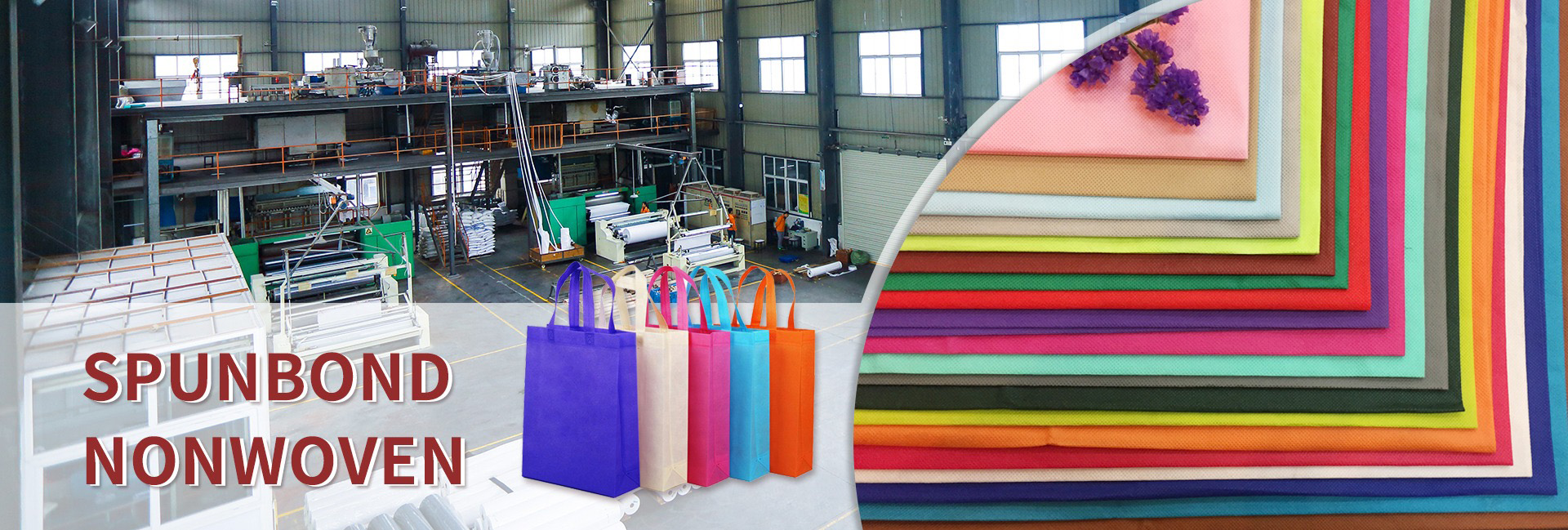
Dongguan Liansheng Non woven Technology Co., Ltd. was established in May 2020. It is a large-scale non-woven fabric production enterprise integrating research and development, production, and sales. It can produce various colors of PP spunbond non-woven fabrics with a width of less than 3.2 meters from 9 grams to 300 grams.
Post time: Jan-27-2025