
The core value of spunbond nonwoven fabric in the field of building waterproofing lies in its ability to enhance the overall performance of the system through “strengthening” and “combining”. It can significantly enhance the tensile and tear resistance of waterproof materials, and its three-dimensional mesh structure also provides excellent penetration and interlocking platforms for various coatings.
Main specific roles
Waterproof membrane system
As a reinforcing substrate/tire base: composite with materials such as asphalt and polyethylene. Provide high-strength skeleton to withstand structural deformation stress and prevent coil tearing. High tensile strength, good elongation, thermal stability, and puncture resistance are key components of modified asphalt waterproofing membranes.
Coating waterproof system
As a reinforcement layer, it is sandwiched between coatings in the “five coatings and one cloth” process. Combined with liquid coating, it forms a composite coating of “skin+bone”, greatly enhancing the overall strength and crack resistance of the coating. Transforming liquid coating into “liquid coil”, the system has high tensile strength and good fracture elongation, especially suitable for irregular and complex roofs.
Single layer roof system
As a composite layer on the back of the roll material: such as PVC and other single-layer roof roll materials on the back. Provide rough bonding surfaces required for full adhesion construction with the base layer (concrete, mortar). To achieve firm and full adhesion between the roll material and the base layer, preventing water leakage, commonly used in buildings with aesthetic and design requirements.
The intrinsic characteristic of “one cloth for multiple uses”
Spunbond non-woven fabrics are capable of fulfilling the above roles mainly due to several key characteristics:
Structural characteristics: It is formed by spinning, laying and hot rolling continuous filaments, forming a three-dimensional network structure with interlaced fibers and uniform pores. This gives it both good mechanical strength and facilitates the infiltration and bonding of other materials such as asphalt and coatings.
Material properties: commonly made of synthetic fibers such as polyester (PET) and polypropylene (PP). Polyester non-woven fabric has advantages such as high strength, high temperature resistance, aging resistance, and UV resistance; Polypropylene non-woven fabric has the characteristics of acid and alkali resistance, non-toxic and environmentally friendly, and good color fastness. In addition, its longitudinal and transverse strength differences are small, and its performance is stable.
Construction and functional advantages:
Enhance crack resistance: effectively disperse stress, greatly improving the waterproof layer’s ability to resist base cracking.
Improve adhesion: The surface is rough and uniform, and can directly and firmly bond with cement-based materials.
Auxiliary function: It has a certain degree of breathability, which helps to discharge moisture from the base layer; Corrosion resistance and extended system lifespan.
How to choose spunbond non-woven fabric
In practical applications, selecting suitable spunbond nonwoven fabrics requires consideration of the following points:
Clarify core requirements: Choose based on the main contradictions of the project. High requirements for resistance and durability, such as large flat roofs, should prioritize the use of polyester spunbond non-woven fabric. For special environments with high requirements for chemical corrosion resistance or environmental protection, polypropylene spunbond non-woven fabric can be considered.
Matching system and process:
Waterproof membrane: Pay attention to the compatibility and composite process of non-woven fabric as the base material and coating material.
Waterproof coating: Choose non-woven fabric that is compatible with the coating used and has good wetting properties, and ensure that it is fully wetted according to the standard of “one cloth, multiple coatings”.
Single layer roof: Choose a backing non-woven fabric roll specifically designed for full adhesion systems.
Focus on key parameters:
Weight: The common range is 20-270g/㎡. The higher the weight, the greater the strength and the higher the cost, which needs to be balanced according to design requirements.
Strength: including tensile strength and tear strength, directly related to the waterproof layer’s ability to resist damage.
Width: affects construction overlap efficiency and material loss.
Assessing Quality and Certification: Choose a reputable supplier. For critical projects, material testing reports may be required to verify whether they meet relevant national or industry standards.
Conclusion
Overall, spunbond nonwoven fabrics have achieved a leap from passive waterproofing to active reinforcement by providing structural “skeletal” support and reliable “bonding” interfaces for waterproofing systems. If you can provide specific application scenarios (such as metal roof maintenance, concrete roof construction, or planting roofs), I can provide more targeted selection suggestions.
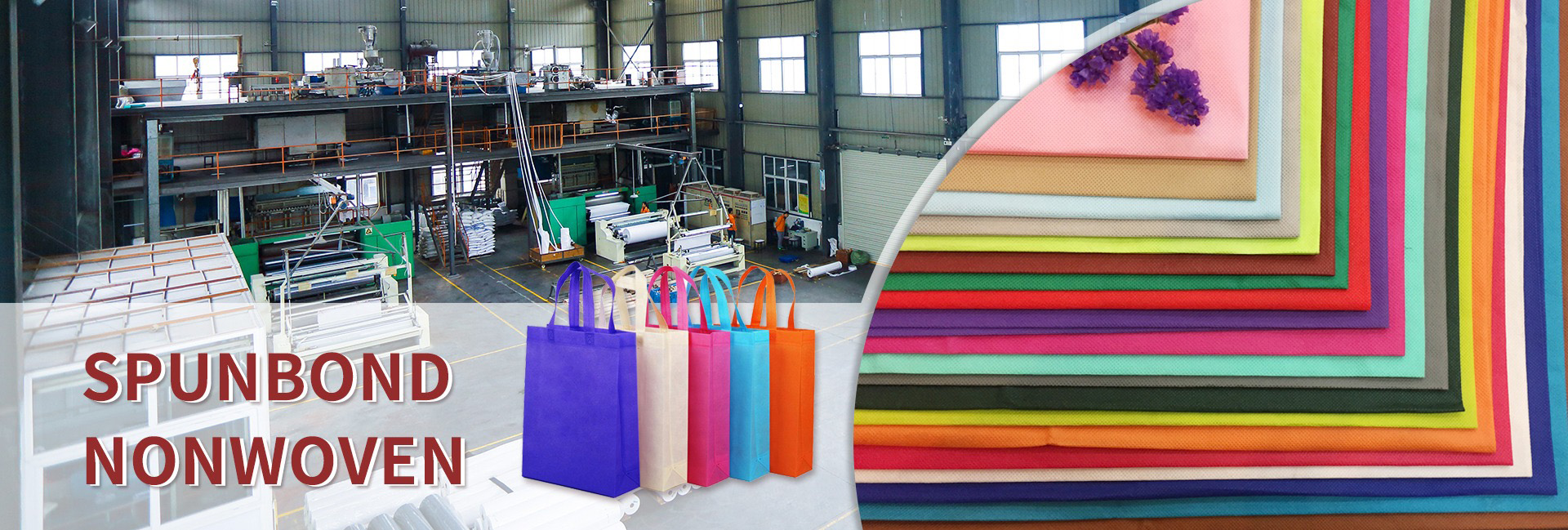
Dongguan Liansheng Non woven Technology Co., Ltd. was established in May 2020. It is a large-scale non-woven fabric production enterprise integrating research and development, production, and sales. It can produce various colors of PP spunbond non-woven fabrics with a width of less than 3.2 meters from 9 grams to 300 grams.
Post time: Feb-01-2026