
I stayed at a hotel on a business trip and sat on the bed, only to find that the sheets made a loud noise – they didn’t feel like pure cotton, but rather like the kind of environmentally friendly bags that couldn’t be torn apart. Looking at the pillowcase again, there is a thin layer that still reveals the patterns underneath. Your heart skipped a beat: Isn’t this the legendary ‘disposable bed sheet’? Is it clean? Will you rub your hair all over? Will you feel suffocated?
Don’t rush to disdain for now. You may think it’s a cheap substitute, but in beauty salons, physical examination centers, hospital wards, and even an increasing number of mid to high end homestays, disposable bed sheets and pillowcases have quietly become “standard”. And the boss behind them is still our old acquaintance - PP non-woven fabric .
Today, let’s take a closer look at this “plastic cloth” that traditional home textiles love and hate. Why does it dominate the disposable home textile market? And can you rest assured before you go to sleep.
Uncovering the true face of ‘disposable bed sheets’ – who is PP non-woven fabric?
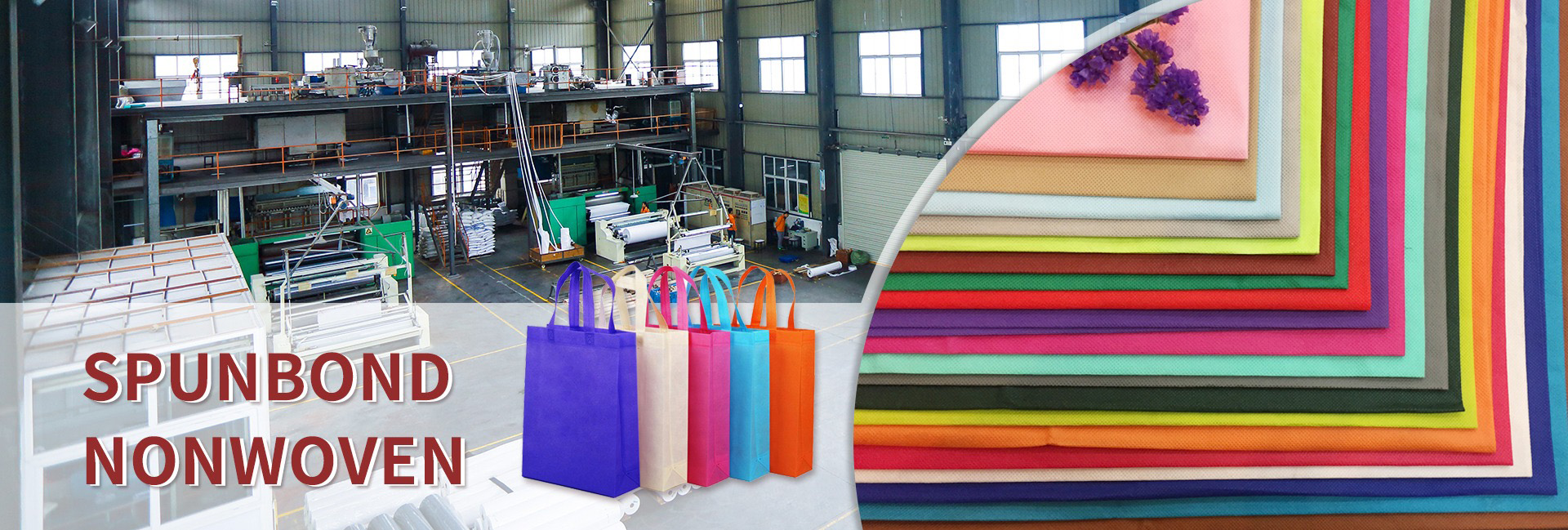
First, separate the names: PP (polypropylene)+non-woven fabric (non-woven fabric). Simply put, it is a layer of “fiber sheet” made by melting plastic particles, spraying them onto a mesh, and then reinforcing them with hot rolling. It doesn’t have warp and weft lines, it’s not woven, but it feels like fabric, it won’t tear, won’t shed fluff, and isn’t afraid of water.
The PP non-woven fabric used for disposable bed sheets and pillowcases mostly belongs to spunbond non-woven fabric or SMS (spunbond meltblown spunbond) . The weight is usually between 20-40 grams per square meter, which is not much thicker than an A4 paper, but has sufficient strength to be laid on a bed without slipping or breaking.
You must have seen that kind of thin bed sheet in “hospital blue” or “beauty salon white”, yes, it’s it.
But the key question is – it looks so simple, is it really hygienic?
Is it hygienic? From production to use, three ‘hard bars’ will check for you
1. Production process: sterile workshop+non fluorescent agent
Many people are concerned that disposable bed sheets are made of “black hearted cotton” recycled material. Don’t be afraid, legitimate non-woven fabric manufacturers produce disposable bedding using original PP material , not recycled material. The production workshop requires cleanliness, even reaching a purification standard of 100000 levels (ten thousand times cleaner than many kitchens). The most crucial thing is, without adding fluorescent whitening agents – if you shine it with a UV lamp, it will not emit blue light. And some cotton bed sheets that are repeatedly cleaned may secretly add fluorescent agents in order to “appear white”.
PP itself has stable chemical properties, does not irritate the skin, and is not prone to bacterial growth. Microbial testing is also conducted before leaving the factory, and the total number of bacterial colonies is controlled at an extremely low level.
2. Usage link: One person one change, eliminate cross infection
This is the biggest killing tactic for disposable bed sheets. How is traditional linen washed in hotels and hospitals? Recycling, mixing, bleaching, ironing… you never know if the previous customer had skin disease or if the washing factory cut corners. It has been exposed by the media that some of the bed sheets in express hotels exceed the standard of Escherichia coli due to incomplete washing and mixed contamination.
And disposable bed sheets have no second use . The one you lay on had not been touched by anyone before it was removed from the packaging. Disposable after use, there is no residue from the previous butt. For places like beauty salons and massage parlors that frequently change people, disposable bed sheets are equivalent to completely killing the four words “cross infection” in the cradle.
3. Comfort: Breathable and not stuffy, can play better than you think
Someone pouted: Can plastic sheeting be comfortable? So you haven’t seen the improved PP non woven fabric. The current spunbond non-woven fabric can achieve a breathability rate of over 1500mm/s through dot pattern and hydrophilic finishing , and water vapor can freely pass through. After lying for half an hour, the back will not get wet. Although it doesn’t feel as sticky as pure cotton, it doesn’t prick people and is considered to be of a ‘useless’ level.
What you should really dislike is not PP non-woven fabric, but those low-quality products with too low weight (less than 18 grams), thin and transparent, wrinkled into a ball when turned over. Choose the right specifications and experience no less than disposable pure cotton.
Why “rule” household textile consumables? Price, performance, and convenience are three in one
How big is the market for disposable bed sheets and pillowcases? You can search casually: there are countless stores with monthly sales of over 100000 yuan. Hospitals, nursing homes, beauty salons, hotels, postpartum centers, and even spare bedding for renters are all in use. PP non-woven fabric can monopolize this market by relying on three unique skills.
1. Cheap enough to ‘use once without feeling heartbroken’
A traditional pure cotton bed sheet, no matter how much it costs, would it cost fifty or sixty yuan? Washing once costs one or two yuan for water, electricity, and laundry detergent, and washing dozens of times can make it look old and pilly. And PP non-woven disposable bed sheets cost only a few cents to two or three yuan per piece. The beauty salon changes dozens of customers a day, and the cost of washing with pure cotton cloth can eat up the profit. Use it once, throw it away after use, save labor, water and electricity, and inventory. Everyone can calculate this account.
2. Lightweight enough to move even the delivery guys
PP non-woven fabric has a density of 0.91g/cm ³ and is lighter than water. A box of 200 sheets, easily carried by one person. The storage and transportation costs are extremely low. And it is not afraid of moisture, mold, or insect infestations, and can still be used in the warehouse for a year. Pure cotton linen is most afraid of the rainy season, and a slight dampness will give it a sour taste.
3. Scene restraint: waterproof with SMS, soft with water spikes
PP non-woven fabric has extremely strong plasticity. Do hospital operating beds need to prevent blood infiltration? Apply SMS non-woven fabric with a melt blown layer in the middle to block the liquid. Does a baby touch center need softness? Using water jet non-woven fabric, it feels like silk to the touch. Do beauty salons need to be waterproof and absorbent on one side? Perform composite processing. A piece of plastic, playing eighteen martial arts skills. Replace with pure cotton, waterproof? you must be dreaming.
4、 Don’t be fooled by the gimmick of “pure cotton”, choose disposable bed sheets and see three points
Of course, the quality of disposable bed sheets on the market varies greatly. To buy something truly hygienic and comfortable, remember three words:
At first glance, the weight is . Don’t buy anything less than 20 grams per square meter, it’s too thin and can be torn apart with just a pull, leaving the bottom exposed. Recommended for household use is 25-30 grams, and for medical use it is 30-40 grams. Take a second look at the material . Choose SMS or high-quality spunbond non-woven fabric, do not buy inferior hot-rolled fabrics that become fuzzy when rubbed. Check if there are any “three antibodies” or “hydrophilic” labels . Choose anti blood and anti alcohol treatments for scenarios that require waterproofing, such as pet care and menstrual use; Pursuing breathability and dryness, choose hydrophilic treatment.
As for those who claim to be “disposable pure cotton bed sheets”, you have to shine – are pure cotton disposable? The cost is outrageously high, most likely a blend of viscose fibers or non-woven fabrics, and has nothing to do with “pure cotton”. Don’t spend too much money on gimmicks.
Write at the end
Are disposable bed sheets and pillowcases hygienic? The answer is: As long as you buy legitimate products, they are much cleaner than the vast majority of shared linens . It is not cheap plastic waste, but a smart choice for modern hygiene management systems. Hospitals use it for infection prevention, beauty salons use it for safety, and you use it for convenience when wandering outside.
Of course, it is not completely without environmental burdens. Fortunately, PP non-woven fabric belongs to plastic grade 5 and can be recycled. Some brands have started to launch biodegradable PP non-woven fabrics or plant-based non-woven fabrics, and the trend is getting better.
Don’t frown when you see that layer of “noisy sheets” next time you stay in a hotel. That is countless PP fibers that you have overlooked, silently building a hygiene defense line for you. Would you be willing to try disposable bed sheets? Or have you had any truly fragrant experiences? Chat in the comment section.
Dongguan Liansheng Non woven Technology Co., Ltd. was established in May 2020. It is a large-scale non-woven fabric production enterprise integrating research and development, production, and sales. It can produce various colors of PP spunbond non-woven fabrics with a width of less than 3.2 meters from 9 grams to 300 grams.
Post time: May-31-2026