
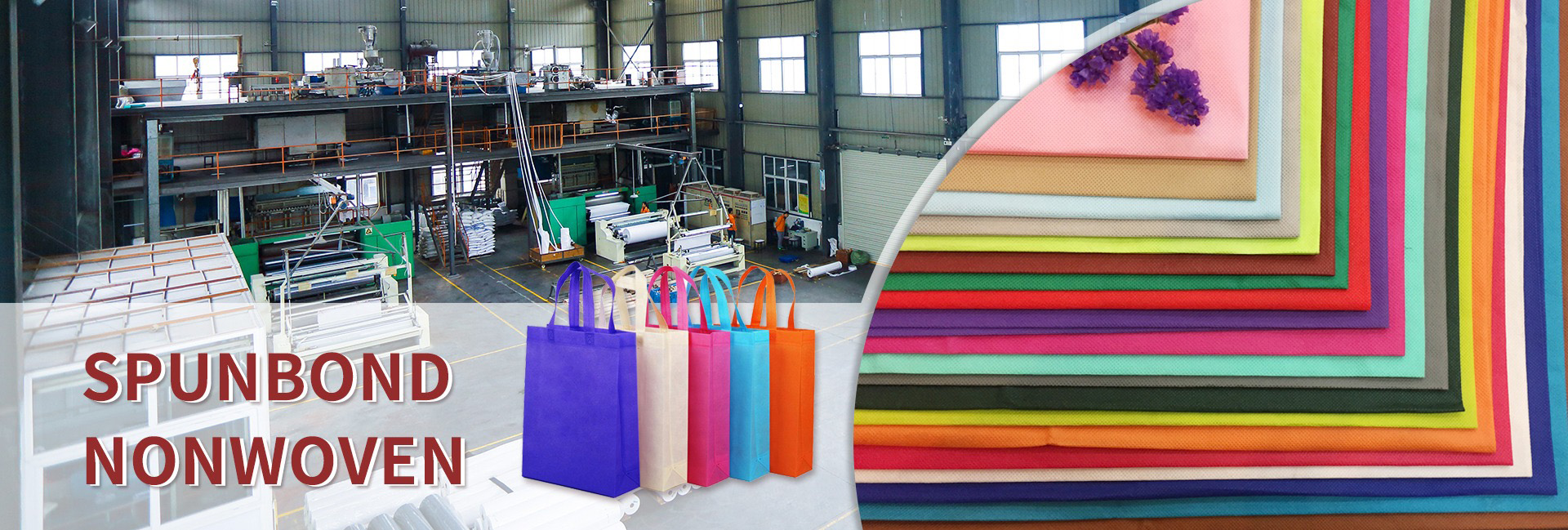
In the non-woven fabric industry, polyester spunbond non-woven fabric has become a core material in packaging, medical, building materials and other fields due to its characteristics of “high strength, wide adaptability, and easy processing”. But its application scenarios have significant differences in cost sensitivity and performance requirements – medical protection needs to balance barrier properties and compliance costs, the packaging field pursues “low cost+basic strength”, and the building materials field values “weather resistance and long-term cost-effectiveness”. The balance game between cost and performance is essentially a precise match between raw material selection, process optimization, and application requirements, which directly determines the market competitiveness of enterprises.
Cost structure breakdown: the “cost code” for polyester spunbond nonwoven fabric
The cost composition of polyester spunbond nonwoven fabric has the characteristics of “raw material dominance, process empowerment, and cost reduction on a large scale”. The cost proportion and control space of each link are significantly different, which is the core lever for balancing performance.
(1) Raw materials: “ballast stones” that account for over 60% of the cost
The core raw material of polyester spunbond non-woven fabric is polyester chips (PET chips), whose price is directly related to the crude oil market (polyester chips are refined from PX, and crude oil accounts for more than 70% of PX costs), accounting for 60% -75% of the total cost. Taking 2024 market data as an example, the average price of native PET slices is about 8200 yuan/ton, while the average price of recycled PET slices (processed from recycled bottles) is only 5800 yuan/ton, with a price difference of 2400 yuan/ton, directly affecting material costs and performance positioning:
Native slicing: high purity (impurity content<0.1%), stable melt flowability, non-woven fabric with a fracture strength of 25N/5cm or more, excellent aging resistance, suitable for medical, high-end packaging and other scenarios, but with high cost;
Regenerated slicing: The cost is 30% -40% lower than raw materials, but the impurity content is higher (0.5% -1%), which can easily cause spinning breakage and a 15% -20% decrease in finished product strength. It is only suitable for fields with lower performance requirements such as ordinary packaging and geotextiles.
In addition, functional additives such as anti UV agents, antibacterial agents, and flame retardants will increase costs – adding 0.5% anti UV agents can improve the weather resistance of materials to over 5000 hours, but the cost per ton increases by 800-1200 yuan, and the cost-effectiveness needs to be judged based on the application scenario.
(2) Production process: a double-edged sword of energy consumption and efficiency
In the “melt spinning web forming reinforcement” process of spunbond technology, energy consumption and equipment depreciation account for 15% -25% of the total cost, and directly affect the consistency of product performance:
Spinning process: The screw extruder needs to maintain a melting temperature of 260-280 ℃, and the power consumption per ton of product is about 800-1000 kWh (industrial electricity price is calculated at 0.6 yuan/kWh, with a cost of about 480-600 yuan/ton). If the spinning speed is increased from 800m/min to 1200m/min, the production capacity can be increased by 50%, and the unit energy consumption can be reduced to 600-700 degrees/ton. However, higher precision spinning components need to be invested (unit price increases by 20% -30%), and costs need to be amortized through large-scale production;
Reinforcement process: Hot bonding (hot rolling mill) is more environmentally friendly than chemical bonding, and the finished product strength is 10% -15% higher. However, the temperature control accuracy of the hot rolling mill rollers is high (± 2 ℃), and the equipment depreciation cost is 25% higher than that of chemical bonding equipment, making it suitable for high-end medical and hygiene products; Although chemical bonding has low cost, residual adhesive may affect breathability (reducing by 10% -15%), and is only suitable for industrial filtration and other scenarios.
(3) Scale effect: the “pressure reducing valve” of unit cost
There are obvious scale barriers in the production line of polyester spunbond non-woven fabric – when the annual production capacity of a single production line is increased from 5000 tons to 20000 tons, the depreciation cost of unit equipment decreases by 40% -50% (from 1200 yuan/ton to 600 yuan/ton), and the purchase price of raw materials also decreases by 5% -8% due to batch orders (the original cutting cost decreases from 8200 yuan/ton to 7600 yuan/ton).
Large scale production can also reduce “performance debugging costs” – in small-scale production, in order to meet specific strength requirements, spinning parameters need to be repeatedly adjusted, resulting in a scrap rate of up to 8% -10%; And large-scale production can control the scrap rate within 3% through stable processes, further reducing unit costs.
The ‘game relationship’ between performance indicators and costs: the balance logic of key parameters
The core properties of polyester spunbond nonwoven fabric (strength, breathability, weather resistance, barrier properties) are positively correlated with cost, but the marginal benefits decrease. It is necessary to set a “performance threshold” according to the application scenario to avoid excessive investment.
(1) Fracture strength: cost difference from ‘sufficient’ to ‘excess’
The fracture strength is the core indicator for measuring the load-bearing capacity of non-woven fabrics, and its improvement relies on “raw material upgrading+process optimization”, but the cost increase gradually expands with the increase of strength:
Basic strength (15-20N/5cm): using 50% native and 50% recycled slices, ordinary spinning process, cost about 9000 yuan/ton, can meet scenarios such as shopping bags, package liners, etc. (load-bearing requirements<5kg);
Medium to high strength (25-30N/5cm): fully native slicing+high-speed spinning (1000m/min), cost about 11000 yuan/ton, suitable for geotextiles and automotive interiors (requiring 10-15kg tensile strength);
Ultra high strength (35N/5cm or more): high viscosity native slices (intrinsic viscosity 0.9-1.0dL/g)+two-component spinning, cost increases to over 14000 yuan/ton, only used for special protection (such as flood prevention sandbags, heavy packaging). If blindly selected in ordinary scenarios, it will cause more than 30% of cost waste. Taking a certain e-commerce packaging enterprise as an example: reducing the strength of non-woven fabric from 25N/5cm to 20N/5cm (still meeting the requirement of package load-bearing ≤ 8kg), increasing the proportion of recycled slices in raw materials from 30% to 50%, reducing the cost by 1200 yuan per ton, and saving 12 million yuan annually when purchasing 10000 tons.
(2) Breathability and Barrier: Cost Balance of Reverse Indicators
Breathability (air permeability per unit time) and barrier properties (ability to block particles and liquids) are a pair of opposite indicators that need to be selected according to the needs of the scene to avoid falling into the cost trap of “having both”:
High breathability scenarios (such as mask lining and clothing lining): Fine denier fibers (1.2-1.5dtex)+low hot rolling temperature (120-130 ℃) are required, and the finished product has a breathability of 800-1200L/m ² · s, but poor barrier properties (particle filtration efficiency PFE<30%), with a cost of about 10500 yuan/ton;
High barrier scenarios (such as medical protective clothing outer layer, food packaging): coarse denier fibers (2.5-3.0 dtex)+high hot rolling temperature (150-160 ℃) need to be used, and a melt blown layer (cost increase of 2000 yuan/ton) needs to be added. The barrier performance is improved to PFE>95%, but the air permeability is reduced to below 300L/m ² · s, with a total cost of about 13500 yuan/ton.
If a medical enterprise mistakenly uses high breathable non-woven fabric for the outer layer of protective clothing, although the cost is reduced by 20%, rework is required due to inadequate barrier properties, resulting in a loss of 5000 yuan per ton, highlighting the importance of “precise matching”.
(3) Weather resistance: a balance between short-term costs and long-term lifespan
In the scene of outdoor building materials (such as waterproof coiled material base, sunscreen), weather resistance (UV resistance, anti-aging ability) directly affects the service life of materials, so it is necessary to balance “auxiliary cost” and “replacement frequency”:
Ordinary weather resistance (service life of 1-2 years): without adding anti UV agents, the cost is about 8800 yuan/ton, but it needs to be replaced every year, with an average annual usage cost of 8800 yuan/ton;
Medium weather resistance (service life 3-5 years): Adding 0.3% UV resistant agent (such as UV-531) increases the cost to 9600 yuan/ton, with an average annual usage cost of 1920-3200 yuan/ton;
High weather resistance (service life 8-10 years): Add 0.8% UV resistant agent+0.5% antioxidant, cost 11000 yuan/ton, average annual usage cost 1100-1375 yuan/ton. Taking the roof waterproofing membrane base as an example: using medium weather resistant non-woven fabric, although the initial cost is 9% higher than the ordinary version, the service life is extended by three times, and the total cost is reduced by 60% within a 10-year cycle, with significant long-term economic benefits.
Differentiated Balance Strategy for Application Scenarios: Optimizing Cost Performance from the Demand Side
There is a huge difference in the “cost sensitivity” and “performance bottom line” of polyester spunbond nonwoven fabrics in different fields, and a targeted balance plan needs to be developed to achieve “cost optimization+performance standards”.
(1) Medical protection field: performance priority, controllable cost
Medical scenarios (protective clothing, surgical drapes) have mandatory requirements for barrier and sterility (in accordance with GB 19082-2009 standards), and performance cannot be compromised, but costs can be controlled through “process optimization”:
Raw material selection: using 90% native chips+10% low melting point polyester chips (to improve thermal bonding strength), avoiding the use of recycled materials (which may introduce impurities), and controlling the raw material cost within 7800 yuan/ton;
Process optimization: Adopting the “spunbond+meltblown” composite process (instead of pure spunbond), the meltblown layer only accounts for 15% (reducing barrier costs), the finished product PFE is greater than 95%, and the unit energy consumption is reduced by 10%;
Large scale procurement: Collaborate with multiple medical enterprises to purchase PET slices in a centralized manner. Bulk orders reduce raw material prices by 5%, resulting in an annual procurement volume of 5000 tons and a total cost savings of 2 million yuan.
(2) Packaging field: cost driven, performance guaranteed
Ordinary packaging (shopping bags, express bags) has low performance requirements (fracture strength ≥ 15N/5cm, no requirement for breathability), and the core is cost control, which can be achieved through “recycled material substitution+simplified process”:
Maximizing recycled materials: using 70% recycled PET slices (with strict screening and impurity content<0.8%)+30% native slices, the raw material cost is reduced to 6500 yuan/ton, which is 20% lower than the original raw material;
Process simplification: Single screw extruder (30% lower cost than twin-screw) is used, and the spinning speed is controlled at 700m/min (reducing energy consumption). Although the finished product strength is reduced to 18N/5cm, it meets the requirement of packaging load-bearing ≤ 5kg;
Thin design: Reduce the weight of non-woven fabric from 50g/㎡ to 40g/㎡ (still in compliance with GB/T 24252-2023 standard), reduce unit area cost by 20%, and reduce raw material consumption.
(3) Building materials field: Long term cost-effectiveness priority
Outdoor building materials (waterproofing membranes, geotextiles) need to balance weather resistance and strength, with a focus on “full lifecycle cost” rather than simply reducing initial costs:
Accurate addition of weather resistant additives: Adjust the amount of anti UV agents added according to the usage area (0.5% in northern regions and 0.8% in high-temperature southern regions) to avoid excessive addition (cost waste of 20%);
Structural optimization: Adopting a “spunbond+needle punched” composite structure (with a 30% increase in strength compared to pure spunbond), but through the linkage of needle punching machine and spinning machine production, the unit energy consumption is reduced by 15%;
Recycling: Choose a recyclable pure polyester formula, which can be reprocessed into recycled chips after being scrapped. The cost of recycling per ton is 40% lower than that of new materials, reducing the dependence on raw materials in the long run.
The ‘future direction’ of economic optimization: technological innovation breaks the bottleneck of balance
With the intensification of industry competition, the space for relying solely on “raw material substitution” or “scale cost reduction” is gradually narrowing, and technological innovation has become the key to breaking the “cost performance” bottleneck.
(1) Biobased polyester chips: a new balance between environmental protection and cost
Traditional PET chips rely on fossil resources, while bio based polyester chips (made from corn and sugarcane as raw materials) can reduce carbon emissions by 30%. As production capacity expands, the cost gap gradually narrows – the average price of bio based chips in 2024 is 11000 yuan/ton, which is 34% higher than that of native chips. However, it is expected that when production capacity reaches 1 million tons in 2028, the average price will drop to 9000 yuan/ton, only 10% higher. The weather resistance of the non-woven fabric made from it is 20% higher than traditional styles, suitable for high-end environmentally friendly packaging and outdoor building materials scenes, achieving “environmental performance improvement+long-term cost control”.
(2) Intelligent spinning system: dual improvement of accuracy and efficiency
By using AI to regulate spinning temperature and speed (with errors<± 1 ℃, ± 5m/min), the fluctuation range of finished product strength can be reduced from ± 15% to ± 5%, the scrap rate can be reduced from 5% to 2%, and the unit cost can be reduced by 8%. After a certain enterprise introduced an intelligent system, the annual net profit of a 20000 ton/year production line increased by 3.2 million yuan. At the same time, performance parameters can be adjusted according to real-time order requirements (such as producing high-strength geotextiles in the morning and high breathable packaging fabrics in the afternoon), flexibly responding to multi scenario demands and avoiding capacity waste.
(3) Circular Economy Model: Whole Life Cycle Cost Optimization
Establish a closed-loop system of “production use recycling reproduction”, crush scrapped polyester spunbond non-woven fabrics (such as old shopping bags and expired protective clothing) and reprocess them into recycled slices, with a recycling cost of only 4500 yuan/ton, which is 22% lower than purchased recycled materials. At the same time, through modification technology (adding compatibilizers), the strength of non-woven fabrics made from recycled slices is only 8% lower than that of raw materials (15% -20% lower than traditional recycled materials), which can cover more application scenarios and further reduce dependence on new materials.
Conclusion: The essence of balance is “precise matching of needs”
The “cost performance” balance of polyester spunbond nonwoven fabric is not simply about “reducing costs” or “improving performance”, but based on the application scenario of “demand decomposition+resource optimization” – the medical scenario needs to hold the “performance bottom line” and control costs through process optimization; The packaging scenario can release the “cost ceiling” and meet the demand with basic performance; The building materials scene needs to focus on “long-term cost-effectiveness” and use weather resistance to reduce the entire lifecycle cost.
In the future, with the advancement of technological innovation and circular economy, the balance boundary between “cost performance” will continue to widen, but the core logic remains unchanged: demand-oriented, converting every cost into “effective performance”, rather than blindly pursuing “higher performance” or “lower cost”. Only by accurately grasping this logic can enterprises achieve “cost-effectiveness breakthrough” in fierce market competition.
Dongguan Liansheng Non woven Technology Co., Ltd. was established in May 2020. It is a large-scale non-woven fabric production enterprise integrating research and development, production, and sales. It can produce various colors of PP spunbond non-woven fabrics with a width of less than 3.2 meters from 9 grams to 300 grams.
Post time: Sep-27-2025