
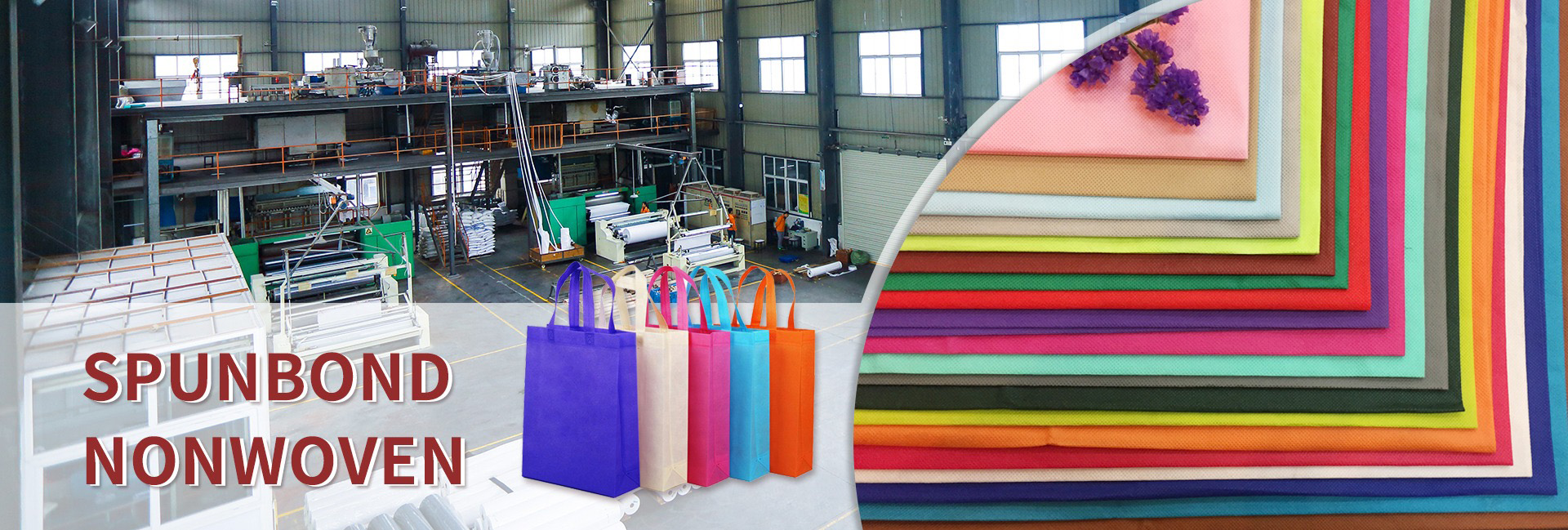
From disposable face towels and masks for daily use, to surgical gowns in the medical field and battery separators for new energy vehicles, non-woven fabrics have already penetrated into every aspect of life and industry. As a rising star in the textile industry, China’s non-woven fabric production has consistently ranked first in the world for many years. In 2024, the production reached 8.561 million tons, with exports of 1.516 million tons. The industry is accelerating its transformation from “scale expansion” to “quality and efficiency improvement”. With green and low-carbon, intelligent manufacturing, and cross-border integration becoming the mainstream of industrial development, the future trend and core technological innovation of non-woven fabrics are reshaping the new ecology of this trillion level industry.
Four Major Directions Leading the High Quality Development of the Nonwoven Industry
Driven by multiple factors such as policy guidance, technological innovation, and market demand, the nonwoven fabric industry is facing unprecedented development opportunities, presenting four clear trends of greenization, high-end, intelligence, and cross-border development, promoting the industry to achieve a qualitative leap.
Green and low-carbon have become the main theme of industrial development. The concept of global sustainable development has deeply penetrated people’s hearts, and under the promotion of the “dual carbon” goal, the non-woven fabric industry is completely getting rid of the label of “high energy consumption and high pollution”. From the substitution of bio based fibers in raw materials, to energy conservation and emission reduction in the production process, to the biodegradability and recyclability of products, green transformation runs through the entire industry chain. As of July 2025, 60 certification units of 35 companies have passed the “biodegradable” certification, and 9 certification units of 8 companies have passed the “washable” certification. Degradable wiping cloths and environmentally friendly hygiene products launched by companies such as DeYou and Steady Medical have become new hotspots in the market, meeting environmental protection needs and solving the industry pain point of traditional non-woven fabrics being difficult to degrade.
Upgrade to high-end and solve the dilemma of “low-end internal competition”. In the past, China’s non-woven fabric industry was mostly concentrated in the mid to low end sector, with low product added value. However, with the upgrading of market demand, high-end has become the key for enterprises to break through. High end dressings in the medical and health field, high-performance functional components for new energy vehicles, and efficient filtering materials in the environmental protection field have become the core tracks for high-end development. It is expected that in the next five years, the proportion of high-end non-woven fabric products will increase from the current 30% to over 50%, with a significant increase in product added value, promoting the industry’s transformation from “Made in China” to “Intelligent Manufacturing in China”.
Intelligent production reconstructs industrial efficiency advantages. Industrial Internet, big data, artificial intelligence and other technologies are deeply integrated with nonwoven production, promoting the transformation of production mode from “traditional manual” to “intelligent manufacturing”. At present, the digital penetration rate of the industry has reached 42.7%, and it is expected to increase to over 60% by 2025, with the penetration rate of intelligent manufacturing reaching 50%. The intelligent production line can achieve full process automation control of raw material ratio, production process, and quality inspection, which not only greatly improves production efficiency, but also reduces product defect rate, making production more accurate and efficient, helping enterprises reduce costs and enhance core competitiveness.
Cross border integration expands application boundaries. Non woven fabrics, with their advantages of flexible processing and customizable performance, are breaking down industry barriers and deeply penetrating into multiple fields such as healthcare, new energy, environmental protection, and agriculture. In the medical field, combined with smart wearables, products such as smart diapers and health monitoring patches have been developed; In the field of new energy vehicles, it is widely used in interior components, battery separators, sound insulation layers, and other parts to assist in the lightweighting and safety of automobiles; In the field of environmental protection, it has become a core material for air filtration and wastewater treatment; In the agricultural field, it is used as a seedling base cloth to improve crop survival rate, and cross-border integration continues to expand the market space of non-woven fabrics.
Core technology breakthrough: Three major fields support the backbone of industrial innovation
The implementation of trends cannot be separated from the support of core technologies. In recent years, China’s non-woven fabric industry has broken through foreign technological monopolies through independent innovation, achieving significant breakthroughs in process upgrading, material innovation, and equipment research and development, injecting strong impetus into the high-quality development of the industry and promoting China’s transformation from a major non-woven fabric production country to a technological powerhouse.
Traditional craftsmanship is iteratively upgraded to build a solid industrial foundation. Traditional processes such as spunbond, meltblown, and hydrojet are continuously optimized, resulting in improved performance and efficiency. As the mainstream process, spunbond technology accounts for 35.2% of the total national output. The high-speed spinning equipment independently developed by domestic enterprises has increased its speed to 4000-6000 revolutions per minute, with an efficiency increase of more than 30% compared to traditional equipment; The melt blown technology has achieved a leapfrog development, with a production capacity of 1.2 million tons by 2024, a year-on-year increase of 45.8%. The filtration efficiency of high-end melt blown materials has been improved to over 99.7%, and they are widely used in fields such as medical protection and air purification; The water jet technology has made breakthroughs through high-pressure pumping station technology, with a working pressure of 200-400 bar and an increased water resource reuse rate of over 85%, which is both environmentally friendly and reduces production costs.
Innovation in new materials to break through performance bottlenecks. Materials are the core of improving the performance of non-woven fabrics, and breakthroughs in new fiber materials and composite technology have made the functions of non-woven fabrics more diverse. Electrospinning technology has achieved large-scale continuous production and developed equipment with independent intellectual property rights. It has been maturely applied in the fields of filtration, waterproof and breathable membranes, and will be expanded to the medical and energy fields in the future; Flash evaporation nonwoven technology breaks foreign monopolies and is applied in industrial protection, medical packaging and other fields; The research and application of bio based fibers and biodegradable materials have solved the problem of traditional synthetic fibers being difficult to degrade. The improvement of Finland’s Fiberpartner’s PolyPlant fibers has also solved the problem of poor processing performance of traditional bio based fibers.
Intelligent device research and development, empowering efficient production. The rise of domestically produced smart devices has broken the monopoly of foreign devices on the high-end market, promoting the dual improvement of production efficiency and product quality. The KM hydraulic entanglement filtration system from Kansan, South Korea, can save 200 kilowatt hours of energy and 20 cubic meters of water resources per hour; Teknoweb’s OCEAN system in Italy reduces the use of absorbent care pad raw materials by 30% through a coreless molding process; The intelligent production line developed by domestic enterprises has achieved real-time monitoring and precise control of the entire production process, making non-woven fabric production more intelligent and efficient.
Conclusion
In the trillion dollar race, innovation leads to long-term success. The development of the non-woven fabric industry is not only related to people’s well-being, but also supports high-end manufacturing and green development. In the future, with the deepening practice of green and low-carbon concepts, continuous breakthroughs in core technologies, and continuous cross-border integration, China’s non-woven fabric industry will continue to unleash its development potential. Zhejiang JinSanfa, Junfu Nonwovens and other enterprises will continue to lead the industry’s development, promote the “Made in China” non-woven fabric business card to the world, and achieve higher quality development on the trillion dollar track.
Dongguan Liansheng Non woven Technology Co., Ltd. was established in May 2020. It is a large-scale non-woven fabric production enterprise integrating research and development, production, and sales. It can produce various colors of PP spunbond non-woven fabrics with a width of less than 3.2 meters from 9 grams to 300 grams.
Post time: Apr-18-2026