
Aramid, flame-retardant adhesive, and pre oxidized silk are the three most widely used core fiber materials in the field of fire-resistant non-woven fabrics, and their performance differences directly determine the applicable scenarios, protection levels, and cost positioning of fire-resistant non-woven fabrics. All three have basic flame retardant properties, but they have their own advantages and disadvantages in terms of high temperature resistance limit, mechanical properties, processing adaptability, environmental properties, and cost.
The following provides a detailed comparison from multiple dimensions to clarify the application boundaries and selection logic of different fibers in fire-resistant non-woven fabrics.
Comparison of Core Performance Dimensions
Characteristics of raw materials
Aramid (mainly para aramid), synthetic aromatic polyamide fiber, stable molecular structure, belongs to permanent flame retardant fiber, halogen-free, no toxic gas release.
Flame retardant adhesive, made from natural cellulose fibers (adhesive) modified with flame retardancy, retains the moisture absorption and breathability characteristics of cellulose fibers, and the flame retardancy is endowed by modification.
Pre oxidation fiber (polyacrylonitrile pre oxidation fiber), made by pre oxidation treatment of polyacrylonitrile fiber, belongs to the conversion type flame retardant fiber, with a molecular structure containing trapezoidal conjugated structure and permanent flame retardancy.
High temperature resistance limit
Aramid can be used for a long time at a temperature of 200-260 ℃, with an instantaneous high temperature resistance of over 500 ℃. It does not melt or ignite, and there is no melting or dripping.
Flame retardant adhesive has a long-term use temperature of ≤ 120 ℃ and an ultimate high temperature resistance of about 250 ℃. When exposed to high temperatures, it will carbonize without melting or dripping, but its strength will rapidly decrease after carbonization.
Pre oxidized fiber (polyacrylonitrile pre oxidized fiber) can be used for a long time at a temperature of 200-280 ℃, with an instantaneous high temperature resistance of over 1000 ℃. It forms a dense carbonized layer at high temperatures and is non melting and non flammable.
Flame retardant performance grade
Aramid generally meets the GB 8624-2017 A-level non combustible standard, with low smoke density and no toxic gas release during combustion.
Flame retardant adhesive meets the GB 8624-2017 B1 level flame retardant standard, with low smoke and toxicity during combustion, and meets environmental protection requirements.
Pre oxidized fiber (polyacrylonitrile pre oxidized fiber) meets the Class A non combustible standard of GB 8624-2017, with almost no smoke or toxic gas release during combustion, and excellent environmental protection.
Mechanical properties
Aramid has extremely high strength (fracture strength ≥ 20cN/dtex), excellent elastic modulus, strong wear and tear resistance, and stable structure when made into non-woven fabric.
Flame retardant adhesive has moderate strength (fracture strength 2-3cN/dtex), with wet strength lower than dry strength, good flexibility, soft hand feel, and is close to natural fibers.
Pre oxidized fibers (polyacrylonitrile pre oxidized fibers) have moderate strength (fracture strength 3-5 cN/dtex), slightly higher brittleness, and average flexural resistance, but can still maintain a certain degree of structural integrity after carbonization.
Processing adaptability
Aramid can be adapted to various non-woven fabric forming processes such as needle punching, hydroneedling, and hot air, but the fiber has a high melting point and the hot rolling temperature needs to be precisely controlled; Can be blended with other fibers to enhance performance.
Flame retardant adhesive has excellent adaptability and is compatible with all non-woven molding processes. Due to its soft hand feel, it is easy to blend with natural fibers such as cotton and linen, resulting in low processing costs.
Pre oxidized fibers (polyacrylonitrile pre oxidized fibers) are suitable for needle punching and dry networking processes, with good fiber fluffiness and excellent thermal insulation after networking; However, due to its high brittleness, it is necessary to control the tension during the processing.
Environmental Protection and Safety
The production process of aramid has certain environmental pollution and is difficult to recycle; But there is no toxic gas during combustion, and the use process is safe.
The raw material for flame-retardant adhesive is natural cellulose, which is biodegradable and environmentally friendly; If halogen-free flame retardants are used for flame retardant modification, the safety is higher and it meets the requirements of green building materials.
The production process of pre oxidized polyacrylonitrile fibers is relatively environmentally friendly, with no toxic gas release during combustion and no secondary pollution from carbonization products. Its environmental friendliness is superior to aramid fibers.
Cost positioning
Aramid has a high cost (about 80000 to 150000 yuan/ton) and belongs to high-end fire-resistant fibers. Its price fluctuations are greatly affected by the crude oil market.
Flame retardant adhesive has low cost (about 20000 to 40000 yuan/ton) and extremely high cost-effectiveness, making it the mainstream choice for mid to low end fire prevention scenarios.
The cost of pre oxidized polyacrylonitrile fiber (about 40000 to 80000 yuan/ton) is between aramid and flame-retardant adhesive, with outstanding cost-effectiveness.
Analysis of Differences in Application Scenarios
1. Aramid: the “must-have choice” for high-end ultimate protection scenarios
Aramid, with its extremely high strength and high temperature resistance, has become the core material for high-end fire-resistant non-woven fabrics, mainly used in scenarios with strict requirements for protection levels. For example, the outer protective cloth of firefighting suits (which needs to withstand high temperature flames and maintain structural integrity to ensure the safety of firefighters’ actions), the fireproof non-woven fabric of aerospace interiors (which requires low smoke and high temperature resistance and meets aviation safety standards), and high-end industrial protective gloves/aprons (which need to be wear-resistant, tear resistant, and have fire resistance).
In addition, aramid non-woven fabric is widely used in the fireproof isolation layer of new energy battery packs due to its excellent mechanical properties and flame retardancy. However, due to high costs, aramid is difficult to promote on a large scale in civilian or mid to low end industrial scenarios.
2. Flame retardant adhesive: the “cost-effective choice” for mid to low end civilian and general industrial scenarios
Flame retardant adhesives dominate the mid to low end fire-resistant non-woven fabric market due to their low cost, high adaptability, and good environmental friendliness. Its application scenarios are concentrated in areas that do not require high temperature resistance, such as fire-resistant non-woven fabrics for building interiors (ceiling and wall insulation materials, which must meet B1 level flame retardant standards), civilian fire-resistant curtains/carpets, disposable fire-resistant protective equipment (such as fire-resistant masks, emergency escape blankets), and fire-resistant isolation fabrics for ordinary industrial workshops.
In addition, due to its soft touch, moisture absorption and breathability, flame-retardant adhesive can also be used to make the inner lining of fire-resistant protective clothing, enhancing wearing comfort.
3. Pre oxidized silk: the “balanced choice” for high-end insulation and fire prevention scenarios
Pre oxygen filament combines moderate cost, A-level non combustible performance, and excellent thermal insulation, making it the cost-effective choice in mid to high end fire protection scenarios, especially suitable for scenarios with outstanding thermal insulation requirements.
For example, industrial welding blankets (which need to block high-temperature sparks and provide insulation to avoid scalding operators), thermal insulation and fireproof non-woven fabrics for public facility ceilings/partitions (such as fire separation layers in high-speed railway stations and airports, which require environmental protection, low smoke toxicity, and good insulation), and insulation layers for new energy vehicle battery packs (which need to quickly form a carbonized layer at high temperatures to block heat diffusion).
In addition, pre oxygenated non-woven fabric, due to its good fluffiness, can also be used to make fire-resistant insulation blankets, which are applied in the dual needs of temporary insulation and fire prevention in construction.
Selection logic and collaborative application suggestions
In actual production, the selection of fire-resistant non-woven fabric should follow the principle of “scene matching+controllable cost”: if it is a high-end ultimate protection scene, aramid is preferred; If it is a mid to low end universal fire prevention scenario, flame retardant adhesive is preferred; If it is a scenario mainly focused on mid to high end insulation, pre oxygenation wire is the optimal solution.
Meanwhile, the three often achieve “complementary performance” through blending: for example, blending flame-retardant adhesive with aramid can improve the hand feel and protective performance of non-woven fabrics while reducing costs; Pre oxidized silk blended with flame-retardant adhesive can balance thermal insulation and flexibility, suitable for building interior scenes.
In the future, with stricter environmental regulations and technological upgrades, the cost of pre oxidized silk is expected to further decrease, and its market share may continue to increase; Flame retardant adhesives will be upgraded towards halogen-free and high flame retardant grades, consolidating their advantages in the mid to low end market; And aramid will focus on high-end segmented scenarios, improve cost-effectiveness through technological innovation, and expand its application boundaries in new energy, high-end manufacturing and other fields.
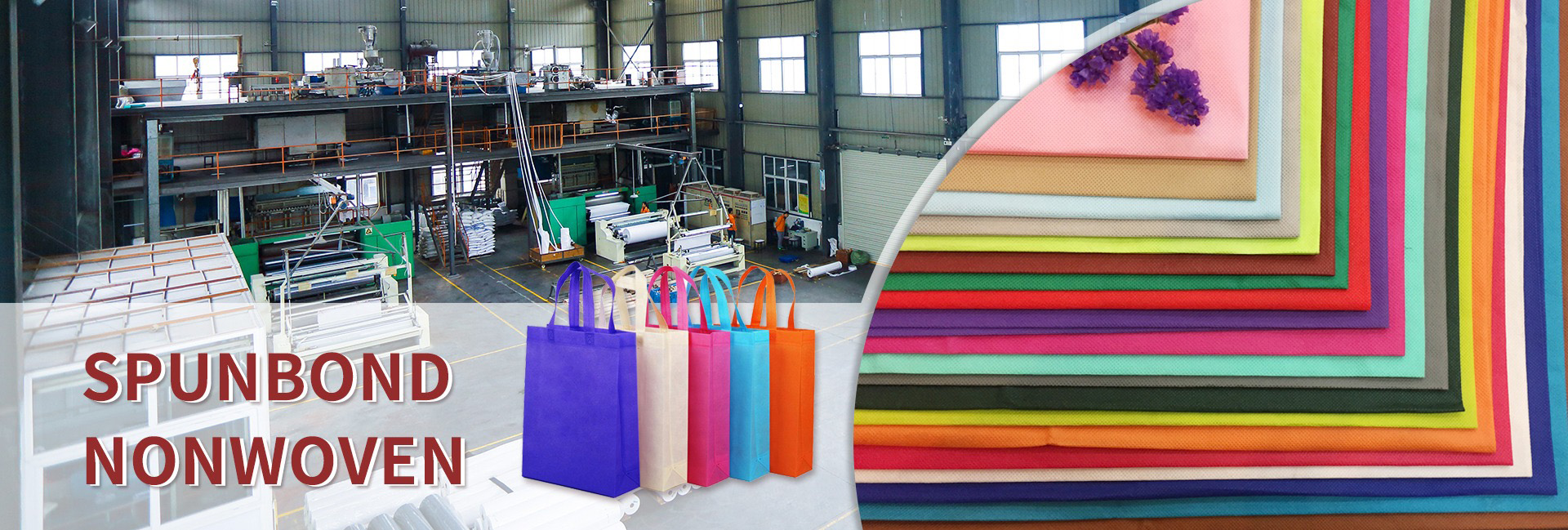
Dongguan Liansheng Non woven Technology Co., Ltd. was established in May 2020. It is a large-scale non-woven fabric production enterprise integrating research and development, production, and sales. It can produce various colors of PP spunbond non-woven fabrics with a width of less than 3.2 meters from 9 grams to 300 grams.
Post time: Dec-27-2025