
The research and development concept of “new fireproof nonwoven fabric with integrated sensors” is indeed a cutting-edge direction that integrates intelligent materials, sensor technology, and textile engineering. Below, I will systematically outline your research and development ideas, key technologies, challenges, and industrialization paths.
Core R&D Concept
The essence of this concept is to endow previously passive fire-resistant materials with the intelligence of “perception” and “warning”. Its core goal is to achieve real-time monitoring and early warning of hazardous signals such as flames, high temperatures, and structural deformation (such as tearing) through integrated sensing units, while ensuring the fire and flame retardancy of the substrate itself.
Key technical solutions and paths
The key to realizing the above concept lies in solving the two major problems of “perception” and “power supply”. There are currently three main technological paths, each with its own advantages and disadvantages:
Core principles, advantages, challenges/limitations, and representative research references of the technological path.
Self powered sensing path
By utilizing frictional nanogenerators (TENG) or thermoelectric effects, mechanical and thermal energy can be directly converted into electrical signals and used for sensing. No need for external power supply, the structure can be flexibly designed; Some technologies, such as thermoelectric, can directly respond to temperature changes. The electrical signal output is relatively weak and may be unstable; High humidity or complex mechanical interference may affect reliability. Janus fabric sensor (thermoelectric); Super intelligent fireproof yarn SIFY (frictional electric).
Active sensor integration path
Combine the prepared flexible piezoresistive, capacitive, or temperature sensitive sensors (such as those based on MXene or silver nanowires) with fire-resistant substrates through coating, packaging, and other methods. Sensing performance (sensitivity, stability) is usually better; The technology is relatively mature and easy to implement multifunctional sensing (pressure, temperature).
Usually requires external power supply (micro batteries or circuits); The interface bonding and long-term durability between sensors and substrates are challenges. Nanocomposite coated aramid (NCANF); MXene based conductive fabric composites (CFCs).
Intelligent fiber/fabric path
Starting from the fiber level, through special structural design (such as multi-layer coaxial), the fiber itself has flame retardant, conductive, and sensing functions. The highest degree of integration, good mechanical performance and durability; Avoiding the contradiction between “patch type” sensors and clothing flexibility. The fiber preparation process is complex and costly; It is currently difficult to produce on a large scale. Super intelligent fire-resistant yarn (SIFY) with a three-layer coaxial structure.
Collaboration and balance of key performance
The biggest challenge in R&D is how to make multiple performances collaborate instead of weakening each other:
High temperature resistance and sensing stability: Sensors and conductive materials must be able to withstand high temperatures in the fire scene. We can learn from PBO fibers, introduce flame retardants such as ammonium polyphosphate into coatings, and use conductive materials with good thermal stability (such as MXene and specific conductive polymers).
Compatibility between flame retardancy and conductivity: Most efficient flame retardants are insulating. The solution includes building a “core-shell” or “sandwich” structure, protecting the conductive layer in the middle, or using a substrate that has both flame retardant and certain conductive properties.
Mechanical flexibility and structural stability: Smart non-woven fabrics need to withstand bending, stretching, and wear during use. The key is to optimize the interface adhesion between sensing materials and fibers, such as enhancing adhesion through chemical bonding or physical entanglement.
Signal processing and system integration: The collected weak signals need to be processed locally and converted into warnings. A feasible architecture is: sensing fiber → flexible circuit/acquisition module → microprocessing unit → wireless transmission (such as low-power Bluetooth). The warning logic can be graded, such as temperature slow rise warning, instant high temperature alarm, and signal disappearance (which may indicate fabric damage) alarm.
Industrialization considerations from conception to product
Market positioning and scenarios: In the initial stage, we can focus on high-value and high safety demand fields, such as professional firefighting suits, emergency rescue equipment, special industrial protection (such as electricity, chemical industry), etc. As costs decrease, it can be expanded to high-rise building interiors, cultural heritage preservation, and high-end home furnishings.
Industrial chain cooperation: This research and development requires deep collaboration among multiple disciplines such as materials science, microelectronics, textile engineering, and software development. Collaborating with university laboratories, non-woven fabric technology innovation centers, and flexible electronics enterprises is an efficient path.
Cost and scale production: This is the core bottleneck of industrialization. Roll to roll (R2R) coating process, screen printing and other technologies suitable for large-scale production are the key directions for future breakthroughs.
Suggested R&D roadmap
Phase 1: Technical validation (1-2 years)
Goal: Identify 1-2 core technology paths and prepare A4 sized samples in the laboratory.
Key task: Screen and test the combination of substrate and sensing scheme; Evaluate its basic flame retardancy (such as limit oxygen index LOI), sensing response (sensitivity, response time), and cycling stability.
Phase 2: Prototype development and optimization (2-3 years)
Goal: Develop wearable sample clothing or fabric that integrates a complete signal acquisition and wireless alarm system.
Key task: Solve the problem of flexible power supply; Optimize sensor layout and signal anti-interference capability; Test in a simulated environment (such as a high temperature and high humidity chamber).
Phase Three: Pilot Test and Industrialization Preparation (3-5 Years)
Goal: Establish a pilot production line, collaborate with downstream application partners for scenario testing, and meet relevant industry standards.
Key task: Optimize production processes to control costs; Complete durability, safety, and reliability certifications; Explore specific product forms and business models.
Overall, this concept has clear practical needs and cutting-edge innovation. Although there are challenges in the technological path, there is already a large amount of cutting-edge research as support. The key to success lies in identifying the application entry point and adhering to interdisciplinary collaboration to tackle specific problems in materials, processes, and system integration.
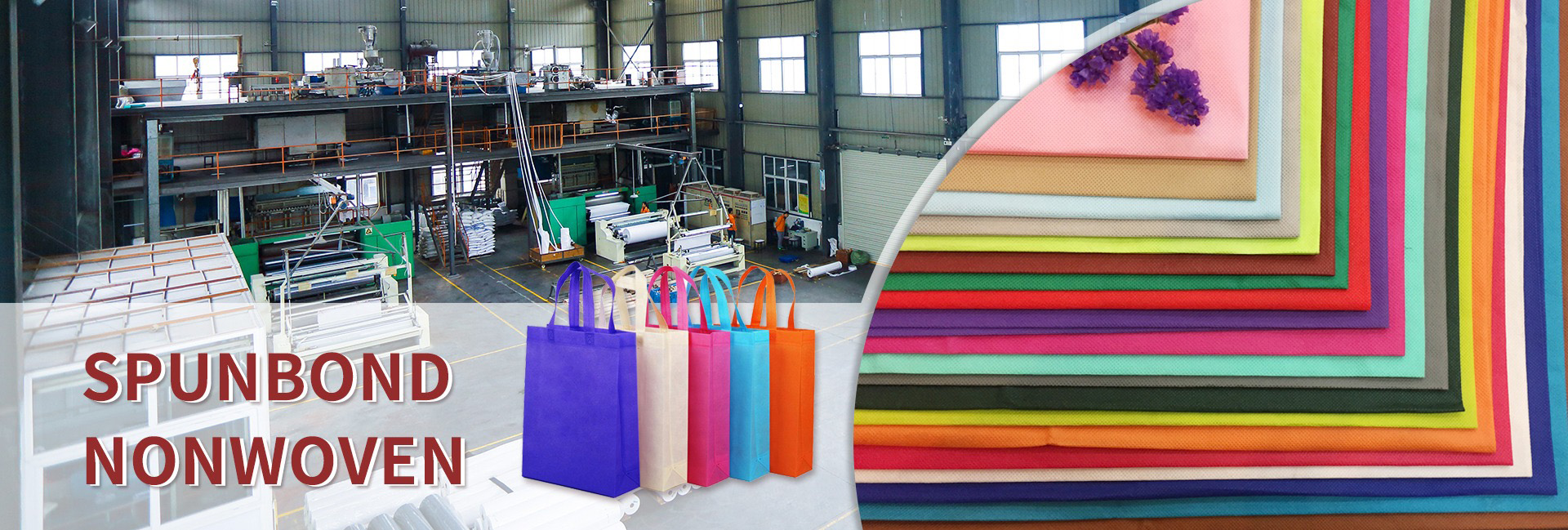
Dongguan Liansheng Non woven Technology Co., Ltd. was established in May 2020. It is a large-scale non-woven fabric production enterprise integrating research and development, production, and sales. It can produce various colors of PP spunbond non-woven fabrics with a width of less than 3.2 meters from 9 grams to 300 grams.
Post time: Dec-13-2025