
Cost-benefit analysis serves as the core decision-making basis for enterprises when selecting anti-rust materials. The value of VCI anti-rust spunbond nonwoven fabric is not solely reflected in the unit price of the material, but rather requires a comprehensive evaluation of “cost input” and “benefit output” across the entire life cycle. Relying on its dual protective properties of “physics + chemistry”, it not only reduces direct procurement and implicit operation and maintenance costs but also maximizes benefits by enhancing protection reliability, simplifying processes, and avoiding corrosion losses. It is particularly suitable for scenarios where precision instruments, high-end components, and other items have stringent protection requirements. The following provides a detailed analysis from four aspects: cost composition, benefit decomposition, comprehensive comparison, and suitable scenarios.
Multi-dimensional decomposition to clarify the core dimensions of input
The cost of VCI anti-rust spunbond nonwoven fabric encompasses direct procurement costs and implicit costs throughout its entire lifecycle, exhibiting a characteristic of being slightly higher in initial procurement and lower in long-term operation and maintenance. The specific composition is as follows:
Direct procurement cost
Direct procurement costs constitute the core costs intuitively perceived by enterprises, primarily determined by raw material composition, production process, and procurement scale. These costs are generally higher than those of traditional rustproof paper and ordinary non-woven fabrics, yet slightly lower than those of customized VCI rustproof films and vacuum packaging materials. In terms of raw materials, the core components include 70% to 90% of specialized spun PP or PET base material, 1% to 30% of VCI gas phase inhibitor, 1% to 5% of water-absorbent resin, and 0.5% to 2% of additives. Notably, VCI inhibitors account for 45% to 55% of the direct costs, which are significantly influenced by price fluctuations of key chemicals such as benzotriazole (BTA).
In 2024, due to stricter environmental policies, the production capacity of some traditional inhibitors was constrained, leading to an average procurement cost increase of approximately 7.3% year-on-year. From a process perspective, the integrated spinning and molding process eliminates the need for secondary coating, resulting in a 15% to 20% cost savings compared to traditional coated rustproof non-woven fabrics. In terms of procurement scale, bulk purchases offer a 10% to 15% bargaining space, and the unit packaging cost from source manufacturers can be 10% lower than the industry average, further reducing procurement costs. Currently, the procurement unit price for the industry’s mainstream specifications (15~50g/m²) is approximately 1.8~3.2 yuan/m², which is higher than that of rustproof paper (0.8~1.5 yuan/m²) and ordinary non-woven fabrics (1.0~1.8 yuan/m²), but lower than that of VCI rustproof films (2.5~4.0 yuan/m²) and vacuum packaging materials (3.5~6.0 yuan/m²).
Recessive costs throughout the entire life cycle
Hidden costs are crucial in influencing the overall cost over long-term usage. VCI anti-rust spunbond nonwoven fabric, with its convenience and stability, significantly reduces such costs, which mainly include the following three categories:
1. Labor cost for operation: No complex pre-treatment and subsequent cleaning is required. Just cutting, wrapping, and sealing are sufficient to complete the operation. Compared to the traditional rust-preventative oil process, which involves oil application, drying, degreasing, and cleaning, this method can save 30% to 40% of labor per batch. After a certain automobile parts factory switched to this material, the labor cost in the packaging process was significantly reduced by 40%. Additionally, the operation threshold is low, and no professional skill training is required, which can reduce the cost of protection failure caused by improper operation.
2. Warehousing and transportation costs: Its lightweight nature (with a weight per unit volume that is only 1/20 of anti-rust oil and 1/5 of vacuum packaging materials) significantly reduces storage space and transportation weight. In long-distance transportation and overseas shipping, it can save 8% to 12% of logistics and warehousing costs. Furthermore, its wide temperature range (-40°C to 80°C) eliminates the need for additional insulation and moisture-proof packaging, further reducing hidden costs.
3. Environmental protection treatment cost: The use of environmentally friendly VCI formula without nitrite, silicone, and heavy metals meets RoHS and REACH certification requirements. The substrate can be recycled and reused, and some high-end products are biodegradable, eliminating the need to bear the cost of disposing of waste oil and harmful chemical waste. Compared to traditional anti-rust oil processes, it saves 20% to 30% of environmental disposal costs and avoids the risk of environmental compliance penalties.
Multi-dimensional gains, covering both direct and indirect values
The benefits of VCI anti-rust spunbond nonwoven fabric encompass direct protective benefits as well as indirect management and brand benefits. Its long-term use can achieve multiple values such as “protection value-added, efficiency improvement, and risk avoidance”, as detailed below:
Reducing corrosion losses and extending the lifespan of equipment
This is its core benefit. Relying on the advantage of gas-phase rust prevention without dead angles, it can reduce the corrosion rate of precision instruments from 12.7% in traditional protection to less than 0.2%, significantly reducing scrap rates and rework costs. For high-end precision instruments (such as aerospace parts and medical equipment components), the loss from corrosion of a single piece can reach several thousand to tens of thousands of yuan. After an export agricultural machinery manufacturer switched to this material, the annual amount of claims due to corrosion was reduced by more than 200,000 yuan; a precision instrument company achieved a more than threefold extension of the product’s shelf life in humid environments in Southeast Asia.
At the same time, its protection period can reach 2 to 5 years, significantly longer than traditional rust-proof paper (3 to 6 months) and rust-proof oil (6 to 12 months), reducing the cost of repeated packaging and protection. It is particularly suitable for long-term storage and global shipping scenarios, avoiding losses due to protection failure during transit. In addition, its residue-free characteristic can prevent the accuracy of the instrument from being reduced and assembly failures caused by rust inhibitor residues, reducing subsequent maintenance and replacement costs and indirectly increasing the service life of the instrument by 15% to 20%.
Simplifying processes and enhancing efficiency across the entire value chain
On the one hand, simplifying packaging and subsequent processing procedures allows the equipment to be directly put into use after unpacking, without the need for additional cleaning and drying, significantly shortening the production and assembly cycle. This is particularly suitable for fields such as electronics and medical devices, which have extremely high cleanliness requirements, and can improve the circulation efficiency of the production line by 20% to 30%. On the other hand, its multi-metal compatibility allows it to be suitable for a variety of materials such as steel, copper, aluminum, and alloys.
Enterprises do not need to stock multiple rust-proof materials for components of different materials, simplifying the material management process and reducing warehouse management costs by 10% to 15%. At the same time, its high physical strength and resistance to damage can reduce the cost of secondary packaging caused by packaging damage, reducing damage-related losses by 30% to 40% compared to rust-proof paper.
Avoiding performance risks and enhancing brand reputation
For export-oriented enterprises or high-end precision equipment manufacturers, delivery failures and customer complaints caused by rust can seriously affect brand reputation. VCI anti-rust spunbond nonwoven fabric can provide long-term stable protection, effectively avoiding rust risks during overseas shipping and long-term storage, reducing the cost of contract breaches, and enhancing customer satisfaction. At the same time, its environmental protection characteristics align with the global trend of green production, helping enterprises meet the environmental compliance requirements of high-end customers and enhance market competitiveness. It is particularly suitable for supply chain access standards in high-end fields such as automotive and aerospace, realizing brand value appreciation.
Core Advantages over Traditional Anti-Rust Solutions
Select four mainstream anti-rust solutions commonly used in industry and compare their full lifecycle cost-effectiveness with VCI anti-rust spunbond nonwoven fabric, highlighting their comprehensive advantages (taking the annual packaging of 100,000 square meters of precision instruments as an example):
1. Compared with traditional rust preventive oil
The procurement unit price of anti-rust oil is relatively low (1.2~1.8 yuan/㎡), but it incurs hidden costs such as labor for oil application, degreasing and cleaning, and environmental protection treatment, with a total annual cost of approximately 280,000 to 350,000 yuan. The total annual cost of VCI anti-rust spunbond nonwoven fabric is about 220,000 to 280,000 yuan. Although the procurement unit price is slightly higher, the hidden costs are significantly reduced, resulting in annual cost savings of 60,000 to 70,000 yuan. At the same time, the corrosion rate has been reduced from 8% to below 0.2%, which additionally reduces scrap losses by 100,000 to 150,000 yuan, and the comprehensive benefit has increased by more than 40%.
2. Comparison with rust-proof paper
The annual procurement cost of rust-proof paper is approximately 100,000 to 150,000 yuan. However, it is prone to damage, has poor waterproofing, and has a damage rate of 15% to 20%. It requires repeated packaging and is prone to fiber shedding, leading to equipment contamination. The annual hidden loss is approximately 80,000 to 120,000 yuan, and the total comprehensive cost is about 180,000 to 270,000 yuan. Although the procurement cost of VCI rust-proof spunbond nonwoven fabric is slightly higher, its damage rate is less than 3%, there is no fiber shedding, and no repeated packaging is required. The total comprehensive cost is more stable, and the protection period is longer, making it suitable for long-term storage scenarios and more economical for long-term use.
3. Comparison with VCI anti-rust film
The protective principles of the two are similar, but VCI anti-rust film lacks flexibility, making it difficult to fit irregular-shaped equipment, and it does not have water-absorbing properties, which can easily lead to protection failure due to condensation. Therefore, it requires additional desiccant, with a total annual cost of about 250,000 to 320,000 yuan. VCI anti-rust spunbond nonwoven fabric combines the advantages of water absorption and fitting irregular-shaped equipment, without the need for additional desiccant. Its total annual cost is 30,000 to 50,000 yuan lower, and it is suitable for packaging more complex precision equipment. Its protective reliability is improved by more than 25%, making it particularly suitable for large-scale mechanical equipment and irregular precision components.
4. Comparison with vacuum packaging
Vacuum packaging offers good protective effects, but its procurement and operation and maintenance costs are extremely high, with an annual total cost of approximately 400,000 to 500,000 yuan. Additionally, it is complex to operate and has poor adaptability, making it unsuitable for rapid batch packaging. The annual total cost of VCI anti-rust spunbond nonwoven fabric is only 55% to 70% of that, and it is easy to operate, enabling batch packaging. At the same time, its protective effect is similar, and its overall cost-effectiveness is significantly higher. The comprehensive cost is reduced by about 40% compared to vacuum packaging.
Cost-benefit optimization and suggestions for suitable scenarios
Cost-benefit optimization techniques
1. Centralized bulk procurement: Through annual framework agreements, bulk procurement can secure a 10% to 15% bargaining space, while reducing procurement frequency and lowering procurement management costs. Prioritize sourcing from original manufacturers to further compress the premium in intermediate links.
2. Precise specification matching: Select the appropriate weight and VCI formula based on the material and protection period of the equipment. There is no need to excessively pursue high-end specifications – for regular short-term protection, choose the lightweight type with 15~25g/m², and for long-term storage and sea transportation, choose the high-strength type with 30~50g/m². Avoid cost waste caused by redundant specifications.
3. Standardize operational procedures: Strictly adhere to the requirements for sealed packaging to minimize the risk of protective failure due to improper handling, and prevent repeated packaging and loss of equipment due to rusting. Reasonably control the dosage, with a standard configuration of 100~130g/m³ for regular scenarios, and an appropriate increase of 20%~30% for stringent scenarios, to avoid under-dosing or waste.
Cost-effectiveness adaptability of the adaptation scenario
1. Highly adaptable scenarios: precision instruments, aerospace components, high-end automotive parts, electronic and electrical assemblies, etc. These products are of high value and suffer significant corrosion losses, thus demanding high levels of cleanliness and protective reliability. VCI anti-rust spunbond nonwoven fabric can significantly mitigate high corrosion losses and brand risks, achieving a cost-benefit ratio of 1:8 to 1:12. The long-term benefits are substantial, making it particularly suitable for export and long-term storage scenarios.
2. Medium-level application scenarios: ordinary metal parts and small mechanical equipment. These products have moderate protection requirements and can replace rust-preventative oil and rust-proof paper, balancing cost and protection effectiveness. The cost-benefit ratio is 1:4 to 1:6, making it suitable for batch use by small and medium-sized enterprises. Further cost reduction can be achieved through purchasing in standard sizes.
3. Low-adaptation scenarios: Low-value metal accessories and simple components for short-term turnover. These products have low value and require a short protection period. Traditional rust-proof paper or ordinary non-woven fabrics can be used, without the need to invest in VCI anti-rust spunbond non-woven fabrics, thus avoiding cost waste.
Summary
To evaluate the cost-effectiveness of VCI anti-rust spunbond nonwoven fabric, we need to move beyond the mere misconception of purchasing unit price and focus on the total cost and comprehensive benefits over its entire lifecycle. Its core advantage lies in “moderate initial investment and significant long-term efficiency enhancement.” Although the direct procurement cost is higher than that of traditional low-priced anti-rust materials, it achieves optimal long-term total cost by simplifying processes, reducing labor and environmental costs, and avoiding corrosion losses.
At the same time, its protective reliability and adaptability far surpass traditional solutions, meeting the diverse needs of high-end precision instruments while balancing protective effectiveness, production efficiency, and environmental compliance. For enterprises that prioritize long-term development, pursue high-end quality, and maintain supply chain stability, especially those engaged in the production and export of precision instruments, VCI anti-rust spunbond nonwoven fabric is the optimal anti-rust solution that balances cost and benefit. Long-term use can achieve the triple value of “cost reduction, efficiency enhancement, and risk control,” aligning with the development trend of green production and high-end manufacturing.
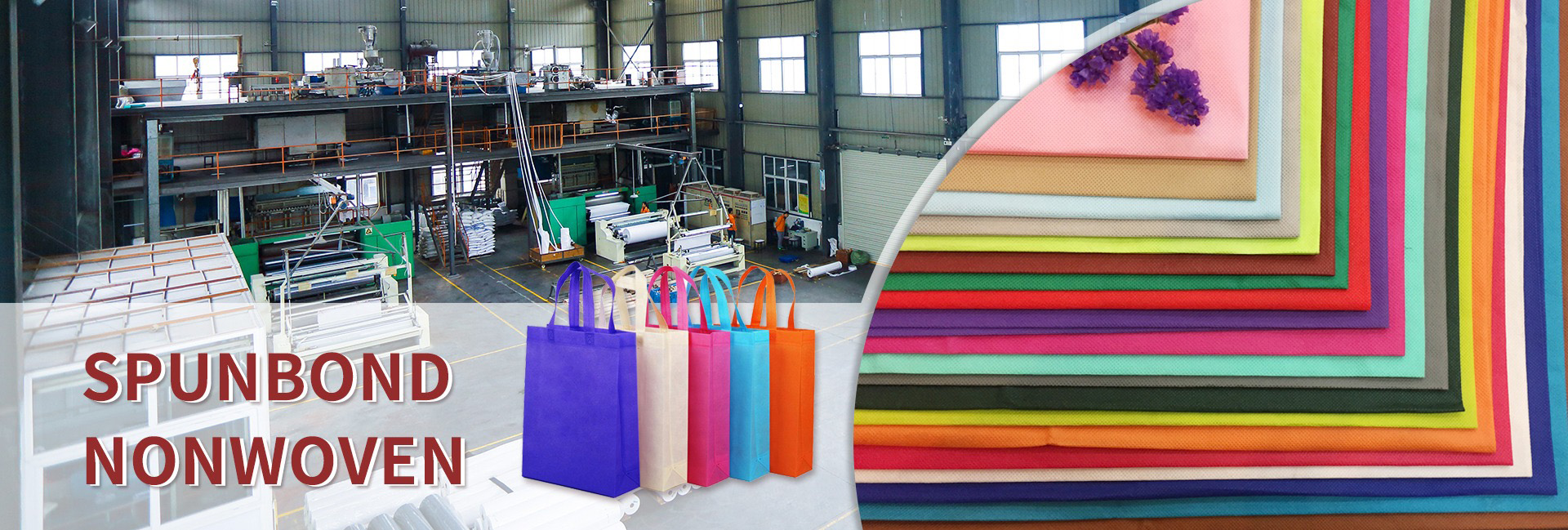
Dongguan Liansheng Non woven Technology Co., Ltd. was established in May 2020. It is a large-scale non-woven fabric production enterprise integrating research and development, production, and sales. It can produce various colors of PP spunbond non-woven fabrics with a width of less than 3.2 meters from 9 grams to 300 grams.
Post time: Feb-21-2026