
As a composite material that combines protection, cushioning, and fixation functions, the core performance of anti slip non-woven fabric – the realization of anti slip adhesion – relies entirely on the precise adhesive and coating technology behind it. From daily disposable gloves and anti slip pads to anti slip packaging materials and medical protective equipment in the industrial field, different scenarios have varying requirements for the strength, durability, and environmental friendliness of anti slip adhesion, which has also given rise to a variety of adhesive and coating technology solutions. This article will delve into the scientific principles behind the adhesion of anti slip non-woven fabrics, detailing the core technology types, key influencing factors, and application scenario adaptation logic.
Dual scientific support of viscosity and slip resistance
The “stickiness” of non slip non-woven fabric is not the traditional “adhesive fixation”, but the dual effect of “interface friction enhancement” and “contact stability enhancement” is achieved through the synergistic effect of backing adhesive and coating. The core principle can be divided into two dimensions:
1. The essence of viscosity: precise control of interfacial forces
The adhesion between the adhesive coating and the contact interface is due to the superposition of intermolecular forces, mainly including van der Waals forces, hydrogen bonding forces, and mechanical interlocking effects. High quality adhesive coatings will form micro nano scale rough structures on the surface of the coating through formula design. When in contact with contact objects such as skin, fabrics, and hard surfaces, on the one hand, they achieve “adsorption adhesion” through van der Waals forces and hydrogen bonds between molecules, and on the other hand, the micro rough structures form mechanical interlocking with the concave and convex parts of the contact interface, further enhancing adhesion stability and avoiding sliding.
2. The key to anti slip: the matching of coating structure and mechanical properties
Slip resistance is an extension of viscosity, and the core lies in the coating having appropriate hardness, elasticity, and surface friction coefficient. If the coating is too soft, it is prone to deformation and sliding; If it is too hard, it cannot fully adhere to the contact interface and the friction coefficient decreases. By regulating the cross-linking degree and elastic modulus of the coating through coating technology, the coating is not easily deformed when subjected to external forces, and can adhere to the interface through small elastic deformation, maximizing frictional resistance and achieving a balance between “anti slip” and “adhesion”.
Main Types and Characteristics of Adhesive and Coating
According to the application requirements of non slip non-woven fabrics, adhesive backing and coating technologies can be divided into three core systems, each with significant differences in formula, process, and performance, suitable for different usage scenarios.
1. Hot melt adhesive backing technology: a mainstream solution for efficient adaptation to mass production
Hot melt adhesive backing is one of the most commonly used technologies for anti slip non-woven fabrics. Its core principle is to use thermoplastic polymer materials (such as EVA, PE, SBS, etc.) to apply to the non-woven fabric substrate after heating and melting, and form a sticky coating after cooling.
Process features: Adopting melt coating technology, the coating thickness is uniform (can be controlled within 5-50 μ m), the coating speed is fast (up to 300m/min), suitable for large-scale industrial production. The coating methods can be divided into comprehensive coating, spot coating, stripe coating, etc. Among them, spot coating and stripe coating can ensure adhesion while retaining the breathability of non-woven fabric.
Performance advantages: Wide range of adjustable viscosity (from micro adhesive to strong adhesive), good low-temperature stability, strong aging resistance, and no solvent residue, with better environmental friendliness than solvent based adhesives. Typical applications: Disposable gloves, anti slip shoe covers, anti slip coatings on the surface of sanitary products, etc.
2. Water based adhesive technology: precise bonding solution guided by environmental protection
The water-based adhesive backing uses water as the dispersion medium, and its core components are water-based acrylate, waterborne polyurethane and other polymer lotion, which form a viscous coating after coating, drying and curing.
Process characteristics: Roll coating, spray coating or scraping coating processes are adopted. The drying process of the coating requires control of temperature (60-120 ℃) and humidity to ensure sufficient evaporation of moisture and avoid bubbles and pinholes in the coating. Due to the use of water as the medium, this technology emits no VOCs and meets environmental protection requirements.
Performance advantages: The coating has high softness, good adhesion to non-woven substrates, mild and long-lasting adhesion, suitable for scenarios where it comes into direct contact with the skin. The disadvantage is that the drying efficiency is lower than that of hot melt adhesive, and the production speed is relatively slow. Typical applications: medical protective equipment (such as non slip cuffs on surgical gowns), personal hygiene products, baby care products, etc.
3. Functional coating technology: high-end solutions adapted to special scenarios
For special scenarios such as high temperature, high humidity, and strong friction, functional coating technology achieves personalized performance requirements by adding special additives (such as anti slip agents, wear-resistant agents, and temperature resistant agents) to the adhesive formula or using composite coating structures.
Common types include: (1) Wear resistant and anti slip coatings: adding inorganic fillers such as silica and alumina to enhance the surface hardness and friction coefficient of the coating, suitable for industrial anti slip packaging, heavy-duty equipment protective pads, and other scenarios; (2) Temperature resistant and anti slip coating: using high temperature resistant polymer materials (such as polyimide and fluorocarbon resin), it can maintain viscosity in environments ranging from -50 ℃ to 200 ℃, and is suitable for protective equipment in extreme environments; (3) Antibacterial and anti slip coating: Adding antibacterial agents such as silver ions and zinc ions, it has both anti slip and antibacterial functions, suitable for high hygiene requirements such as medical and food packaging.
Core variables that determine the performance of adhesive backing and coating
The final performance of adhesive and coating (adhesion, slip resistance, durability, etc.) is not only determined by the type of technology, but also influenced by multiple factors such as substrate characteristics, formulation design, and process parameters.
1. Substrate characteristics: Structure and material compatibility of non-woven fabric
The fiber fineness, porosity, and weight of non-woven fabric directly affect the adhesion of the adhesive coating. The finer the fiber fineness and the higher the porosity, the easier it is for the adhesive to penetrate into the substrate during the coating process, forming an “anchoring effect” and improving the bonding strength between the coating and the substrate; Non woven fabrics with low weight are prone to deformation during the coating process, resulting in uneven coating; If the weight is too high, it will reduce the penetration effect of the coating and affect the transmission of viscosity. Common compatible substrates include PP (polypropylene), PE (polyethylene), PET (polyester) non-woven fabric, among which PP non-woven fabric is the most commonly used substrate due to its moderate melting point and low cost.
2. Formula design: precise ratio of polymer resin and additives
The formula of the adhesive coating is the core that determines the viscosity. As a film-forming substance, the glass transition temperature (Tg) of polymer resin directly affects the softness and viscosity of the coating: the lower the Tg, the softer the coating, and the better the low-temperature viscosity; The higher the Tg, the higher the coating hardness and the stronger the high temperature resistance. The addition of additives plays a role in optimizing performance, such as thickening agents that can enhance interfacial adsorption, crosslinking agents that can enhance coating durability, and defoamers that can avoid coating defects. There are significant differences in the requirements for formulations in different application scenarios. For example, skin contact products require low irritation and low Tg resins, while industrial anti slip products require high Tg and high crosslinking formulations.
3. Process parameters: precise control of coating and curing processes
Coating thickness, coating speed, and curing temperature are key process parameters that affect coating performance. The coating thickness is too thin and the adhesion is insufficient; Excessive thickness will reduce the breathability of non-woven fabric and increase costs. The coating speed should match the curing speed. If the speed is too fast, the curing is not sufficient and the coating is prone to adhesion; If the speed is too slow, it will affect production efficiency. The curing temperature directly affects the crosslinking degree and crystallinity of the coating. If the temperature is too high, it may cause resin degradation and reduce viscosity; If the temperature is too low, the curing will not be complete and the durability of the coating will be poor.
Application scenario adaptation
The selection of adhesive and coating technologies should be guided by the core requirements of the application scenario, achieving the optimal balance between performance and cost. The following are technical adaptation cases for typical scenarios:
-Daily consumption scenarios (disposable gloves, anti slip shoe covers): Hot melt adhesive backing technology is preferred, taking into account production efficiency, adhesive stability, and cost advantages. Point coating technology can be used to retain breathability.
-Medical protection scenarios (surgical gown cuffs, medical dressing fixation): Choose water-based adhesive technology to ensure low irritation, environmental protection, and residue free, while requiring the coating to have good antibacterial and sweat resistance.
-Industrial protection scenarios (anti slip packaging materials, equipment protective pads): using functional wear-resistant and anti slip coating technology, adding inorganic fillers to improve friction coefficient and wear resistance, suitable for harsh environments with high temperature and high friction.
-High end nursing scenarios (baby diapers, personal hygiene products): Choose water-based polyurethane adhesive technology with excellent softness and fit, while adding antibacterial and anti allergic additives to meet hygiene and comfort needs.
Technological development trends
With the improvement of environmental protection requirements and the refinement of application scenarios, adhesive and coating technology is developing in three directions: first, environmental protection, solvent based adhesives are gradually being replaced by water-based adhesives and solvent-free hot melt adhesives to reduce VOCs emissions; The second is efficiency improvement, which enhances production efficiency and reduces material loss by improving coating processes such as electrostatic spraying and precise spot coating; The third is multifunctionality, developing composite coatings with multiple properties such as anti slip, antibacterial, breathable, and biodegradable to meet the needs of more high-end scenarios. For example, the research and development of biodegradable biobased hot melt adhesives (using starch and polylactic acid as raw materials) is promoting the upgrading of non slip non-woven fabrics towards green and environmentally friendly directions; The exploration of intelligent coating technology, such as temperature sensitive and photosensitive adhesive adjustment coatings, also provides the possibility for precise adaptation to special scenarios.
Conclusion
Behind the adhesive properties of non slip non-woven fabrics is the precise control of interfacial forces and material mechanical properties through adhesive backing and coating technology. From the efficient mass production of hot melt adhesive to the environmentally friendly adaptation of water-based adhesive, and to the special empowerment of functional coatings, every technical solution is a deep integration of scientific principles and application requirements.
In the future, with the continuous advancement of materials science and process technology, adhesive and coating technology will further break through the performance boundary, bringing a wider range of application scenarios and better user experience for non slip non-woven fabrics, and continuously promoting innovative development in the field of composite materials.
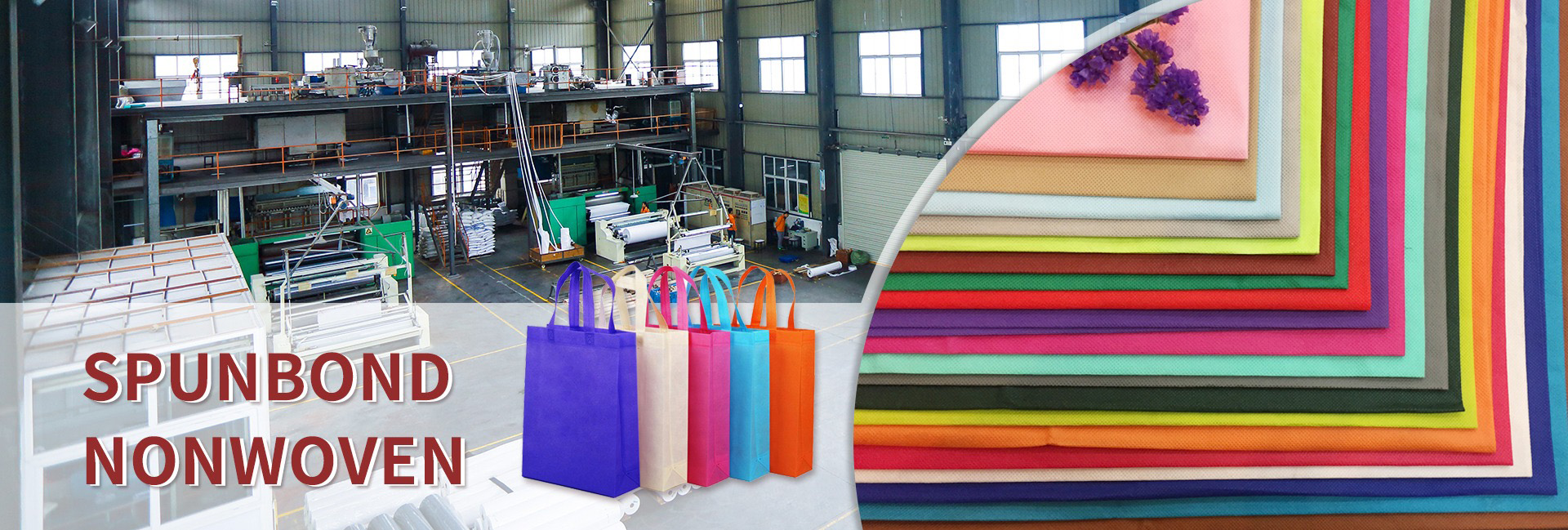
Dongguan Liansheng Non woven Technology Co., Ltd. was established in May 2020. It is a large-scale non-woven fabric production enterprise integrating research and development, production, and sales. It can produce various colors of PP spunbond non-woven fabrics with a width of less than 3.2 meters from 9 grams to 300 grams.
Post time: Jan-17-2026