
The core competitiveness of VCI anti rust spunbond non-woven fabric lies in the deep integration of “physical advantages of substrate+VCI chemical protection”. With special formulas and integrated production processes, it not only breaks through the performance limitations of traditional anti rust materials, but also adapts to the diverse requirements of high-end protection scenarios such as precision instruments. Its core characteristics can be comprehensively analyzed from five dimensions: material technology, protection mechanism, adaptability, environmental safety, and functional expansion, balancing professionalism and practicality.
High-strength carrier+integrated fusion, building a solid foundation for protection
The substrate is made of spinning specific polypropylene (PP) or polyester (PET), accounting for 70%~90% by mass percentage, combined with 1%~30% VCI vapor phase corrosion inhibitor, 1%~5% water absorbent resin, and 0.5%~2% additives. It is made through integrated processes such as melting, extrusion, spinning mesh laying, and reinforcement, without the need for secondary coating processing, greatly reducing energy consumption and production costs while achieving deep integration of material and protective components. Compared with traditional anti rust paper, anti rust film, and secondary coated anti rust non-woven fabric, its physical properties are superior, with significantly improved tear resistance and puncture strength, less prone to damage, and completely solving the pain point of fiber shedding in traditional anti rust paper – even in humid environments, there will be no problem of fiber shedding and adhesion to metal surfaces, which can meet the strict requirements of precision instruments for packaging cleanliness. In addition, the substrate material is lightweight and soft, with a porous structure that combines breathability and water absorption properties. It can not only conform to the contour of irregular instruments, but also absorb environmental moisture, avoiding the risk of corrosion caused by condensation and making up for the shortcomings of the anti rust film’s non hygroscopicity.
Active slow-release+no dead angle coverage, achieving long-term rust prevention
This is its core protective advantage, relying on the special mechanism of VCI gas-phase corrosion inhibitors to achieve “active protection rather than passive barrier”. The VCI components are selected from organic amines, benzotriazoles and their derivatives, imidazolines, molybdates, borates and other organic acid salts, inorganic acid salt compounds, which are integrated into the substrate in powder or masterbatch form. After micronization treatment (particle size ≥ 800 mesh), they can slowly and continuously volatilize gas-phase molecules at room temperature, and the volatilization rate can be dynamically adjusted with temperature and humidity – the release is accelerated in high temperature and high humidity environments, which can cope with harsh scenarios such as sea transportation; When the environment is stable, the release slows down to avoid wasting ingredients. Under normal conditions, the protection period can reach 2-5 years, and some high-end products can achieve long-term protection of more than 3 years.
The evaporated VCI molecules can flow with the air in a closed space and penetrate into small gaps, threaded interfaces, internal cavities and holes of precision instruments that are difficult to reach with traditional oil coating and packaging, covering the metal surface without dead corners. After contact with metal, a dense protective film with 3-5 layers of molecular thickness (or 1-3 nanometers of single molecule) is formed through electrostatic adsorption. It can block corrosive media such as oxygen, moisture, and salt, and change the electrochemical properties of the metal surface, suppress the flow of anode and cathode electrons, block electrochemical corrosion reactions, and the protective film can self repair. After local damage, it can be re formed by new VCI molecules to maintain the protective effect.
Multi material adaptation+multi scene applicability, balancing accuracy and convenience
Highly adaptable, it can meet the protection needs of different materials and scenarios. In terms of material compatibility, by customizing VCI formulas, it can simultaneously adapt to both ferrous and non-ferrous metals, without the need to classify and package precision instruments with multiple material combinations. This solves the limitation of traditional anti rust materials that are only suitable for a single metal, and is suitable for various precision metal components such as gears, bearings, sensors, and micro motors. In terms of convenience, there is no need for complex operations, just wrap and pad directly. After unpacking, the VCI protective film can naturally dissipate without oil stains, adhesive residue, etc. Metal instruments can be directly put into the next process, greatly improving production and assembly efficiency, especially suitable for fields such as electronics and medical devices that require high cleanliness.
In terms of scene adaptability, it has a wide temperature range (-40 ℃~80 ℃) and can cope with low temperature storage, high temperature transportation and other scenarios. It can also be composite with materials such as PE, PP, PA, PET or woven fabrics to enhance additional properties such as waterproofing and barrier. It can also be made into various forms such as 3D bags and zipper bags, suitable for short-term protection, long-term storage, global shipping and other diverse scenarios. At the same time, it is lightweight and does not increase packaging weight and volume, making it suitable for products with high packaging lightweight requirements such as aerospace parts.
Green and harmless+recyclable, in line with the trend of green production
Adhering to the global green production concept, it meets environmental standards in both composition and materials. VCI formulas often use environmentally friendly ingredients that are free of nitrite, silicone, phosphate, and heavy metals. They have passed the EU RoHS and REACH certifications, and some products comply with FDA standards. They are harmless to human health and the environment, and will not cause secondary pollution or environmental pollution to devices.
The PP and PET fibers used as the substrate and the finished products themselves can be recycled and reused. Some products are biodegradable, which is more in line with environmental emissions and resource recovery requirements compared to traditional harmful chemical anti rust materials. At the same time, the production process adopts integrated spinning technology, reducing secondary coating, drying and other processes, saving water and energy, reducing environmental pressure in the production process, and balancing protective effects with green production needs.
Multiple additional functions, adapted to high-end protection needs
Multiple additional functions can be expanded according to scene requirements to enhance comprehensive protection capabilities. Some products are added with permanent anti-static additives to form an ion conductive polymer network, achieving long-lasting anti-static effects and providing an electrostatic safety protection environment for sensitive electronic devices to avoid electrostatic damage to precision components. It has good mechanical protection capabilities, with a soft texture that can form a buffer, avoiding scratches and bumps on the surface accuracy, mirror or scale of precision instruments caused by hard contact.
At the same time, it has waterproof, moisture-proof, and puncture resistant properties, and can cope with slight collisions and moisture invasion during transportation. In addition, customized printing of company logos is available, supporting customization of different weights (140~200g/m ², etc.), widths, colors, and shapes (rolls, sheets) to meet packaging scenarios of different sizes and brand identity requirements, further enhancing practicality.
In summary, VCI anti rust spunbond non-woven fabric is based on the core of “high-strength physical carrier+efficient gas-phase protection+multiple adaptability compatibility+green environmental protection”. It not only solves the disadvantages of traditional anti rust materials such as easy damage, residue, and blind spots in protection, but also meets the high-end requirements of precision instruments for precision protection, cleanliness, and environmental protection. It has become the preferred anti rust material in industrial precision components, electronic equipment, aerospace parts and other fields.
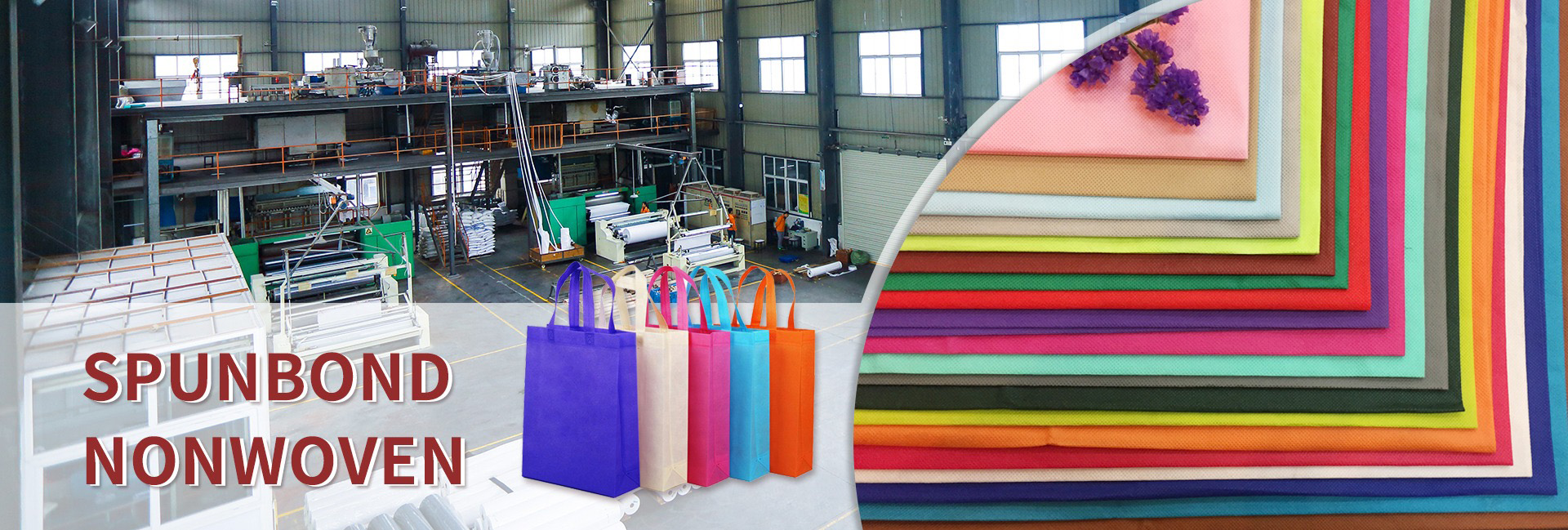
Dongguan Liansheng Non woven Technology Co., Ltd. was established in May 2020. It is a large-scale non-woven fabric production enterprise integrating research and development, production, and sales. It can produce various colors of PP spunbond non-woven fabrics with a width of less than 3.2 meters from 9 grams to 300 grams.
Post time: Feb-23-2026