
The manufacturing of non slip non-woven fabrics mainly relies on three core finishing processes: dispensing, embossing, and composite. They construct anti slip structures on the surface or inside of non-woven fabrics through different physical or chemical methods.
Core information of three processes
Glue dispensing process
Apply hot melt adhesive in a specific dot pattern (such as diamond dots, circular dots) onto the base fabric. Adhesive dots increase friction: The surface adhesive dots form microscopic protrusions, increasing the friction coefficient of the contact surface.
Good breathability: Dot coating preserves the breathable channels of the base fabric; Texture and stiffness: can improve the texture and stiffness of materials; Wide applicability: can handle water repellent materials.
Mainly used in shoe lining (anti slip fabric), medical protective product composite materials, and clothing lining fabrics.
Embossing process
By using pressure rollers engraved with patterns, permanent concave convex textures are produced on the surface of the material under hot pressing conditions. Physical pattern anti slip: The pressed three-dimensional pattern (such as diamond pattern) directly forms a mechanical anti slip structure.
The effect is intuitive and long-lasting: clear patterns and stable anti slip performance; Enhanced material performance: can enhance surface strength and wear resistance. Both aesthetically pleasing: can be used to suppress decorative patterns such as logos.
Mainly used for non-woven shoe covers/glove anti slip soles, surfing clothes anti slip parts, and shopping bag surface decoration.
Composite process
Combine non-woven fabric with other functional layers with high friction coefficients (such as PE anti slip layer, rubber sponge) through methods such as hot melt and water jet. Functional material overlay: Anti slip is achieved by combining specialized anti slip functional layers (such as granular PE layers).
Strong functionality: can integrate multiple functions such as anti slip, wear-resistant, and moisture absorption; Structural stability: Each layer is firmly bonded and has good durability; Flexible design: Comprehensive performance can be optimized through gradient design.
High end anti slip non-woven fabric (patented product), rubber sponge anti slip adhesive (used for sports equipment), self-lubricating pad.
Process depth analysis
After understanding the basic differences, let’s take a closer look at the technical details of each process:
Glue dispensing process: not just bonding, but also precise “dot matrix” design
The core of dispensing lies in the shape and arrangement of “points”. Common dots include diamond shaped dots, circular dots, cross shaped dots, bark dots, etc. These precise dot matrix designs provide sufficient adhesion or slip resistance while maximizing the inherent soft feel and breathability of non-woven fabrics. For example, in the production of hot-rolled dual point non-woven lining, the use of a combination of large and small dots in the dual point design is to balance the bonding strength with the softness and breathability of the fabric.
Embossing process: using pressure and heat to “carve” anti slip patterns
Embossing is a physical molding process. The designed pattern (such as the diamond shaped anti slip pattern on the bottom of the shoe cover) is pressed onto the surface of the material through a high-temperature steel roller, forming a durable dent with a depth of about 0.3-0.5mm. This process not only prevents slipping, but also significantly enhances the strength and wear resistance of the material surface. According to the requirements, embossing can be applied to the smooth surface, leather surface, or composite fabric surface of materials.
Composite technology: constructing a multifunctional “sandwich” structure
The anti slip concept of composite technology is different, it solves the problem by introducing a specialized anti slip functional layer. For example, a patented anti slip composite non-woven fabric adds a PE anti slip layer with granular protrusions on both the top and bottom surfaces between the layers. In addition, laminating non-woven fabric with high friction materials such as rubber sponge before embossing is also a common composite anti slip solution, widely used in surfing clothes, gloves and other products that require strong anti slip properties.
How to choose the process for your product?
After understanding the principle, you can make preliminary choices based on the core requirements of the product:
If pursuing cost-effectiveness, breathability, and lightweight: glue or embossing is preferred. Glue dispensing technology is more suitable for clothing lining fabrics and shoe material interiors that require maintaining a soft and breathable base layer; Embossing is suitable for shoe covers, gloves, shopping bags, etc. that require clear and durable anti slip patterns on the surface.
If pursuing high strength, multifunctionality, and durability: composite technology should be considered. When the product needs to cope with harsh environments (such as medical, outdoor sports), or requires a combination of anti slip and wear-resistant, cushioning and other properties, composite technology is a better choice. For example, non-woven fabric materials used for surgical drapes or professional sports protective gear.
Conclusion
In summary, dispensing, embossing, and compounding are the three main methods for endowing non-woven fabrics with anti slip properties, which serve diverse product needs based on different physical and chemical principles. In actual production, these processes are often combined to achieve the best results.
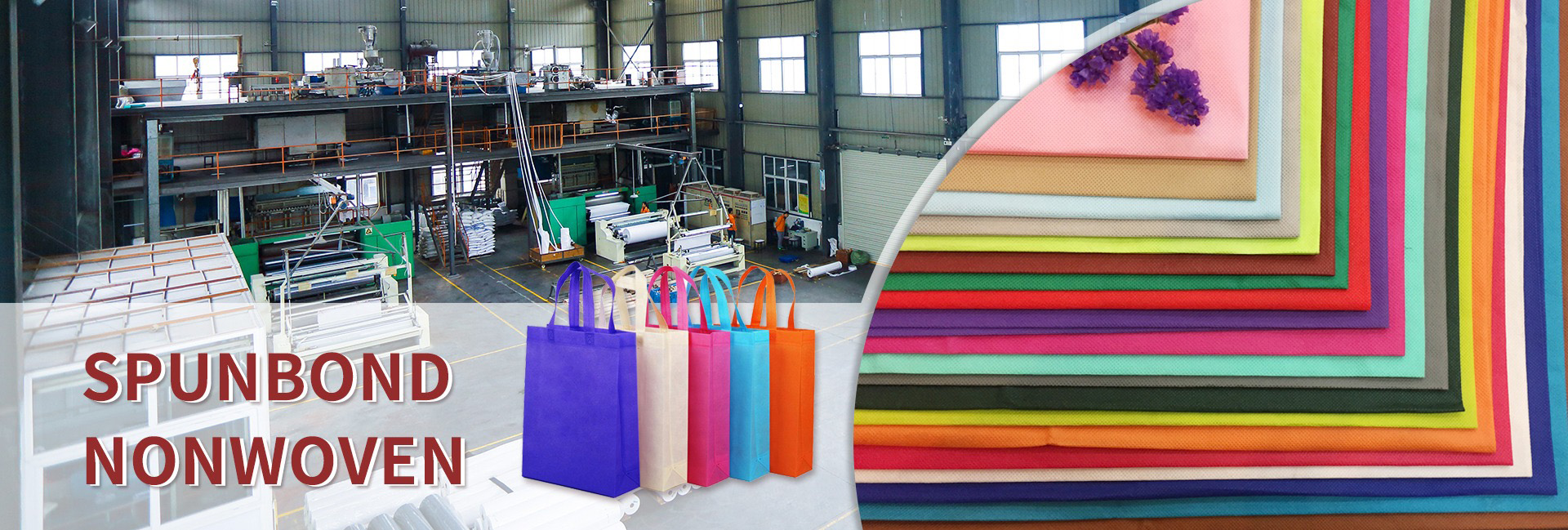
Dongguan Liansheng Non woven Technology Co., Ltd. was established in May 2020. It is a large-scale non-woven fabric production enterprise integrating research and development, production, and sales. It can produce various colors of PP spunbond non-woven fabrics with a width of less than 3.2 meters from 9 grams to 300 grams.
Post time: Jan-07-2026