
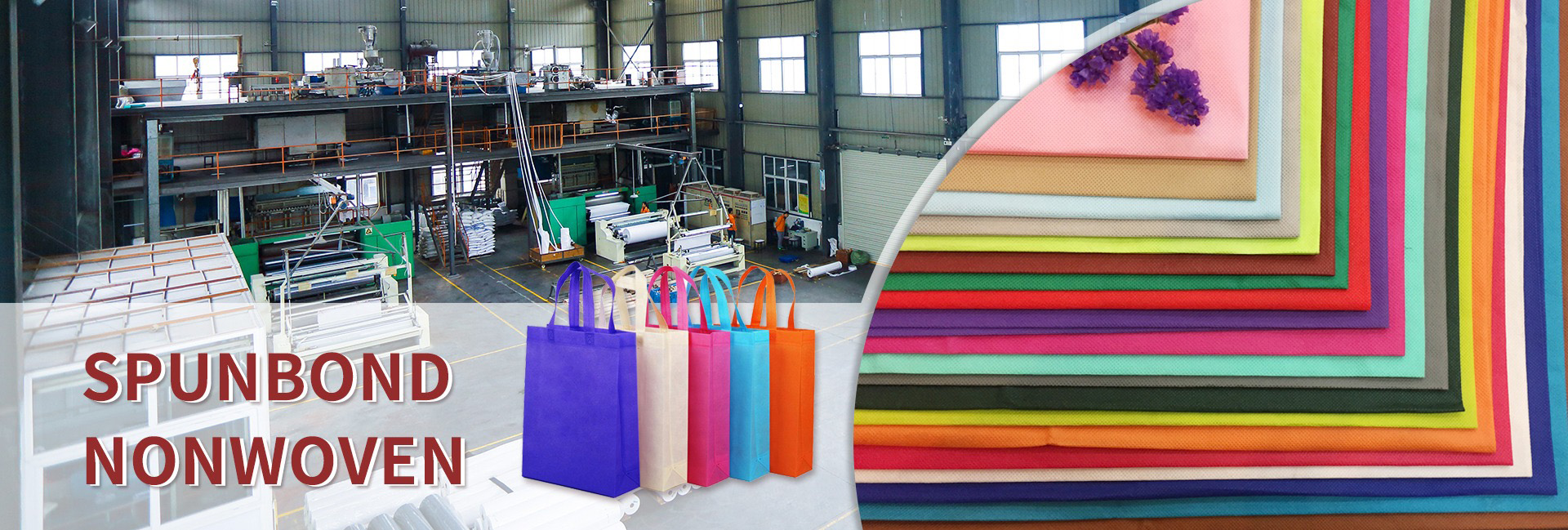
In daily life, non-woven fabric is everywhere – it can be found in supermarket shopping bags, medical masks, home storage bags, agricultural coverings, and even industrial filter materials. Many people fall into a misconception when choosing nonwoven fabric products: subconsciously thinking that “the thicker, the stronger” and “the thicker the quality, the better”, and even using thickness as the only criterion to judge the quality of non-woven fabric.
Today, let’s make it clear at once: when choosing non-woven fabric, do we need to consider its thickness? What is the relationship between thickness, quality, and practicality? Is thicker non-woven fabric really more worth choosing? The answer may be different from what you think. After reading this article, you will never waste money again.
Thickness is important, but it is not necessarily ‘thicker is better’
Firstly, clarify the core point: when choosing non-woven fabric, thickness is important, but it is definitely not the thicker the better. Thickness is one of the key indicators that affect the performance of non-woven fabrics, but its role is to “adapt to the scene” rather than “determine the quality”.
Many people confuse the relationship between “thickness” and “quality”, thinking that thick non-woven fabrics are necessarily durable and of high quality. But in reality, the quality of non-woven fabric is determined by multiple factors such as thickness, weight, fiber material, and processing technology. Choosing the right thickness can balance practicality, cost-effectiveness, and user experience; Blindly pursuing thickness not only costs more money, but may also fail to achieve the expected results, and even backfire.
Here is a key knowledge point to popularize: the “thickness” of non-woven fabric is usually directly related to “weight” (weight refers to the weight of non woven fabric per square meter, unit: g/m ²). Generally speaking, the higher the weight, the thicker the non-woven fabric, but the two are not absolutely equal – non-woven fabrics of the same weight have different fiber densities and processing techniques, resulting in differences in thickness. For example, some non-woven fabrics thicken by increasing fiber fluffiness, resulting in a thick texture but insufficient strength; Some are thickened by encrypting fibers, resulting in better strength and durability.
Why is thickness important? Directly affecting the three core performance indicators
The reason why thickness is an important reference for selecting non-woven fabrics is that it directly determines the core properties of non-woven fabrics, and these properties directly correspond to our usage needs. Specifically, the influence of thickness is mainly reflected in three aspects:
One is physical strength. Thicker non-woven fabrics (high weight) usually have higher tensile strength and wear resistance, and can withstand greater tension and weight, making them suitable for scenarios that require load-bearing and wear resistance, such as industrial packaging, geotextiles, and heavy-duty shopping bags. On the contrary, thin non-woven fabrics have weaker tensile strength and are more suitable for lightweight, non load bearing scenarios.
The second is insulation and barrier properties. Thick non-woven fabric has a thicker fiber layer and more internal gaps, which can better block heat, air, and moisture. It is suitable for use as insulation materials, agricultural coverings, waterproof packaging, etc. However, thin non-woven fabric has stronger breathability and cannot achieve effective insulation and barrier.
The third is breathability and water absorption. This is the most easily overlooked point and also the key to the misconception of “thicker is better” – increasing thickness will lead to a decrease in breathability and a decrease in water absorption. Thin non-woven fabric is lighter and more breathable, suitable for scenarios that require breathability and water absorption, such as the inner layer of medical masks, the surface layer of sanitary napkins, wet wipes, etc.
In addition, thickness also directly affects costs: the higher the thickness, the more fiber is used per unit area, resulting in higher production costs and naturally higher selling prices. Blindly choosing thick models is equivalent to wasting money on unnecessary performance.
In these 4 scenarios, thick non-woven fabric is actually not easy to use
The easiest way to fall into a trap is to blindly choose thick styles regardless of the scene. Many times, thick non-woven fabrics are not only impractical, but also affect the effectiveness of use. After reading these 4 common scenarios, you will understand why ‘thicker is worse’.
Scenario 1: Medical field (masks, sterilization packaging). Many people think that ‘thicker non-woven fabric has better antibacterial effect’, but this is not the case in reality. The key to the antibacterial performance of non-woven fabrics lies not in the overall thickness, but in the pore size of the core filter layer (meltblown layer), rather than the thickness of the spunbond layer – even if the spunbond layer is made thicker, as long as the pore size of the meltblown layer does not meet the standards, it cannot effectively prevent microorganisms and dust from entering. On the contrary, excessively thick non-woven fabric will reduce breathability, and after sterilization, it is prone to “wet packaging”, which affects the effectiveness of use; Meanwhile, after high-temperature sterilization, the fibers of thick non-woven fabrics will shrink and become brittle, making them more prone to damage.
Scenario 2: Daily shopping bags. Many people buy non-woven shopping bags thinking that ‘the thicker, the stronger, and the more things they can hold’, but in fact, the load-bearing capacity of shopping bags depends not only on thickness (weight), but also on the manufacturing process. For the same 75g shopping bag, the car seam reinforced version has a much stronger load-bearing capacity than the ultrasonic heat sealed version, reaching around 10kg, while the ultrasonic version may only be able to bear up to 5kg. If it’s just for daily consumption of vegetables and fruits, a thickness of 75-90 grams is sufficient, with the highest cost-effectiveness; If you need to load heavy objects, choose thick ones weighing over 100 grams, and prioritize sewing technology for the correct choice.
Scenario 3: Home beauty (face towels, curtains). For example, non-woven face towels may have a thick texture, but their water absorption and breathability may decrease. When wiping the face, they are prone to residual moisture and may also rub against the skin; Thin face towels are softer, more breathable, and have even water absorption, providing a better user experience. For example, for home curtains, thicker ones are indeed more durable and have better shading properties. However, if it is a small apartment with poor ventilation, thicker ones will appear bulky and affect ventilation. Choosing a medium thickness and breathable style can balance aesthetics and enhance living comfort.
Scenario 4: Industrial filtration. Thick non-woven fabric can indeed improve filtration efficiency and durability, but if the filtration scene needs to balance breathability, excessively thick non-woven fabric will block the filtration channel and reduce filtration efficiency. For example, in workshop ventilation filtration, choosing non-woven fabrics with medium thickness and good breathability can ensure air circulation in the workshop while filtering impurities.
Ordinary selection of non-woven fabric, 3-step selection of correct thickness
Without having to memorize complex parameters, mastering these three core principles allows ordinary people to easily choose the right non-woven fabric without stepping on pitfalls or waste.
The first step is to clarify the usage scenario. The performance requirements for non woven fabrics vary in different scenarios, and the thickness selection is also different: for light and thin scenarios (such as medical mask inner layers, face towels, and clothing linings), choose a thin version of 10-50 grams, prioritizing breathability and softness; For daily scenarios such as shopping bags, regular packaging, and home storage, choose a medium thickness of 50-100 grams to balance durability and cost-effectiveness; Heavy duty/wear-resistant scenarios (industrial packaging, geotextiles, heavy-duty storage), choose thick models weighing over 100 grams, with a focus on strength and durability.
The second step is not only to consider the thickness, but also the craftsmanship and material. Non woven fabrics of the same thickness, produced through a combination of spunbond and meltblown processes, are more durable and have better barrier properties than those produced through a single spunbond process; Polyester fiber material is more wear-resistant and tensile resistant than polypropylene material; The strength of encrypted fibers is higher than that of fluffy fibers. When selecting, in addition to considering the thickness, attention should also be paid to the craftsmanship and material indicated on the product label.
Step three, choose according to your needs and reject the excessive pursuit of thickness. Based on one’s own usage needs, as long as it is sufficient – for example, if it is only used to store light items, there is no need to choose thick shopping bags; Just for daily face cleaning, there’s no need to choose thick face towels. Excessive pursuit of thickness will only increase costs and may also affect the user experience.
Choosing the right thickness is choosing the right non-woven fabric
Finally, let’s emphasize again: when choosing non-woven fabric, thickness is an important reference, but it is definitely not the only criterion, let alone the thicker the better. The core function of thickness is to “adapt to the scene”. Different scenes require non-woven fabrics of different thicknesses. Blindly pursuing thick styles will only cost more and be impractical.
Remember: choose thin styles for light and thin scenes, while also considering breathability; Choose a suitable product for daily scenarios, taking into account cost-effectiveness; Choose thick models for heavy-duty scenarios while considering strength. By combining craftsmanship and materials, it is easy to choose non-woven fabric products that are suitable for oneself, no longer misled by the misconception of “thicker is better”, and spend the least money to buy the most practical products.
Dongguan Liansheng Non woven Technology Co., Ltd. was established in May 2020. It is a large-scale non-woven fabric production enterprise integrating research and development, production, and sales. It can produce various colors of PP spunbond non-woven fabrics with a width of less than 3.2 meters from 9 grams to 300 grams.
Post time: May-10-2026