
When people were still worried about the “lack of environmental protection and weak protection” of traditional anti UV materials, a group of college students came up with a brilliant idea that broke industry norms – using common ink from squid on the dining table, they actually made anti UV non-woven fabric with a UPF value of up to 1797! This seemingly “whimsical” innovation not only enables ordinary squid ink to “turn waste into treasure”, but also overcomes many pain points of traditional anti UV materials. After actual testing and verification, its UV shielding efficiency is as high as 99.94%, far exceeding industry standards, stunning the entire non-woven fabric field and showing people the huge potential of biomass materials in the field of functional textiles.
When it comes to cuttlefish ink, everyone’s first impression is often the ink pasta, ink Fried Rice in seafood restaurants, or the “smoke bomb” released by cuttlefish when escaping. Few people will associate it with anti ultraviolet materials. But this group of college students majoring in materials and textiles captured innovative inspiration from the natural characteristics of squid ink. After repeated experiments, they successfully transformed this marine biomass waste into efficient, environmentally friendly, and low-cost anti UV non-woven fabric materials, unlocking new possibilities of “natural anti UV” with Qingchun’s creativity.
Source of Brain Hole: “Anti UV Password” in Ink Fish Ink
The starting point of this innovation originated from an accidental classroom discussion. When researching natural anti UV materials, team members found that the main component of squid ink is melanin. This natural substance not only has unique colors, but also has excellent light protection properties – its molecules contain conjugated double bond structures, which can fully cover the full range of UVA (320-400 nm) and UVB (290-320 nm) ultraviolet rays. Through molecular vibration, 99% of ultraviolet light energy is converted into heat energy and released, fundamentally preventing ultraviolet rays from penetrating the material. This is the core requirement of anti UV materials.
What surprised the team even more was that the natural melanin surface in squid ink also contains active groups such as hydroxyl and carboxylic acid groups. These groups can block the oxidative stress response caused by ultraviolet radiation by clearing free radicals, not only improving the material’s UV resistance, but also enhancing its antioxidant properties and extending the service life of non-woven fabrics. In addition, as a waste product in the processing of squid, squid ink has a wide range of sources, low cost, and is completely biodegradable, perfectly matching the concept of “green, low-carbon, and circular development”, avoiding the problem of environmental pollution caused by traditional chemical anti UV additives.
In order to verify this hypothesis, team members consulted a large number of literature and found that existing studies have confirmed that the melanin of squid has good photostability and antioxidant activity. Its absorption efficiency in the UVA/UVB band is even better than some artificially synthesized anti UV agents. Based on the conclusion mentioned in the relevant research of the Journal of Shandong University that “the melanin of squid can enhance light protection ability through structural remodeling”, the team has determined the research direction: combining squid ink with environmentally friendly fibers to prepare a new type of non-woven fabric with high efficiency, UV resistance, environmental friendliness, and softness.
The Path of Preparation from “Waste” to “Black Technology”
Seemingly simple “squid ink+non-woven fabric”, behind it lies countless experiments and adjustments. The team admitted that the initial experiments were not smooth, and the biggest challenge was the dispersibility and stability of squid ink – natural squid ink has a viscous texture, and adding it directly to fibers can cause agglomeration, resulting in uneven color and protective performance of non-woven fabrics, and even affecting the mechanical properties of the material.
To solve this problem, the team drew on the techniques of biological fermentation and structural remodeling, and innovatively adopted a dual strategy of “pH regulation+biological fermentation”: firstly, alkaline treatment was used to induce structural reorganization of squid melanin, transforming its natural dense spherical particles into fiber amorphous composite structures with high surface activity, greatly improving its dispersibility and interfacial bonding ability with fibers; Subsequently, using biological fermentation technology, genes controlling the synthesis of melanin were introduced into microbial strains to achieve large-scale production of melanin from squid, solving the pain point of limited natural squid ink extraction and inability to meet industrial production.
In terms of preparation technology, the team chose Lyocell fiber with excellent environmental performance as the substrate – this fiber is made from natural materials such as bamboo and wood, and the solvent recovery rate during the production process is as high as 99.5%. It is known as the “green fiber of the 21st century”, and China has achieved complete independent production with sufficient production capacity. They mixed the processed cuttlefish melanin with Lyocell fibers in NMMO strong polar solvent, and made modified fibers through wet spinning technology. After combing, they reinforced them with water jet method and finally made UV resistant non woven fabric.
The entire preparation process is environmentally friendly, with no harmful waste generated and no need for additional dyeing. The dark brown color of the ink itself gives the non-woven fabric a unique visual texture, reducing production costs and avoiding environmental pollution caused by the dyeing process. After repeated debugging, the team finally determined the optimal ratio, allowing the ink of the squid to be evenly dispersed in the fibers, ensuring the softness and breathability of the material while maximizing its UV resistance.
UPF1797! Protection far beyond industry standards
The value of innovation ultimately depends on data. According to the standards released by the State Administration for Market Regulation, a product can only be called a “UV resistant product” when its UPF (Ultraviolet Protection Factor) is greater than 40 and the transmittance of long wave ultraviolet (UVA) is less than 5%. Products with UPF>50 can be labeled as “UPF50+”, which is already a high-quality level in the industry.
The ink ink anti UV non-woven fabric developed by the team has been tested by a professional organization and its UPF value has directly exploded to 1797. The UV shielding efficiency is as high as 99.94%, far exceeding the industry’s top standard of “UPF50+”, and even better than the protective performance of some professional sunscreen clothes. Comparative tests show that the UPF value of ordinary non-woven fabrics is only 5-10, and even traditional anti UV non-woven fabrics mostly have UPF values between 50-100. However, the protective power of this squid ink non-woven fabric is more than 18 times that of ordinary anti UV products.
In addition to its strong UV resistance, this non-woven fabric also has multiple advantages: thanks to the conjugated double bond structure of squid ink, it has good anti-static properties, which can effectively avoid dust adsorption; The water jet process endows it with a soft texture and excellent breathability and moisture permeability, providing a comfortable touch and avoiding stiffness and stuffiness like traditional chemical UV resistant materials; At the same time, its antioxidant performance is also outstanding, and it is not easy to age or crack under long-term sunlight exposure. Its service life is more than three times longer than ordinary non-woven fabrics.
It is worth mentioning that this material has significant cost advantages. Due to the fact that squid ink is a processing waste with a wide range of sources and low cost, coupled with the use of environmentally friendly Lyocell fibers and simplified production processes, its production cost is reduced by more than 20% compared to traditional UV resistant non-woven fabrics, and it has strong potential for large-scale production.
Unlock new possibilities for “natural sunscreen” in multiple scenarios
This “black technology” non-woven fabric developed by college students, with its advantages of high efficiency, environmental protection, and low cost, has unlocked multiple application scenarios and has broad market prospects in the future, perfectly meeting people’s current demand for green, healthy, and practical products.
In the daily household use field, it can be used to make curtains and window screens – it can effectively block ultraviolet rays from entering the room, protect furniture and floors from fading, reduce dust adsorption through its anti-static performance, and maintain indoor cleanliness. At the same time, its soft texture and unique dark brown appearance can also enhance the texture of home decoration. In the outdoor field, it can be used to make sun protection tents, umbrellas, and car clothes. It not only provides strong sun protection for the human body and vehicles, but also resists sun aging and extends the product’s service life.
In special fields, this non-woven fabric can also play an important role. For example, in high-altitude and strong ultraviolet environments, it can be used to make protective fabrics for military equipment, providing reliable ultraviolet protection for soldiers; In the medical field, it can be used to produce medical packaging materials for long-term outdoor storage, avoiding material failure caused by ultraviolet radiation and ensuring protective performance; In addition, it can also be applied in the agricultural field as a greenhouse covering material, which can block harmful ultraviolet rays and provide a suitable growth environment for crops.
Not just “brainstorming”, but also a practice of green development
From the “waste” on the dining table to the stunning “black technology” in the industry, this squid ink anti UV non-woven fabric is not only a reflection of innovative thinking among college students, but also a vivid practice of the concepts of “turning waste into treasure” and “green and low-carbon”. The team members stated that their original intention was simple: to break the dilemma of traditional UV resistant materials relying on chemical additives, polluting the environment, and being expensive, and to provide people with safer and more environmentally friendly protection solutions using natural biomass materials.
At present, the project has formed a complete technical system, and the related processes have applied for patents. The team is further optimizing the production process, promoting large-scale production of the product, and bringing this “college student innovative product” into the lives of more people. At the same time, they are also exploring more possibilities for the application of squid ink, planning to expand it to products such as sun protection clothing and masks, so that natural anti UV technology can benefit more fields.
This seemingly imaginative innovation tells us that innovation is never an unattainable miracle, but rather stems from observation and persistence in life. A group of young people have come up with innovative ideas to revitalize ordinary squid ink, not only breaking the limitations of traditional UV resistant materials, but also injecting new vitality into the green development of the non-woven fabric industry. I believe that in the near future, this’ squid ink anti UV non-woven fabric ‘will become a common’ natural sunscreen protector ‘in our daily lives, writing a win-win chapter for youth innovation and green development.
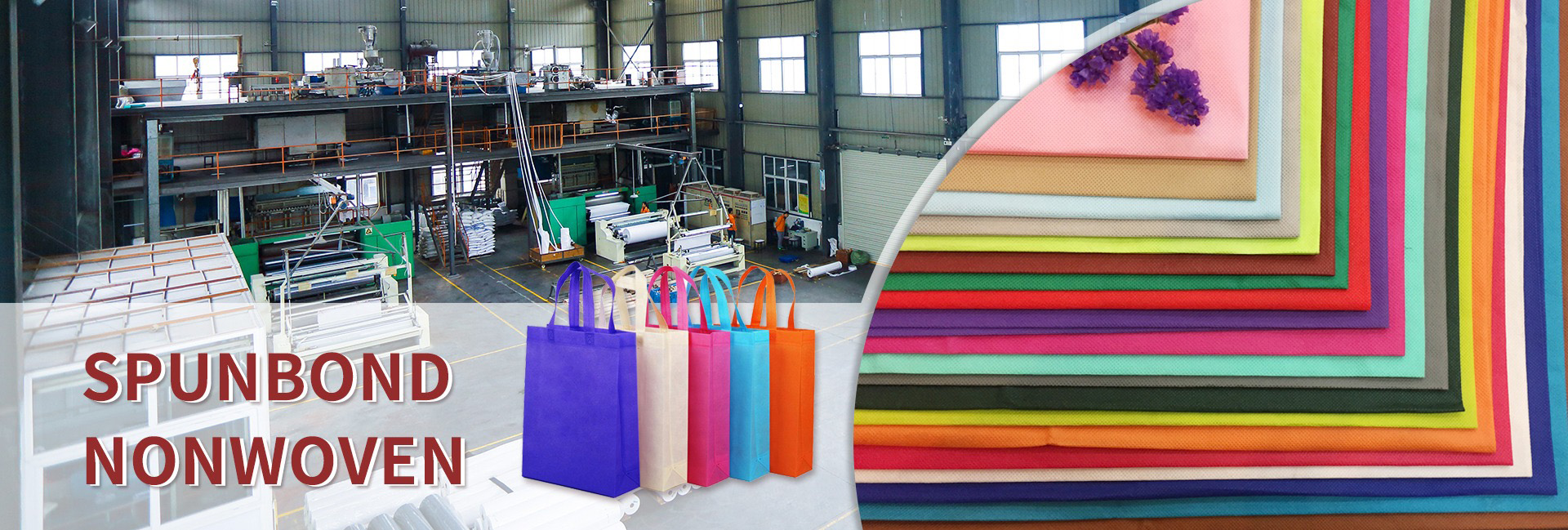
Dongguan Liansheng Non woven Technology Co., Ltd. was established in May 2020. It is a large-scale non-woven fabric production enterprise integrating research and development, production, and sales. It can produce various colors of PP spunbond non-woven fabrics with a width of less than 3.2 meters from 9 grams to 300 grams.
Post time: Apr-15-2026