
Heavy breakthrough! After ten years of collaborative research, China has achieved key technological breakthroughs in the field of anti-aging polypropylene staple fiber. Led by Donghua University and Jiangsu Botao New Materials Co., Ltd., the light aging and flame retardant engineering specific polypropylene staple fiber technology has successfully broken the foreign long-term technical blockade and equipment monopoly, and achieved independent and controllable high-end products, marking China’s leap from “following” to “leading” in this field, completing the remarkable “curve overtaking”, providing key material support for China’s new infrastructure, new energy vehicles and other strategic industries.
Polypropylene short fibers may seem slender, but they are an indispensable “strategic backbone” for the national economy and defense industry. The geotextiles and structural composite panels made from them are widely used in key areas such as large airports, high-speed rail tracks, highways, and new energy vehicle bodies, directly affecting the durability and product safety of engineering structures. However, for a long time, China’s high-end anti-aging polypropylene staple fiber market has been firmly monopolized by foreign enterprises, and core technology and production equipment have been restricted by others, which has become a “choke” problem restricting the high-quality development of China’s related industries.
The “passive situation” under foreign monopoly
Before the domestic technology breakthrough, China’s high-end anti-aging polypropylene staple fiber field was faced with the “three difficulties” for a long time, relying heavily on imports, and the industrial development was limited everywhere. On the one hand, core technologies have been blocked, and foreign companies not only strictly keep confidential key formulas such as light aging resistance and flame retardancy from China, but also prohibit the export of high-end production equipment. If Chinese companies want to introduce a German production line, they not only have to pay exorbitant fees, but are also subject to strict clauses stating that they cannot be used for military related projects, making independent development difficult.
On the other hand, product performance and production capacity are both limited. Traditional domestically produced polypropylene short fibers have pain points such as poor light aging resistance, difficulty in coordinating strength and toughness, and poor flame retardant effect. Geotextiles made from them are prone to brittle cracking and pulverization after outdoor exposure, and structural composite panels are prone to deformation and cracking, which cannot meet the stringent requirements of major engineering projects; At the same time, the single line production capacity of domestic production lines is low, the variety switching cycle is long, and the product uniformity is poor, making it difficult to achieve large-scale and high-quality production.
What is even more severe is that the high prices of imported products significantly increase the costs for downstream enterprises. Data shows that previously, China needed to import over 80000 tons of high-end polypropylene short fibers annually, with an import unit price of up to 28000 yuan/ton, which is 1.8 times that of domestic ordinary products. The import cost alone has brought a heavy burden to downstream industries and has kept China in a passive position in related fields.
Three core innovations to achieve ‘overtaking on curves’
In the face of foreign monopolies and technological barriers, the R&D team adheres to the path of “industry university research application” collaborative research and development. After ten years of polishing, they have conducted more than 1200 experiments, overcome 43 technical bottlenecks, and achieved full chain innovation from material systems, spinning processes to production equipment. Ultimately, they broke through the monopoly, achieved technological breakthroughs, and embarked on a path of independent innovation development.
Innovation 1: build a collaborative anti-aging system to solve the problem of decentralized functions. In response to the industry pain points of light aging resistance, low efficacy of flame retardant modifiers, and uneven dispersion, the R&D team has designed a triple synergistic light aging resistance system of “UV absorption UV reflection free radical capture”. Combined with the “heat absorption dilution barrier capture” quaternary green flame retardant modification technology, the key technology of gradually dispersing and strengthening functional materials, masterbatch, and fiber preparation has been developed, achieving uniform dispersion of modifiers in fibers of 1-2 microns – which is equivalent to precise control of functional particles in specific areas within the space of hair diameter. According to actual test data, this technology has increased the UV aging strength retention rate of the product by 22.5% and the ultimate oxygen index by 10.3%, both of which have reached the international leading level.
Innovation point 2: Optimize the regulation of mechanical properties and solve the “strong brittle contradiction”. Traditional polypropylene short fibers face the challenge of being brittle when strong and shrink when stretched, making it difficult to balance high strength, high elongation, and low shrinkage performance. The R&D team has developed a targeted cooling stretching heat setting collaborative control technology, which achieves a synergistic improvement in mechanical properties by precisely controlling the temperature and stress fields during the spinning process. High strength and high elongation products maintain a fracture strength of 3.8 cN/dtex while increasing their elongation at break by 12.3%; The high elongation and low shrinkage products achieve a synergistic improvement of 44.6% elongation at break and 36.5% dry heat shrinkage, perfectly adapting to the demanding requirements of different scenarios.
Innovation point three: Independently research and develop production equipment to achieve large-scale production. In response to the problems of low production capacity and uneven quality in domestic production lines, the R&D team has developed an online control technology for the molecular weight and distribution of polypropylene raw materials. They have designed and developed an integrated linkage process and equipment of “spinning cooling stretching shaping curling”, which has increased the single line production capacity by 25% and built a large capacity flexible production line with an annual output of 150000 tons. This is currently the world’s largest single line production capacity for high-end polypropylene short fibers. At the same time, through the “blowing pumping” collaborative cooling system, the coefficient of variation (CV) values of product fineness, fracture strength, and elongation are controlled below 8.3%, 12.7%, and 13.6%, respectively, achieving the unity of large-scale production and high quality.
From independent controllability to empowering industries, highlighting value
This breakthrough in domestic anti-aging polypropylene staple fiber technology has not only broken the foreign monopoly and realized the independent control of high-end products, but also has far-reaching significance for the upgrading of China’s related industries, reducing costs and improving international competitiveness, with significant economic and social benefits.
At the industrial level, technological breakthroughs drive the overall upgrading of the industry. The project has obtained 18 patents, including 9 invention patents, and led the development of one industry standard. The core technology “light aging resistance and high elongation and low shrinkage collaborative optimization technology” has reached the international leading level, filling the technical gap in China’s high-end anti-aging polypropylene staple fiber field, providing a replicable and promotable innovation model for domestic similar enterprises, and promoting the transformation of China’s polypropylene fiber industry from “low-end manufacturing” to “high-end intelligent manufacturing”.
At the economic level, significantly reducing downstream enterprise costs and enhancing industrial competitiveness. Domestic products are priced 30% lower than similar imported products, saving downstream enterprises over 1.2 billion yuan in costs by 2024 alone; At the same time, technology has driven the output value of related industries to increase by over 8 billion yuan, creating more than 2000 new job opportunities and injecting strong impetus into local economic development. As of now, the products produced by this technology have ranked first in the country in terms of output for the past three years, with a market share exceeding 35%, achieving a win-win situation of large-scale profitability and industrial empowerment.
At the application level, it widely serves major projects and strategic industries. At present, the product has been successfully applied in major infrastructure projects at home and abroad, such as the expansion project of Beijing Daxing International Airport, the underwater tunnel of the Hong Kong Zhuhai Macao Bridge, and the track slab of the Beijing Shanghai high-speed railway, extending the service life of the engineering structure from the designed 60 years to over 80 years and significantly reducing maintenance costs; In the field of new energy vehicles, its lightweight composite panels reduce the weight of the vehicle by 15%, helping Tesla, NIO and other models achieve an 8% -12% increase in range, which is in line with the trend of green and low-carbon development.
Future outlook: Continuous iteration to strengthen the advantage of domestic materials
Breaking the foreign monopoly and achieving “overtaking on the curve” is only a new starting point for the development of anti-aging polypropylene staple fiber technology in China. At present, the R&D team is focusing on the core strategy of “focusing on lightweight, tackling green challenges, breaking through new processes, and strengthening the industrial chain”, continuously promoting technological iteration and scene expansion.
In the future, the team will further optimize the green environmental protection performance, research and develop plant based anti-aging additives, replace traditional chemical additives, and meet the goal of “double carbon”; At the same time, we will promote the extension of technology to new fields such as wind turbine blades and ocean engineering, and enhance the penetration rate of domestically produced high-performance fibers in more strategic industries. In addition, it will continue to improve the industrial layout, expand the capacity scale, promote the domestic anti-aging polypropylene staple fiber to the international market, compete with foreign enterprises on the same stage, and demonstrate the strength of “Made in China Intelligently”.
From being “choked” by foreign countries to leading in technology, the breakthrough of domestic anti-aging polypropylene staple fiber is a vivid epitome of the transformation and upgrading of China’s manufacturing industry. Behind this is the decade long perseverance and innovation of the R&D team, as well as the firm steps taken by China to move from a “manufacturing power” to a “manufacturing powerhouse”. With the continuous improvement and promotion of technology, domestic anti-aging polypropylene staple fiber will play a core role in more fields, escort the development of China’s strategic industry, and write a new chapter of independent innovation of domestic materials.
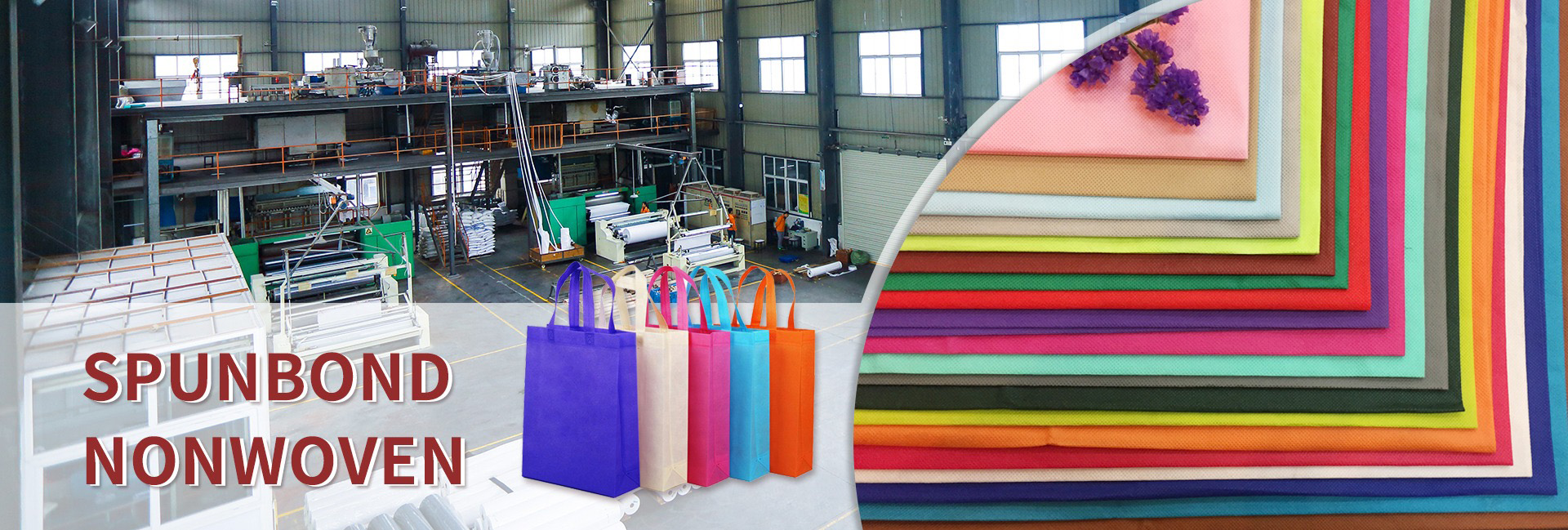
Dongguan Liansheng Non woven Technology Co., Ltd. was established in May 2020. It is a large-scale non-woven fabric production enterprise integrating research and development, production, and sales. It can produce various colors of PP spunbond non-woven fabrics with a width of less than 3.2 meters from 9 grams to 300 grams.
Post time: Apr-16-2026