
Pain points in the lifespan of outdoor products: facing the multiple erosion of complex environments
The usage scenarios of outdoor products (tents, sunshades, etc.) determine that they must withstand extreme environmental tests for a long time, and the short lifespan often stems from multiple erosion that traditional materials cannot resist. The tent bottom fabric needs to face the ground friction, gravel puncture, rainwater immersion, UV exposure, and also deal with possible problems such as acidic and alkaline soil, moisture and mold in the camping site; Sunshades are exposed to outdoor environments for a long time, withstanding high temperatures in summer (surface temperatures can reach over 70 ℃), continuous exposure to ultraviolet radiation, wind and rain impacts, and thermal expansion and contraction caused by temperature differences between day and night.
Traditional materials (such as ordinary canvas, unmodified synthetic fabric, and low-priced non-woven fabric) often experience rapid performance degradation under these tests: ultraviolet radiation can damage the fiber molecular structure, causing the material to become brittle and fade; Friction and puncture can cause local damage, leading to overall structural failure; A humid environment can easily breed mold, corrode materials, and affect safety during use. These problems directly lead to the service life of ordinary outdoor products is usually only 1-2 years, and the anti-aging spunbonded fabric solves this pain point from the root through targeted technical innovation.
Longevity gene of anti-aging spunbonded fabric: dual empowerment of material modification and structural design
The key reason why the anti-aging spunbond fabric can become the “durable core” of outdoor products lies in its all-round optimization from material formula to structural form, forming a three-dimensional protection system against environmental erosion. In the aspect of material modification, it uses high-strength polypropylene (PP) or polyester (PET) filament as the base material, and constructs dual protection by precisely adding special anti-aging additives: the addition of hindered amine light stabilizer can efficiently absorb ultraviolet energy and convert it into heat energy release, avoiding the breakage of polymer molecular chain.
According to the actual measurement, the strength retention rate of high-quality products can still reach more than 80% of the initial value after three years of outdoor exposure, while the strength attenuation of ordinary materials under the same conditions has exceeded 50%; Four season pentanol ester antioxidants can decompose hydrogen peroxides produced by materials in humid and hot environments, inhibit free radical chain reactions, prevent material oxidation from turning yellow and brittle, and effectively prevent mold and corrosion even in rainy and humid areas in the south. In addition, some high-end products will also add anti UV coatings or undergo fiber cross-linking modification to further enhance their ability to block ultraviolet radiation, allowing the material to maintain stable performance in areas with strong sunlight, such as plateaus and seaside areas.
In structural design, the anti-aging spunbonded fabric adopts the integrated process of spunbonded netting and hot rolling consolidation to form a dense and uniform network structure. This structure is different from the loose lapping of ordinary short fiber non-woven fabric. The mutual winding and hot melt bonding between filaments form a solid mechanical system, which not only gives the material excellent tensile strength (longitudinal and transverse strength are far higher than ordinary materials), but also significantly improves the wear resistance and puncture resistance – the anti-aging spunbonded fabric specially used for tent bottom cloth can wear more than 5000 times, which can easily resist the friction and puncture of ground debris and branches, and avoid the problems of traditional bottom cloth that is easily damaged and leaked; At the same time, the dense mesh structure can also form the characteristic of “breathable and impermeable”. The tent bottom fabric can quickly discharge the moisture on the ground, prevent internal condensation and water accumulation, protect the user’s comfortable experience, and reduce the accelerated aging of materials caused by long-term moisture. For sunshade fabrics, fiber density and thickness can be adjusted to ensure transparency (filtering harmful ultraviolet rays and retaining soft light) while improving structural stability and resisting the pulling and deformation caused by wind and rain impact.
Scenario adaptation: precise reinforcement for tent bottom fabric and sunshade
The anti-aging spunbonded fabric is not a “universal” material, but through scene customization, it further extends the service life of different outdoor products, and its adaptation logic closely matches the core use needs of the product.
For the tent bottom cloth, the core demand is “wear resistance, puncture resistance, waterproof and moisture-proof”. The targeted strengthening of anti-aging spunbond cloth is reflected in three aspects: first, the use of high gram weight (usually 150-300g/㎡) filament spunbond structure, higher fiber density, forming a thicker protective layer, combined with the surface calendering treatment, to improve the wear resistance and waterproof, and avoid water infiltration on the ground; Second, some products will be compounded with a layer of TPU waterproof film, which not only retains the breathability of spunbonded fabric, but also enhances the waterproof effect.
At the same time, the synergistic effect of TPU film and anti-aging spunbonded fabric will prevent the overall structure from cracking and delamination in the process of repeated folding and unfolding, solving the short life problem of traditional composite fabric that is easy to delaminate; The third is to optimize the anti mold and antibacterial performance by adding silver ion antibacterial agents or performing anti mold treatment to inhibit the growth of mold and bacteria in humid environments, avoiding the occurrence of mold spots, odors, and corrosion in materials. It is especially suitable for outdoor camping, long-term camping, and other scenarios, extending the service life of tent bottom fabric from traditional materials of 1-2 years to 5-8 years.
For the sunshade, the core demand is “weather resistance, UV resistance, wind resistance, and easy cleaning”. The matching design of anti-aging spunbonded fabric is also accurate: first, the extreme UV resistance and weather resistance. By upgrading the anti-aging additive formula, the materials will not only not fade and remain brittle under long-term exposure, but also can continuously filter more than 95% of the UV rays, which not only protects users from UV damage, but also avoids the strength decline of materials due to UV aging; Secondly, it has the ability to resist wind and deformation. The fiber arrangement is optimized using biaxial stretching technology to achieve a more balanced longitudinal and transverse tensile strength of the material, which can withstand the pulling force caused by strong winds. At the same time, its good elongation rate (40% -60%) can adapt to slight deformation of the frame, avoiding tearing caused by stress concentration; In addition, the anti-aging spunbonded cloth with anti fouling treatment on the surface is not easy to be contaminated with dust and oil, and can be cleaned after rain washing, which reduces the damage to materials caused by manual cleaning, at the same time, avoids the accelerated aging of stain residues, and extends the service life of the sunshade from 2-3 years of traditional canvas to 8-10 years.
Lifetime guarantee throughout the entire lifecycle: collaborative advantages from use to maintenance
The value of anti-aging spunbonded fabric in prolonging the life of outdoor products is not only reflected in the performance advantages of the material itself, but also in the convenience of use and maintenance throughout its life cycle. From a usage perspective, its lightweight feature (reducing weight by 30% -50% compared to traditional canvas) reduces losses during product handling and folding, avoiding repeated friction and damage at the folding point caused by excessive material weight; At the same time, good flexibility allows the product to remain soft and not easily brittle in low temperature environments (below -20 ℃), making it suitable for low-temperature scenarios such as northern winter and plateau, and solving the problem of traditional materials being easily damaged at low temperatures.
From the perspective of maintenance, the anti aging spunbond fabric’s dirt resistance and easy cleaning characteristics reduce the maintenance frequency and difficulty, without complex cleaning processes or special maintenance agents, and avoid damage to materials due to improper maintenance; In addition, its stable chemical properties make it resistant to acid and alkali, as well as oil stains. Even when used in coastal (high salt spray environment) or industrial areas (slightly polluted environment), it is not prone to corrosion or accelerated aging, further extending the effective use time of the product. This synergistic advantage of “high performance+easy maintenance” enables outdoor products made of anti-aging spunbonded fabric to maintain stable performance in long-term use, fundamentally breaking through the life limit of traditional outdoor products.
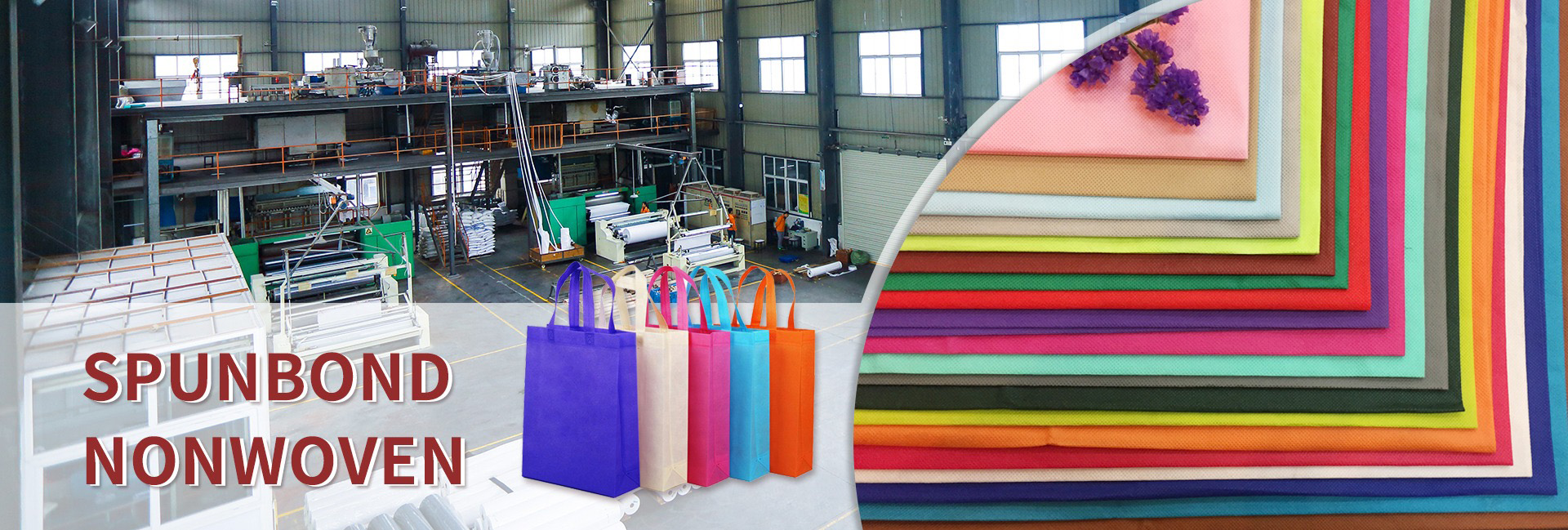
Dongguan Liansheng Non woven Technology Co., Ltd. was established in May 2020. It is a large-scale non-woven fabric production enterprise integrating research and development, production, and sales. It can produce various colors of PP spunbond non-woven fabrics with a width of less than 3.2 meters from 9 grams to 300 grams.
Post time: Mar-04-2026