
White pollution has long become a global ecological problem. Disposable plastic non-woven fabrics (such as plastic bags, masks, medical waste) are difficult to degrade and can remain in the natural environment for hundreds of years, polluting soil, water sources, and oceans, threatening ecological balance. PLA (polylactic acid) biodegradable non-woven fabric derived from biomass such as corn, with the core advantage of “returning to nature in 180 days”, breaks the degradation dilemma of traditional plastics and becomes a key breakthrough point in ending white pollution. It not only continues the practical value of non-woven fabric, but also realizes the environmental protection loop of the entire life cycle.
180 day degradation: not a gimmick, it’s a molecular level ‘self disintegration’
PLA non-woven fabric can achieve efficient degradation in 180 days, which is based on its natural molecular structure – different from the carbon carbon single bond structure of traditional petroleum based plastics (polyethylene, polypropylene), PLA molecular chains are rich in ester bonds. This “easy to break” structural characteristic allows it to be decomposed by microorganisms in the natural environment and ultimately converted into harmless substances, truly achieving “from nature, to nature”.
The degradation process is divided into three gradual stages, with no harmful residues throughout: the first stage is hydrolysis initiation. After PLA non-woven fabric comes into contact with moisture (soil moisture, seawater, body fluids, etc.), the ester bonds in the molecular chains break, and the long molecular chains decompose into short chain polylactic acid fragments. At this time, the appearance of the material gradually becomes brittle and damaged, but not completely decomposed; The second stage is microbial metabolism, where bacteria, fungi, and other microorganisms in soil or water further decompose short chain polylactic acid into lactic acid. Lactic acid, as a natural organic compound, can be absorbed by microorganisms as a “nutrient”; The third stage is complete mineralization, where microorganisms decompose lactic acid into carbon dioxide and water, ultimately integrating into the natural environment to complete the degradation cycle.
It is worth noting that the “180 day degradation” is not an absolute fixed cycle, but based on measured data from standard environments – in a soil environment of 25 ℃ and 60% -80% humidity, the degradation rate of PLA non-woven fabric can reach over 90%, and complete decomposition only takes about 180 days; Even in marine environments (25 ℃ seawater), the degradation cycle only takes 200-300 days, far better than the hundreds of years retention period of traditional plastic non-woven fabrics; Under industrial composting conditions (55-60 ℃, high humidity), the degradation cycle can be shortened to 90 days, making it suitable for large-scale waste treatment scenarios.
Degradation advantage: crushing traditional materials and solving multiple pollution pain points
Compared to traditional non degradable plastic non-woven fabrics, the degradation characteristics of PLA spunbond non woven fabrics are not only reflected in their short cycle, but also in their ability to solve pollution problems in multiple scenarios such as soil, ocean, and medical care. Their environmental advantages are irreplaceable.
In soil pollution control, traditional plastic non-woven fabric residues can hinder soil aeration and permeability, damage soil microbial communities, and affect crop growth. PLA non-woven fabric has no toxic residues after degradation, and the carbon dioxide and water produced by decomposition can provide weak assistance for plant growth. It is suitable for agricultural seedling cultivation, weed control cloth and other scenarios. Demonstration projects in Henan, Zhejiang and other places have verified that the use of PLA weed control cloth does not reduce soil fertility and increases crop yield by 5% -8%.
In the treatment of marine pollution, the advantages of PLA non-woven fabric are more prominent. According to statistics, millions of tons of plastic waste enter the ocean every year, with non-woven products accounting for over 20%, becoming a “deadly trap” for marine life. The degradation rate of PLA non-woven fabric in seawater can reach 89% after 180 days, and no microplastics are produced during the degradation process, avoiding microplastics from entering the food chain, endangering marine ecology and human health. It is suitable for making marine protective nets, disposable marine fishing equipment and other products.
In the medical field, PLA non-woven fabric has completely solved the pain point of medical waste pollution. Traditional medical non-woven fabrics (such as masks and surgical gowns) are hazardous waste that cannot be degraded and require incineration, which can easily produce toxic gases such as dioxins; PLA medical non-woven fabric can naturally degrade after use without the need for incineration, reducing toxic gas emissions and lowering the cost of medical waste disposal. At the same time, its biocompatibility can adapt to human contact scenarios, which is in line with the concept of green medicine.
The prerequisite for efficient degradation: dual adaptation of process and environment
PLA non-woven fabric achieves efficient degradation in 180 days, relying not only on its own molecular structure advantages, but also on dual support of process optimization and environmental adaptation to avoid prolonged degradation cycles due to improper processes or unsuitable environments.
In terms of production process, molecular weight control during the polymerization stage and optimization of spinning and web forming processes directly affect degradation efficiency. If the molecular weight of PLA resin is too high (exceeding 150000 g/mol), the difficulty of ester bond breaking increases, and the degradation cycle will be extended to more than 250 days; If the molecular weight is too low, it will affect the strength of the non-woven fabric. At present, the mainstream in the industry uses the “continuous polymerization melt direct spinning” process to control the molecular weight between 100000 and 120000 g/mol, which not only ensures the mechanical properties of non-woven fabrics, but also ensures that the degradation standard is met within 180 days. At the same time, chemical adhesives are discarded in the post finishing process, and physical entanglement (water jet, needle puncture) methods are used to avoid chemical substances hindering microbial decomposition.
In terms of environmental adaptability, temperature, humidity, and microbial content are key influencing factors. Low temperature (below 10 ℃) can inhibit microbial activity, leading to an extended degradation cycle of over 300 days; When the humidity is below 40%, the hydrolysis reaction is difficult to initiate and degradation almost stops; In extreme environments without microorganisms (such as sterile deserts), PLA non-woven fabric can only undergo slow hydrolysis and cannot complete complete complete mineralization. Therefore, in environments rich in microorganisms such as natural soil, farmland, and oceans, PLA non-woven fabric has the best degradation efficiency and can stably return to nature for 180 days.
Not only degradation: the full cycle environmental value of PLA non-woven fabric
The core competitiveness of PLA non-woven fabric in ending white pollution lies not only in its 180 day efficient degradation, but also in its environmental protection properties throughout its entire life cycle, from raw material production to waste degradation, achieving low-carbon and pollution-free processes, which is in line with the “dual carbon” strategy and green development concept.
On the raw material side, PLA uses renewable biomass such as corn and sugarcane bagasse as raw materials, replacing traditional petroleum resources. Producing 1 ton of PLA resin can reduce 3 tons of carbon dioxide emissions and reduce dependence on non renewable resources; On the production end, the PLA spinning and web forming process has no toxic gases or wastewater emissions, and compared to traditional plastic non-woven fabric production, energy consumption is reduced by more than 40%; On the user side, it has the advantages of natural antibacterial properties, skin friendly breathability, etc., and can replace the vast majority of application scenarios of traditional plastic non-woven fabrics; Abandoned end, efficiently degraded in 180 days, completely solving the long-term residual pollution problem of traditional plastics, forming an environmental protection loop of “renewable raw materials – zero pollution production – high-quality use – biodegradable waste”.
Conclusion: Ending the White Pollution Dilemma with Degradable Power
The core of white pollution control is to break the pollution loop of “production use waste”, and PLA biodegradable non-woven fabric has the efficient degradation ability to return to nature in 180 days, accurately solving the pain points of waste pollution of traditional plastic non-woven fabric. At the same time, it balances practical value and full cycle environmental protection attributes, becoming the core force to promote the green transformation of the non-woven fabric industry.
With the continuous upgrading of technology, the cost of PLA non-woven fabric continues to decrease and production capacity continues to expand. Currently, China’s PLA non-woven fabric production capacity accounts for 40% of the world’s total, gradually achieving large-scale application. In the future, with breakthroughs in technologies such as non grain raw material modification and degradation performance optimization, PLA non-woven fabric will cover more high-end scenarios, gradually replacing traditional non degradable plastic non-woven fabric, truly achieving the goal of “ending white pollution”, protecting the ecological environment, and promoting low-carbon sustainable development.
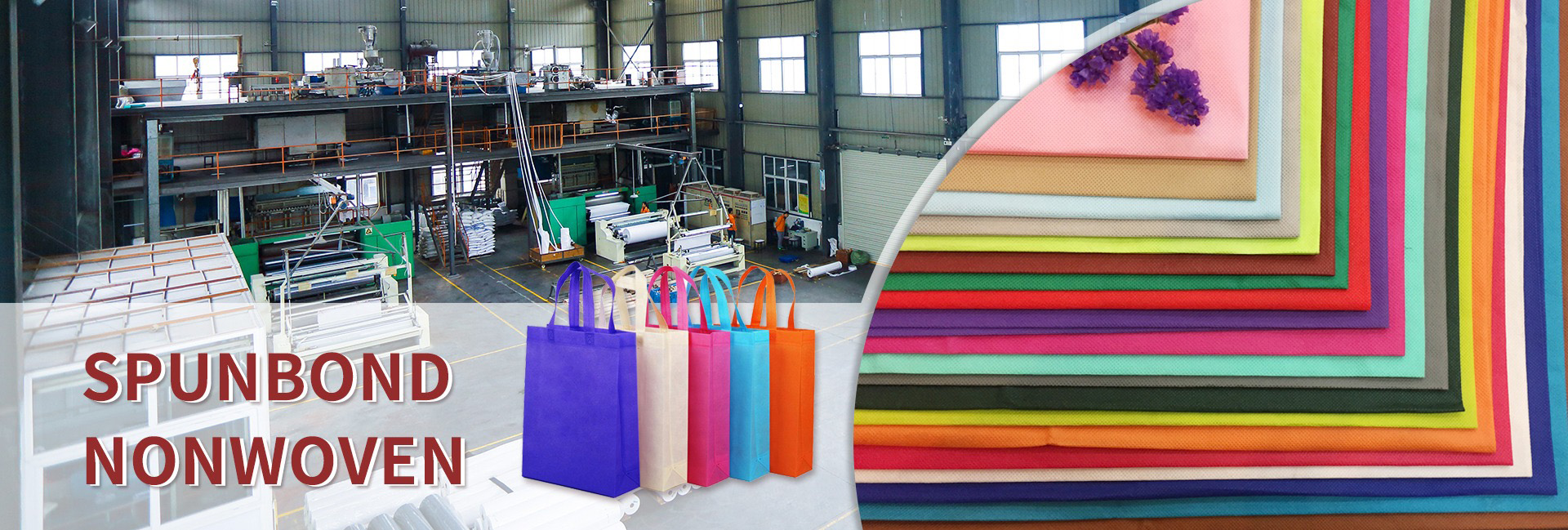
Dongguan Liansheng Non woven Technology Co., Ltd. was established in May 2020. It is a large-scale non-woven fabric production enterprise integrating research and development, production, and sales. It can produce various colors of PP spunbond non-woven fabrics with a width of less than 3.2 meters from 9 grams to 300 grams.
Post time: Feb-13-2026