
The metal components of precision instruments, such as CNC machine spindles, aerospace connectors, and electronic equipment contacts, have almost zero tolerance for corrosion, and even micrometer scale rust may cause precision failure and functional damage. Traditional rust proof oil is prone to residue and requires additional cleaning. The protection range of desiccants is limited, making it difficult to adapt to the complex structure and long-term storage and transportation needs of precision instruments.
VCI anti rust spunbond non-woven fabric, with the dual advantages of “gas-phase corrosion inhibition+physical protection”, constructs a comprehensive and residue free anti rust barrier for precision instruments through molecular level protection mechanism, becoming the core solution for rust prevention and control in high-end manufacturing fields.
Core mechanism: Collaborative protection of gas-phase corrosion inhibition and carrier characteristics
The protection core of VCI (Volatile Corrosion Inhibitor) anti rust spunbond non-woven fabric lies in the scientific integration of VCI agent and spunbond substrate, achieving a “active volatilization+precise adsorption” gas-phase protection closed loop. Its working principle can be divided into three steps:
Firstly, the VCI agent loaded in the non-woven fabric substrate (mostly amine carboxylate composite formula) slowly evaporates in a sealed environment with suitable vapor pressure, forming a corrosion inhibiting molecular vapor phase layer that can diffuse to every corner without direct contact with the metal surface;
Secondly, these molecules have strong adsorption properties for metals and will preferentially form a dense single-molecule protective film on the metal surface over corrosive media such as oxygen and moisture. Through ion binding, they block electrochemical corrosion reactions and suppress rust formation from the source;
Finally, when the concentration of corrosive media in the environment increases, the protective film will dynamically replenish corrosion inhibiting molecules to maintain the stability of the protective effect and achieve long-term rust prevention.
Spunbond non-woven fabric, as an ideal carrier for VCI agents, further enhances its protective efficacy due to its structural characteristics. The spunbond fabric made of polypropylene, polyester and other raw materials has a uniform fiber pore structure, which can ensure the slow release and uniform diffusion of VCI molecules, as well as block the intrusion of external moisture and impurities, forming a physical protective barrier. At the same time, spunbond fabric has excellent flexibility, tear resistance, and wear resistance, which can tightly adhere to the complex contours of precision instruments (such as threaded holes, inner cavities, and gaps), without causing scratches on high-precision surfaces, and can withstand external impacts such as compression and friction during storage and transportation.
Some high-end products use double-layer composite technology, with the inner layer loaded with high concentration VCI agent and the outer layer treated with anti-seepage coating, which balances corrosion inhibition and moisture resistance. The protection period can be extended to 24-36 months.
Material and process upgrade: customized protection solution adapted to precision instruments
In response to the diverse protection needs of precision instruments, VCI anti rust spunbond non-woven fabric breaks through the limitations of universal anti rust materials through customized optimization of material formula and production process, achieving dual precision protection of “material matching+scene adaptation”.
At the pharmaceutical formulation level, a metal specific customization scheme is adopted to avoid secondary damage to precision components. The corrosion mechanisms of different metal materials vary, and universal VCI agents may cause discoloration and performance degradation of non target metals – for example, copper alloy components are prone to surface blackening when in contact with amine containing agents, while aluminum alloys require a neutral formula to avoid damage to the oxide layer.
To this end, manufacturers have developed specialized VCI formulas for commonly used precision metals such as carbon steel, stainless steel, copper alloys, and aluminum alloys. For example, amine free corrosion inhibitors are used for copper product protection, and weak alkaline composite agents are used for aluminum alloy protection to ensure efficient rust prevention without affecting the surface smoothness and mechanical properties of the metal. At the same time, high-end products use environmentally friendly formulas that are free of heavy metals, nitrites, and amines, meeting the clean production requirements of precision manufacturing. After opening the package, there is no residue or odor, and it can be directly assembled and used without additional cleaning.
At the production process level, composite modification technology is used to enhance the comprehensive performance of materials. The mainstream process adopts an integrated process of “spunbond web formation+VCI impregnation/coating”, which evenly loads the corrosion inhibitor inside the fibers to prevent the agent from falling off and causing protection failure; Some products use a blend spinning process to directly fuse VCI masterbatch with spunbond raw materials, achieving molecular level bonding between the agent and the fiber and improving release stability.
For the protection of heavy precision instruments, high-density spunbond substrates of 75gsm or above are used, combined with 0.75mil anti permeability coating to enhance material toughness and moisture resistance, and can withstand the packaging pressure of steel coils and large machine tool components; For micro precision parts, we provide lightweight products that achieve precise size customization through laser cutting and are compatible with automated packaging production lines.
Precision instrument scene adaptation: full cycle protection from storage and transportation to reserve
Precision instruments need to go through multiple stages from production to terminal use, such as warehousing, long-distance transportation, and long-term storage, with significant environmental differences (such as high humidity during sea transportation, tropical high temperatures, and dry storage). VCI anti rust spunbond non-woven fabric achieves full scene coverage with its flexible application form and stable protective performance.
In warehousing and long-distance transportation scenarios, the focus is on addressing the risk of corrosion caused by humidity and temperature changes. The core components of CNC machine tools, such as guide rails and spindles, are wrapped in VCI anti rust spunbond non-woven fabric and sealed. Corrosion inhibitors can penetrate into areas that are difficult to cover with traditional anti rust methods, such as guide rail gaps and spindle bearings. Even in high humidity environments in Southeast Asia, the shelf life can be extended by more than three times.
The test data from a certain automotive parts supplier shows that the gearbox gears packaged with this material have no rust after 45 days of sea transportation, while traditional packaged products have obvious rust spots. For metal contacts in electronic devices and metal brackets on circuit boards, VCI non-woven fabric can avoid the aging problem of plastic parts caused by traditional rust proof oil. It only forms a protective film on the metal surface, significantly reducing customer complaint rates during overseas transportation.
In the long-term strategic reserve scenario, adapt to the demand for “one-time packaging and long-term protection” of precision instruments. Aerospace engine components, emergency rescue precision equipment, etc. may require a reserve period of 2-5 years. The slow-release characteristics of VCI rust proof spunbond non-woven fabric can meet long-term protection needs. T
he practice of an emergency material management center has shown that precision rescue tools packaged with this material can remain intact even after five years of unopened packaging. At the same time, for precision instruments with multiple metal combinations (such as integrated components containing steel, copper, and aluminum), composite formula VCI non-woven fabric can be used to achieve synchronous protection of multiple metals through the synergistic effect of multi-component corrosion inhibitors, avoiding contact corrosion between different metals.
Practical points and development trends: Building a strong protection loop, iterating technological boundaries
To fully utilize the protective effectiveness of VCI anti rust spunbond non-woven fabric, it is necessary to follow scientific operating procedures and avoid protection failure caused by details and loopholes.
Firstly, before packaging, it is necessary to ensure that the metal surface is clean and dry, and to remove impurities such as fingerprints and oil stains. A certain construction machinery enterprise once had poor local rust prevention effect due to the failure to remove fingerprints on the surface of parts. After supplementing the pre-treatment process, the problem was completely solved;
Secondly, it is necessary to ensure the integrity of the seal, and it is recommended to use heat sealing or specialized tape sealing packaging to avoid the loss of corrosion inhibitors and the invasion of external moisture;
Finally, when stacking, avoid sharp parts piercing the non-woven fabric. It can be used with cardboard boxes, foam and other auxiliary protection to strengthen the physical barrier.
In the future, VCI anti rust spunbond non-woven fabric will iterate towards intelligence, environmental protection, and high performance. In terms of intelligence, it integrates a color change indicator function. When the VCI agent is about to run out or the humidity inside the packaging exceeds the standard, the material color changes, making it easy for warehouse personnel to intuitively monitor the protection status.
In terms of environmental protection, promoting recyclable polypropylene substrates and biodegradable VCI agents to replace traditional non environmentally friendly materials, in line with the trend of green manufacturing, while saving the cost of treating rust proof oil waste liquid and improving overall economy.
In terms of high performance, through molecular controlled release technology, the release rate of VCI agents can be automatically adjusted with environmental temperature and humidity, and stable protection can still be maintained in extreme environments, further expanding the application boundaries in high-end scenarios such as deep space exploration equipment and deep-sea precision instruments.
Conclusion
The reason why VCI rust proof spunbond non-woven fabric can become the preferred solution for precision instrument vapor phase protection is essentially the precise adaptation of vapor phase corrosion inhibition technology and spunbond substrate performance. It not only solves the pain points of traditional rust prevention methods such as incomplete protection, residual pollution, and poor adaptability, but also meets the strict requirements of precision instruments for cleanliness, long-term effectiveness, and safety.
With the increasing demand for rust prevention and control in the high-end manufacturing industry, VCI anti rust spunbond non-woven fabric will provide more reliable support for the full life cycle protection of precision instruments through continuous technological innovation and scene optimization, helping the manufacturing industry to overcome the problem of rust and ensure product accuracy and value.
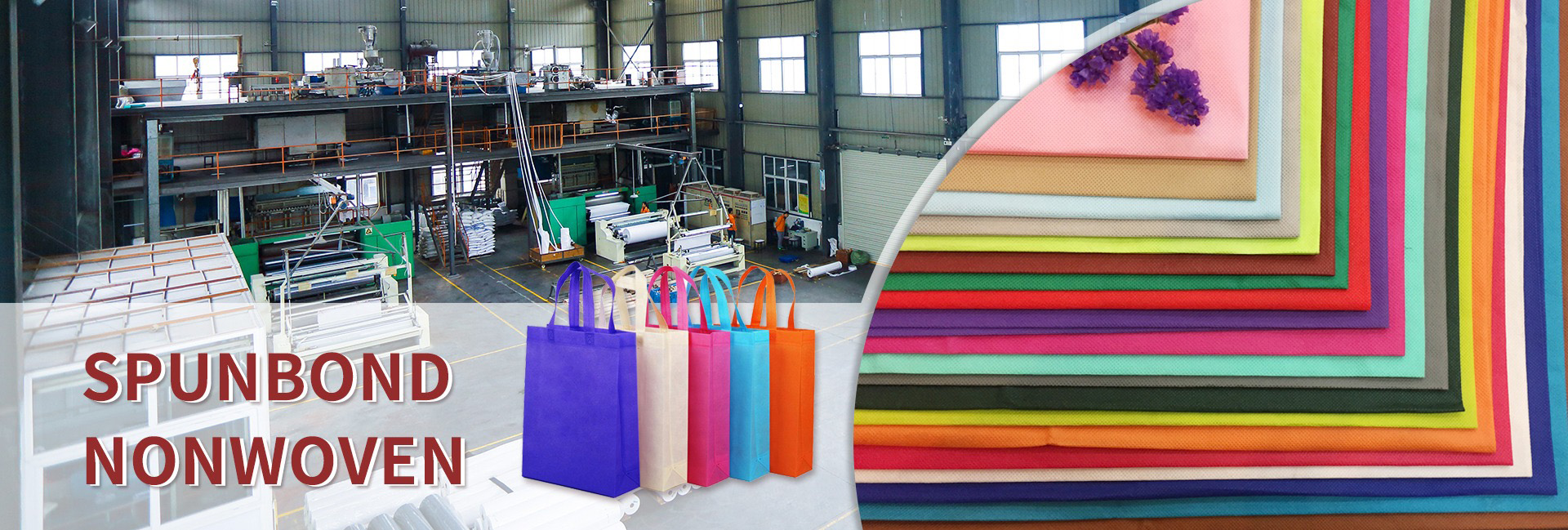
Dongguan Liansheng Non woven Technology Co., Ltd. was established in May 2020. It is a large-scale non-woven fabric production enterprise integrating research and development, production, and sales. It can produce various colors of PP spunbond non-woven fabrics with a width of less than 3.2 meters from 9 grams to 300 grams.
Post time: Jan-22-2026