
Metal corrosion is the “invisible killer” in the lifecycle of precision instruments, affecting everything from core components of industrial automation equipment to aerospace precision parts, and from metal contacts in electronic instruments to critical structures in medical devices. Even minor signs of corrosion can lead to reduced equipment accuracy, frequent malfunctions, or complete failure.
Traditional anti-corrosion methods such as oil coating and vacuum packaging either struggle to cover complex structures or suffer from drawbacks like residue removal difficulties and short-term protection. The emergence of VCI anti-corrosion spunbond non-woven fabric, with its innovative vapor-phase corrosion inhibition logic, provides precision instruments with a comprehensive, no-void, and highly adaptable anti-corrosion solution, completely breaking the limitations of traditional protection.
Core Cognition: What is the essence of VCI rust-proof spunbond nonwoven fabric?
VCI anti-rust spunbond nonwoven fabric is a functional protective material produced by deeply integrating VCI (Volatile Corrosion Inhibitor) with spunbond nonwoven base material through processes such as blending and impregnation. It combines the physical strength of spunbond nonwoven fabric with the chemical corrosion resistance of VCI vapor-phase inhibition, forming a dual combination of “physical protection + chemical protection.” In this material, the spunbond nonwoven fabric serves as the carrier, featuring breathability, flexibility, tensile strength, and wear resistance. It can conform to the complex contours of precision instruments, avoiding scratches caused by rigid contact. Meanwhile, the VCI vapor-phase corrosion inhibitor acts as the core protective component, where its volatility and adsorption properties together form the foundation of vapor-phase protection. It functions effectively without direct contact with metal surfaces, perfectly meeting the dual requirements of “anti-corrosion + anti-damage” for precision instruments.
Compared to traditional VCI rust-proof paper and rust-proof films, VCI rust-proof spunbond non-woven fabric offers more prominent advantages—it overcomes the issues of rust-proof paper such as being prone to damage and poor waterproofing, while also addressing the shortcomings of rust-proof films like insufficient flexibility and difficulty in adapting to irregularly shaped instruments. At the same time, it retains the residue-free, environmentally friendly, and safe characteristics of VCI materials, meeting the requirements for multi-scenario storage and transportation, particularly suitable for the protection of metal instruments with complex structures and precise materials. Additionally, high-quality products often utilize eco-friendly VCI formulations, free from silicone, phosphates, and heavy metals, certified by SGS and compliant with RoHS directives, aligning with the environmental standards for high-end precision instruments.
Protection Core: Scientific Principles of Gas Phase Rust Prevention
The core competitiveness of VCI anti rust spunbond non-woven fabric lies in “gas-phase protection”, which is essentially a closed-loop reaction of VCI molecules’ “volatilization adsorption film formation”. The entire process does not require full contact with the metal surface, and can achieve “no dead angle coverage”. This is also the key to its adaptation to complex structures of precision instruments. The specific process is divided into three steps:
Step 1: VCI molecule slow-release volatilization
When VCI rust proof spunbond non-woven fabric and precision equipment are placed together in a sealed packaging space, at room temperature, the VCI corrosion inhibitor in the non woven fabric substrate will slowly and continuously evaporate, releasing gas-phase molecules with positive and negative charges. This volatilization process has dynamic regulation characteristics. When the ambient temperature or humidity increases, the release rate of molecules will automatically accelerate to cope with harsh corrosive environments (such as high temperature and humidity, condensation problems in maritime transportation); When the environment tends to stabilize, the release rate slows down, achieving long-term protection and avoiding waste of VCI components. It is worth noting that the volatilization rate of VCI molecules is precisely regulated, and it will not be exhausted too quickly, nor will it cause untimely protection due to slow volatilization. Under normal conditions, long-term protection can be achieved, and the protection period of some high-quality products can reach more than 3 years.
Step 2: Gas phase molecules diffuse without dead corners
The evaporated VCI gas-phase molecules will diffuse to every corner along with the air flow in the enclosed space – whether it is the small gaps, threaded interfaces, internal cavity holes of precision instruments, or complex areas that are difficult to reach with oil or traditional packaging, VCI molecules can penetrate and cover them. This feature completely solves the pain point of “blind spots” in traditional physical protection, especially suitable for complex precision components such as gears, bearings, sensors, and micro motors, which can achieve comprehensive protection without disassembling and packaging. At the same time, the density of VCI molecules is slightly higher than that of air. When non-woven fabric is placed on top of the instrument, the molecules can naturally sink, further enhancing the protective coverage of complex cavities.
Step 3: Molecular film formation passivation protection
When VCI gas-phase molecules come into contact with the metal surface of precision instruments, they will combine with the positive and negative electrons on the metal surface due to electrostatic adsorption, forming a dense protective film with 3-5 layers of molecular thickness on the metal surface (some formulations can form a single molecular film of 1-3 nanometers). This protective film has a dual protective effect: firstly, it provides physical barrier, effectively isolating corrosive media such as oxygen, moisture, salt, dust, etc. from coming into contact with the metal surface, blocking the occurrence of oxidative corrosion from the source; The second is chemical passivation, which inhibits the flow of electrons between the anode and cathode by changing the electrochemical properties of the metal surface, blocks the initiation of electrochemical corrosion reactions, and achieves “active protection” rather than simply “passive blocking”. This film-forming process does not affect the accuracy and gloss of the metal surface, nor does it leave any oil stains, adhesive layers, or other residues. After unpacking, the equipment can be directly put into use without additional cleaning.
Adaptation advantage: Why precisely match the protection needs of precision instruments?
The anti rust protection of precision instruments requires not only “comprehensive and no dead corners”, but also “no damage to accuracy, no residue, and adaptability to multiple scenarios”. The characteristics of VCI anti rust spunbond non-woven fabric precisely meet these needs and have irreplaceable advantages compared to traditional anti rust methods:
1. Non contact protection to avoid accuracy damage
The surface accuracy of precision instruments requires extremely high precision, and traditional oil coating methods may result in uneven oil film, affecting the assembly accuracy of instruments; Hard packaging materials are prone to scratches. VCI anti rust spunbond non-woven fabric, with its gas-phase protection characteristics, does not need to be tightly adhered to metal surfaces. At the same time, the non-woven fabric itself is soft in texture and can wrap around the surface of instruments to form a buffer, which can avoid scratches, bumps and damage, and will not affect the dimensional accuracy and surface smoothness of instruments due to contact pressure. It is suitable for protection of sensitive parts such as mirrors and precision scales.
2. No residue and easy to clean, improving production efficiency
Traditional methods such as rust proof oil and wax can leave residues on metal surfaces, and instruments need to go through multiple processes such as cleaning and drying before being put into use. This not only increases labor costs, but may also lead to subsequent assembly failures due to incomplete cleaning. The protective film produced by VCI anti rust spunbond non-woven fabric will naturally dissipate with the flow of air after unpacking, leaving no residue on the metal surface. The equipment can directly enter the next process, greatly improving production and assembly efficiency, especially suitable for fields such as electronics and medical devices that require high cleanliness.
3. Multi material compatibility, suitable for complex instruments
Precision instruments are often composed of a variety of metal materials (such as steel, copper, aluminum, zinc, alloy, etc.). Different metals have different corrosion characteristics. Traditional antirust materials are designed for a single material, which is difficult to achieve unified protection. VCI anti rust spunbond non-woven fabric can achieve multi metal compatibility protection through customized VCI formula, which can protect both ferrous metals and adapt to non-ferrous metals without the need to classify and package components of different materials, reducing packaging complexity and costs. At the same time, it has a wide temperature range (-40 ℃~80 ℃) and can cope with various scenarios such as low-temperature storage and high-temperature transportation, meeting the global transportation and long-term storage needs of precision instruments.
4. Lightweight and environmentally friendly, in line with green production
Precision instruments, such as aerospace parts and portable instruments, have high requirements for lightweight packaging. VCI anti rust spunbond non-woven fabric is lightweight and does not significantly increase packaging weight and volume, making it easy to transport and store. At the same time, the environmentally friendly VCI formula is biodegradable, and the non-woven fabric substrate can also be recycled. Compared with traditional anti rust materials containing heavy metals and harmful chemicals, it is more in line with the global trend of green production and environmental emissions, avoiding environmental pollution and secondary pollution of equipment during the anti rust process.
Application scenarios and usage points
Core application scenarios
The application of VCI rust proof spunbond non-woven fabric covers various precision metal instruments, especially suitable for fields with strict protection requirements: industrial precision components (gears, bearings, screws, sensors), electronic and electrical equipment (connectors, circuit board metal contacts, micro motors), aerospace parts, medical equipment (surgical instruments, precision testing equipment metal components), automotive precision components (engine core components, electronic control system components), etc. It can be used for short-term protection after production, long-term storage protection, and global shipping protection.
Key usage points
1. Ensure packaging airtightness: Gas phase protection relies on enclosed spaces and should be used in conjunction with sealed bags, sealed boxes, etc. to avoid loss of VCI molecules. If the packaging is damaged, it should be replaced in a timely manner, otherwise the protective effect will be greatly reduced; It is recommended to let the VCI molecules fully diffuse and form a saturated protective atmosphere after being completely sealed for 30-40 minutes.
2. Control the surface condition of the instrument: Before use, it is necessary to ensure that the surface of the precision instrument is clean, dry, and free of oil, dust, water stains, etc. Otherwise, it will affect the adsorption and film formation of VCI molecules, reducing the anti rust effect.
3. Reasonable selection of dosage and specifications: Choose the appropriate thickness (15g/m ²~50g/m ²) and dosage based on the volume of the enclosed space, the size of the equipment, and the protection period. The conventional dosage is 100g-130g/m ³, and the dosage should be appropriately increased in harsh environments (high humidity, high salt spray).
4. Standardize storage conditions: Unused VCI rust proof spunbond non-woven fabric should be sealed and stored in a cool, dry, and ventilated place to avoid moisture and high temperature environments that may cause VCI components to evaporate prematurely. The shelf life is usually 12 months.
Summary: Reshaping a new paradigm for rust prevention in precision instruments
Compared with the many limitations of traditional anti rust methods, VCI anti rust spunbond non-woven fabric takes “gas-phase protection” as the core, achieving a breakthrough in “no dead corners, no damage, no residue, and long-term protection”. It not only solves the protection problem of complex structures of precision instruments, but also takes into account production efficiency and environmental protection needs, becoming the preferred solution for anti rust protection of high-end precision instruments.
With the iterative upgrading of VCI nanotechnology and intelligent slow-release formulas, it will develop towards multifunctional integration in the future, combining anti-static, anti mold, flame retardant and other properties to further adapt to the comprehensive protection needs of high-end fields such as electronics and aerospace, completely helping the industry bid farewell to the problem of metal corrosion, and safeguarding the long-term stability and service life of precision instruments.
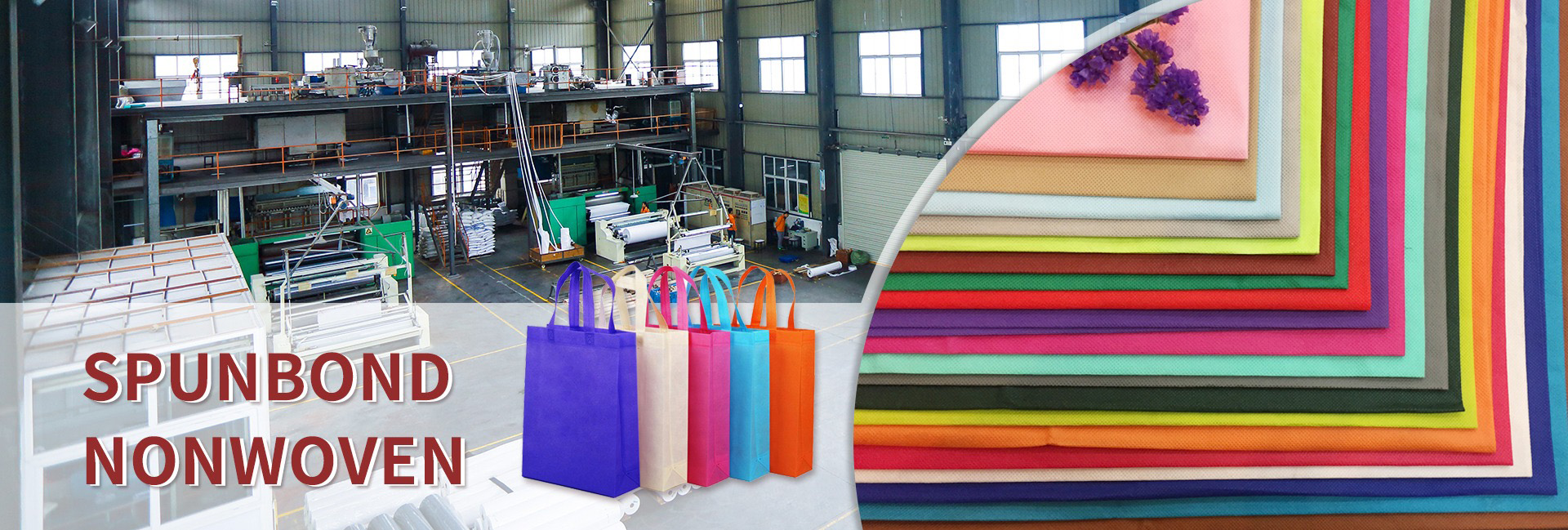
Dongguan Liansheng Non woven Technology Co., Ltd. was established in May 2020. It is a large-scale non-woven fabric production enterprise integrating research and development, production, and sales. It can produce various colors of PP spunbond non-woven fabrics with a width of less than 3.2 meters from 9 grams to 300 grams.
Post time: Feb-25-2026