
The safety performance of car interiors is one of the core bottom lines in car manufacturing, and flame retardancy is of utmost importance. If the flame retardancy of car interior materials does not meet the standard, once a fire occurs, the fire will quickly spread and produce a large amount of toxic smoke, seriously threatening the safety of drivers and passengers. Therefore, the global automotive industry has extremely strict requirements for the flame retardant standards of interior materials. Both domestic and international standards have made clear limitations on key indicators such as combustion rate, smoke density, and droplet melting. Among numerous automotive interior materials, flame-retardant polyester spunbond hot-rolled fabric has successfully passed multiple stringent automotive interior standards due to its excellent flame-retardant performance and stable physicochemical properties. It has become the preferred substrate for interior components such as car seats, ceilings, and door panels, laying a solid foundation for driving and riding safety.
Core Requirements for Flame Retardant Materials in Automotive Interiors
The core of the flame retardant standard for automotive interior materials is to “control fire and reduce harm”, which not only prevents the rapid spread of flames, but also reduces the release of smoke and droplets during combustion, and provides valuable escape time for drivers and passengers. At present, the mainstream global automotive interior flame retardant standards are mainly divided into two systems. The national standard is the core in China, and the American standard is the representative internationally. Each standard has detailed and strict assessment requirements. Materials that can pass these standards are considered qualified automotive interior flame retardant substrates.
Domestically, the core implementation standards include GB 8410-2006 “Combustion characteristics of automotive interior materials” and GB/T 17591-2025 “Flame retardant fabrics”. GB 8410, as a mandatory standard, explicitly requires that the combustion rate of automotive interior materials should not exceed 100mm/min; As an upgraded recommended standard, GB/T 17591-2025 has added stricter requirements for flame-retardant fabrics used in automotive interiors, dividing combustion performance into three levels: B1, B2, and B3. Level B1 requires a combustion rate of ≤ 100mm/min and a smoke density level of ≤ 15. It also adds a vertical combustion rate assessment and focuses on droplet indicators to prevent the risk of short circuits in new energy vehicle battery packs.
Internationally, the most widely used standard is the American standard FMVSS 302, which requires automotive interior materials to pass multiple tests such as cigarette ignition, open flames, and hot metals to ensure that the materials are not easily ignited, the fire does not spread quickly, and the hazards of combustion are reduced. In addition, there are international standards such as ISO 3795 and DIN 75200 that provide supplementary requirements for the flame retardant performance of automotive interiors in different scenarios. These strict standards constitute the “safety threshold” for automotive interior materials, and flame-retardant polyester spunbond hot-rolled fabric, with its excellent performance, has successfully crossed this threshold and gained industry recognition.
Flame retardant compliance+multi-dimensional adaptation, meeting the urgent needs of automotive interiors
The reason why flame-retardant polyester spunbond hot-rolled fabric can pass the strict automotive interior standards is that it perfectly integrates excellent flame-retardant performance with the physical and chemical characteristics required for automotive interiors, meeting both flame-retardant safety requirements and adapting to the usage scenarios of automotive interiors, solving the pain points of traditional flame-retardant materials that are “flame retardant, not durable, and not environmentally friendly”.
The ultimate flame retardant performance is its core competitiveness. This material is made of 100% high-quality polyester chips as raw materials, modified by adding special flame retardants, and combined with spunbond hot rolling technology, achieving excellent effects of “non flammability upon contact with fire and self extinguishing upon leaving fire”. According to authoritative testing, its combustion speed can be controlled within 50mm/min, far exceeding the requirements of GB 8410 standard and meeting the B1 level standard of GB/T 17591-2025. At the same time, it has passed all test items of FMVSS 302; When burning, the smoke density level is ≤ 15, there is no release of toxic or harmful gases, and there is no melting or dripping, effectively avoiding the risk of secondary fire and fully meeting the flame retardant safety requirements of automotive interiors.
In addition to meeting flame retardant standards, it also has multiple advantages in adapting to automotive interiors. Firstly, it is strong and durable, relying on the continuous spunbond filament structure and hot rolling consolidation process. Its longitudinal fracture strength can reach 120-180N/50mm, and its latitudinal strength is 80-130N/50mm. It has outstanding tear and wear resistance, and can withstand external impacts during the production, assembly, and long-term use of automotive interiors, making it less prone to damage; Secondly, it is lightweight and environmentally friendly, with a weight that can be controlled between 180-250g/m ². It is lightweight, does not increase the load on the car body, and has no chemical glue added during the production process. There is no odor or harmful substances, which meets the environmental standards for car interiors; Thirdly, it is easy to process and adapt, with a soft texture and good extensibility. It can easily fit the complex curves of interior components such as seats, ceilings, and door panels, making it easy to cut and fit without affecting the flexibility of interior design.
Crafted with ingenuity to ensure that every batch of products meets standards
Flame retardant polyester spunbond hot-rolled fabric can stably pass strict automotive interior standards, which cannot be achieved without precise and rigorous production processes. Every link revolves around “flame retardant compliance and stable performance”, from raw materials to finished products, with strict control throughout the process to ensure consistent product quality.
The selection of raw materials is the foundation. High quality native polyester chips with characteristic viscosity ≥ 0.64dL/g are selected to eliminate the mixing of recycled materials. At the same time, environmentally friendly phosphorus based flame retardants are added to ensure that the flame retardants are evenly dispersed in the fibers through precise proportioning, achieving long-lasting flame retardancy and avoiding the deterioration of flame retardancy during later use. Unlike traditional post finishing flame retardant processes, this material uses “pre spinning modification” technology to integrate flame retardants into polyester melt, making flame retardant properties a characteristic of the fiber itself. After multiple water washes, the flame retardant effect can still be maintained, meeting the long-term needs of automotive interior use.
During the production process, polyester chips and flame retardants are melted at high temperatures of 280-290 ℃, and then spun into flame-retardant polyester filaments using advanced spinning equipment. These filaments are then stretched by high-speed airflow and precisely laid into a uniform and dense fiber network structure; Subsequently, a dual pass hot rolling shaping process was adopted to precisely control temperature and pressure, ensuring high material strength while retaining sufficient porosity and balancing flame retardancy and breathability. Each batch of products needs to undergo multiple indicators such as combustion speed, smoke density, and droplet melting. Only when all meet the standards of GB 8410, FMVSS 302, etc., can they leave the factory, ensuring that all products entering the automotive interior production process are qualified products.
Widely used in car interiors to safeguard driving and passenger safety
With the strength to meet strict automotive interior standards and excellent comprehensive performance, flame-retardant polyester spunbond hot-rolled fabric has been widely used in various automotive interior components, becoming the preferred substrate for mainstream car manufacturers, covering various models such as fuel vehicles and new energy vehicles, and safeguarding the safety of drivers and passengers with strength.
In the field of car seats, it can be used as a base material for seat covers and backrests, which can achieve flame retardant protection, good breathability and comfort, meet the needs of human contact, wear resistance, easy cleaning, and long-term use without aging; In the field of automotive ceilings, it can be used as the core material for ceiling lining, lightweight and soft, able to adapt to the curved design of the ceiling, and meet the flame retardant performance standards to avoid safety hazards caused by the combustion of ceiling materials; In the field of automotive door panels and instrument panels, it can be used as a lining substrate to achieve flame retardancy, sound insulation, and shock absorption, balancing safety and comfort.
In addition, it is also used in interior components such as car curtains, sunshades, and seat belt wraps, and can be seen in both passenger and commercial vehicles, as well as traditional fuel vehicles and new energy vehicles. At present, the mainstream models of many domestic automobile manufacturers use flame-retardant polyester spunbond hot-rolled fabric as the base material for their interior components. With stable flame-retardant performance and reliable quality, they have gained recognition from manufacturers and consumers, providing a solid guarantee for the safety of automobile interiors.
Domestic upgrading, leading the new direction of flame retardant materials for automotive interiors
With the development of the automotive industry towards high-end, green, and intelligent directions, the requirements for flame retardant materials in automotive interiors are constantly increasing. They not only need to meet basic flame retardant standards, but also take into account multiple needs such as environmental protection, lightweight, and comfort. At present, domestic enterprises have achieved large-scale and customized production of flame-retardant polyester spunbond hot-rolled fabrics, with product performance benchmarking international advanced levels. Not only can they stably pass strict standards such as GB 8410 and FMVSS 302, but they also have higher cost-effectiveness, gradually breaking the foreign monopoly of high-end automotive interior flame-retardant materials.
In the future, with the continuous upgrading of flame retardant technology, flame retardant grade polyester spunbond hot-rolled fabrics will further optimize their performance, develop more environmentally friendly, lightweight, and flame retardant products, and adapt to the special needs of new energy vehicles. The focus will be on improving droplet control and smoke toxicity control capabilities to avoid secondary risks caused by battery pack short circuits. As a high-quality substrate that meets strict automotive interior standards, it will continue to deepen its roots in the automotive interior field, helping the automotive industry improve its interior safety level and create a safer and more comfortable travel environment for drivers and passengers.
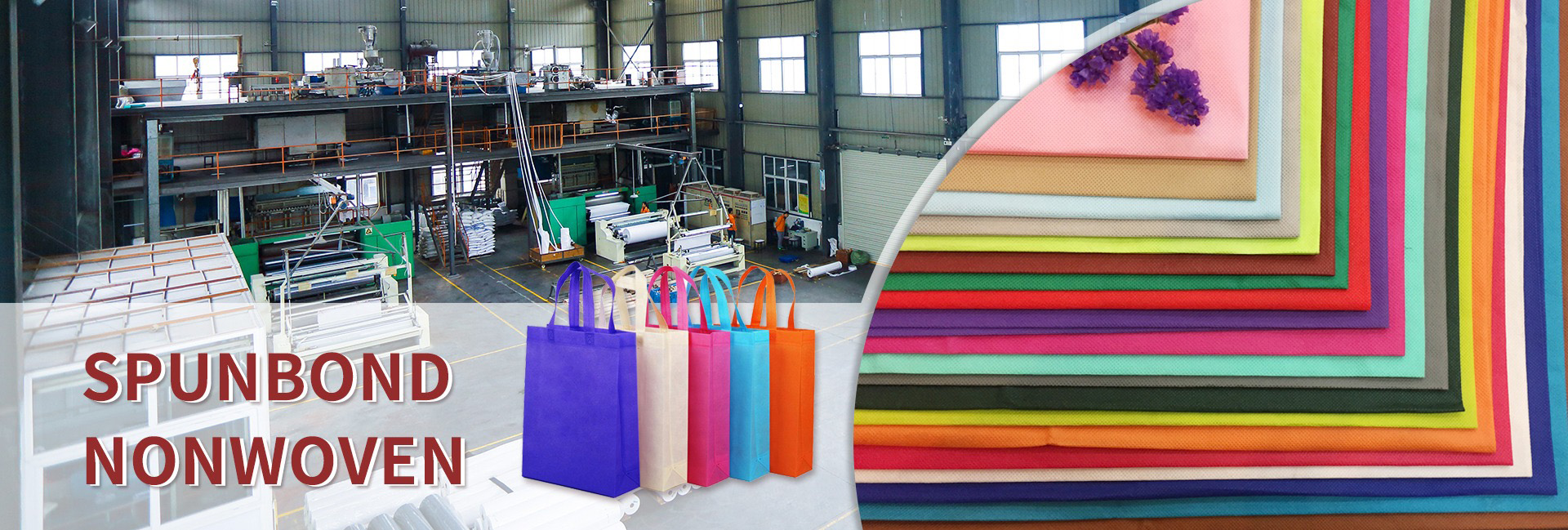
Dongguan Liansheng Non woven Technology Co., Ltd. was established in May 2020. It is a large-scale non-woven fabric production enterprise integrating research and development, production, and sales. It can produce various colors of PP spunbond non-woven fabrics with a width of less than 3.2 meters from 9 grams to 300 grams.
Post time: Mar-28-2026