
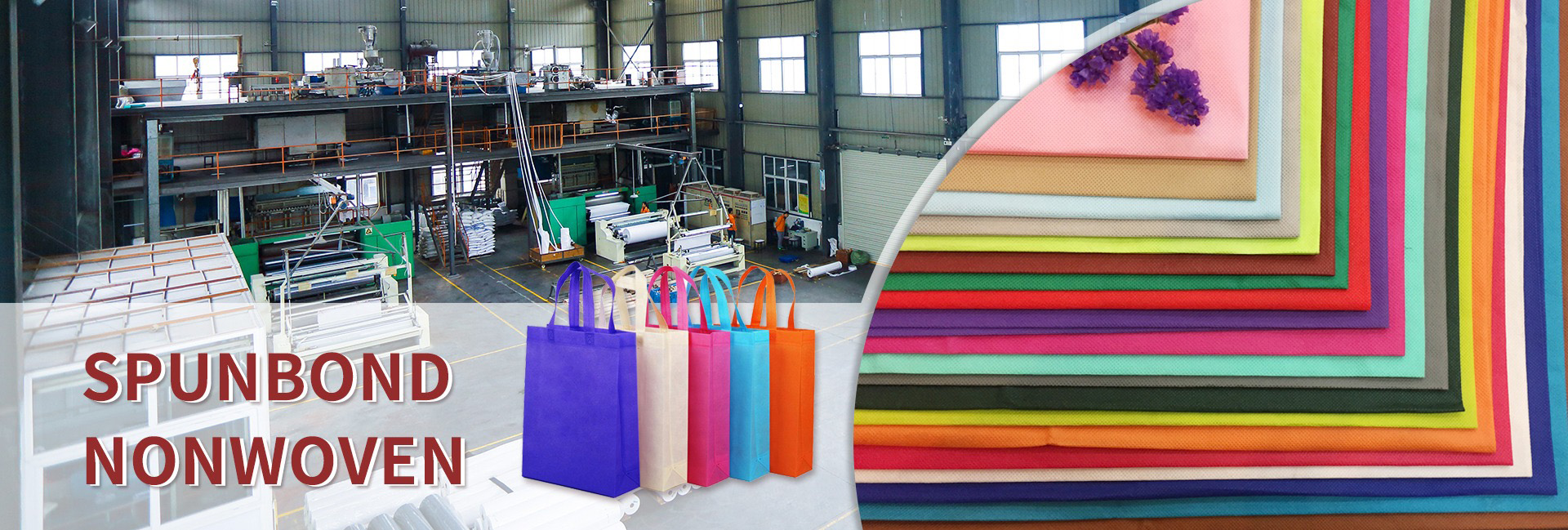
When it comes to non woven fabric, we tend to associate it with “disposable” and “easy to wear and tear” – outdoor sunshade nets become brittle and cracked after six months, agricultural plastic film becomes powdery and falls off after three months of sun exposure, and home non-woven curtains turn yellow and brittle after one year, and fall off with just a gentle pull. These seemingly common “aging tragedies” were the pain points of the nonwoven industry until the emergence of anti-aging black technology, which completely broke this dilemma and enabled the nonwoven industry to achieve a counter attack from “short-lived consumption of materials” to “ten years as new”.
Why do some non-woven fabrics end up dead after just a few months, while others can withstand the sun and rain for ten years and still maintain their good texture? Today, we will dismantle the “frozen age” password of anti-aging non-woven fabric, reveal the black technology hidden in the fiber, and you will understand the strength of a piece of “durable” non-woven fabric.
How deadly is the “aging nightmare” of ordinary non-woven fabrics?
Before the popularization of anti-aging technology, the “fragility” of ordinary non-woven fabrics has long become a consensus, especially in outdoor scenes, the aging speed is shocking. And the root of all of this can be traced back to the characteristics of high molecular weight materials such as polypropylene (PP) and polyester, which are the core raw materials of non-woven fabrics.
In the molecular chains of ordinary non-woven fabrics, there are tertiary carbon atoms that are extremely sensitive to ultraviolet radiation. Once exposed to sunlight, high temperatures, and humid environments for a long time, UVA/UVB in sunlight will directly damage the molecular chains and trigger photocatalytic degradation reactions; At the same time, hot oxygen and humid heat will accelerate the oxidation process, forming a “chain destruction” – first the color turns yellow and the surface becomes hard, then it becomes brittle and powdery, and finally loses its toughness completely, breaking at the first pull.
The data shows that the tensile strength of PP non-woven fabrics without anti-aging ingredients can decline by more than 60% after 6 months of outdoor exposure, completely losing its use value . For example, ordinary non-woven film in the agricultural field will pulverize and break under strong ultraviolet radiation for only 1-2 months in summer, resulting in the loss of soil insulation effect; Geotextiles in the construction field, due to aging and brittleness, cannot prevent soil erosion and may even cause local landslides.
What’s even more troubling is that this kind of aging is irreversible – once it becomes brittle or powdery, no matter how it is maintained, it cannot restore its original performance and can only be replaced, which not only wastes money but also causes serious material waste and environmental pollution. Because of this, “anti-aging” has become the core direction of upgrading the non-woven fabric industry, and a series of breakthroughs in “frozen age” black technology have completely changed the fate of non-woven fabrics.
Three “frozen age codes” to make non-woven fabrics “as new as new for ten years”
The reason why the anti-aging non-woven fabric can get rid of the “short-lived” fate lies in the three core black technologies – raw material modification, composite protection and process upgrading, which work together to block the aging process from the molecular level, just like putting a layer of “invisible shield” on the non-woven fabric to resist the multiple erosion of sunlight, high temperature and damp heat.
Code 1: raw material modification, injecting “anti-aging gene” into fiber
Raw materials are the basis of anti-aging. The first step of anti-aging non-woven fabrics is to “genetically modify” the core materials to improve the anti-aging ability from the root. Unlike ordinary non-woven fabrics, which only use pure PP particles, anti-aging non-woven fabrics will add a variety of functional ingredients in the raw materials to form a “composite formula” and build the first line of defense against anti-aging .
The most critical ones are composite antioxidants and UV resistant dispersions – composite antioxidants can bind with free radicals generated during the oxidation of non-woven fabrics, block aging chain reactions, inhibit PP particle degradation, and maintain fiber fracture strength and elongation ; UV resistant dispersion can efficiently absorb and shield UV rays, inhibit photo oxidative reactions, and reduce the possibility of PP particle degradation, which is equivalent to putting a “sunscreen” on the fibers.
A more breakthrough is the addition of enhanced cellulose nanocrystals, which can be modified with fluorinated or silane coupling agents to form a molecular arranged combination with PP particles. Fluorinated cellulose nanocrystals can improve the surface energy of PP particles, enhance the hydrophobicity of non-woven fabrics, and prevent moisture degradation; Silane coupling agent modified cellulose nanocrystals can enhance the fracture strength of fibers, making non-woven fabrics less prone to brittle fracture.
According to the industry standard ratio, the raw materials of anti-aging non-woven fabrics are generally 70-75 parts PP particles, 12-18 parts composite antioxidant, 52-57 parts anti ultraviolet dispersion, and 13-17 parts reinforced cellulose nanocrystals, which achieve synergy through scientific ratio and delay aging at the root .
Password 2: Composite protection, dual support to resist multiple erosion
If the modification of raw materials is “internal anti-aging”, then the composite protection technology is “external reinforcement”. Through “internal+external” dual protection, it can comprehensively resist the aging hazards. Many people mistakenly believe that anti-aging is just “anti ultraviolet”, but in fact it is not – high temperature, damp heat, wind and rain in the outdoor environment will accelerate the aging of non-woven fabrics, so multiple protections are required.
On the one hand, a dual protection system of “anti UV+anti thermal oxidation” is adopted. In addition to the anti UV components added to the raw materials, a special anti UV coating is also attached to the surface of the non-woven fabric to double block UV rays. Even if it is exposed to long-term sunlight, it will not turn yellow or become brittle; Meanwhile, composite antioxidants can resist thermal oxidative aging caused by high temperatures, avoiding accelerated degradation of fibers in high-temperature environments .
On the other hand, in response to humid and hot environments, the modification of fluorinated cellulose nanocrystals enhances the hydrophobicity of non-woven fabrics, making them less susceptible to moisture and mold, and avoiding fiber breakage caused by hydrolysis reactions. This “all-round protection” enables anti-aging non-woven fabrics to not only resist outdoor sun exposure, but also adapt to humid and rainy environment, and the applicable scenarios are greatly expanded.
Password 3: Process upgrade, lock in the “youthful” state of fibers
No matter how good the raw materials and protective ingredients are, without advanced production processes, they cannot achieve maximum effectiveness. The “freezing age” effect of anti-aging non woven fabrics can not be separated from the upgrading of refined production process. Every step from raw material mixing to finished product shaping hides “mystery” .
The core process is divided into two steps: the first step is to mix all raw materials except for the anti ultraviolet dispersion liquid evenly, melt blend, extrude, filter and extract oil at a temperature of 240-250 ℃, then draw and cool, and perform fiber shaping at 135-145 ℃. Finally, compression shaping is carried out at 155-160 ℃ to obtain the non-woven fabric to be treated [1]; The second step is to immerse the non-woven fabric to be treated in the anti ultraviolet dispersion solution, dip roll it for 2-2.5 hours, dry it, and then dip it at 170-190 ℃ for 20-40 seconds to finally obtain the anti-aging non-woven fabric .
This fine process can make anti-aging ingredients evenly distributed in each fiber, avoiding the problem of “insufficient local protection”; At the same time, high-temperature stretching and shaping can make the fiber structure more compact, improve the toughness and durability of non-woven fabrics, lock in the “youthful state” of fibers, and ensure that they do not become brittle or powdery during long-term use.
Anti-aging non-woven fabrics vs ordinary non-woven fabrics, the gap is clear at a glance
Through two groups of actual measurements, we can see how amazing the “freezing age” effect of anti-aging non-woven fabrics is and how big the gap between anti-aging non-woven fabrics and ordinary non-woven fabrics is, which can be easily verified at home.
Test 1: UV exposure test (simulating outdoor scenes)
Take samples of anti-aging non-woven fabrics and ordinary non-woven fabrics of the same thickness and specification, and place them in direct sunlight for 30 days and 8 hours a day. Observe the changes of the two:
Anti aging non-woven fabric: after exposure to the sun for 30 days, the color is basically unchanged, and the original color is still maintained. The texture is soft and flexible when touched by hand, and there is no crack when gently pulled. The tensile strength only decreases by 5%, which does not affect the use at all;
Ordinary non-woven fabric: It starts to turn yellow and harden after 7 days of exposure to sunlight, shows obvious brittleness after 15 days, breaks easily with a gentle pull after 20 days, and completely pulverizes after 30 days. It falls off with a pinch by hand, completely losing its use value.
Test 2: Damp heat aging test (simulating rainy season and humid environment)
Place two sets of samples in a constant temperature and humidity chamber with a temperature of 35 ℃ and a humidity of 80% for 20 days, simulate an outdoor humid environment, and observe the changes:
Anti aging non-woven fabric: after 20 days, there is no mildew or softening on the surface, the toughness remains, the waterproof performance does not decline, and the tensile strength does not change significantly;
Ordinary non-woven fabric: After 10 days, it will become moldy and softened, with a sticky surface. After 15 days, its toughness will significantly decrease, and after 20 days, it will show local damage or breakage, making it unusable.
In addition, the service life of anti-aging non-woven fabrics is also much longer than that of ordinary non-woven fabrics – the outdoor service life of ordinary non-woven fabrics is usually 3-6 months, while high-quality anti-aging non-woven fabrics can be used stably for 5-10 years in the outdoor environment, truly realizing “ten years as new” .
These scenes have long been inseparable from anti-aging non-woven fabrics
With the maturity of anti-aging black technology, anti-aging non-woven fabrics have already gone out of the laboratory and penetrated into all aspects of our lives. Especially in the scenes with high requirements for durability, they play an irreplaceable role and become the “invisible helper” to promote the upgrading of many industries .
The transformation from “consumables” to “durable goods” in the field of agriculture
Agriculture is one of the core application scenarios of anti-aging non-woven fabrics. With its excellent anti-aging performance, it promotes the transformation of agricultural mulching film, fruit tree bagging and other products from “consumables” to “durable goods” . The film added with anti-aging ingredients can resist long-term sun and rain, and its service life can be extended to 1-2 years, reducing farmers’ replacement frequency and cost input; Anti aging non-woven fabric is used for fruit tree bagging, and the weather resistance is increased by 3 times, which can not only prevent the ultraviolet ray from burning the fruit, but also maintain the stability of the microclimate in the bag, and improve the fruit quality .
Building and Infrastructure: Strengthening the Durability Defense Line
In the field of construction and infrastructure, the demand for anti-aging non-woven fabrics is increasingly prominent [3]. In the expressway slope protection and dam protection works, the anti-aging geotextile shall withstand more than 12 hours of ultraviolet radiation on a daily basis. With its excellent anti-aging performance, it can effectively prevent water and soil loss and improve project safety; The building waterproof layer and roof covering material can prevent cracking and leakage caused by ultraviolet rays after using anti-aging non-woven fabric, and greatly improve the building durability .
Home and outdoor fields: balancing aesthetics and durability
In the home scene, the weather resistance of balcony curtains, outdoor furniture fabrics, etc., has been improved by 4 times after the anti-aging non-woven fabrics were used, and even after three summers of exposure, they can still maintain bright colors and good texture ; Outdoor awnings, leisure chairs, shopping bags and other products are made of anti-aging non-woven fabrics, which can be used outdoors for a long time without yellowing, embrittlement, beauty and durability.
In addition, anti-aging non-woven fabrics are also gradually popularized in the fields of industrial filtration, automobile interior decoration, medical protection, etc. With the durability of “ten years as new”, the use cost and resource waste are reduced .
The counter attack of anti-aging non-woven fabric from embrittlement and pulverization to ten years as new is essentially the progress of material science and technology. The “frozen age” black technology hidden in fibers, without complex principles, solves the fatal pain points of ordinary non-woven fabrics in the most practical way, saving money and reducing environmental pollution.
Now, with the continuous upgrading of technology, the application scenarios of anti-aging non-woven fabrics are still expanding, and the price is gradually affordable . The next time you buy non-woven products, especially those used in outdoor, agricultural, architectural and other scenes, don’t just look at the thickness and price, and focus on anti-aging black technology. Only in this way can you truly achieve “one purchase, long-term benefits” and say goodbye to the trouble of frequent replacement.
Dongguan Liansheng Non woven Technology Co., Ltd. was established in May 2020. It is a large-scale non-woven fabric production enterprise integrating research and development, production, and sales. It can produce various colors of PP spunbond non-woven fabrics with a width of less than 3.2 meters from 9 grams to 300 grams.
Post time: Apr-21-2026