
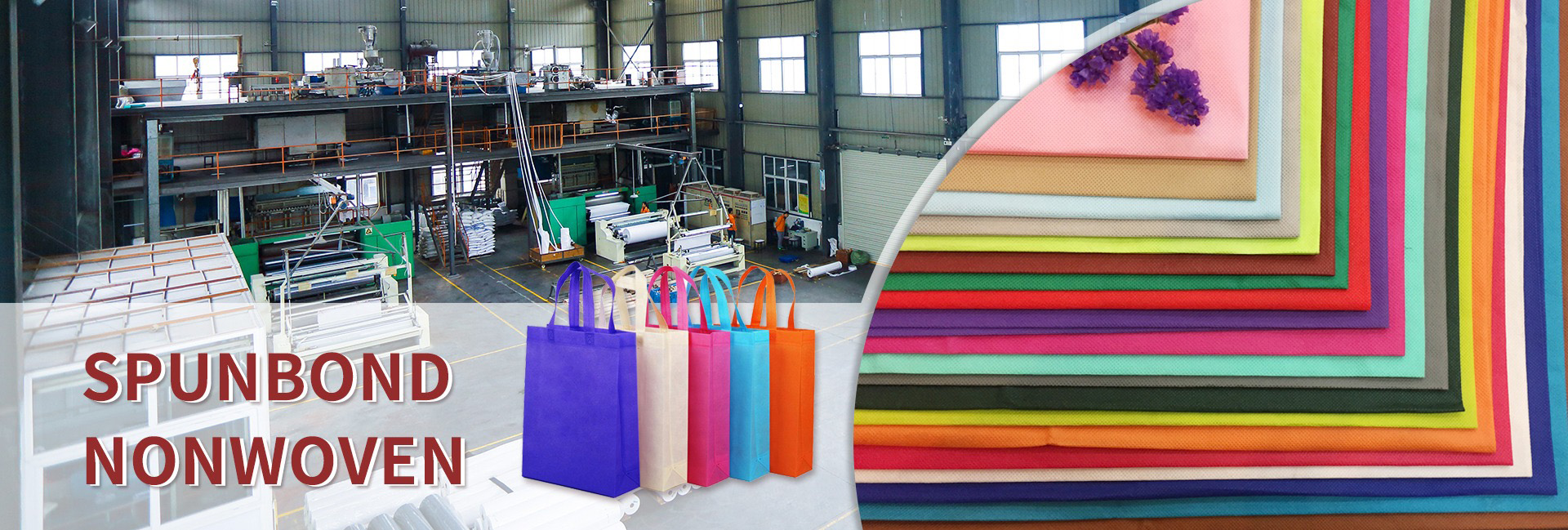
Polypropylene short fiber non-woven fabric (commonly known as “polypropylene short fiber geotextile”) is a three-dimensional fluffy non-woven material made from polypropylene (PP) short fibers through opening, combing, laying, and needle punching consolidation. It has high strength, acid and alkali resistance, anti-aging and low cost. From highway and railway, water conservancy and environmental protection to new energy vehicles, it has become the core basic material and invisible safety barrier of China’s infrastructure and manufacturing industry.
Why is it polypropylene short fiber non-woven fabric?
High strength+high elongation: The longitudinal and transverse tensile strength can reach 20-80 kN/m, with an elongation rate of 40% -80%. It is resistant to tearing and deformation, and suitable for foundation settlement and vehicle load impact.
Strong chemical stability: acid and alkali resistance, corrosion resistance, mold resistance, low temperature resistance (-40 ℃), long-term non degradation and non aging in soil/sewage, design life ≥ 25 years.
Three dimensional pore structure: porosity of 80% -90%, with excellent permeability (drainage) and precise filtration (preventing soil particle loss), solving the core engineering requirement of “water drainage and soil retention”.Lightweight, low-cost, and easy to process: with a density of only 0.91 g/cm ³, it is 30% lighter than polyester; The raw materials and technology are mature, and the price is only 60% -70% of that of long filament geotextile; It can be cut and spliced freely, with high on-site construction efficiency.
Localization breakthrough: High end products rely on imports before 2020 (with an annual import of over 80000 tons and a unit price of 28000 yuan/ton); In recent years, enterprises such as Hubei Botao and Tiandingfeng have overcome aging resistance, flame retardancy, and high-strength technologies, built production lines with a capacity of 10000 tons, exceeded national standards in performance, significantly reduced costs, and achieved independent controllability.
Geotechnical materials: the “underground steel bars” of major infrastructure projects
1. Highways and railways: roadbed “stabilizer” and “anti-seepage membrane”
Roadbed isolation and reinforcement: laid between the roadbed and cushion layer to isolate soil of different particle sizes, prevent loss of base soil, increase roadbed bearing capacity by 30% -50%, reduce pavement cracks and settlement, and extend road life to 15-20 years.
High speed rail ballastless track: used for the bottom layer of the track bed, dispersing train dynamic loads, preventing ballast from embedding into the foundation, blocking capillary water rise, ensuring track geometric accuracy and long-term stability, and is a key material for “zero settlement” of high-speed rail.
Major engineering cases include the Hong Kong Zhuhai Macao Bridge, Beijing Daxing Airport, Zhengzhou Wanzhou High speed Railway, and the Yangtze River to Huaihe River Diversion Project, all of which have been widely adopted, with a single project usage of hundreds of thousands of square meters.
2. Water conservancy and environmental protection: dam “protective clothing” and landfill “anti-seepage shield”
Dam/Channel Anti filtration Drainage: Used for reservoir dams, river embankments, and channel slope protection, intercepting sediment, discharging seepage, preventing piping and dam collapse, it is the “lifeline material” of hydraulic engineering.
Landfill anti-seepage system: As a protective layer of HDPE anti-seepage film, it prevents the film from being punctured by sharp garbage; Simultaneously guide and discharge leachate, block the spread of harmful substances, and ensure the safety of soil and groundwater.
Emergency flood control: in 2020, Wuhan “Huoshen Mountain/Leishen Mountain” and 2021, Henan rainstorm disaster relief, impervious and drainage layers will be quickly laid to help emergency construction and post disaster reconstruction.
3. Architecture and Municipal Engineering: Waterproof “Reinforced Layer” and Crack Resistant “Fiber Mesh”
Waterproof membrane base: As a reinforcement layer of SBS/APP modified asphalt waterproof membrane, it significantly improves the tensile strength, tear resistance, and puncture resistance of the membrane, solving the pain points of “easy breakage, leakage, and short life” in building roof/underground waterproofing.
Crack resistant mortar/concrete additive: Short fibers are directly added to mortar/concrete to form a three-dimensional random network structure, which suppresses shrinkage cracks, improves impact resistance and impermeability, and is widely used for secondary lining of walls, floors, and tunnels.
An invisible skeleton of lightweight and safety
1. Interior lightweighting: weight reduction, sound insulation, heat insulation, flame retardancy
Roof/door/carpet bottom layer: replacing traditional heavy fabrics and foam materials, reducing weight by 30% -50% (vehicle weight reduction of 10-15 kg, range improvement of 5% -8%); Sound insulation and noise reduction of 3-5 decibels, thermal insulation and heat preservation; Flame retardant standard (vertical combustion ≤ 100 mm/min), improving passenger safety.
Thermal insulation/buffer layer of battery pack: used between the battery module and the shell, it provides thermal insulation (temperature resistance -40 ℃ to 120 ℃), shock absorption, insulation flame retardancy, and prevents thermal runaway diffusion. It is a key material for the safety of new energy vehicle batteries.
2. Filtration and protection: air/air conditioning/battery filtration
Engine/air conditioning filter: gradient pore structure, dust holding capacity increased by 40%+, efficient filtration of PM2.5 and impurities, protecting the health of the engine and passengers.
Battery separator auxiliary material: used as a separator support layer in some processes to enhance the strength and thermal stability of the separator, ensuring battery cycle life and safety.
From ‘Underground’ to ‘On the Car’: The Value Logic of Invisible Heroes
Engineering safety bottom line: In harsh environments such as underground, underwater, heavy load, and corrosion, replacing traditional sand and gravel, asphalt, and metal mesh can achieve more reliable reinforcement, isolation, filtration, and anti-seepage at a lower cost, and safeguard the safety bottom line of infrastructure construction.
Whole life cycle cost reduction: Although the unit price is higher than ordinary materials, the lifespan is extended by 2-3 times, maintenance is reduced by more than 50%, and the whole life cycle cost is reduced by 30% -40%. It is the core choice for infrastructure “cost reduction and efficiency improvement”.
Domestication ensures the security of the industrial chain: Breaking foreign monopolies, fully independent and controllable in raw materials, equipment, and processes, ensuring the safety, stability, and cost control of major projects and the new energy vehicle industry chain.
Ordinary materials, extraordinary mission
Polypropylene short fiber non-woven fabric, without the grandeur of steel and cement, without the brilliance of chip batteries, but deeply buried in every road, every dam, and every new energy vehicle, silently guarding the safety, durability, and economy of the country’s infrastructure with the identity of “underground steel bars” and “invisible skeleton”.
From geotechnical materials to new energy vehicles, its story is a microcosm of China’s manufacturing industry’s “ordinary materials, extraordinary innovation, independent controllability, and service to the great country”.
Dongguan Liansheng Non woven Technology Co., Ltd. was established in May 2020. It is a large-scale non-woven fabric production enterprise integrating research and development, production, and sales. It can produce various colors of PP spunbond non-woven fabrics with a width of less than 3.2 meters from 9 grams to 300 grams.
Post time: Apr-24-2026