
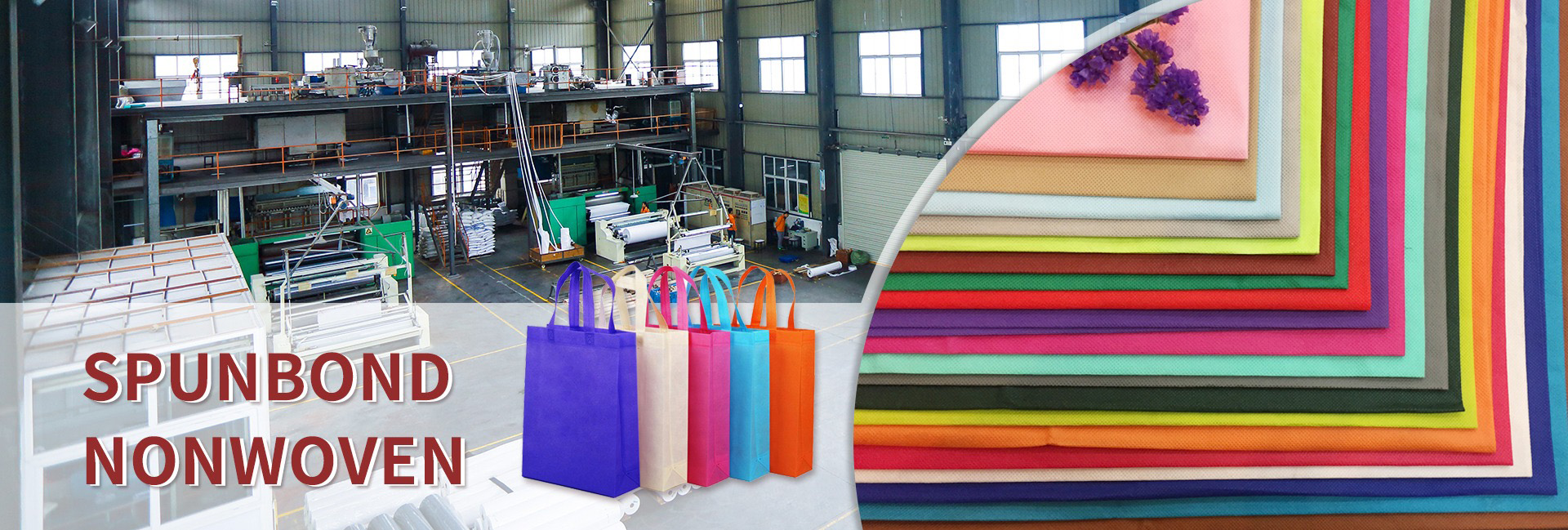
When ZARA launches recycled polyester spunbond tote bags, when Lululemon uses antibacterial spunbond fabric to make yoga backpacks, and when niche designer brands integrate three-dimensional spunbond technology into handbags – polyester spunbond non-woven fabric, which was once synonymous with supermarket shopping bags and express packaging bags, is breaking through the triple of “environmental protection+texture+function”, from a cheap and practical basic product to a trendy item sought after by the fashion circle. In the global fashion bag market by 2025, the proportion of polyester spunbond materials has soared from 8% in 2019 to 22%, with the average price of high-end products exceeding $500, completely breaking the stereotype of “non-woven fabric=low-end”. The core of this transformation is the deep integration of material modification, process innovation, and design concepts, allowing polyester spunbond nonwoven fabrics to retain their inherent advantages of “lightweight and durability” while also possessing the “beauty, personality, and environmental value” required for fashionable items.
Transformation Foundation: “Fashionable Upgrade” of Material Characteristics
The entry of polyester spunbond non-woven fabric into the fashion industry is first due to its precise iteration of its own characteristics – through physical modification and chemical treatment, it solves the shortcomings of traditional non-woven fabric such as “rough texture, single form, and weak function”, and builds the core ability to adapt to fashion bags.
(1) Texture Innovation: From “Plastic Feeling” to “Fabric Grade Touch”
Traditional polyester spunbond non-woven fabric has a coarse fiber diameter (2-3dtex), obvious thermal bonding points, and a “plastic film like” rigid touch on the surface, which is difficult to meet the “delicacy” requirements of fashionable bags. The breakthrough in fine filament spunbond technology has completely changed this situation:
Fine denier spinning: Using 1.0-1.5dtex fine denier PET filament spunbond, the fiber specific surface area increases by 40%, forming a “soft and sticky touch” similar to cotton fabric on the surface. After friction coefficient testing, its dynamic friction coefficient decreased from 0.35 to 0.28, approaching the touch of linen fabric;
Texture customization: By adjusting the roller patterns of the hot rolling mill (such as lychee pattern, crocodile pattern, weaving pattern), a three-dimensional texture is embossed on the surface of the spunbond fabric, replacing the traditional leather embossing process, and the depth of the pattern can reach 0.5-1mm, far exceeding that of ordinary non-woven fabric;
Composite reinforcement: It is combined with thin knitted fabric and recycled suede fabric through “spunbond+bonding” to form a double-layer structure with “outer softness and inner stiffness” – the outer layer maintains the texture of the fabric, and the inner layer relies on the strength of the spunbond fabric (fracture strength ≥ 25N/5cm) to achieve the requirement of “shape without softness and collapse” of the bag. This composite fabric has been used by Coach in its tote bag series, reducing weight by 35% compared to pure leather models.
(2) Breakthrough in Form: From “Flat Cutting” to “Stereoscopic Molding”
Traditional non-woven fabrics have poor ductility (with a fracture elongation of only 15% -20%), and can only be made into bags through flat cutting and splicing, making it difficult to achieve complex three-dimensional shapes. The combination of elastic spunbond and compression molding technology endows polyester spunbond nonwoven fabrics with “shaping ability”:
Elastic modification: 5% -8% TPU elastic particles are mixed into PET slices and spun to produce elastic spunbond fabric. The elongation at break is increased to 40% -50%, and the rebound rate reaches 90%. It can be used for stretching parts such as the side and shoulder straps of bags, replacing traditional elastic fabrics;
Hot pressing molding: By combining spunbond fabric with low melting point PET mesh and pressing it in a high-temperature mold at 120-140 ℃, the three-dimensional bag body and curved handle of the bag can be directly made without cutting or splicing, with a molding accuracy error of less than 0.5mm. A fast fashion brand uses this process to produce semi-circular hand-held bags, with a production efficiency three times higher than manual splicing;
Lightweight support: Using a composite substrate of “spunbond+honeycomb structure”, the density is only 0.18g/cm ³, which is 60% lighter than the cardboard support layer used in traditional bags, but can provide the same support strength (bending strength ≥ 8MPa), suitable for making tote bags and briefcases that require “stiffness”.
(3) Functional Enhancement: From “Single Carrier” to “Multi Scene Adaptation”
Fashion bags not only need to be aesthetically pleasing, but also need to meet the needs of “waterproof, stain resistant, and antibacterial” in daily use. Functional modification has made polyester spunbond non-woven fabric a “versatile material“:
Waterproof and Anti fouling: Apply 1-2 μ m polytetrafluoroethylene (PTFE) nano coating on the surface of spunbond fabric, increasing the water contact angle from 90 ° to 115 °, achieving the “lotus leaf effect”. Liquid splashes such as cola and coffee can directly slide off, and the coating thickness is only 1/5 of traditional waterproofing agents, without affecting the texture of the fabric;
Antibacterial and Deodorizing: 0.5% silver ion antibacterial agent is added during the spinning process. After testing, the antibacterial rate against Escherichia coli and Staphylococcus aureus is greater than 99%, and the antibacterial rate remains above 95% after 20 washes. It is suitable for making commuting bags, sports backpacks, and other styles that are prone to bacterial growth;
Anti UV: Adding 0.3% UV-531 anti UV agent, UPF (UV protection factor) reaches 50+, which can be used for outdoor picnic bags and beach bags to avoid the aging of items inside the bag (such as cosmetics and electronic products) caused by UV radiation.
Process Innovation: Reshaping the “Efficiency and Environmental Protection” of Bag Production
The landing of polyester spunbond non-woven fabric in the field of fashion bags also relies on innovation in production processes – it not only solves the problems of “high pollution, low efficiency, and high cost” in traditional leather and fabric bags, but also meets the dual needs of “fast reverse production” and “sustainability” in the fashion industry.
(1) Environmental Protection Technology: From “High Carbon Production” to “Circular Loop”
The trend of “carbon neutrality” in the fashion industry has made the “environmental attributes” of polyester spunbond non-woven fabric the core competitiveness. Its low-carbon advantages in production and recycling far exceed traditional bag materials
Application of recycled materials: spunbond fabric spun from 100% recycled PET bottle sheets can reduce 3.2 tons of carbon emissions per ton of material, and can be directly spun through color masterbatch (without subsequent dyeing), avoiding water pollution caused by traditional dyeing processes (100 tons of water are consumed per ton of fabric dyeing). H&M’s’ Conscious Exclusive ‘series of bags uses this recycled spunbond fabric, consuming approximately 12 recycled mineral water bottles per bag. After its launch, sales increased by 60% year-on-year;
Adhesive free bonding: replacing the traditional adhesive bonding process, using the “hot pressing bonding+ultrasonic welding” technology to splice bags, avoiding the release of VOCs (volatile organic compounds) from adhesive, and the bonding strength reaches 15N/5cm, far exceeding the 10N/5cm of adhesive bonding. A backpack made by an environmentally friendly brand using this process has passed the EU ECOCERT certification, becoming the first non-woven bag brand to enter Sephora’s sales market;
Degradable optimization: For disposable fashion bags (such as flash sale limited edition), we have developed a “PET+PBAT” blend adhesive fabric that can degrade in a natural environment for 180 days without releasing microplastics during the degradation process, solving the “white pollution” problem of traditional plastic bags.
(2) Fast response production: from “long cycle” to “7-day delivery”
The demand for “fast fashion” and “personalization” in the fashion industry requires bag production to have the ability of “short cycle, small batch, and multi style”. The process characteristics of polyester spunbond non-woven fabric perfectly meet this demand:
Digital printing fast response: Traditional fabric printing requires the production of a screen printing, with a cycle of 7-10 days. However, polyester spunbond fabric, due to its flat surface and good ink absorption, can be directly printed using digital sublimation printing, with a pattern resolution of 300dpi and a design to finished product time of only 24 hours. It supports “printing from one piece” and meets the customization needs of niche designer brands;
Modular production: The bag is disassembled into modules such as the bag body, shoulder straps, and accessories. Each module is produced using standardized spunbond substrates, and assembly only requires snap fasteners and zippers. One production line can produce 5-8 styles simultaneously, reducing the changeover time from 4 hours to 30 minutes. A certain e-commerce brand uses this model to achieve a fast response chain of “user order factory production 48 hour delivery”;
AI assisted design: By using AI algorithms to generate bag styles (such as color matching and texture based on seasonal trends), and directly integrating them with spunbond production parameters (such as automatically matching 150g/㎡ or 200g/㎡ spunbond fabric weight based on design stiffness requirements), the design cycle is shortened from 1 week to 2 days, and the final product matches the design draft by 95%.
Design Breakthrough: From “Functional” to “Fashion Symbol”
The key to making polyester spunbond non-woven fabric a truly fashionable item lies in the breakthrough of design concepts – no longer considering it as a “substitute material”, but creating a fashionable form that traditional materials cannot achieve around its “light, soft, and malleable” characteristics, and even becoming a “signature element” of the brand.
(1) Environmental Fashion: Wear ‘Sustainable’ on Your Body
Environmental protection has become a core issue in the fashion industry, and the “regenerative properties” of polyester spunbond non-woven fabric naturally fit this trend, becoming a “visual carrier” for brands to convey environmental protection concepts:
Transparent traceability: Printing a “recycled material traceability QR code” on the inside of the spunbond bag, consumers can scan the code to view the recycling location and carbon footprint of the PET bottle production process. This “visual environmental protection” design has increased Patagonia’s sales of recycled spunbond backpacks by 80%, and the repurchase rate has increased by 45%;
Deconstructive design: Utilizing the “easy to cut and lightweight” characteristics of spunbond fabric, adopting a deconstructive style, the bag is divided into detachable modules (such as main bag, side bag, storage bag), which can be used separately or reassembled, and all modules are made of 100% recycled spunbond material, in line with the environmentally friendly design concept of “less is more”. This style has become a classic collection of Stella McCartney;
Natural Element Fusion: Splicing spunbond fabric with natural materials such as reed fiber and bamboo fiber, imprinting natural textures such as leaves and flowers on the surface, conveying the concept of “coexistence between humans and nature”. Loewe’s “Paula’s Ibiza” series spunbond tote bags adopt this design and sell out quickly for up to 890 euros.
(2) Functional fashion: coexistence of “practicality” and “aesthetics”
The demand of modern consumers for bags has long surpassed the basic function of “carrying things” and pursued “multi-functional scene adaptation”. The “customizable function” feature of polyester spunbond non-woven fabric perfectly meets this demand:
Commuting scenario: Design a spunbond commuting bag with “anti-theft+partitioned storage” – using anti cut spunbond fabric (with added glass fiber, with a cutting strength of 50N), built-in 15.6-inch computer compartment, power bank storage bag, and a bag body weight of only 0.8kg, 25% lighter than traditional nylon commuting bags. It has been selected as an employee commuting bag by Microsoft and Google;
Sports scenario: Developing a “waterproof+breathable” sports backpack – the outer layer is made of waterproof spunbond fabric, the inner layer is made of breathable spunbond mesh fabric (with a breathability of 1200L/m ² · s), the side pockets can accommodate 500ml water cups and are waterproof, and the shoulder straps are added with elastic spunbond layers to reduce the weight. Lululemon’s sports backpack has accounted for 30% of the brand’s bag category sales since its launch;
Travel scenario: Launching a “folding+wear-resistant” travel storage bag – made of high weight (200g/㎡) spunbond fabric, with a wear resistance coefficient of 100000 times (far exceeding the 50000 times of ordinary fabrics). After folding, the volume is only 1/5 of the original volume, making it easy to fit into luggage. This MUJI collection bag has an annual sales volume of over 1 million pieces.
(3) Niche Personality: Designers’ ” Material Experiment Field ‘
The “plasticity” of polyester spunbond non-woven fabric makes it a “creative carrier” for niche designers, creating highly recognizable fashion items through unconventional processes:
3D printing combination: cutting spunbond fabric into specific shapes as the “base material” for 3D printing, and printing three-dimensional decorations (such as acrylic flowers and metal texture patterns) on the surface. This “spunbond+3D printing” bag has been unveiled at Paris Fashion Week and has become a “breakthrough” for niche designer brands;
Light and shadow effect design: using semi transparent spunbond fabric (weight 50-80g/㎡), embedding LED light strips inside, and controlling the light color and flashing mode through a mobile app to create a “night glow bag”. This design is used by Diesel for party series bags, priced at $699, but still in high demand;
Recycling of materials: After crushing waste spunbond bags, they are spun back into “recycled spunbond yarn” and then woven into bags, retaining the “irregular texture” of the broken surface and conveying the design concept of “incomplete beauty”. This “recycled” bag has been selected for the “Sustainable Design Exhibition” at Milan Design Week.
Future trend: the “two-way rush” of environmental protection and technology
With the deepening pursuit of “sustainability” and “intelligence” in the fashion industry, the application of polyester spunbond non-woven fabric in the field of bags will upgrade towards “more environmentally friendly, intelligent, and personalized” direction, further consolidating its position as a fashion item.
(1) Biobased and Biodegradable: The Ultimate Environmental Solution
In the future, bio based PET spunbond technology will gradually replace traditional petroleum based PET – bio based PET slices made from corn starch and sugarcane bagasse fermentation, with a carbon footprint reduced by 70% compared to traditional PET, and can be fully degraded by blending with PBAT. It is expected that by 2028, bio based polyester spunbond bags will occupy 15% of the market share, completely resolving the environmental controversy of “recycled materials still being plastic”.
(2) Intelligent Function Integration: From “Passive Bearing” to “Active Service”
Integrating intelligent modules with spunbond technology to develop “intelligent spunbond bags”: embedding flexible sensors in spunbond fabric to monitor items inside the bag (such as forgetting keys or mobile phones), and connecting to mobile phones via Bluetooth for reminders; Using conductive spunbond fabric to make shoulder straps, it can achieve “wireless charging” function (charging can be done by placing the phone on the shoulder strap); The surface is coated with a temperature sensitive color changing coating, which can change color according to the ambient temperature, achieving personalized needs of “one package with multiple colors”.
(3) Personalized customization: ‘Everyone is a designer’
Relying on AI design and digital printing technology, in the future, consumers can “customize bags” through brand apps – choose the color, texture, functional module (such as whether to add waterproof and antibacterial functions) of spunbond fabric, and even upload their own patterns. The system automatically generates a 3D preview image, and after confirmation, they can receive customized bags within 72 hours, achieving a personalized experience of “thousands of people, thousands of bags”. This model will reduce the customization cost of polyester spunbond bags by 50% and further expand the market audience.
Conclusion: Material innovation reshapes the boundaries of fashion
The transformation of polyester spunbond non-woven fabric from handbags to fashionable items is not only an upgrade of the material itself, but also a microcosm of the sustainable transformation and technological innovation of the fashion industry. It breaks the bias of “environmentally friendly materials=low-end” and “functional materials=lack of design sense”, proving that through technological innovation and design creativity, traditional industrial materials can also enter the forefront of fashion.
As more and more fashion brands incorporate polyester spunbond non-woven fabric into their core material system, and consumers are willing to pay high prices for “environmentally friendly+designed” spunbond bags, this “material revolution” is no longer a niche attempt, but an inevitable trend in the development of the fashion industry. In the future, with the further integration of bio based and intelligent technologies, polyester spunbond non-woven fabric will continue to break through the boundaries of fashion and become the core carrier connecting “environmental protection, technology, and aesthetics”, redefining the value standards of fashion bags.
Dongguan Liansheng Non woven Technology Co., Ltd. was established in May 2020. It is a large-scale non-woven fabric production enterprise integrating research and development, production, and sales. It can produce various colors of PP spunbond non-woven fabrics with a width of less than 3.2 meters from 9 grams to 300 grams.
Post time: Sep-20-2025