
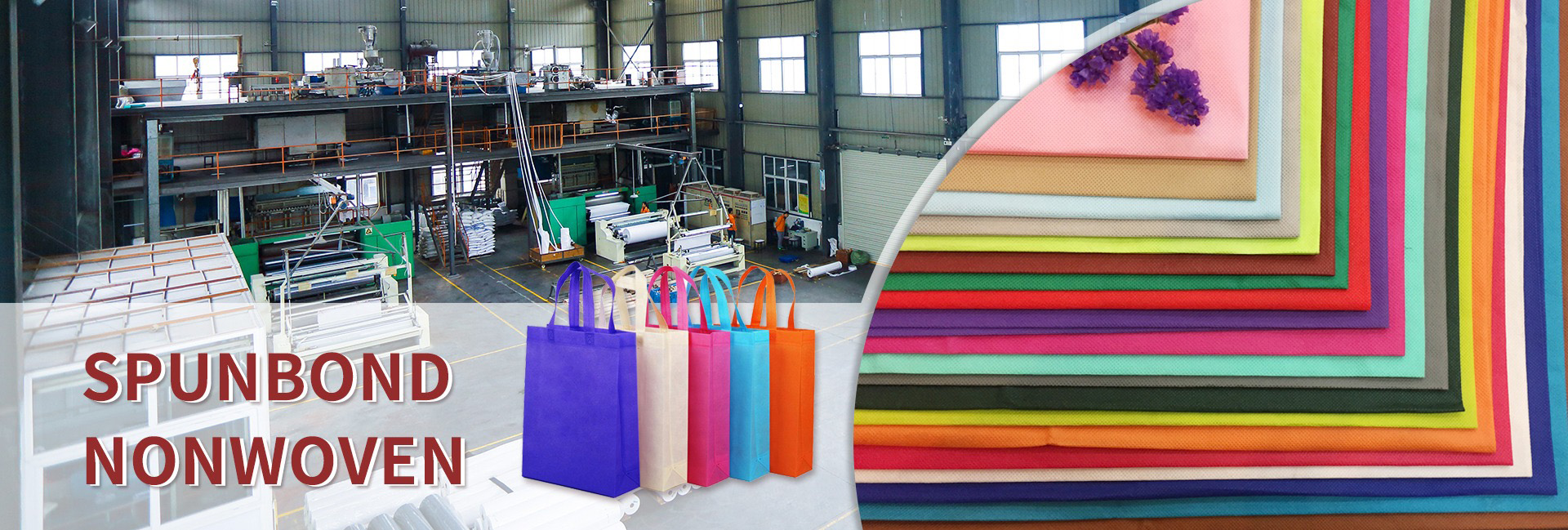
As a widely used new material, non-woven fabric has already penetrated into various fields such as medical, maternal and child care, packaging, agriculture, etc. The selection of its raw materials is always closely linked to resource consumption and ecological environment. For a long time, the non-woven fabric industry has relied on fossil based raw materials such as polyethylene and polypropylene derived from petroleum, forming a “high carbon, unsustainable” development model. Nowadays, with the promotion of the “dual carbon” strategy and the upgrading of environmental protection needs, PLA (polylactic acid) fibers made from biomass such as corn are gradually rising, and a “green transformation” of raw materials sweeping the entire non-woven fabric industry has officially begun, reconstructing the development logic of the non-woven fabric industry from the source.
Old Era: The ‘double-edged sword’ of petroleum based raw materials
Petroleum based raw materials, as the traditional core of the non-woven fabric industry, have supported the rapid expansion of the industry with their advantages of low cost, mature technology, and stable performance, becoming the main support for global non-woven fabric production. Currently, about 80% of non-woven fabrics worldwide are produced using petroleum based raw materials such as polyethylene and polypropylene, which are widely used in disposable masks, plastic bags, medical care products, and other products.
But behind this’ convenience ‘lies an unbearable cost of resources and environment, making petroleum based raw materials a double-edged sword. On the one hand, oil is a non renewable resource, and excessive dependence will exacerbate the crisis of resource depletion. With the fluctuation of global oil prices, the cost stability of the non-woven fabric industry is also greatly affected, and the uncertainty of raw material supply continues to increase. On the other hand, the environmental shortcomings of petroleum based non-woven fabrics are extremely prominent. The stable carbon carbon single bonds in their molecular structure are difficult to decompose by the natural environment. After being discarded, they can remain in the soil for hundreds of years, and their degradation cycle in the ocean can last for thousands of years. This not only causes serious white pollution, but also damages the ecological chain through microplastic infiltration, posing a threat to human health. In addition, the production process of petroleum based raw materials consumes extremely high energy. For every ton of polypropylene raw material produced, about 3 tons of oil are consumed, and a large amount of pollutants such as carbon dioxide and sulfur dioxide are emitted, which goes against the concept of low-carbon development.
New Era: Green Breakthrough of Corn based PLA
As the limitations of petroleum based raw materials become increasingly prominent, biomass materials represented by corn, with their renewable and biodegradable core advantages, have become the core carrier for the “green replacement” of non-woven materials. The industrialization breakthrough of PLA fiber has made this transformation from a concept to a reality. Corn, as a crop rich in starch content, can be converted into PLA resin through precise processing, and then spun into fibers suitable for non-woven fabric production, achieving an environmentally friendly closed-loop of “originating from nature and returning to nature” throughout the process.
The conversion of corn to PLA fiber is the core link of this “green transformation” and has now formed a mature industrialization path. The first step is raw material processing. Corn is crushed, separated and extracted from starch, and then starch is converted into high-purity lactic acid through microbial fermentation technology. After purification, raw materials that meet the polymerization requirements are obtained; The second step is polymerization reaction, in which lactic acid is dehydrated and cyclized to produce lactide, which is then subjected to ring opening polymerization to produce PLA resin. By adjusting the molecular weight (100000-120000 g/mol), both fiber strength and subsequent processing performance are taken into account; The third step is spinning molding, which uses melt spinning and other processes to process PLA resin into fibers of different fineness. It is suitable for various non-woven fabric forming processes such as spunbond, water jet, and meltblown, and can produce corn based PLA non-woven fabric with soft, breathable, and antibacterial properties.
Compared to traditional petroleum based fibers, the green advantages of corn based PLA fibers are highlighted in all aspects. On the raw material side, corn is a renewable crop that can be continuously supplied through circular planting. During the growth process, it can absorb carbon dioxide through photosynthesis, forming natural carbon sequestration. Replacing petroleum based raw materials can significantly reduce fossil energy consumption; On the production side, the production process of PLA fiber has no toxic wastewater or exhaust emissions, and energy consumption is reduced by more than 40% compared to petroleum based fibers. For every ton of PLA resin produced, 3 tons of carbon dioxide emissions can be reduced; At the disposal end, PLA non-woven fabric can degrade into carbon dioxide and water in the natural environment in about 180 days without any toxic residues, completely solving the problem of white pollution and truly achieving low-carbon environmental protection throughout the entire life cycle.
Upgrade and upgrade: not only environmental protection, but also restructuring the industrial value
The “green transformation” of non-woven fabric raw materials is not simply a substitution of raw materials, but a comprehensive upgrade that balances environmental protection, performance, and industrial benefits, gradually breaking the monopoly of petroleum based raw materials and reconstructing the industry value pattern for corn based PLA.
In terms of performance, PLA fibers have been optimized through modification technology and can now rival or even surpass petroleum based fibers. The fracture strength of pure PLA fiber reaches 3.5-4.2 cN/dtex, which is close to polypropylene fiber. By blending with PBAT, adding nano SiO ₂ and other modification methods, it can make up for the shortcomings of high brittleness and insufficient heat resistance. At the same time, it has the additional advantages of natural antibacterial and skin friendly breathability. The weakly acidic environment (pH 5.5-6.5) formed on its surface can inhibit the growth of harmful bacteria. The smooth fiber surface makes the non-woven fabric feel silky smooth, suitable for high-end scenarios such as mother and baby care and sensitive skin care, solving the pain points of rough and non antibacterial properties of petroleum based non-woven fabrics.
At the industrial level, this “green transformation” has promoted the transformation of the non-woven fabric industry from “high carbon dependence” to “low-carbon circulation”, while driving the coordinated development of agriculture and new materials industry. As a major producer of corn, China has sufficient supply of raw materials, and breakthroughs in the application of non grain biomass such as straw and sugarcane bagasse have further reduced its dependence on food resources and promoted the resource utilization of agricultural waste; The rise of the PLA industry has also driven the development of upstream and downstream industrial chains such as polymerization, spinning, and modification, forming industrial clusters such as the Yangtze River Delta and the Pearl River Delta. Currently, China’s PLA resin production capacity has reached 1.2 million tons per year, ranking first in the world, providing solid support for the transformation of non-woven fabric raw materials. In addition, with the iteration of technology, the cost of PLA fiber continues to decline, dropping to 12000 to 20000 yuan/ton, gradually approaching petroleum based fibers and possessing the economic feasibility of large-scale substitution.
Global implementation: ‘Green blood exchange’ covers diverse scenarios
Nowadays, corn based PLA nonwoven fabric has gradually penetrated into the core application scenarios of traditional petroleum based non-woven fabric, becoming an intuitive manifestation of “green transformation” and achieving large-scale implementation in multiple fields.
In the medical field, PLA non-woven fabric, with its biocompatibility and biodegradability, replaces traditional petroleum based materials for surgical gowns, nursing pads, absorbable dressings, and other products. After use, it can naturally degrade without incineration, reducing toxic gas emissions and aligning with the concept of green medicine; In the field of mother and baby, the surface layer of diapers and wet wipes made of PLA non-woven fabric have the advantages of being skin friendly, antibacterial, and residue free, reducing irritation to the delicate skin of babies and avoiding safety hazards of petroleum based materials; In the field of agriculture, PLA weed control cloth and seedling bags can degrade in soil within 3-6 months, replacing traditional plastic mulching films, avoiding soil compaction and pollution, and promoting the green transformation of agriculture; In the field of packaging and daily life, PLA non-woven fabrics are used for food packaging, shopping bags, facial mask cloth and other products, which not only take into account the practicality, but also reduce white pollution, and adapt to the environmental protection needs under the consumption upgrade.
Conclusion: An industrial transformation that concerns the future
From oil to corn, the “green transformation” of non-woven fabric raw materials is not only a revolution in material substitution, but also an inevitable choice for the industry to transform towards low-carbon, circular, and sustainable development. It breaks the inherent understanding that “environmental protection and practicality cannot be balanced”, allowing the non-woven fabric industry to not only break free from dependence on non renewable resources, but also solve the environmental problem of white pollution, achieving a win-win situation of resource, environmental and industrial benefits.
With the continuous breakthroughs in PLA modification technology, the widespread application of non grain raw materials, and further cost reduction, this “green transformation” will continue to accelerate, gradually achieving a comprehensive upgrade of non-woven fabric raw materials. In the future, corn based PLA will become the core raw material for the non-woven fabric industry, driving the industry into a new stage of green development. It will not only protect the ecological environment, but also inject strong impetus into the achievement of the “dual carbon” goal, completing an industrial transformation that concerns the future of materials and ecology.
Dongguan Liansheng Non woven Technology Co., Ltd. was established in May 2020. It is a large-scale non-woven fabric production enterprise integrating research and development, production, and sales. It can produce various colors of PP spunbond non-woven fabrics with a width of less than 3.2 meters from 9 grams to 300 grams.
Post time: Feb-08-2026