
Food delivery boxes deeply integrated into social life
Takeout has penetrated into every aspect of contemporary life, greatly facilitating daily life while also generating a large amount of waste food boxes. People are very concerned about where these food boxes go after use, whether they become garbage or cause plastic pollution? With the support of Meituan Qingshan Technology Fund, scientists from Donghua University creatively proposed to modify waste food boxes through processing to prepare ultra-fine polypropylene fibers, which were then made into fabrics and T-shirts with fast drying function. The integration of this technological route will provide a high-value recycling scenario for takeaway food containers, thereby avoiding corresponding environmental pollution.
Achievement Release Conference
On the afternoon of December 6, in Songjiang Campus of Donghua University, an achievement conference was held jointly organized by the Advanced Low dimensional Materials Center of Donghua University, the State Key Laboratory of Fiber Material Modification, and the Meituan Qingshan Science and Technology Fund. From the takeaway platform, plastic recycling enterprises, fabric processing enterprises, designers and brands, as well as material scientists, we witnessed the release of “the first recycled lunch box material to prepare low-carbon polypropylene fabric“. This fabric was made into a T-shirt with quick drying function for display, and as an opportunity, industry experts from upstream and downstream also discussed the development trend of sustainable textile fabrics in the future.
The development trend of sustainable textile fabrics
When we were considering the way out for takeaway food containers, we thought about more than 20 years ago when waste beverage bottles were made into recycled polyester fabric. So we were thinking about whether food containers made of polypropylene could also be made into recycled polypropylene fabric after waste recycling, “said Li Bin, project leader and researcher of the Polymer Carbon Neutrality Platform at the Advanced Low Dimensional Materials Center. After unremitting efforts from multiple parties, we have finally solved the technical problems of impurity removal, deodorization, spinning, and fabric production in recycled food box materials. We have successfully opened up the technical route of “recycled food box slicing granulation drawing weaving clothing” and achieved the circular utilization from takeaway food boxes to quick drying T-shirts.
While giving new life to recycled food box materials, this project also provides a new sustainable development solution for the textile fabric industry, “said Mr. Fang Weimin, Vice President of Management Systems at TUV Rheinland Greater China.” We have conducted corresponding third-party carbon accounting for recycled food box materials, and the results show that compared with native materials, the carbon reduction can reach 73%, and the carbon reduction effect is very significant. Polypropylene fabric prepared from recycled meal box materials has inherent low-carbon properties and is expected to become a sustainable textile fabric on par with recycled polyester, favored by designers and brand owners.
According to industry statistics, the annual use of takeaway food boxes has exceeded 1 million tons, and currently, after recycling, they are mainly used in some lower end applications. Improving the application value of food box recycling will greatly increase the proportion of waste food box recycling. Meituan has always been committed to promoting the green and low-carbon development of the food delivery industry. The ability to convert waste food boxes into recycled polypropylene fabric provides a new way to reduce food box pollution and create new experiences for consumers. It is an excellent project case that embodies the concept of ‘using technology as an engine to build green mountains and rivers’, “shared Ms. Tian Jin, Project Director of Meituan Qingshan Plan.” We will continue to strongly support such innovative projects and contribute to the development of the circular economy.
Low carbon and environmental protection is the development theme of today’s era, and it is also a new direction for the development of materials science. We are pleased to see that experts from the school and industry have found a good cross innovation point in the field of ‘polymer material carbon neutrality’, combined with the school’s disciplinary advantages, providing innovative ideas, solutions, and products for the industry. We hope that the successful promotion of recycled polypropylene can drive the high value-added utilization of lunch boxes, promote the green and sustainable development of the industry; we hope that our industry university research cooperation can deepen, continuously improve the technological innovation ability of the industrial chain, promote technological progress and product upgrading, and make greater contributions to the country’s’ dual carbon ‘development, “said Zhao Zhen, Vice President of Donghua University.
Post meeting interview
After the meeting, Jiang Yanhui, Senior Vice President of Hengtian Enterprise, and Fang Weimin, Vice President of Management System of TUV Rheinland Greater China, were interviewed by NTMT Textile New Materials.
Mr. Jiang mentioned that in response to global environmental changes and the national requirements of “3060″, low-carbon and sustainable development is now a trend for the entire clothing or textile industry. Whether it is the application of wood to yarn, or the sustainable utilization of waste materials, low-carbon polypropylene is a good example. This material combines sustainability and functionality. It is made from recycled meal box materials and has a significant moisture wicking effect. It has inherent advantages in some sportswear or outerwear applications.
TUV Rheinland is one of the first overseas certification and testing institutions to enter the domestic market. Mr. Fang mentioned that the product design of the textile industry is gradually moving towards low-carbon and environmental protection, and many enterprises are beginning to pay attention to the efficient use of energy. In response to these issues, TUV Rheinland has introduced two types of certification standards. One is a universal standard, such as disclosing information on the carbon footprint of an organization’s operations, product carbon footprint, and carbon emissions; The other type is specifically designed for the textile industry, such as GRS certification for circular economy material recycling and ZDHC certification for zero carbon waste textile material evaluation.
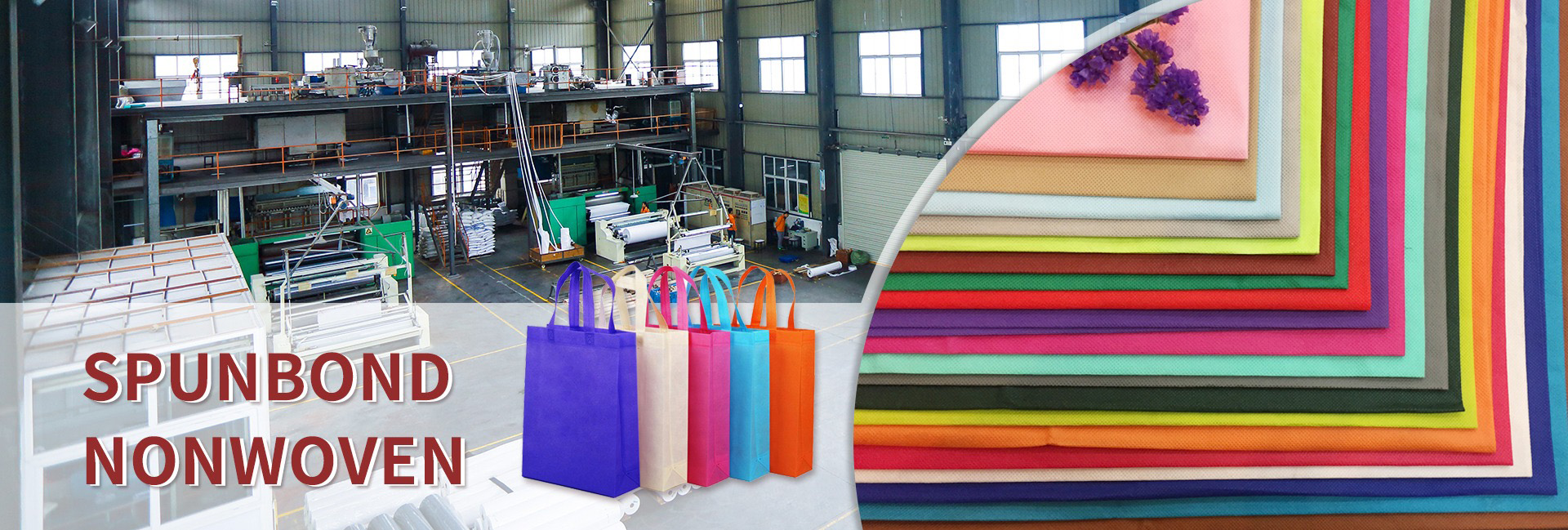
Dongguan Liansheng Non woven Technology Co., Ltd. was established in May 2020. It is a large-scale non-woven fabric production enterprise integrating research and development, production, and sales. It can produce various colors of PP spunbond non-woven fabrics with a width of less than 3.2 meters from 9 grams to 300 grams.
Post time: May-29-2025