
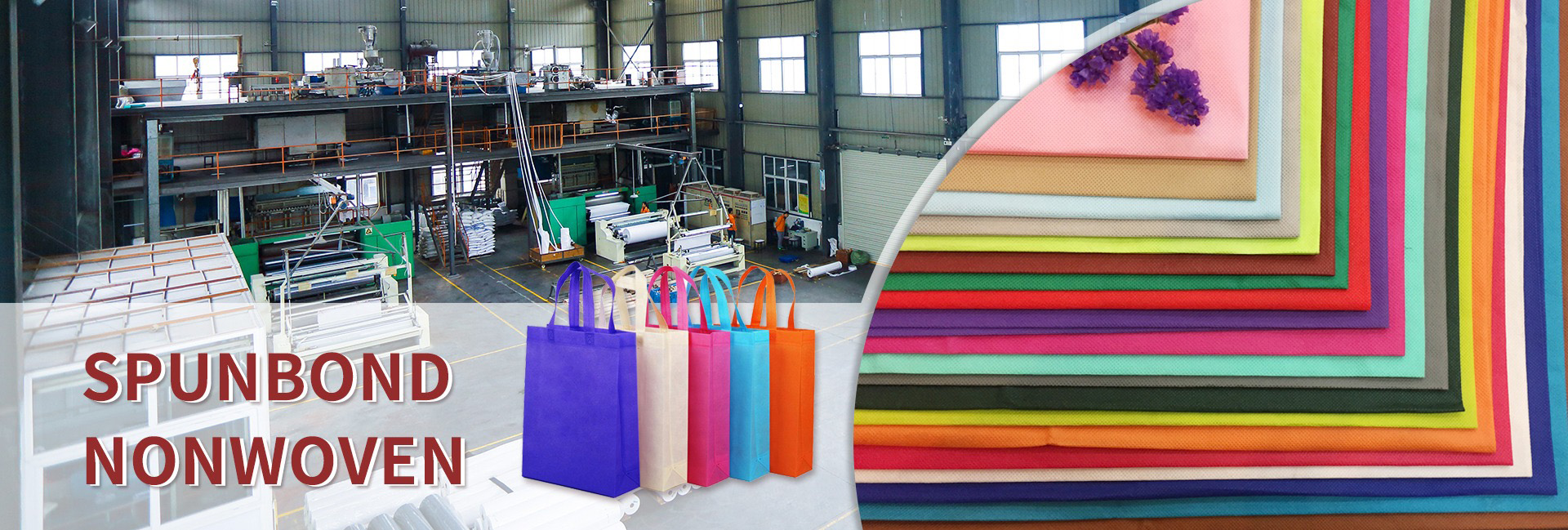
Disposable masks, shopping bags, express cushioning pads… PP nonwoven fabric can be seen everywhere in daily life. As the world’s largest non-woven fabric material, PP non-woven fabric has the advantages of low cost and stable performance, with an annual consumption of over 5 million tons, widely penetrating into fields such as medical and health, packaging, and industry. But behind the glamour lies a long-term environmental pain point. Traditional PP non-woven fabrics are made of petroleum based polypropylene, which has stable chemical properties and can remain in the natural environment for hundreds of years, making them difficult to degrade. After being discarded, they will form a large amount of white pollution, and even break into microplastics that invade soil and oceans, threatening ecological balance.
With the tightening of global plastic ban policies and the awakening of green consumption awareness, the industry is accelerating its transition from the label of “white pollution” to a sustainable direction. Biobased PP non-woven fabric and biodegradable modification technology, with their core advantages of low-carbon environmental protection and performance adaptation, have become a dual hot spot in current research and industrialization, promoting the key transformation of PP non-woven fabric industry from high carbon dependence to green circulation.
Environmental dilemma of petroleum based PP
The environmental weakness of PP non-woven fabric lies in the inherent properties of its petroleum based raw materials. Polypropylene, as a typical petrochemical product, has a stable molecular structure and does not contain easily degradable polar groups. Under natural conditions, it can only slowly age and break apart, and cannot be completely decomposed by microorganisms. Every year, millions of tons of discarded PP non-woven fabrics, most of which enter landfills or natural environments, not only occupy land resources, but also continue to release microplastics, pollute soil and water sources, and endanger the survival of animals and plants and human health.
For a long time, the industry has tried methods such as recycling and improving additives to alleviate pollution, but the results have been limited. The performance of ordinary recycled PP non-woven fabric deteriorates significantly, making it difficult to return to high-end application scenarios; The simple addition of light stabilizer or anti-aging agent can only slow down the aging rate, and cannot fundamentally solve the degradation problem. In recent years, policies such as the EU Disposable Plastic Directive and China’s Plastic Ban have been implemented intensively, clearly restricting the use of non degradable disposable plastic products. Coupled with the surge in consumer demand for green products, the market space for traditional PP non-woven fabrics continues to be under pressure, and the green transformation of the industry is urgently needed.
Biobased PP nonwoven fabric
Biobased PP non-woven fabric is one of the core directions of industrial transformation, with the core logic of replacing petroleum resources with renewable biomass to reduce carbon footprint from the source while retaining the excellent performance of PP non-woven fabric. Its raw material is not polypropylene produced by traditional petroleum refining, but bio based polypropylene prepared from biomass such as sugarcane, corn, and straw through fermentation, catalytic polymerization, and other processes. It is then processed into non-woven fabric through spunbond, melt blown, and other processes.
Compared with petroleum based PP, the core advantage of bio based PP is its low-carbon and environmentally friendly nature. Biomass raw materials can absorb carbon dioxide during their growth process, offsetting carbon emissions from production and use. Their carbon footprint is reduced by more than 40% compared to petroleum based products, and some high-end products can reach up to 60%. At the same time, the chemical structure of bio based PP is highly similar to petroleum based PP, and its mechanical and processing properties are basically the same. It can be directly adapted to existing non-woven fabric production lines without the need for large-scale equipment transformation, greatly reducing the industrialization threshold.
The current research and development of bio based PP non-woven fabrics focuses on two major directions. One is the diversification of raw materials, breaking through the limitation of a single sugarcane raw material, developing non grain biomass preparation technologies such as straw, cassava, and waste oil, reducing raw material costs, and avoiding land disputes with grain. The second is performance optimization, which improves the melt index and spinning stability of bio based PP through catalyst improvement and polymerization process regulation, solving problems such as insufficient strength and easy breakage of early products. At present, companies such as Jinfa Technology and Donghua Energy have achieved small-scale production of bio based PP, and their products have passed the EU OK compose certification, gradually being applied in high-end packaging, medical consumables and other fields.
Degradable modification technology
If biobased PP is a “source innovation”, then biodegradable modification is a “stock upgrade”. By using physical or chemical means, traditional petroleum based PP non-woven fabrics can obtain controllable degradation ability, which is currently the most cost-effective green transformation solution. The mainstream modification paths in the industry include blending modification, grafting modification, and the addition of degradation masterbatch. The core is to introduce easily degradable groups or microbial targeting sites into the PP molecular chain, achieving the dual goals of stable use and waste degradation.
Blending modification is the most mature industrial solution, which blends PP with biodegradable polymers such as PLA and PBAT in proportion, balancing the strength of PP with the environmental friendliness of biodegradable materials. For example, blending PP with PLA can improve material rigidity and degradation rate; Blending with PBAT enhances toughness and softness, making it suitable for packaging, sanitary materials, and other scenarios. The third-generation composite degradation masterbatch developed by Sinopec Research Institute can increase the biodegradation rate of PP non-woven fabric to 82%, increase the tensile strength by 30%, and control the degradation cycle within 180 days.
Grafting modification technology is more difficult but the effect is more long-lasting. By chemically initiating or ultraviolet irradiation, polar groups such as carboxyl and amino groups are grafted onto PP molecular chains, which not only improves hydrophilicity but also provides attachment sites for microorganisms, accelerating degradation. The interface macromolecule implantation technology developed by the Qingdao University team anchors modified PVA segments on the surface of PP fibers, which can stably exist in hot water, rapidly degrade after disposal, and PVA can be recycled and reused.
The addition of degradation masterbatch is the most convenient solution. By mixing masterbatch containing microbial inducers and photosensitive catalysts with PP, the performance is stable during use, and it can be quickly activated and degraded in environments such as soil and landfills after disposal. AdmPro launched by Luoyang Green Hub ® PP3000 masterbatch can weaken the side chains of PP molecules in anaerobic environments, attract microorganisms to secrete enzymes to decompose materials, and ultimately generate carbon dioxide, biogas, and humus without secondary pollution. It has been certified by ASTM and EN standards in the United States and the European Union.
R&D hotspots and industrialization prospects
There are currently three hot trends in the research and development of bio based and biodegradable PP non-woven fabrics. One is full degradation, breaking through the bottleneck of “partial degradation” and developing products that can be completely degraded in multiple environments such as soil, seawater, compost, etc., to solve the problem of microplastic residue. The second is to balance performance, taking into account high strength, high breathability, and rapid degradation, avoiding sacrificing performance for environmental protection. For example, by using nanocomposite technology to improve the filtration efficiency and weather resistance of biodegradable PP non-woven fabrics. The third is to make costs more affordable, optimize biomass conversion processes, reduce the amount of biodegradable masterbatch, promote the price of green PP non-woven fabrics to approach traditional products, and accelerate the popularization of the civilian market.
The industrialization process is continuously accelerating. In 2023, the global biodegradable non-woven fabric market will reach $5.8 billion, with PP substrate products accounting for over 45%. It is expected to maintain a compound annual growth rate of 12.7% in 2030, with the Chinese market growing at an even higher rate of 18.2%. In the field of healthcare, biodegradable surgical gowns and diaper surface materials are gradually replacing traditional products; In the packaging field, the annual replacement volume of biodegradable shopping bags and express cushioning pads exceeds 1.2 billion units; In the agricultural field, biodegradable seedling cloth and insulation cloth reduce field residues and promote the development of green agriculture.
Conclusion
The transformation of the PP non-woven fabric industry from “white pollution” to “green transformation” is a microcosm of the material industry’s response to the dual carbon goal and practice of sustainable development. Biobased PP non-woven fabric bids farewell to petroleum dependence from the source, and biodegradable modification technology endows traditional products with environmental attributes.
The two directions complement each other and jointly solve the industry’s environmental dilemma.
Although green PP non-woven fabrics still face challenges such as high costs and insufficient high-end production capacity, these issues will gradually be resolved with continuous technological breakthroughs, increased policy support, and market demand expansion. In the future, bio based and biodegradable PP non-woven fabrics are expected to become mainstream in the market, while protecting the ecological environment and releasing greater industrial value, truly integrating green and low-carbon into the bloodline of the materials industry.
Dongguan Liansheng Non woven Technology Co., Ltd. was established in May 2020. It is a large-scale non-woven fabric production enterprise integrating research and development, production, and sales. It can produce various colors of PP spunbond non-woven fabrics with a width of less than 3.2 meters from 9 grams to 300 grams.
Post time: May-21-2026