
At present, with the deepening of the “dual carbon” strategy and the acceleration of global green transformation, the materials industry is undergoing a profound transformation – getting rid of dependence on non renewable resources such as oil and achieving “low-carbon production and circular utilization” has become the core demand of the industry. PLA (polylactic acid) corn fiber has broken the monopoly of traditional petroleum based fibers and quickly emerged as the preferred material in multiple fields, relying on multiple advantages such as renewable raw materials, full cycle low-carbon, biodegradable and environmentally friendly. It has become the new favorite of the industry under the “dual carbon” goal. Its rise is not accidental, but the result of the resonance between policy, technology, market and ecological demand.
Practicing the dual carbon concept throughout the entire lifecycle, with outstanding advantages in carbon reduction
The core competitiveness of PLA corn fiber lies in its low-carbon properties throughout its entire lifecycle, which precisely meets the core requirements of “carbon reduction, carbon sequestration, and carbon reduction” in the “dual carbon” strategy. This is also the key difference between PLA and traditional fibers. Unlike polyester, nylon and other fibers that rely on petroleum, PLA corn fiber uses renewable biomass such as corn and sugarcane bagasse as raw materials, achieving a breakthrough in “getting rid of fossil dependence and reducing carbon emissions” from the source.
On the raw material side, crops such as corn absorb carbon dioxide through photosynthesis, forming a natural “carbon sequestration” effect. Replacing petroleum based raw materials can significantly reduce fossil energy consumption and carbon emissions – producing 1 ton of PLA resin can reduce 3 tons of carbon dioxide emissions. Compared to traditional PE plastic bags, PLA material can reduce comprehensive carbon emissions by 70%. Within five years, replacing only traditional plastic bags can reduce carbon dioxide emissions by 840000 tons, equivalent to saving 1.2 million tons of petroleum resources. On the production side, the PLA spinning and polymerization process has no toxic gases or wastewater emissions. Compared to traditional petroleum based fiber production, energy consumption is reduced by more than 40%. With technological breakthroughs such as the localization of propylene glycol, the carbon footprint of the production process is further compressed. At the waste end, PLA corn fiber can degrade into carbon dioxide and water in the natural environment for about 180 days, returning to the ecological cycle and avoiding the “carbon accumulation” caused by the long-term retention of traditional fiber waste. It truly achieves a low-carbon closed-loop of “renewable raw materials, zero pollution production, and biodegradable waste” throughout the entire cycle. According to calculations, the carbon emissions per ton of PLA fiber are about 1.2 tons of CO ₂ equivalent, which is only about 30% of polyester, indicating a significant advantage in carbon reduction.
Breaking through performance and cost bottlenecks, building a solid foundation for industrialization
PLA corn fiber can move from laboratory to large-scale application, becoming a new favorite in the industry. The key lies in the continuous breakthrough of core technology, which completely solves the pain points of “insufficient performance and high cost” in the early stage, and achieves a balance between “environmental protection and practicality”.
On the performance level, the mechanical properties of PLA corn fiber have been significantly improved through optimization of polymerization and spinning processes. Currently, the mainstream products in the industry have a fracture strength of 3.5-4.2 cN/dtex, which is close to the level of polyester. At the same time, through modification technologies such as blending with PBAT and adding nano SiO ₂, the shortcomings of pure PLA fiber, such as high brittleness and insufficient heat resistance (original heat resistance temperature was only around 60 ℃), have been filled, expanding its application boundaries. For example, Fengyuan Group has achieved the localization of continuous distillation of propylene glycol, with a purity of over 99.9%, effectively improving fiber stability; The application of high-speed melt spinning technology enables spinning speeds to reach 3000-4000 meters per minute, balancing production efficiency and fiber quality, resulting in functional products such as fine denier, irregular cross-section, antibacterial, etc., suitable for diverse scene needs.
On the cost level, with the substitution of non grain raw materials, large-scale production, and technological iteration, the cost of PLA corn fiber continues to decline. In the early days, the cost of PLA resin was as high as 30000 yuan/ton. Nowadays, by replacing corn with non grain materials such as straw and sugarcane bagasse, the cost per ton has been reduced by 400 yuan. In addition, leading enterprises such as Anhui Fengyuan and Jindan Technology have formed large-scale production capacity (global PLA production capacity has exceeded 3 million tons/year, with China ranking first in the world with 1.2 million tons/year). The cost of PLA fiber has been reduced to 12000 to 20000 yuan/ton, which is more than 30% lower than traditional biodegradable plastics, and the gross profit margin has reached more than 22%, gradually approaching the cost of petroleum based fiber, and has the economic feasibility of large-scale substitution. At the same time, the application of processes such as “continuous polymerization melt direct spinning” has further reduced processing costs and accelerated its industrialization.
Policy protection+market pressure, dual driving to accelerate rise
The outbreak of PLA corn fiber cannot be separated from the precise protection of policies and the driving force of market demand, forming a joint force to quickly become the new favorite of the industry.
At the policy level, the global “plastic ban” and China’s “dual carbon” related policies provide overlapping support. China’s 14th Five Year Plan for the Development of Bioeconomy clearly lists biobased materials as a key research and development direction, requiring a PLA fiber production capacity of 500000 tons by 2025, and including it in the Green Industry Guidance Catalog. Guangxi, Zhejiang and other places provide subsidies of up to 30% for related projects; The Ministry of Industry and Information Technology and six other departments have issued a plan to establish a 10000 ton non grain biobased production line by 2025, forming 3-5 industrial clusters. International policies such as the EU’s CBAM (Carbon Border Adjustment Mechanism) also force export companies to choose low-carbon and biodegradable materials, with PLA corn fiber becoming the preferred choice to avoid carbon tariffs and meet environmental standards. In addition, the implementation of standards such as “Biodegradable Plastic Shopping Bags” and “Technical Specification for Environmental Labeling Certification of Degradable Plastic Products” has standardized the industry order and rectified the chaos of “pseudo degradation”, creating a favorable development environment for PLA corn fiber.
At the market level, consumer upgrading and green demand are driving industrial transformation. Nowadays, consumers’ demand for environmentally friendly, safe, and healthy products is increasing day by day. Whether it is in the fields of maternal and child care, beauty, intimate clothing, or industrial fields such as healthcare, agriculture, and packaging, they are all seeking low-carbon and environmentally friendly alternative materials. PLA corn fiber has the advantages of natural antibacterial properties, skin friendly breathability, and biodegradability, which perfectly meet market demand. In 2024, the market size of China’s PLA fiber industry has reached 4.511 billion yuan, and the total production of biodegradable plastic shopping bags is nearly 500000 tons, with a total output value exceeding 10 billion yuan. It is expected that the market size of PLA fiber will increase to 6.979 billion yuan by 2030, and the market capacity of biodegradable plastic bags will exceed 60 billion yuan, with continuous release of market potential. Meanwhile, H&M、Adidas、 IKEA and other international brands are promoting the construction of green supply chains, increasing the procurement of bio based materials, and further driving the market demand for PLA corn fiber.
Adaptable to all fields, with huge potential for substitution
The rise of PLA corn fiber is also due to its wide adaptability to various scenarios, which can cover the vast majority of application areas of traditional petroleum based fibers and unlock high-end new scenarios. It has enormous potential for substitution and has become a cross industry green solution.
In the textile industry, PLA corn fiber can be used to make underwear, sportswear, home textiles and other products, with a silky touch and cotton like breathability. It is naturally antibacterial, skin friendly and non irritating, suitable for sensitive skin and infants. Brands such as Xtep have launched PLA blended sportswear to solve the pain points of traditional polyester clothing being stuffy, hot and sticky; In the field of non-woven fabric, it can be made into facial mask cloth, makeup remover cotton, diaper surface, etc. After the optimization of processes such as spunlace and spunbond, both softness and breathability are taken into consideration. Unijia and other enterprises in Japan have launched PLA non-woven fabric wipes to reduce marine pollution.
In the medical field, the biocompatibility and biodegradability of PLA corn fiber make it an ideal raw material for medical dressings, absorbable sutures, and tissue engineering scaffolds. PLA sutures from companies such as Johnson&Johnson are widely used in minimally invasive surgeries, and can be fully absorbed in the human body within 56-70 days after surgery, reducing the risk of infection and aligning with the concept of green medicine; In the field of agriculture, PLA weed control cloth and seedling bags can degrade in soil for 3-6 months. The pilot area in Xinjiang and other areas exceeds 500000 acres, which not only avoids soil pollution caused by traditional plastic film, but also promotes crop growth and promotes green transformation of agriculture.
In the field of packaging, PLA corn fiber can replace EPS foam and traditional plastic packaging for food, electronics, and clothing packaging, giving consideration to moisture-proof, lightweight, and environmental protection. The annual potential demand of Meituan, Jingdong and other platforms exceeds 60000 tons, effectively reducing white pollution and carbon emissions in the field of packaging. In addition, its potential applications in emerging fields such as marine protection and aerospace are continuously being explored, further expanding its market space.
PLA corn fiber, a new benchmark for materials in the dual carbon era
PLA corn fiber has become the new favorite of the industry, which is the result of the “dual carbon” strategy, technological breakthroughs, market demand, and policy protection. It is also an inevitable choice for the material industry to transform from “high carbon dependence” to “low-carbon circulation”. It not only solves the pain points of resource depletion and environmental pollution caused by traditional petroleum based fibers, but also achieves a triple balance of “environmental protection, practicality, and economy”, which not only protects the ecological environment, but also adapts to the needs of industrial upgrading and consumption upgrading.
In the future, with the continuous breakthroughs in non grain raw material modification, closed-loop recycling and other technologies, PLA corn fiber will further reduce costs, improve performance, and get rid of dependence on grain resources. China’s straw production will reach 1 billion tons in 2024, and based on a 30% utilization rate, it can support a hundred billion level industrial scale and gradually achieve green upgrading of the entire industry chain. Against the backdrop of the continuous promotion of the dual carbon target, PLA corn fiber will continue to penetrate more fields, reshape the material industry pattern, become the core force in promoting low-carbon development, ending white pollution, and opening a new era of green materials.
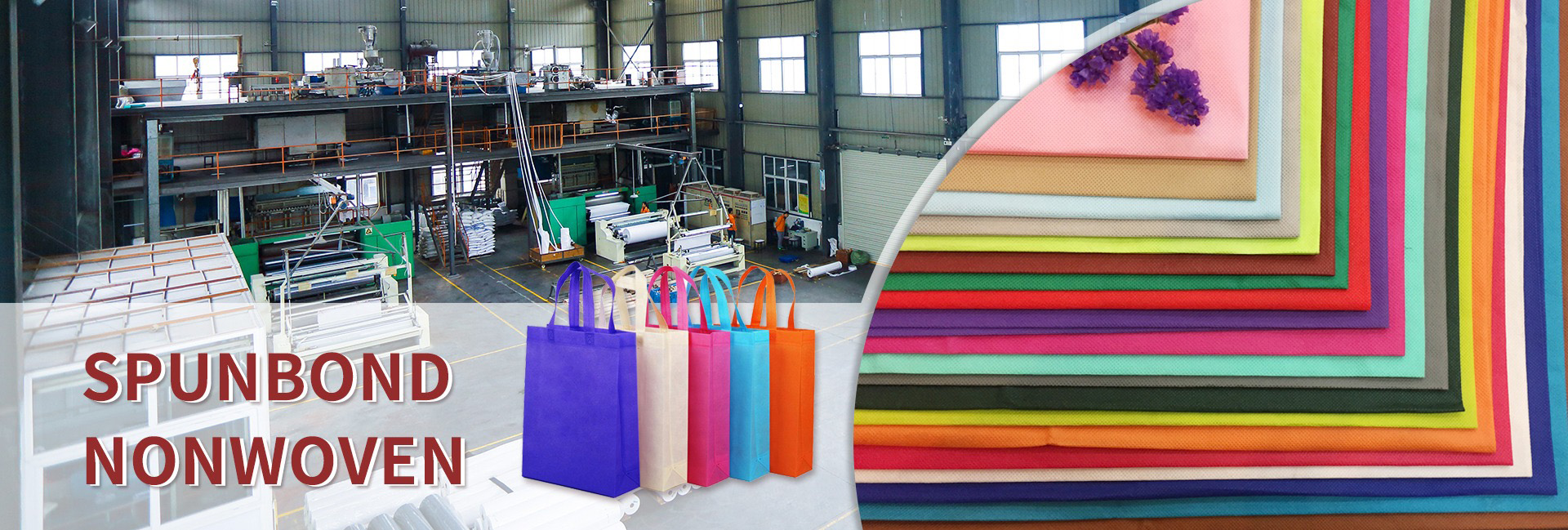
Dongguan Liansheng Non woven Technology Co., Ltd. was established in May 2020. It is a large-scale non-woven fabric production enterprise integrating research and development, production, and sales. It can produce various colors of PP spunbond non-woven fabrics with a width of less than 3.2 meters from 9 grams to 300 grams.
Post time: Feb-11-2026