
Driven by the dual goals of global “dual carbon” and new pollution control policies, the fireproof non-woven fabric industry is undergoing a critical transformation from “flame retardant compliance” to “environmental upgrading”. Traditional halogenated flame retardants have gradually been restricted or banned by EU REACH regulations, China’s New Pollutant Control Action Plan, and other measures due to the release of toxic gases during combustion and strong environmental persistence. Green flame retardants (including halogen-free phosphorus nitrogen series, inorganic hydroxides, biobased and other types) have been used as an alternative solution.
By 2023, the usage rate of flame retardant nonwoven fabrics in China has increased to 58%, and it is expected to exceed 70% by 2025. However, the balance between environmental attributes and flame retardancy, cost control, and industrial adaptation are still difficult to solve. The technological breakthroughs and application landing directly determine the green transformation process of the fireproof non-woven fabric industry.
The core driving force for the environmental transformation of fireproof non-woven fabric
The promotion of green flame retardants is not simply a technical choice, but the result of the synergy between policies, markets, and technology. At the policy level, the Ministry of Emergency Management’s “14th Five Year Plan for the New Materials Industry” lists flame retardant materials as a key development area, and the GB8624-2023 Building Materials Combustion Performance Grading Standard is enforced, explicitly requiring fire-resistant materials to balance flame retardancy and environmental safety.
At the market level, the environmental protection needs of downstream application scenarios continue to upgrade: the insulation materials for new energy vehicle battery packs not only need to meet UL94 V-0 level flame retardancy, but also need to pass environmental testing with a smoke density rating (SDR) of ≤ 50;
The fireproof non-woven fabric used for sofas exported to Europe must comply with BS5852 standards and prohibit halogen containing flame retardants. At the technical level, the maturity of technologies such as halogen-free flame retardant and biobased modification has increased, making green flame retardants gradually feasible for substitution. The global market size of environmentally friendly flame retardants is expected to reach 8.6 billion US dollars by 2025, with the Chinese market exceeding 28 billion yuan, of which the fireproof non-woven fabric field contributes 31% of the demand increment.
The core challenge of applying green flame retardants to fire-resistant non-woven fabrics
Despite the positive development trend, the large-scale application of green flame retardants in fire-resistant non-woven fabrics still faces the triple contradiction of “performance cost durability”, manifested as the following four bottlenecks:
1. The synergistic problem of flame retardancy and mechanical properties
The compatibility between green flame retardants and non-woven fabric substrates is insufficient, which can easily lead to an imbalance between flame retardant effect and mechanical properties. Inorganic hydroxides (such as magnesium hydroxide and aluminum hydroxide), as mainstream green varieties, require an addition of more than 60% to achieve UL94 V-0 grade for polypropylene based non-woven fabrics.
However, high filling levels can lead to a decrease of more than 40% in fiber fracture strength, which cannot meet the structural strength requirements of automotive interiors, building insulation, and other scenarios. Although bio based flame retardants have outstanding environmental friendliness, their thermal stability is poor – flame retardants based on chitosan are prone to decomposition at non-woven spinning temperatures (230-280 ℃), reducing the limit oxygen index (LOI) from 32% in the laboratory to 26% in industrial production, making it difficult to meet the US CFR1633 mattress flame retardant standard (peak heat release ≤ 200 kW).
Even high-performance phosphorus nitrogen based halogen-free flame retardants have an imbalance between flame retardant efficiency and smoke suppression effect. Although some products have passed vertical combustion tests, their smoke density level is as high as 80, exceeding the requirement of SDR ≤ 50 in the new energy vehicle industry.
2. High cost enterprises and insufficient scale supply
The production cost of green flame retardants is significantly higher than that of traditional halogenated products, and high-end varieties rely on imports. Data shows that the raw material cost of bio based flame retardants is 30% -50% higher than that of bromine based flame retardants. If the renewable raw material synthesis process developed by Oak Ridge National Laboratory in the United States is used, although the carbon footprint can be reduced by 40%, the initial equipment investment increases the ton cost by more than 1200 yuan.
The core intermediate phosphate ester products of halogen-free phosphorus flame retardants have a domestic self-sufficiency rate of only 61%, while high-end varieties such as resorcinol diphosphate (RDP) have an import dependence of 39%, with price fluctuations 2-3 times higher than halogenated products. On the supply side, the utilization rate of domestic green flame retardant production capacity is only 75%, and it is concentrated in mid to low end inorganic varieties.
In 2023, the new production capacity of high-end halogen-free flame retardants will only be 123000 tons, which is difficult to match the 43.6% penetration rate increase demand of the fireproof non-woven fabric industry.
3. Poor compatibility between durability degradation and recycling system
The long-term effectiveness of green flame retardants is insufficient, and there are compatibility conflicts with existing recycling systems. In the post-processing process, phosphorus based flame retardants adhere to the surface of non-woven fabrics through immersion rolling. After washing with water for 5 times, the flame retardant level drops from V-0 to V-2, which cannot meet the requirements of repeated use scenarios such as home textiles and medical applications.
Even with the use of intrinsic flame retardant technology, the regeneration process can still lead to performance degradation – after three physical recoveries, the LOI value of recycled PET (RPET) fireproof non-woven fabric decreased from 32% to 24% due to the interaction between flame retardants and PET molecular chain breakage, losing its flame retardant effect.
More importantly, the presence of green flame retardants increases the difficulty of recycling: non-woven fabrics containing aluminum hydroxide will form aluminum salt precipitation during the PET chemical depolymerization process, blocking the reaction kettle, resulting in a 30% decrease in recycling efficiency and an increase of 800 yuan per ton in recycling costs.
4. Fragmentation of standard system and lagging detection and evaluation
The evaluation criteria for environmental flame retardant performance are not unified, and there is a lack of a full life cycle assessment system. Internationally, standards such as CFR1633 in the United States and BS5852 in the United Kingdom focus on flame retardancy and only provide basic requirements for environmental indicators; Although GB8624-2023 in China has strengthened the requirements for smoke and toxic substances, it has not specified the specific environmental protection limits for green flame retardants.
There are also shortcomings in the detection methods: existing detection methods focus more on the release of toxic gases during combustion, and lack a unified evaluation method for the environmental impact of green flame retardants during production and disposal stages (such as biodegradability and soil accumulation). For example, although a certain biobased flame-retardant non-woven fabric has passed the EU REACH regulation, its degradation rate in soil degradation testing after 6 months was only 12%, far lower than the expected 30%, indicating limitations in exposure to existing standards.
Technological breakthroughs and industrial upgrading: the core path to solving challenges
In response to the above challenges, the industry has formed a three-dimensional breakthrough path of “material innovation+process optimization+system improvement”, promoting the implementation of green transformation through technological iteration and industry synergy:
1. Collaborative modification of materials: the core lever for balancing performance and environmental protection
By using multi-component composite and nano modification technology, the performance of green flame retardants can be significantly improved. In the inorganic flame retardant system, the nano alumina coating technology improves the dispersibility of magnesium hydroxide by 40%. By reducing the addition amount from 60% to 45%, the LOI of non-woven fabric can exceed 38%, while the decrease in fracture strength is controlled within 15%. It has been applied as a thermal insulation material for new energy vehicle battery packs.
The phosphorus nitrogen synergistic system has become the mainstream direction in the halogen-free field – the phosphate melamine cyanurate composite flame retardant developed by Zhejiang JinSanfa can achieve UL94 V-0 grade for polyester non-woven fabric with an addition of 25%, reducing the smoke density level to 45. According to the German VDA 278 automotive interior standard, the ton cost is reduced by 20% compared to single phosphorus products. Biobased flame retardants break through bottlenecks through molecular structure reconstruction.
The Oak Ridge National Laboratory synthesizes phosphorus containing biobased flame retardants from agricultural waste using a dual mechanism of “coalescing phase+gas-phase flame suppression”, resulting in a PLA based non-woven fabric LOI of 32% and improved thermal stability to 300 ℃, fully meeting the requirements of spinning processes.
2. Process integration innovation: the key to cost reduction, efficiency improvement, and large-scale implementation
Transitioning from “post-processing” to “intrinsic flame retardancy” while optimizing production processes to reduce costs. In the spinning process, the “in-situ polymerization of flame retardant masterbatch” technology is used to blend green flame retardants with PET monomers, which improves the dispersion uniformity of flame retardants to 92% and avoids the loss of chemicals in the post-treatment process (reducing the loss rate from 25% to 5%).
After adopting this process, Jiangsu Jintaiyang reduced its production cost by 18% per ton. In terms of recycling technology, Tianfulong has developed the “physical chemical coupling recycling” technology, which separates and regenerates phosphorus based flame retardants in PET through specific solvents, resulting in a mechanical property retention rate of 90% for recycled fibers and a flame retardant recovery rate of 85%, achieving a “use recovery regeneration” closed-loop. The application of intelligent manufacturing technology further improved the efficiency.
The online quality monitoring system on the industrial Internet platform was used to regulate the amount of flame retardant added in real time, so that the product qualification rate increased from 97% to 99.3%, and the unit energy consumption decreased by 14.5%.
3. Supply chain upgrading and policy empowerment: breaking through supply and standard bottlenecks
On the supply side, top enterprises solve the shortage problem through vertical integration and capacity expansion. Zhejiang JinSanfa has partnered with upstream enterprises to build a 10000 ton halogen-free phosphorus flame retardant production base. After it is put into operation in 2024, the self-sufficiency rate of high-end products will increase from 61% to 85%, and the import substitution rate will increase by 24 percentage points.
At the policy level, the China National Textile and Apparel Council has initiated the development of the group standard for “Green Flame Retardant Non woven Fabric”, which aims to clarify 12 core indicators such as flame retardant performance and environmental indicators (such as biodegradation rate and toxic gas release), and is expected to be implemented in 2026.
In terms of international trade, industry associations promote “mutual recognition of standards” and establish a compliance database for green flame retardants in response to the seven new restrictive clauses in the EU REACH regulation, helping companies avoid 15% of export order risks.
4. Application scenario expansion: Creating differentiated value to hedge cost pressure
Realize “environmental premium” in high-end scenarios, and back feed technology research and development investment. In the field of medical protection, flame-retardant medical dressings use halogen-free phosphorus flame retardants, which have passed FDA certification and biosafety testing. Although the cost per ton is 20% higher, the export price has increased by 35%, and the procurement volume in 2023 has increased by 19.8% year-on-year.
In the field of electronics and electrical engineering, the substrate of 5G base station circuit board adopts nano composite green flame-retardant non-woven fabric, which has won long-term orders from enterprises such as Huawei and ZTE due to its low smoke and toxicity characteristics, and the market size has exceeded 1.2 billion yuan.
In the field of construction, green flame-retardant non-woven fabric that meets the B1 level of GB8624-2023 has been included in the green building evaluation system and widely used in affordable housing projects in the Yangtze River Delta. Although the unit price is 10% higher, it has received policy subsidies due to environmental benefits, resulting in an overall cost reduction of 8%.
Conclusion and Future Prospects
Green flame retardants promote the environmentally friendly development of fire-resistant non-woven fabrics. Although facing multiple challenges such as performance synergy, cost control, and recycling adaptation, breakthroughs in core technologies have been achieved through material synergistic modification, process integration innovation, and supply chain upgrading.
In some scenarios, a virtuous cycle of “environmental performance benefit” has been formed. From the perspective of development trends, there will be three major changes in the next three years: first, multifunctional composite, combining phase change materials with green flame retardant systems to develop non-woven fabrics that combine fire prevention and thermal management functions.
The penetration rate in the field of new energy vehicles is expected to exceed 25%; The second is the scaling up of bio based flame retardants. With the implementation of 10000 ton demonstration projects, the cost is expected to be on par with traditional halogen-free products; The third is the deep integration of intelligence and recycling, optimizing the entire production and recycling process through digital twin technology, and reducing carbon footprint by another 20%.
Overall, green flame retardants have evolved from an “alternative solution” to a “necessary path” for the environmental protection of fire-resistant non-woven fabrics. With the improvement of technological maturity and policy system, it is expected that the usage rate of green flame retardants in fire-resistant non-woven fabrics will exceed 90% by 2027, promoting the industry to achieve a qualitative change from “passive compliance” to “active green innovation”, and providing a Chinese solution for the sustainable development of the global flame retardant material industry.
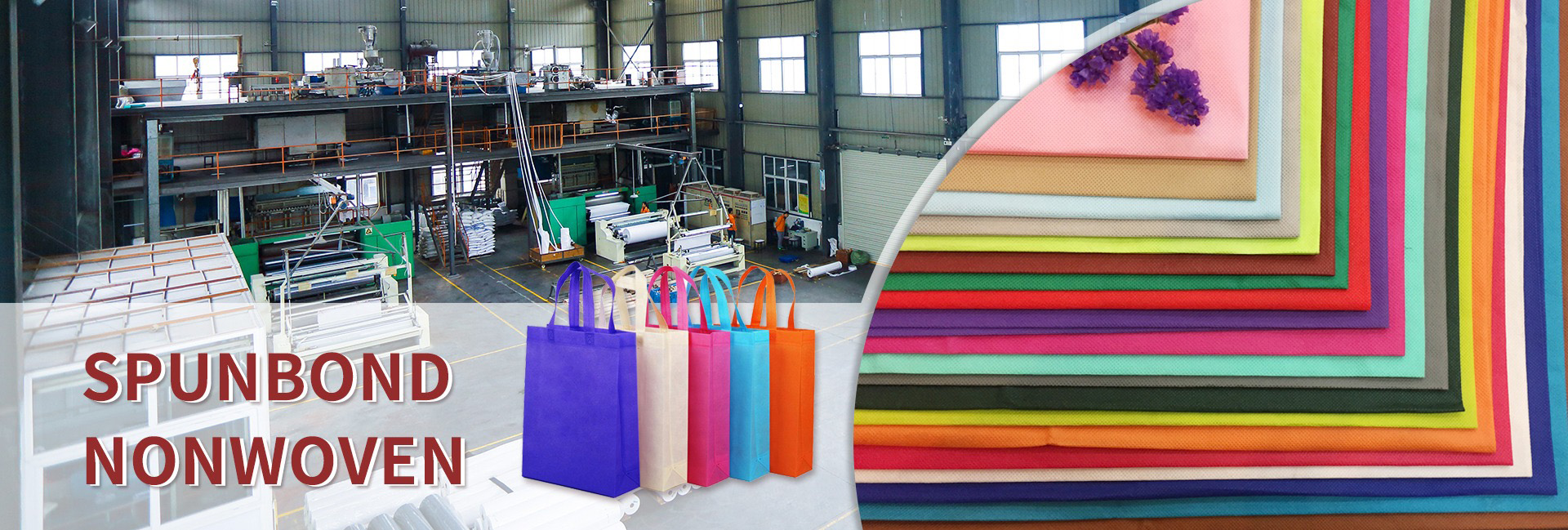
Dongguan Liansheng Non woven Technology Co., Ltd. was established in May 2020. It is a large-scale non-woven fabric production enterprise integrating research and development, production, and sales. It can produce various colors of PP spunbond non-woven fabrics with a width of less than 3.2 meters from 9 grams to 300 grams.
Post time: Dec-08-2025