
In the current era of rapid iteration in precision instrument manufacturing and the electronics industry, the cleaning process has been upgraded from an auxiliary process to a core checkpoint that determines product yield. Traditional cotton wiping cloths are prone to shedding hair and leaving a lot of residue, while ordinary non-woven fabrics have insufficient cleaning power and are difficult to meet the cleaning needs of nanoscale and high cleanliness.
By virtue of the dual breakthroughs in materials and processes, ultra-fine spunbond non-woven fabric has accurately solved the pain points of high-end cleaning, becoming a “cleaning tool” for the two major industries, promoting the high-end direction of industrial wiping cloth towards high performance, customization, and compliance.
Breakthrough in material properties: innate advantages adapted to high-end cleaning needs
The core competitiveness of ultra-fine spunbond non woven fabric lies in its extremely refined fiber structure and scientific material ratio, forming a cleaning performance that ordinary materials cannot match. From the fiber dimension, its single filament diameter can be as low as 0.056dtex, which is only one twentieth of silk, and even reaches the ultra-fine specification of 0.4 μ m. This extreme fineness brings two key advantages: first, it has extremely low bending stiffness, soft and delicate feel, and will not cause scratches or wear on the fragile surfaces of optical lenses and electronic components of precision instruments when wiped, perfectly adapting to the cleaning needs of vulnerable parts such as semiconductor chips and LCD panels.
The second is that the specific surface area increases geometrically, and the frequency of contact between fibers and dust and oil stains is greatly increased. Combined with the micro pores formed between fibers, a capillary like adsorption structure is constructed, which can firmly lock pollutants like a magnet, rather than simply pushing them away, and the cleaning efficiency far exceeds traditional materials.
In terms of material ratio, mainstream products use a composite formula of 80% polyester and 20% nylon, which splits the filament into a multi petal structure through orange petal technology, further expanding the adsorption area and porosity. This structure not only allows dirt to be adsorbed between fibers, avoiding infiltration residue, but also has strong water and oil absorption capabilities. The water absorption per unit area can reach over 400g/m ², which can quickly remove lubricants, adhesive residues, and trace solvents on the surface of precision components.
After cleaning, it can be reused, with a service life more than four times that of ordinary cleaning cloths, balancing cleaning efficiency and economy. More importantly, the combination of high-strength synthetic filament and precision weaving method achieves the “zero shedding” characteristic, eliminating the risk of secondary pollution during the cleaning process from the source, which is crucial for electronic workshops that require a dust-free environment.
Empowering Technological Innovation: Upgrading Spunbond Technology to Build High end Barriers
The industrialization and high-end development of ultra-fine spunbond nonwoven fabrics cannot be separated from the innovation and breakthrough of production processes, among which the application of orange petal type two-component spinning and hydroentangled technology is a key milestone. The traditional production process of ultrafine fibers has the disadvantages of long process, high pollution, and high cost.
However, the orange petal process integrates composite spinning, spinning and bonding into a web, and water jet reinforcement technology. Through high-pressure water flow impact, the orange petal filament is split into ultrafine fibers, and the fiber web reinforcement is completed without additional cutting, dissolution and other processes, achieving the production goals of short process flow, high production efficiency, and green environmental protection, laying the foundation for the large-scale supply of high-end wiping cloth.
The upgrade of equipment technology further ensures the stability of product quality. For example, the independently developed high-efficiency fine denier spinning melt composite production line has solved the problem of difficult balance between fabric uniformity and production efficiency in the process of ultrafine fiber spinning through innovative devices such as spunbond cooling side blowing bellows and airflow leveling and stretching devices; Paired with high-precision control and correction systems, it can achieve wide and high-speed production, with an annual production capacity exceeding 10000 tons, breaking the monopoly of foreign enterprises in the high-end equipment field.
At the same time, in response to the customized needs of high-end cleaning, enterprises can develop differentiated products by adjusting parameters such as fiber fineness, weight, and edge sealing technology – such as using laser or ultrasonic edge sealing technology to avoid fiber shedding caused by traditional sewing edge sealing and adapt to the strict requirements of Class 10 cleanrooms.
Industry deep adaptation: precise cracking of cleaning pain points in two major fields
There is a significant commonality between the cleaning needs of precision instruments and the electronics industry, which is the ultimate pursuit of cleanliness, anti-static, and chemical compatibility. Ultra fine spunbond non-woven fabric achieves full scene adaptation through functional optimization.
In the field of precision instruments, whether it is lens wiping for optical instruments, precision component cleaning for aerospace equipment, or sterile wiping for medical equipment, wiping cloths are required to have both high cleaning power and non-destructive properties. Ultra fine spunbond non-woven fabric, with its soft texture and strong adsorption, can efficiently remove fine dust and oil stains on the surface of instruments.
It can also be used in conjunction with solvents such as isopropanol and ethanol, while meeting sterile requirements – after gamma radiation sterilization, the sterile assurance level can reach 10 ⁻⁶ SAL, which meets ISO 11137 standards and is suitable for cleaning scenarios of medical precision instruments. In addition, the ultra-high density fabric made of it has waterproof and breathable properties, which can maintain stable cleaning performance in complex environments and avoid damage to internal components of the instrument caused by water vapor.
In the electronics industry, high-end manufacturing such as semiconductors and display screens have more stringent requirements for dust-free and anti-static. Ultra fine spun non-woven fabric can achieve anti-static performance with surface resistivity ≤ 1 × 10 ¹⁰ Ω and electrostatic decay time ≤ 2 seconds through material modification and process adjustment, in compliance with IEC 61340-5-1 standard, effectively dissipating static electricity and avoiding electrostatic breakdown of electronic components.
At the same time, the packaging is cleaned in a Class 10 cleanroom, with strict control over dust generation, ion content, and non-volatile residue (NVR). According to ASTM E1560 weight method testing, the residue content can be controlled at an extremely low level, meeting the requirements for use in ISO Class 4-8 cleanrooms. For emerging electronic fields such as lithium batteries and solar panels, specialized products that are resistant to chemical corrosion and high temperatures can also be developed to meet the cleaning needs of specific scenarios.
Standard compliance and trend leadership: consolidating the dominant position in the high-end market
The entry threshold for high-end industrial wiping cloths is not only about meeting performance standards, but also about complying with industry standards and customer customization requirements. Ultra fine spun nonwoven fabric has passed strict standard certification, building a market trust barrier – at the international level, it meets the requirements of IEST-RP-CC004.4:2019 standard for particle residue and anti-static performance; In China, it meets the GB/T 24249-2009 anti-static clean fabric standard and SJ/T 11480-2014 electronic industry dust-free wiping cloth standard to ensure product compliance in different application scenarios. Some top companies can also optimize product parameters and further strengthen cooperation stickiness based on exclusive standards of core customers such as Seagate.
From the perspective of industry trends, ultra-fine spunbond nonwoven fabrics are upgrading towards multifunctional integration, environmental sustainability, and intelligence, continuously consolidating their dominant position in the high-end clean market. By adding functional coatings such as antibacterial and chemical corrosion resistance, the product’s applicable scenarios can be expanded; Adopting recyclable materials and circular design to meet the environmental protection needs of the industrial sector.
In the future, it will also integrate with Industry 4.0 technology and provide data support for intelligent production by embedding sensors to monitor cleaning effects in real time. With the upgrading of precision manufacturing and the electronics industry towards higher precision and more complex scenarios, ultra-fine spunbond nonwoven fabrics will continue to break through technological boundaries and promote the high-end development of industrial wiping fabrics.
Conclusion
The reason why ultra-fine spunbond nonwoven fabric can conquer the cleaning market of precision instruments and electronics industry is essentially the precise matching of material characteristics, process innovation and industry demand. It not only solves the core pain points of traditional wiping materials, but also provides reliable cleaning solutions for high-end manufacturing industries with a standardized and customized product system. In the wave of industrial upgrading, ultra-fine spunbond non-woven fabric will continue to be driven by technology, leading the transformation of industrial wiping cloth from “basic cleaning” to “precise cleaning, efficient cleaning, and green cleaning”, becoming an indispensable core consumable for high-end manufacturing.
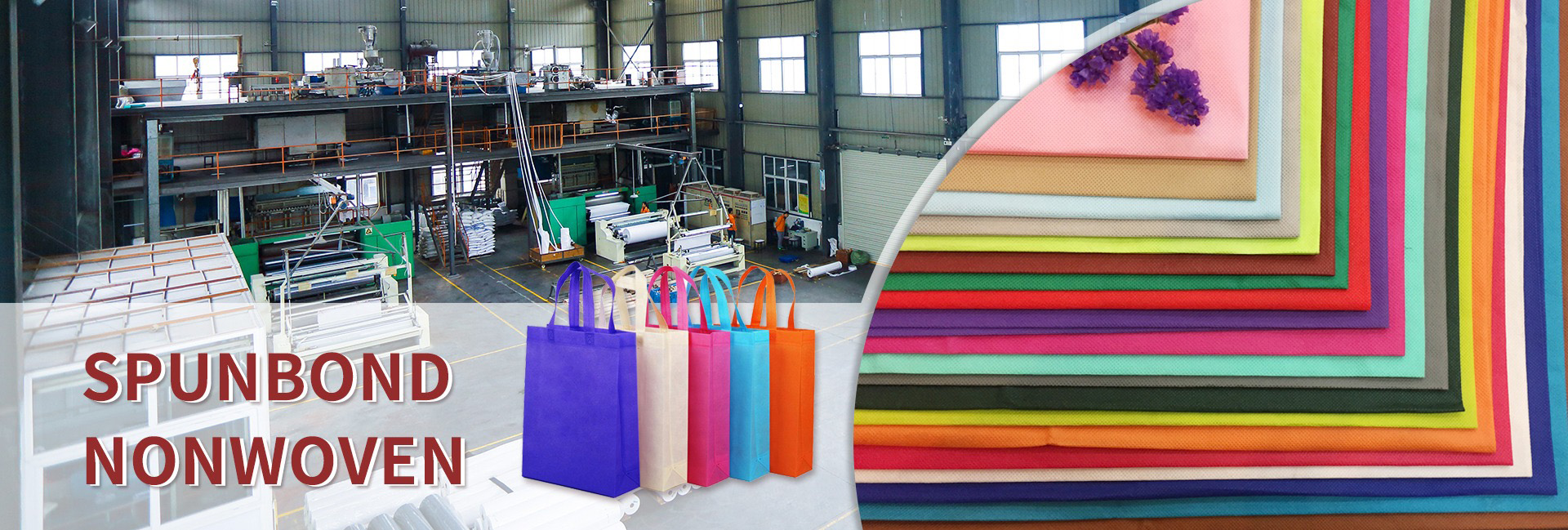
Dongguan Liansheng Non woven Technology Co., Ltd. was established in May 2020. It is a large-scale non-woven fabric production enterprise integrating research and development, production, and sales. It can produce various colors of PP spunbond non-woven fabrics with a width of less than 3.2 meters from 9 grams to 300 grams.
Post time: Jan-27-2026