
Under the scorching heat of summer, the fading problem of outdoor sunshades has always been a pain point that troubles many people – ordinary sunshades will turn yellow, fade, and become brittle after one summer, which not only affects their appearance but also greatly shortens their service life. Repeated replacement is both expensive and laborious. Now, the extensive application of anti-aging non-woven fabrics has completely solved this problem. Only one high-quality anti-aging non-woven fabric can keep the awning bright and durable after three summer sun exposure.
Many people wonder why the anti-aging products can resist the sun exposure without fading, which are also non-woven fabrics? In fact, behind this lies the triple core code of materials, craftsmanship, and formula, which eliminates fading and aging problems from the source, allowing the sunshade to “last forever” in harsh outdoor environments. Today, we will take apart the key logic and see how the anti-aging non-woven fabric can realize the promise of “three summers without fading”.
Anti aging raw materials to prevent ultraviolet radiation from the source
The core reason for sunshade fading is that long-term outdoor ultraviolet radiation causes fiber molecule breakage and pigment decomposition. The first step of anti-aging non-woven fabric is to “build a defense line” from the raw materials and improve the anti ultraviolet ability from the root.
Unlike conventional polypropylene (PP) and polyester (PET) raw materials used for ordinary non-woven fabrics, anti-aging non-woven fabrics use “anti-aging modified raw materials”, and special anti-aging master batch is added in advance to the basic raw materials – this is the “core component” of resistance to fading in the sun. The commonly used anti-aging masterbatches are mainly divided into two categories: one is ultraviolet absorbers, which can actively absorb harmful ultraviolet rays in the sun like “sunscreen” to prevent ultraviolet rays from directly penetrating the fiber to damage the pigment; Another type is hindered amine light stabilizers, which can capture free radicals generated after ultraviolet irradiation, prevent fiber molecules from oxidizing and breaking, and delay fading and brittleness.
More importantly, the addition proportion of anti-aging masterbatch is strictly proportioned, usually accounting for 2% -5% of the total amount of raw materials, which can ensure the anti-aging effect without affecting the softness and permeability of non-woven fabrics. According to the test, the non-woven fabric added with anti-aging master batch can reach UPF50+, which can block more than 98% of the ultraviolet rays. Even if it is exposed to the sun for a long time, the fiber structure will not be easily damaged, avoiding the problem of “fading one layer of color at a time” from the source.
In addition, the purity of the raw materials can also affect the fading effect. High quality anti-aging non-woven fabric is made of high-purity polypropylene chips, free of impurities and low-quality fillers, which avoids the oxidation and discoloration of impurities under ultraviolet radiation, further improves the stability of color, and ensures that the original color can still be maintained after three summer sun exposure.
Dedicated Color Masterbatch+High Temperature Fixing Process, Locking Color and preventing it from Falling off
If anti-aging raw materials are the “basic line of defense”, then special color masterbatch and high-temperature color fixing process are the “key guarantees” to make the awning “durable”. Many ordinary awnings fade fast, not only because of the poor anti-aging ability of raw materials, but also because of the simple dyeing process, and the pigment is easy to fall off and decompose.
When anti-aging non-woven fabric is used for awning, “anti-aging special color master batch” is used instead of ordinary dyes. This kind of masterbatch has strong compatibility with anti-aging materials, and can be evenly dispersed in the fiber, rather than attached to the fiber surface, avoiding the problem that common dyes are easy to fall off and fade when “surface dyeing”. At the same time, the special color master batch itself has added anti ultraviolet components, forming “double protection” with the anti-aging master batch in the raw materials. Even if exposed to the sun for a long time, the pigment will not be easily decomposed, and the color is still bright.
In addition to high-quality masterbatch, high-temperature fixing process is of utmost importance. After dyeing, the anti-aging non-woven fabric will undergo high temperature setting treatment at 150-180 ℃, which can make the color master batch and fiber molecules deeply fuse, firmly “lock” in the fiber, and form a stable color layer. Compared to the room temperature dyeing of ordinary non-woven fabrics, the high-temperature fixing process can increase the adhesion of pigments by more than 60%. Even after being washed away by rainwater and exposed to sunlight, there will be no color fading or color mixing.
It is worth noting that high-quality anti-aging nonwoven fabrics will also be screened by the “sun resistance test” – the samples will be placed in a simulated outdoor exposure environment, tested continuously for 1000 hours (equivalent to the actual exposure time in three summers), and the color change level will be controlled above level 4 (the higher the level, the less obvious the fading). Only products that pass the test can be used in the production of awnings, to ensure that the commitment of “no fading in three summers” is implemented.
Surface protection treatment, double reinforcement, sun resistance and durability
In addition to raw materials and processes, the surface protection treatment of anti-aging non-woven fabric further improves the sun resistance and fade resistance of the awning, making the durability go to a higher level. For the use scenario of awning, anti-aging non-woven fabric will be subject to two layers of surface treatment to form “double protection”.
The first layer is treated with waterproof and anti fouling coating. Long term exposure of sunshades to the outdoors not only exposes them to direct sunlight, but also to the erosion of rainwater and dust. Waterproof and anti fouling coatings can form a dense protective film on the surface of non-woven fabrics, which can prevent rainwater from penetrating, prevent fibers from swelling and discoloration after absorbing water, and block dust from adhering, reducing the obstruction and corrosion of color caused by dust. At the same time, this coating itself also has UV resistance, which can further block the damage of UV to fibers and pigments, and delay fading.
The second layer is treated with scratch and wear resistance. During the use of sunshades, it is inevitable that they will be affected by external forces such as wind and friction, and the surface is prone to scratches and damage. The damaged areas will accelerate the penetration of ultraviolet rays, leading to local fading and brittleness. The anti-aging non-woven fabric can improve the surface hardness and wear resistance through surface coating or calendering, reduce scratches, and avoid the damage becoming “aging breakthrough”, so as to ensure the uniform and lasting color of the entire awning.
In addition, the fiber structure of the anti-aging non-woven fabric has also been optimized. The spunbond needling composite process is used to make the fibers more closely arranged and the structure more stable, which not only improves the tensile strength, but also reduces the penetration of ultraviolet light from the fiber gap, further protects the pigment, and keeps the sunshade in good color in the three summer sun exposure.
Purchase and usage tips to extend the service life of sunshades with peace of mind
In order to make the awning “fade in three summers”, in addition to selecting high-quality anti-aging non-woven fabric, there are also tips for purchasing and daily use, which can further extend its service life.
When purchasing, first identify the “anti-aging” logo, check the product’s UV resistance rating (UPF50+best) and sun resistance test report, and avoid purchasing “pseudo anti-aging” products; Secondly, prioritize choosing sunshades with lighter colors, as light colors are more sun resistant and fade slower than dark colors. At the same time, avoid choosing bright fluorescent colors, as their pigments are more easily decomposed; Finally, check the thickness and density of non-woven fabrics. Products with thickness ≥ 0.3mm and high density have stronger anti-aging and fade resistance.
In daily use, try to avoid keeping the sunshade in a “sun exposure+humidity” environment for a long time. After rainy days, it should be opened and dried in a timely manner to avoid long-term residual moisture that can cause pigment oxidation; Regularly wipe the surface dust with clean water to avoid dust accumulation and corrosion of materials; When not in use in winter, fold and store the sunshade in a dry and ventilated place to avoid damage to the material from rain, snow, and low temperatures.
In conclusion, a piece of anti-aging non woven fabric can keep the awning from fading in three summers, and the core lies in the triple guarantee of “raw material anti-aging+process fixation+surface protection”. With the outbreak of outdoor economy, anti-aging non-woven fabric not only solves the fading pain of the awning, but also becomes the “just needed material” for outdoor shading, camping, cultural tourism and other scenes with its advantages of durability, environmental protection and portability. Choosing the right quality anti-aging non-woven fabric can not only save the trouble of replacing the awning repeatedly, but also keep the outdoor space beautiful all the time, and truly realize “one use for three years, color as new”.
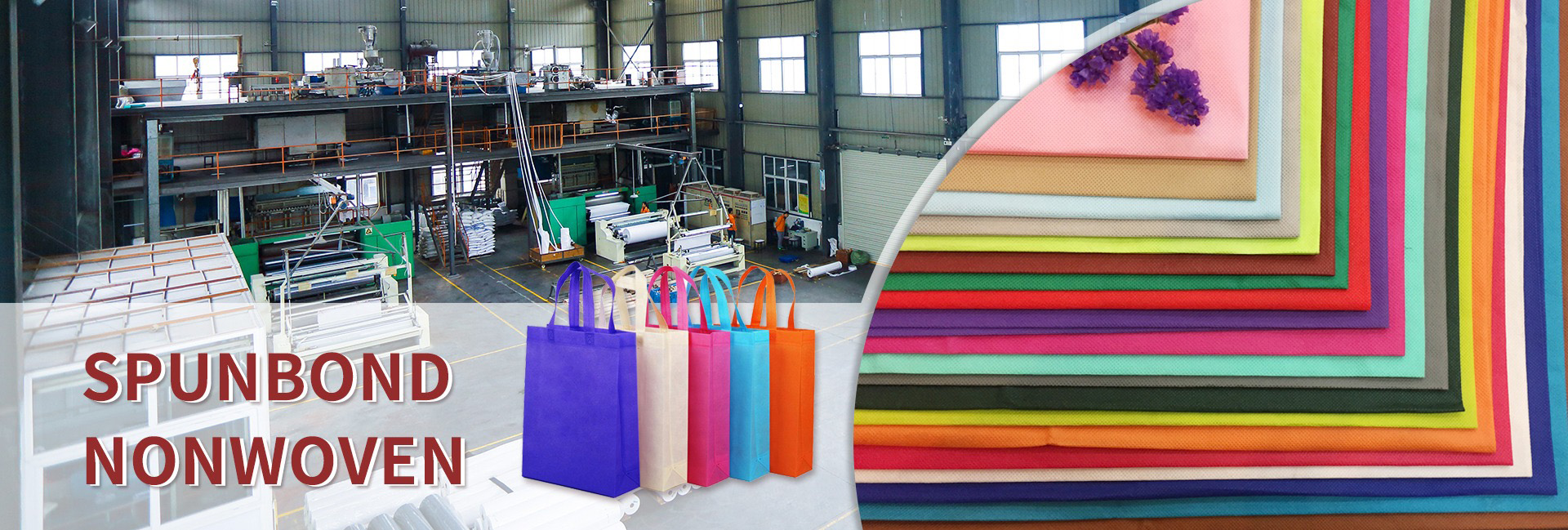
Dongguan Liansheng Non woven Technology Co., Ltd. was established in May 2020. It is a large-scale non-woven fabric production enterprise integrating research and development, production, and sales. It can produce various colors of PP spunbond non-woven fabrics with a width of less than 3.2 meters from 9 grams to 300 grams.
Post time: May-09-2026