
Realizing the import substitution of high-end medical spunbond fabrics in China is a systematic project from technological catch-up to market leadership. This requires collaborative efforts from upstream and downstream of the industrial chain to achieve breakthroughs in multiple dimensions such as technology research and development, product innovation, standard construction, and market application.
The core challenge of domestic high-end medical spunbond fabric
In order to help you quickly grasp the core information, I will sort out the core challenges and breakthrough directions in the process of domestic high-end medical spunbond fabric achieving import substitution.
Technology R&D
The high-end production capacity is insufficient, and there are shortcomings in technologies such as sub micron spunbond and biocompatibility modification; The basic theoretical research is weak. Strengthen cross disciplinary collaboration and innovation in medical engineering, tackle the list of “bottleneck” technologies, and develop functional post-processing technologies.
industrial ecosystem
Insufficient synergy in the industrial chain and low efficiency in the transformation of industry, academia, and research; The standard system is not perfect. Build an integrated innovation and integration model of “government medicine industry academia research supervision” to promote the intelligent and green upgrading of the industrial chain.
market application
The high-end market is monopolized by international giants; The customer lacks trust in domestic materials. Breaking through from the “protection” scenario to the high value-added “implantation” scenario, utilizing green certification and cost advantages to expand the market.
Deeply cultivate technology, from imitation to leadership
Technological breakthroughs are the cornerstone of import substitution, requiring joint efforts in cutting-edge materials, precision equipment, and process optimization.
Key materials and technologies for research and development
It is necessary to break through key material technologies such as flash evaporation nonwoven fabrics. There are already successful domestic precedents in this regard. Xiamen Dangsheng New Materials Company has successfully overcome the flash evaporation technology and achieved mass production through independent research and development, breaking the 60 year monopoly of foreign countries. In terms of specific products, innovative processes such as multi comb warp knitting technology can be used to manufacture spunbond fabrics with high porosity (over 70%) and high strength (longitudinal tensile strength of 274N), meeting high-end medical needs such as tendon repair.
Strengthening cross disciplinary collaboration between medical and engineering departments
The ultimate testing ground for medical materials lies in clinical practice. Yu Jianyong, an academician of the CAE Member, pointed out that it is necessary to strengthen the cross collaborative innovation of medicine and industry, and conduct research and development guided by clinical needs. This means that material scientists must work closely with doctors to jointly develop products that can meet specific medical needs, such as anti infection and promoting tissue regeneration.
Layout green and intelligent technology
Future competitiveness is also reflected in green and intelligent manufacturing. Enterprises can reduce their carbon footprint and meet the environmental requirements of the international market by deploying production capacity in areas with abundant green power resources such as Xinjiang, utilizing “direct supply of green power”, and transforming environmental constraints into green premiums. Meanwhile, empowering research and development with artificial intelligence and intelligent production equipment is also an important direction for the future.
Upgrading industries and building a collaborative ecosystem
A strong industrial ecosystem can provide fertile ground for technological breakthroughs and help innovative products smoothly enter the market.
Building an integrated innovation model: It is necessary to break down barriers and focus on building an integrated innovation integration model of “government medical industry academia research supervision”. This model ensures a smooth chain from research and development, clinical validation, product registration to market application, accelerating the transformation of innovative achievements.
Promoting the modernization and upgrading of the industrial chain: It is necessary to vigorously develop intelligent manufacturing technology and equipment for high-end biomedical fiber material products. Through digital transformation, the transformation from selling raw materials in tons to selling high value-added products in grams can be achieved, enhancing the modernization level and added value of the industrial chain.
Expanding the market, from substitution to definition
The final step in completing import substitution is to successfully enter and lead the market.
Exploring high value-added application scenarios
While firmly establishing a foothold in the medical protection (such as surgical gowns and protective clothing) market, it is necessary to move towards a higher end of the industry chain. The future opportunity lies in the “three-level leap” from the basic “protection” scenario to the “implantation and repair” scenario. For example, the development of smart fibers that can be used for tendon repair, have antibacterial and real-time infection monitoring functions, etc. These fields have high technological barriers, but the product premium is also extremely considerable.
Using the ‘Green Passport’ to Expand the Market
Under the global green wave, environmental qualifications have become hard currency. The digital passport product launched by the European Union requires full traceability of materials throughout the process. Enterprises that lay out the production of recycled materials and green electricity in advance and complete closed-loop verification will be able to enter the procurement list of international customers with priority based on this “green pass”, achieving a transition from “being spot checked” to “being recommended”.
Building national brands and benchmark projects
It is necessary to establish a closed-loop innovation chain for mainstream products, form national brands, and create flagship enterprises. By creating benchmark domestic high-end medical device products, it can reshape market confidence in domestic materials, proving that domestic products not only have lower prices, but also can achieve or even surpass international standards in performance and quality.
Summary
Overall, the path of import substitution for high-end medical spunbond fabrics in China is a comprehensive upgrade from technology, ecology to brand. It requires long-term joint efforts from upstream and downstream enterprises, research institutions, medical institutions, and government departments in the industrial chain.
The endpoint of this path is not only to achieve self-sufficiency, but also to participate in and even lead the formulation of global industry standards in future fields such as green, intelligent, and personalized medicine through continuous technological innovation and keen market insights, making “Made in China” synonymous with high quality.
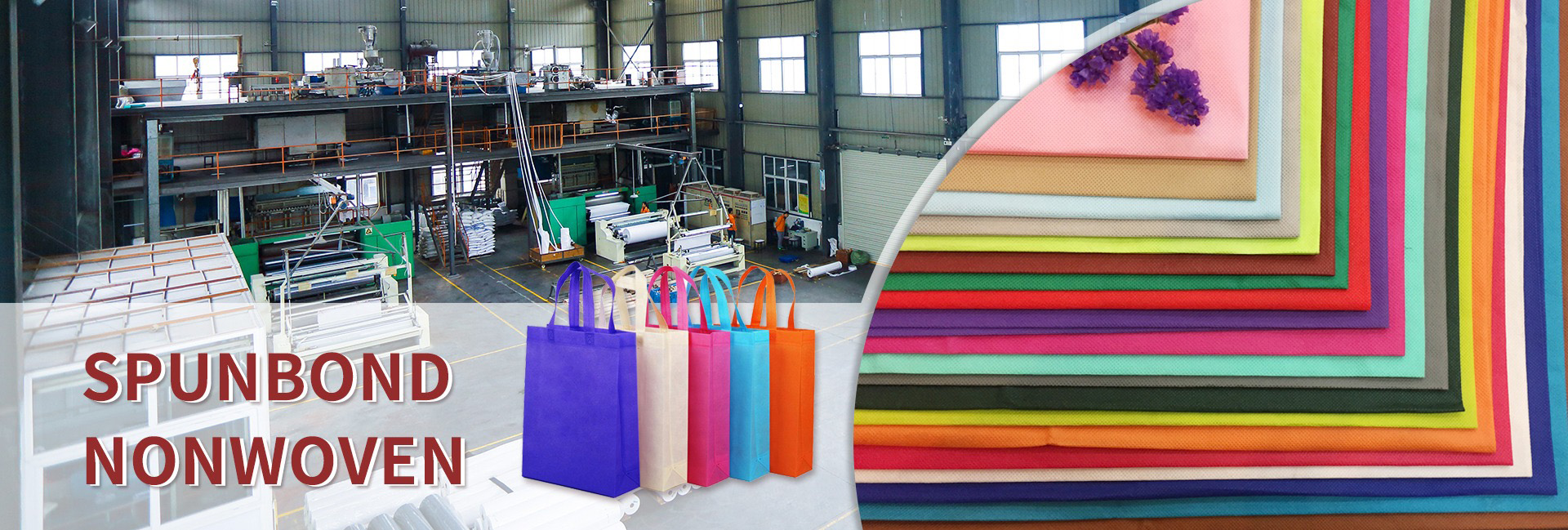
Dongguan Liansheng Non woven Technology Co., Ltd. was established in May 2020. It is a large-scale non-woven fabric production enterprise integrating research and development, production, and sales. It can produce various colors of PP spunbond non-woven fabrics with a width of less than 3.2 meters from 9 grams to 300 grams.
Post time: Dec-01-2025