
The core logic of qualified duration: there is no “unified answer”, but there is “industry consensus”
The xenon lamp aging test qualification time of anti-aging spunbonded non-woven fabrics is essentially “accelerated equivalent time to simulate natural aging”, and there is no single fixed value. The core depends on three factors: material use (outdoor/indoor), target service life, and the standard system followed. But the industry has formed a clear consensus: short-term testing (100-500 hours) is only used for preliminary screening, standard testing (500-2000 hours) is the qualified benchmark for most outdoor scenarios, and long-term testing (over 2000 hours) is used for major projects or products with high weather resistance requirements.
The core principle is to simulate the full spectrum of sunlight (including ultraviolet, visible, and infrared) through a xenon lamp, combined with temperature, humidity, and rain cycles, to accelerate the material aging process – usually 1000 hours of xenon lamp aging is equivalent to 1-2 years of natural exposure (the specific ratio needs to be adjusted according to irradiance, such as at 0.35 W/m ² @ 340nm wavelength, the equivalent relationship is closer to natural aging). The setting of qualified duration essentially ensures that the performance degradation of the material does not exceed the critical value within the target service life.
Detailed Explanation of Mainstream Standards: Qualification Requirements for International and Domestic Core Standards
Xenon lamp aging test of anti-aging spunbonded non woven fabrics mainly follows three categories of international (ISO, ASTM) and domestic (GB/T) standards. The qualification duration and test conditions of different standards differ significantly, and need to be accurately matched according to the application scenarios:
(1) International standard (preferred for export products)
ASTM G155 (American Society for Testing and Materials)
Applicable scenarios: outdoor building materials, automotive exterior, industrial spunbond fabrics, etc. It is the most widely used non-metallic material aging standard in the world.
Qualified duration: Recommended 500-3000 hours. The exposure mode should be selected based on the material usage – for outdoor rainy scenes, choose “dry+wet cycle” (such as 102 minutes of light exposure+18 minutes of water spray), and for dry environments, choose “dry exposure”.
Core requirements: The retention rate of tensile strength after aging should be ≥ 80%, without cracking or powdering, and the color difference Δ E should be ≤ 3 (difficult to distinguish with the naked eye). For example, the anti-aging spunbonded fabric used for outdoor tent bottom cloth in Europe and the United States needs to pass the 1000 hour ASTM G155 test, and the strength retention rate is not less than 85%.
ISO 4892-2 (International Organization for Standardization)
Applicable scenarios: Plastic and synthetic spunbond fabrics (such as PP/PET based), suitable for export needs in most regions around the world.
Qualified duration: 250-2000 hours, the spectrum needs to match the near ultraviolet visible region of sunlight, and the blackboard temperature should be controlled at 40-80 ℃.
Core requirements: Tensile strength attenuation ≤ 20%, elongation retention rate ≥ 70%, and no obvious yellowing or cracking on the appearance. For example, geotextile spunbond fabric used in international infrastructure projects needs to pass 2000 hours of ISO 4892-2 testing to ensure outdoor service stability for more than 5 years.
ISO 105-B04 (Textile specific)
Applicable scenario: textile anti-aging spunbonded fabrics (such as outdoor clothing, sunshade fabrics), focusing on color stability assessment.
Qualified duration: 20-500 hours, requiring the use of a daylight filter to simulate outdoor lighting.
Core requirements: Color fastness rating ≥ 3-4 levels (1-5 levels, with 5 levels being the best), color difference Δ E ≤ 2.0 (significant color change but acceptable). If used for high-end outdoor products (such as high-end sunshades), it must reach level 4 or above (slight color change).
(2) National standard (mandatory for domestic sales/engineering)
GB/T 16422.2 (Plastic laboratory light source exposure test method)
Applicable scenarios: Domestic plastic based spunbond fabric (such as PP geotextile and non-woven fabric for building enclosure), with technical specifications compatible with ISO 4892-2.
Qualified duration: 500-4000 hours, outdoor building materials products usually require more than 1000 hours.
Core requirements: after 1000 hours of aging, the tensile strength retention rate is ≥ 80%, the water absorption rate is ≤ 1.5%, and there is no cracking and chalking – this is the core qualification standard of anti-aging spunbond fabric designated by domestic water conservancy and road engineering. For example, the spunbond fabric used for building enclosure in Xiong’an New Area needs to pass the 1500 hour GB/T 16422.2 test, with a strength retention rate of not less than 85%.
GB/T 8427-2019 (Color fastness of textiles to artificial light)
Applicable scenarios: Textile spunbond fabrics (such as outdoor tent fabrics, insect proof nets), focusing on color weather resistance.
Qualified duration: Recommended for outdoor products is 100-500 hours, with irradiation intensity controlled at 42 ± 3W/m ² @ 340nm.
Core requirements: Color fastness rating ≥ 3, color difference Δ E ≤ 3.0, avoiding significant fading within 1 year of outdoor use.
Key judgment indicators: In addition to the duration, these “qualified lines” are more important
The “qualification” of xenon lamp aging test does not only depend on the duration, but also needs to meet the dual requirements of “duration+performance indicators”. The core judgment indicators include three categories, all of which are indispensable:
Mechanical property retention: This is the core qualification index of anti-aging spunbonded non-woven fabrics. Regardless of the testing duration, the retention rate of tensile strength after aging should be ≥ 80%, and the retention rate of elongation should be ≥ 70% – if the strength decreases by more than 20%, the material is prone to fracture due to stress in actual use. For example, spunbond fabric used for roof waterproofing is considered qualified if its tensile strength decreases from the initial 800N/50mm to 640N/50mm after 1000 hours of aging (with a retention rate of 80%); If it drops to 600N/50mm (retention rate of 75%), it is judged as unqualified.
Appearance and color difference: Qualified products need to have no obvious appearance defects (cracking, powdering, fuzzing), and color difference Δ E ≤ 3.0 (difficult to distinguish with the naked eye). If used in scenes with high appearance requirements (such as outdoor sunshades and landscape sheds), it is necessary to achieve Δ E ≤ 2.0 (slight color change). For example, the black anti-aging spunbonded fabric turns dark gray after aging, ΔE=2.8, Meet the qualified standards for engineering use; If Δ E=4.2 and there is obvious fading, it is judged as unqualified.
Environmental adaptability: Depending on the usage scenario, additional environmental requirements need to be met. For outdoor rainy scenes, wet cycling tests must be conducted without interlayer peeling; High temperature environments (such as roofs) need to be tested at a blackboard temperature of 65 ℃ without any abnormal performance degradation.
Industry application differences: customized logic for “qualified duration” in different scenarios
The qualified duration of anti-aging spunbonded non-woven fabrics needs to be customized according to the service requirements of the actual application scenarios. The threshold values of different scenarios differ significantly:
Short term usage scenarios (1-3 years lifespan): such as temporary construction enclosures and disposable outdoor tents, the qualified duration is usually 500 hours (GB/T 8427 or ASTM G155), with core requirements of color fastness ≥ level 3 and strength retention rate ≥ 75%, without excessive pursuit of long-term testing.
Mid term usage scenario (3-10 years lifespan): For example, for ordinary building exterior wall insulation and outdoor crop coverage, the qualified duration needs to reach 1000 hours (GB/T 16422.2 or ISO 4892-2), with a strength retention rate of ≥ 80% and a color difference Δ E ≤ 3.0. For example, spunbond fabric used in vegetable greenhouses in Shouguang, Shandong needs to pass a 1000 hour test to ensure 3-5 years of weather resistance.
Long term usage scenarios (with a lifespan of over 10 years): such as major water conservancy projects, highway roadbeds, and high-end building roofs, the qualified duration must reach 2000-3000 hours (ASTM G155 or GB/T 16422.2), with a strength retention rate of ≥ 85%, and additional tests such as freeze-thaw cycles and chemical corrosion resistance must be passed. For example, the geotextile spunbond fabric used in the Hong Kong Zhuhai Macao Bridge has passed a 3000 hour xenon lamp aging test, with a strength retention rate of 90%, ensuring stable service for more than 20 years.
Extreme environmental scenarios (plateau, seaside, industrial pollution area): It is necessary to extend the standard duration by 50% or increase the irradiance test. In high-altitude areas with strong ultraviolet radiation, the qualified duration needs to reach 1500-2000 hours, and the amount of light stabilizer added needs to be increased to 0.4% -0.5% to ensure stable performance after aging.
Common Misconceptions Clarification: Avoiding These ‘Qualified’ Traps
Misconception 1: The longer the duration, the more qualified it is – it is not necessarily better to match the target service life. For example, using spunbond fabric for a 2000 hour test for temporary enclosures may pass, but it will significantly increase costs and is completely unnecessary.
Misconception 2: Only looking at the duration without considering the indicators – if the strength retention rate after 1000 hours of testing is only 70%, even if the duration is marked, it is still judged as unqualified; On the contrary, if the strength retention rate is 85% after 500 hours of testing and meets short-term usage requirements, it can be judged as qualified.
Misconception 3: Universal Standards – ASTM G155/ISO standards are required for exports to Europe and America, while GB/T standards are required for domestic engineering. Mismatching standards can result in invalid test data. For example, if the spunbond fabric used in domestic water conservancy projects is tested according to AATCC TM16 (Textile Short Term Duration Standard), even if it passes 500 hours, it does not meet the engineering requirements.
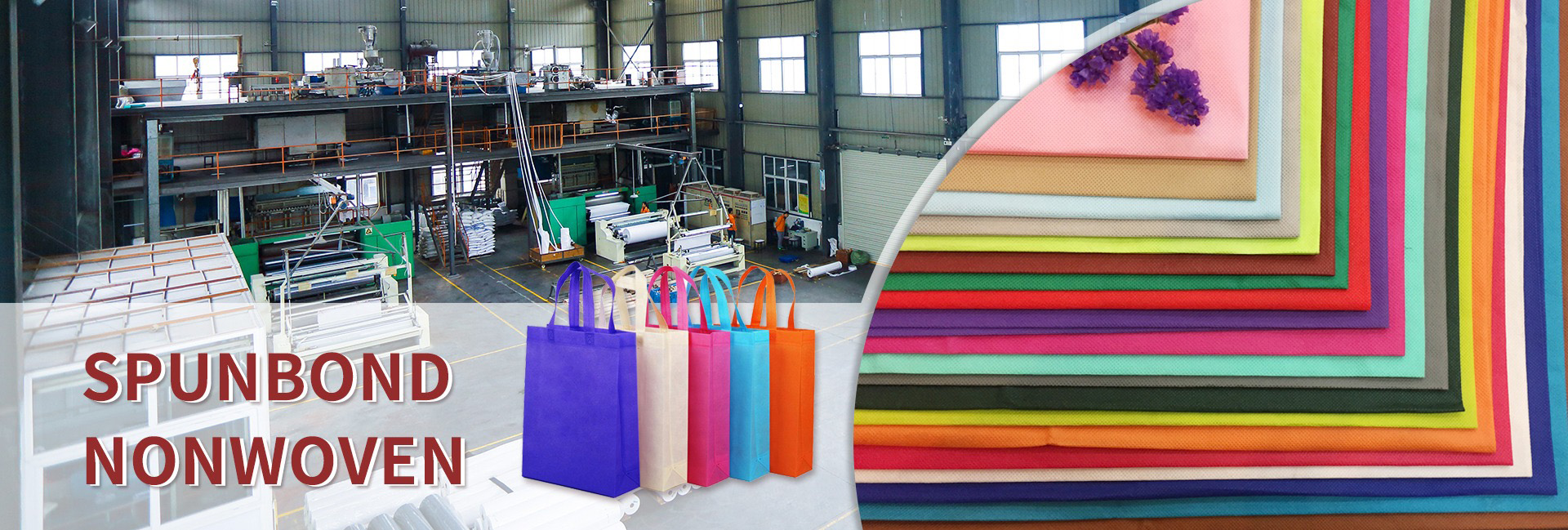
Dongguan Liansheng Non woven Technology Co., Ltd. was established in May 2020. It is a large-scale non-woven fabric production enterprise integrating research and development, production, and sales. It can produce various colors of PP spunbond non-woven fabrics with a width of less than 3.2 meters from 9 grams to 300 grams.
Post time: Mar-05-2026