
For growers, grass proof cloth and harvest cloth are the “essential items” in the field – grass proof cloth can suppress grass and maintain moisture, saving the need for manual weeding; Harvest cloth protects fruits from damage and increases the commodity rate of fruits. But many people have fallen into the same trap: buying ordinary fabrics at a low price, either the grass proof fabric will become brittle and damaged after six months of use, or the harvest fabric will fade and crack after one season of sun drying, and they have to spend money to replace it every year. At the end of the year, the cost of fabric alone will be several hundred or thousands of yuan, all of which are “wasted money”. In fact, the key is to choose the right material. The straw proof cloth and harvest cloth made of anti-aging non-woven fabric can be laid for 3-5 years at a time, completely saying goodbye to the dilemma of “changing every year, losing every year”. Today, we will teach you how to choose precisely, spend one time, and save many years of costs.
Firstly, it should be clarified that although grass proof cloth and harvest cloth are commonly used non-woven fabrics in agriculture, their uses are completely different and cannot be confused. Many growers make the wrong choices, which not only fail to achieve the desired results, but also waste money. Simply put, anti grass cloth focuses on “field maintenance” and is laid on the surface to suppress grass, retain water, and protect soil; Harvest cloth focuses on “harvest protection” and is used for wrapping fruits, laying them for drying, preventing bumps and pollution. The core purchase logic of the two is the same – priority is given to anti-aging non-woven fabrics, avoiding the pitfalls of ordinary non-woven fabrics and low-quality plastic fabrics, which is the key to saving replacement costs.
Distinguish between grass proof cloth and harvest cloth, with different uses and key selection points
The most common mistake many growers make when purchasing is to use grass proof cloth as harvest cloth, or vice versa, which greatly reduces the effectiveness of use and accelerates fabric aging. Only by understanding the core purposes of both can we accurately choose the right one and avoid waste.
Grass proof cloth: “magic tool for grass suppression” in the field, focusing on anti-aging, air permeability and water permeability
Grass proof cloth is mainly laid on the surface of orchards, vegetable gardens, and nurseries. Its core function is to inhibit weed growth, maintain soil moisture, protect crop roots, reduce manual weed control costs and pesticide use, and adapt to various crops such as apples, citrus, grapes, and vegetables. According to data from the Chinese Academy of Agricultural Sciences, the domestic market for grass repellent fabric will exceed 4.5 billion yuan in 2024, with a compound annual growth rate of 12.3%. However, many growers have to replace the wrong materials every year, which adds extra costs.
Choose grass proof cloth, focus on 3 key points, even a little less can easily cause pitfalls:
1. Anti aging non-woven fabric (polypropylene PP modified material) is preferred for material: ordinary non-woven grass proof fabric is not added with anti-aging ingredients, and it will become brittle and tear in half a year after being exposed to the sun in summer and washed in rainy season, so it can be replaced in less than a year; The anti-aging non-woven fabric grass proof cloth, with the addition of special anti-aging master batch and nano reinforced particles in the raw materials, can block more than 98% of the UV rays, and the weather resistance has been greatly improved. It can be used stably for 3-5 years in the open air, which is more than 3 times longer than the ordinary non-woven fabric. It does not need to be replaced every year. It saves 200-500 yuan per mu of weed control and cloth replacement costs per year. At the same time, the anti-aging non-woven fabric adopts the spunbonded needle punched composite process. The fibers are closely arranged, and the tensile strength is more than 800N/5cm. It can resist agricultural machinery rolling, stone friction, and is not easily damaged. It is suitable for complex planting scenes such as hills and mountains.
2. The specifications should be suitable for the planting scenario: weight is the key, and it is recommended to choose 90-120g/㎡. If it is too thin, it is easily broken by weeds and blown away by the wind, and if it is too thick, it will waste costs; Choose the width according to the row spacing. For single row planting in orchards, choose 1-1.2 meters, and for double row or field planting, choose 2-3 meters. The width can be customized to avoid cutting waste. When laying, the joints overlap by 5-10cm, and the edges are compacted with soil or ground nails to improve durability. In addition, the shading rate of the grass proof cloth needs to be ≥ 95% to completely block the photosynthesis of weeds, with a grass suppression effect of over 95%. Weeds can turn yellow and wither within 15 days, truly achieving the goal of “one-time laying, worry free for many years”.
3. Color selection is correct, doubling the effect: black is preferred for its best shading and grass suppression effect, as well as its ability to absorb heat and heat. In spring, it can increase soil temperature by 2-3 ℃, promote crop root growth, early germination and maturity, and is a universal outdoor planting option; Green and brown are suitable for landscape gardening or courtyard planting, balancing aesthetics; The silver gray or “green on top and black on bottom” double-layer model has better anti-aging performance and is suitable for long-term outdoor planting. It can also reflect ultraviolet rays and reduce the occurrence of crop sunburn.
Harvest Cloth: Harvesting the ‘Fruit Guardian’, with a focus on softness, sun resistance, and damage prevention
Harvest cloth is mainly used for fruit harvesting, drying, and storage. Its core function is to wrap fruits (such as apples, pears, and citrus) to prevent collision, wear, and pollution, or to lay them on the ground to dry grains and fruits, avoiding direct contact with soil and causing mold. It can also prevent fruit from fading due to exposure to sunlight and improve the yield of commercial fruits. Many growers use ordinary cotton or plastic cloth as harvest cloth. Cotton cloth is prone to water absorption and mold, and is not durable. Plastic cloth is stiff and not breathable, and is prone to scratching fruits. Both are not sun resistant, and will age and break after one season of sun exposure.
Choose a harvest cloth with 3 core points, balancing fruit protection and durability:
1. Soft anti-aging non-woven fabric is preferred: this kind of fabric adopts fine fiber spunbonded process, which is soft and delicate, and will not scratch the skin of the fruit. At the same time, anti-aging masterbatch is added, which is sun resistant, rain resistant, and will not fade or embrittle after exposure to 1000 hours (equivalent to three harvest seasons). It can be reused for 3-4 years, more than 4 times longer than ordinary cotton cloth and plastic cloth. In addition, the anti-aging non-woven fabric is breathable and moisture permeable, and the wrapped fruit will not be stuffy. When it is laid in the sun, it can quickly drain water and reduce the mildew of the fruit. It is especially suitable for harvesting and use in rainy areas, meeting the needs of green agriculture and environmental protection, without agricultural residues, pollution, and damage to the fruit and soil.
2. The thickness and density should be moderate: choose a thickness of 0.2-0.3mm and a moderate density. Being too thick will increase costs and is not breathable; Too thin and easy to break, unable to protect the fruit. The harvest cloth used to wrap fruits can choose styles with micropores for better breathability and to avoid fruit rot; The harvest cloth used for drying can be encrypted to prevent the leakage of grains and small fruits, while improving wear resistance. The Martindale abrasion test can reach 200000 times, suitable for large-scale harvesting and drying scenarios.
3. Choose the color according to your needs, taking into account practicality and fruit protection effect: choose light colors (white, light gray) for wrapping the fruit, which have good reflectivity and can prevent the fruit from fading due to exposure to sunlight, while reducing the temperature difference on the surface of the fruit and lowering the rate of fruit cracking; Choose dark colors (black, dark gray) for laying and drying, which absorb heat quickly, accelerate the drying of fruits and grains, save drying time, and improve harvesting efficiency. It is especially suitable for areas with rainy autumn and inconvenient drying.
Identify anti-aging non-woven fabrics, avoid three purchase mistakes, and do not waste money
Whether to choose grass proof cloth or harvest cloth, “anti-aging” is the core. Many growers buy low-quality products cheaply, which seems to save money, but in fact, they have to replace them every year, which costs more money. Based on years of practical experience of growers, summarize the three most common misconceptions that can be avoided to avoid detours and save costs.
Misconception 1: Only consider the price, not the material. Many businesses use ordinary non-woven fabrics and recycled materials mixed with PP to make grass proof fabrics and harvest fabrics, with a very low price (about 0.56 yuan/m2). However, such fabrics have no anti-aging treatment, and become brittle and damaged after half a year of outdoor use. The cost of annual replacement is higher than that of buying anti-aging non-woven fabrics once. Remember: Every penny is worth every purchase. The average price of anti-aging non-woven grass proof cloth is 0.8-3.0 yuan/㎡, and the average price of harvest cloth is 1.0-3.5 yuan/㎡. It seems a little expensive, but it can be used for 3-5 years. The average annual cost is more than 60% lower than that of ordinary cloth. In the long run, it is more cost-effective. The price can be lowered by collective purchase, which is about 30% less than the retail price.
Misconception 2: Confusing the uses of grass proof cloth and harvest cloth. Using anti grass cloth to wrap fruits, due to its hard material and insufficient breathability, can scratch the fruits and cause them to rot; Laying the harvest cloth on the ground to prevent grass is wasteful and ineffective due to its insufficient density, poor shading, poor grass suppression effect, and susceptibility to being broken by weeds. Be sure to choose the right fabric according to its purpose, and not blindly use it universally.
Misconception 3: Neglecting testing reports and qualifications. All high-quality anti-aging non-woven fabrics will have a third-party test report, which will indicate the UV resistance grade (UPF50+best), weather resistance years, weight, tensile strength and other parameters, and meet the requirements of GB/T 17639 and other national standards; The inferior products have no test report, the material is unknown, and the anti-aging performance cannot be guaranteed. When making a purchase, be sure to request a testing report from the merchant, and prioritize choosing manufacturers with ISO9001 certification and large-scale production for better quality assurance. Products from companies such as Shandong Jinpusen and Jiangsu Hengli Chemical Fiber have more reliable reputation and quality.
Actual measurement of growers: anti-aging non-woven fabric, saving hundreds of pieces a year, durable and worry free
This anti-aging non-woven fabric of grass proof cloth and harvest cloth has been piloted and promoted in many planting areas in China, such as Yantai, Shandong, Luochuan, Shaanxi, Taizhou, Zhejiang, and has received unanimous praise from growers. The measured effect of saving money is very significant, and practical experience has proved that selecting the right material can save a lot of money.
Brother Zhang, an apple grower in Yantai, Shandong Province, said: “In the past, we used to buy ordinary grass proof cloth every year. After half a year, it would be crisp. It would break when the wind blew, and we would have to re lay it at the end of the year. It would cost hundreds of dollars a year. This year, we replaced the anti-aging non-woven grass proof cloth, which was laid in the spring, but it was not damaged when exposed to the sun in summer or washed in rainy season. Moreover, the grass control effect was particularly good. It saved the money for manual weeding, and it can save more than 500 yuan a year. It is expected to last 4-5 years, which is worth it!”
Li Dajie, a citrus grower in Taizhou, Zhejiang Province, shared: “In the harvest season, I was most afraid of bumping fruits. I used to wrap them with ordinary cotton cloth. After drying for a few days, they faded and became moldy, and were easy to scratch the peel. The fruit rate of commodities could not go up. After replacing them with anti-aging non-woven fabric, the surface of the wrapped citrus was smooth, free of scratches, and resistant to sunlight and rain. After the harvest season, they were cleaned, and could continue to be used next year. There was no need to buy new ones every year. More than 300 pieces could be saved a year. The fruit rate of commodities also increased by 10%, and the selling price was also high.”
There is also feedback from grape growers that after the anti-aging non-woven grass proof cloth is laid, it not only has a good grass control effect, but also can reduce soil moisture evaporation by 30% -50%, prevent rainwater from flushing fertilizer, improve the fertilizer utilization rate by 15% -20%, make the grape skin more colorful and evenly colored, and greatly increase the number of first-class fruits, which can save costs, improve quality and increase production, and truly achieve “more with one action”.
Remember these 2 sentences, don’t waste money, durable and worry free
1. Select grass proof cloth: anti-aging non-woven fabric (PP modified)+90-120g/㎡ gram weight+black (general), give priority to UV resistance, air permeability and water permeability, lay it once, do not replace it for 3-5 years, save labor and cost;
2. Choose harvest cloth: soft anti-aging non-woven fabric+0.2-0.3mm thickness+light color (package)/dark color (air drying), giving priority to softness, sun resistance and damage resistance, which can be reused, and fruit protection can save money.
For farmers, every penny saved is pure profit. The grass proof cloth and harvest cloth need not be too expensive, but we must choose the right material – anti-aging non-woven fabric. It seems that the investment is slightly higher at one time, but it can actually save the “wasted money” that is replaced every year, improve the planting efficiency and ensure the quality of fruits. By mastering the above purchasing techniques and avoiding misunderstandings, one can choose durable and worry free agricultural fabrics, making planting easier and generating more substantial profits, truly achieving the goal of “one investment, many years of benefits”.
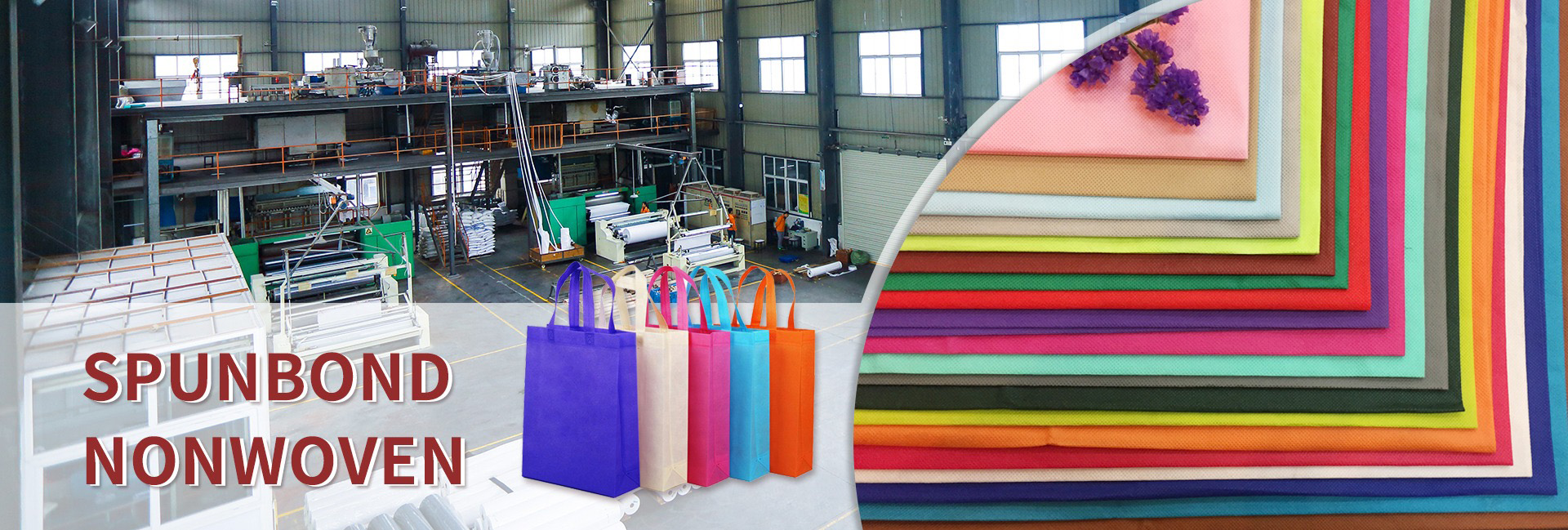
Dongguan Liansheng Non woven Technology Co., Ltd. was established in May 2020. It is a large-scale non-woven fabric production enterprise integrating research and development, production, and sales. It can produce various colors of PP spunbond non-woven fabrics with a width of less than 3.2 meters from 9 grams to 300 grams.
Post time: May-08-2026