
Choosing the appropriate cutting width for a non-woven fabric slitting machine requires comprehensive consideration of multiple factors to ensure production efficiency and product quality. The following are the key steps and precautions:
Usage scenario
Firstly, choosing the appropriate cutting width needs to consider the usage scenario. For example, medical non-woven fabric products usually require a smaller cutting width to ensure their tightness and hygiene. In the textile industry, different cutting widths are selected based on different fabric formulas, product specifications, and other requirements.
Clarify product specification requirements
Determine the width of finished products based on orders or downstream processes (such as medical non-woven fabrics, hygiene products, etc., which have specific width standards). Confirm the allowable width error (such as ± 1mm) to avoid nonconformity caused by accumulated errors.
Analyze material properties
Some non-woven fabrics (such as hot air non-woven fabrics) may shrink after cutting, and compensation needs to be reserved in advance (for example, if the target width is 100mm and the shrinkage rate is 2%, the cutting width is set to 102mm). Thick or elastic materials may require more precise tension control to prevent stretching deformation from affecting the final width.
Evaluate equipment capabilities
Check the maximum/minimum cutting width of the slitting machine (if the equipment supports 200-2000mm, if it exceeds the range, the machine model needs to be changed). High precision equipment (such as servo motor control) can be fine tuned to the 0.5mm level, suitable for precision cutting. The system equipped with automatic correction or real-time monitoring can be dynamically adjusted to reduce human error.
Match production needs
Choose a quick tool changing device that supports frequent adjustments (such as electric tool adjustment saving 30% of changeover time compared to manual adjustment). Prioritize fixed width to maximize production capacity. If rewinding or laminating is required, reserve process allowance (such as edge wrapping after slitting, with an additional width of 5mm).
Optimize efficiency and losses
Calculate the minimum corner material through typesetting (e.g. raw material width of 2100mm, cut into 3 strips of 700mm, utilization rate of 100%). Narrow widths (such as below 50mm) may require a speed reduction of 50% to maintain stability, while wide widths can operate at full speed.
Test validation and adjustment
Take 1-2 meters of material for trial cutting, measure the actual width (using a laser rangefinder), and adjust the parameters to meet the standard. Real time feedback and automatic correction of deviations using online measuring instruments in production.
Experience and data accumulation
Record the optimal cutting parameters for different materials (such as the lowest shrinkage rate of a certain brand of PP non-woven fabric under a tension of 10N). Regularly train operators to familiarize themselves with material characteristics and improve problem response speed.
Other precautions
Environmental factors: Changes in temperature and humidity may cause material expansion/contraction, and the workshop needs to maintain constant temperature and humidity.
Tool maintenance: Regularly check blade wear to avoid uneven cutting or burrs caused by blade edge passivation.
Production costs
Finally, a very important factor is production cost. The level of production costs directly affects the economic interests of enterprises. Therefore, when choosing the cutting width, it is not only necessary to consider the actual situation and production needs, but also to pay attention to cost control.
Summary steps
Determine requirements: Clearly define the width and tolerance of the finished product.
Material testing: measure shrinkage rate and evaluate physical properties.
Equipment selection: Choose a suitable slitting machine based on the width range and accuracy.
Trial cutting verification: Small batch trial production and parameter adjustment.
Batch production: Monitor the process, optimize utilization and speed.
Through systematic analysis and verification, cutting width can be efficiently selected to balance quality, cost, and efficiency. If further optimization is needed for specific scenarios, detailed information can be provided to obtain customized solutions. Choosing the appropriate cutting width is crucial for the application of non-woven fabric slitting machines. Enterprises should make choices based on comprehensive factors such as their own production needs and economic strength when making purchases, in order to achieve optimal production efficiency and economic benefits.
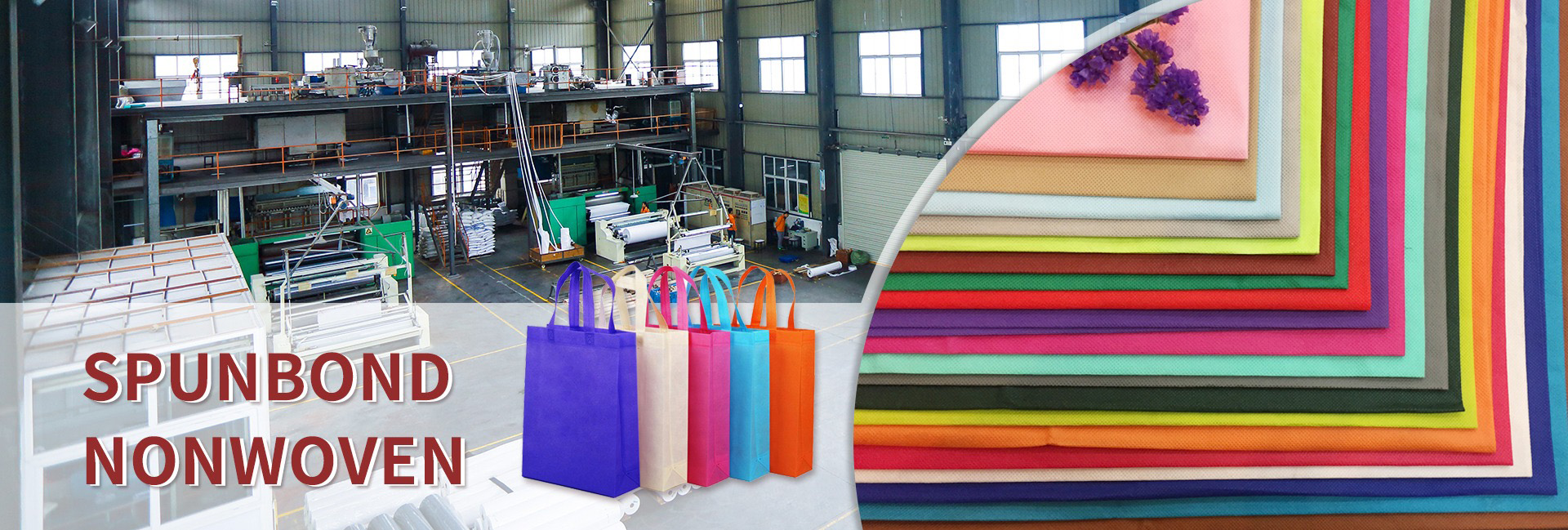
Dongguan Liansheng Non woven Technology Co., Ltd. was established in May 2020. It is a large-scale non-woven fabric production enterprise integrating research and development, production, and sales. It can produce various colors of PP spunbond non-woven fabrics with a width of less than 3.2 meters from 9 grams to 300 grams.
Post time: May-11-2025