
3 core cognitive misconceptions must be broken
Misconception 1: “High flame retardant rating=absolute safety”
Correction: The level only represents “combustion control capability” and needs to be combined with the scenario – for example, UL94 V0 level is suitable for electronic devices, but building firewalls still require A-level non combustible materials (organic flame-retardant non-woven fabrics cannot reach A-level even at higher levels);
Misconception 2: “Zero halogen=safer”
Correction: The core of halogen-free products is “low smoke toxicity”, but the flame retardant efficiency may be lower than that of halogenated products. It is necessary to consider the comprehensive indicators (such as LOI ≥ 28%+smoke density ≤ 75), rather than simply looking at the “halogen-free” label;
Misconception 3: “High temperature resistance=flame retardancy”
Correction: High temperature resistance (such as no deformation at 150 ℃) ≠ Preventing combustion. It is necessary to clarify the “flame retardant grade” (such as GB8624-2023, UL94) to avoid confusion between the concept of “high temperature resistance” for commercial and household use.
4 hard indicators+2 practical verifications
(1) 4 core indicators that must be considered (no clear data=invalid product)
Flame retardant grade
Domestic: GB8624-2023 (A/B1/B2) International: UL94 (V0/V1/V2), EN 13501-1.
-Core protection (firewall, cable blocking): Choose Class A (only inorganic materials); Auxiliary protection (home, car): Choose B1 level/UL94 V0 level; Disable B3 level (flammable).
Limiting Oxygen Index (LOI)
≥ 28% (flame retardant critical value), – daily scenario: LOI 28% -32% (B1 level); High risk scenarios (new energy, aerospace): LOI ≥ 35%.
Smoke and droplets
Smoke Density Rating (SDR) ≤ 75 (UL94 V0 requirement), – Closed Space (Automotive, Indoor): SDR ≤ 50+No Droplets; -In densely populated areas, a “low VOC” testing report is required to be attached
Environmental compliance.
Domestic: GB 18587 (formaldehyde free) International: REACH (EU), CFR1633 (North America), – Maternal and Child/Medical Scenarios: zero formaldehyde+heavy metal compliance; Product: Requires certification for the corresponding region.
(2) Two verification methods that can be operated by ordinary people (auxiliary judgment, cannot replace detection)
Simple ignition test (under safety conditions)
Operation: Use the outer flame of a lighter to ignite the corners of the material (for 10 seconds), and remove the source of the fire;
Effective product performance: V0 level → extinguishes within 10 seconds without dripping; B1 level → extinguishes within 30 seconds without obvious flame spread;
Invalid product performance: continuous burning for more than 1 minute, droplets igniting filter paper, and producing a large amount of black smoke (pungent odor=high toxicity).
Check the detection report (core verification)
Focus on three points: ① Whether the testing institution has CMA/CNAS qualifications (domestic) and ILAC-MRA (international mutual recognition); ② Report validity period (usually 1-3 years); ③ Whether the testing items cover “flame retardant level, smoke density, and harmful substances” (all of which are indispensable);
Avoiding pitfalls: Reject products with “copies without official seals”, “reports that do not match product models”, and “only test single indicators (such as LOI, not smoke toxicity)”.
Scene based selection guide (accurate matching is effective)
1. Home life (sofa/mattress/curtains/carpet)
Core requirements: low smoke toxicity, washability, and no impact on hand feel;
Selection criteria: GB8624-2023 B1 level+LOI ≥ 28%+SDR ≤ 75+formaldehyde free;
Avoiding pitfalls: Do not buy low-priced products that are labeled as “flame retardant only, not B1 grade” (mostly B2 grade).
2. Maternal and child products (baby crib/safety seat/toys)
Core requirements: non-toxic, non irritating, flame retardant and non dripping;
Selection criteria: EU EN 716 (children’s specific flame retardant standard)+plant-based flame retardants (starch/cellulose based)+heavy metals ≤ 10mg/kg;
Avoiding pitfalls: Refuse products containing halogen flame retardants (which produce hydrogen halides during combustion and pose a risk to infants).
3. Industrial/Electronic (5G base station/charging station/lithium battery)
Core requirements: high temperature resistance, insulation, flame retardancy and durability;
Selection criteria: UL94 V0 level+LOI ≥ 32%+temperature resistance ≥ 120 ℃+halogen-free low smoke;
Avoiding pitfalls: Do not choose “post finishing flame retardant” products (dip rolling/coating process, prone to failure at high temperatures), prioritize “body flame retardant” (co blend spinning process).
4. Building infrastructure (external wall insulation/cable well/steel structure)
Core requirements: high flame retardant rating, anti spread;
Selection criteria: Core area (firewall) → A-grade non combustible material (fiberglass cloth/rock wool); Auxiliary parts (insulation layer) → B1 level+fireproof isolation belt;
Avoiding pitfalls: It is strictly prohibited to use B2 grade flame-retardant non-woven fabric as a substitute for A-level materials (which must not pass the fire inspection and has safety hazards).
5. Transportation sector (automobiles/subways/airplanes)
Core requirements: low smoke toxicity, wear-resistant, suitable for enclosed spaces;
Selection criteria: Automobile → UL94 V0 level+ISO 3795 (smoke and poison); Subway → EN 45545-2 (railway specific standard); Aircraft → FAA 25.853 (Aviation Standard);
Avoiding pitfalls: Do not buy “universal flame retardant materials” (such as using building B1 grade materials instead of automotive specific materials, which do not meet temperature/wear resistance standards).
5 Key Questions (Ask Merchants to Avoid Being Scammed)
What is the flame retardant rating of this product in GB8624-2023? Do you have a complete testing report? ”(No report=counterfeit);
What are the Limiting Oxygen Index (LOI) and Smoke Density Rating (SDR) specifically? ”(Saying ‘flame retardant’ without numerical values=vague promotion);
What type of flame retardant is used? Is it halogen-free? Is there a hazardous substance testing report? “(Must ask for mother and baby/indoor scenes);
Is the flame retardant process for the main body flame retardant (blended yarn) or post finishing (dipping/coating)? (Post finishing products have poor durability);
Is it suitable for my scenario? For example, for baby crib/building insulation, can you provide specialized certification corresponding to the scenario? “(General product ≠ Scenario adaptation).
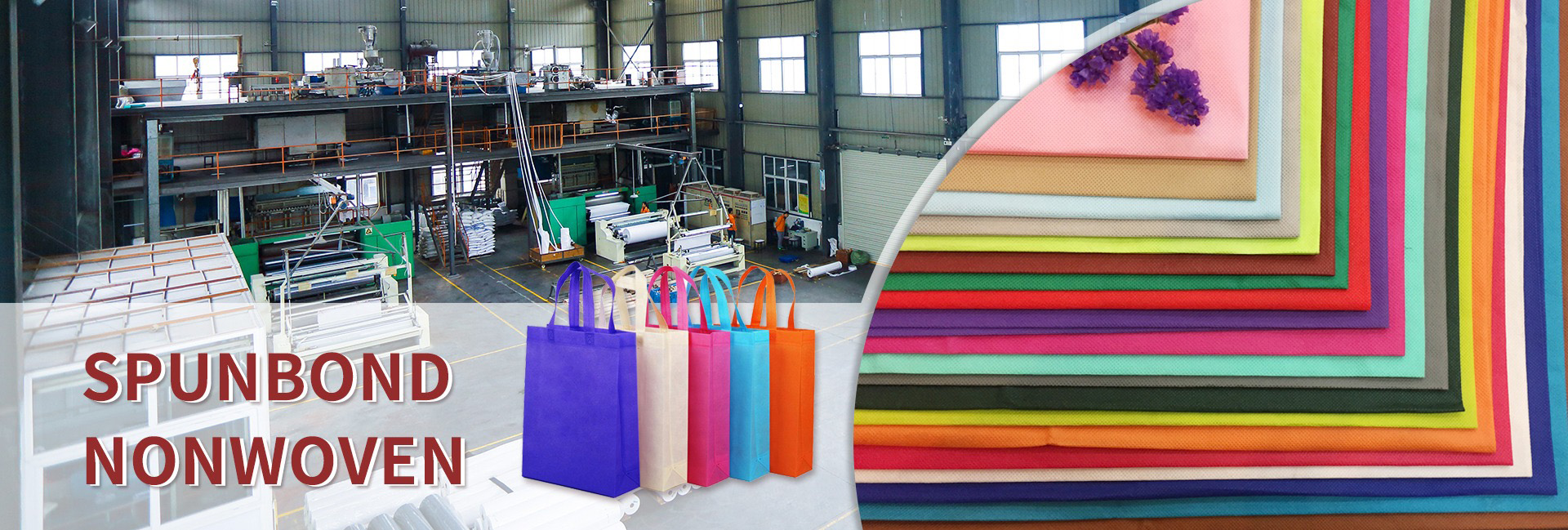
Dongguan Liansheng Non woven Technology Co., Ltd. was established in May 2020. It is a large-scale non-woven fabric production enterprise integrating research and development, production, and sales. It can produce various colors of PP spunbond non-woven fabrics with a width of less than 3.2 meters from 9 grams to 300 grams.
Post time: Dec-17-2025