
Non woven fabrics are widely used in various fields such as industrial filtration, automotive interior, high-temperature protection, aerospace, etc. However, their core substrates (such as polypropylene and polyester) have limited heat resistance. They usually soften and deform at 120-150 ℃, and are prone to decomposition and brittleness above 200 ℃, making them unsuitable for high-temperature scenarios. How to make non-woven fabric withstand high temperature tests? The solutions in the industry have already moved beyond single material modification, using the “golden combination” of nano silica and montmorillonite to construct a dual protective system through synergistic effects. This has successfully put “high-temperature resistant protective clothing” on non-woven fabrics, allowing them to maintain stable performance even in high temperature environments above 250 ℃, solving the industry pain point of non-woven fabric failure in high temperature scenarios.
Many people wonder why it is the combination of nano silica and montmorillonite, rather than a single material? The core reason lies in the complementary advantages and synergistic effects of the two – nano silica focuses on “high temperature resistance+mechanical reinforcement”, while montmorillonite emphasizes “barrier+dispersion stability”. Each has its own limitations when used alone, but when combined, it can form a “1+1>2″ high temperature resistance effect, which not only solves the problems of easy aggregation and incomplete protection of single nano materials, but also compensates for the shortcomings of high cost and poor environmental protection of traditional high temperature modification processes, becoming the mainstream solution for high temperature modification of non-woven fabrics.
The core advantages of the two “high-temperature resistant artifacts”
To understand how the two work together to “cool down and protect the shape” of nonwoven fabrics, it is first necessary to understand the “outstanding features” of nano silica and montmorillonite. It is these characteristics that make them a “golden partner” for high-temperature modification.
Nano silica is the “core backbone” of high-temperature modification, with a melting point of up to 1713 ℃. It can maintain stable physical and chemical properties in high temperature environments, without softening or decomposition, and will not produce harmful gases. It is a natural high-temperature resistant filler. At the same time, its particle size is only 30-100nm, with a large specific surface area and high surface activity. It can form a tight interface with non-woven fibers, which not only improves the material’s high temperature resistance, but also enhances the tensile strength and tear strength of non-woven fabrics, solving the pain point of non-woven fabrics becoming soft and brittle at high temperatures. In addition, nano silica also has good dispersibility. After hydroxylation modification, the hydroxyl groups on the surface can form stable chemical bonds with fiber molecules, further enhancing the durability of protection and avoiding problems such as filler detachment and performance degradation at high temperatures.
Montmorillonite is an “auxiliary expert” in high-temperature protection. It is a natural layered silicate mineral with a unique layered structure, with a layer thickness of only about 1nm and a lateral dimension of several hundred nanometers. Its aspect ratio is greater than 1000, which enables it to form a “layer by layer barrier” protective net in non-woven fibers. On the one hand, the layers of montmorillonite can block heat transfer, reduce the damage of high temperature to fiber molecular chains, and delay fiber thermal degradation; On the other hand, its layered structure can suppress the aggregation of nano silica, allowing the nano silica to be uniformly dispersed in the fiber system, fully exerting the synergistic effect of the two. After modification with silane coupling agents, active groups are introduced onto the surface of montmorillonite, forming stable bonds with nano silica and fiber molecules, further enhancing the high-temperature stability and mechanical properties of the material.
Simply put, nano silica is responsible for “withstanding high temperatures and strengthening bones”, while montmorillonite is responsible for “blocking heat and preventing agglomeration”. The combination of the two can not only resist high-temperature erosion of non-woven fabrics, but also ensure their structural integrity and performance at high temperatures, truly achieving the dual goal of “high temperature resistance+toughness”.
Full process analysis of “dual protection+collaborative modification”
Nano silica and montmorillonite are used as “protective clothing” for non-woven fabrics, not simply mixed and added, but a complete process of “modified pretreatment uniform dispersion composite molding”. The core is to deeply integrate the two with non-woven fibers through synergistic modification, and build a dual high-temperature protection system of “physical barrier+chemical bonding”. Each step has strict process requirements to ensure stable and controllable protection effect.
The first step is to modify and pretreat the raw materials, breaking down the “compatibility barrier”. Directly adding nano silica and montmorillonite to fibers can lead to agglomeration and poor compatibility with fibers, so modification treatment must be carried out first. For nano silica, silane coupling agents such as KH570 are usually used for modification. The trimethoxysilane group at one end of the molecule hydrolyzes to form silanol, which condenses with the hydroxyl group on the surface of the nano silica to form stable Si-O-Si covalent bonds. The methacryloyloxy group at the other end can polymerize with fiber molecules to form a “chemical bridge” and enhance interfacial bonding strength; Hydroxylated nano silica can also be prepared by treating with hydrogen peroxide solution to enhance its compatibility with fibers. For montmorillonite, it is modified with γ – glycidoxypropyltrimethoxysilane or long-chain alkyl ammonium salt surfactants to strip its layer structure and introduce active groups, transforming it from a “stacked state” to a “dispersed layer”, while enhancing its binding ability with nano silica and fibers to avoid layer aggregation.
The second step is to accurately mix and evenly disperse, building a solid foundation for protection. The modified nano silica and montmorillonite need to be mixed in a mass ratio of 1:3-5, and then a composite inorganic filler is prepared by hydrothermal reaction (130-150 ℃, reaction time 8-10 hours) to form a stable synergistic system between the two. Subsequently, the composite filler is mixed with non-woven fabric substrates (such as polyester and polypropylene) in a certain proportion, and an appropriate amount of crosslinking agent (such as triallyl cyanurate) is added. Through melt blending and extrusion granulation, the composite filler is uniformly dispersed in the fiber matrix – the dispersion uniformity directly determines the high temperature resistance effect. If the dispersion is uneven, the problem of “local high temperature resistance and local softening” will occur. Practice has proven that when the amount of composite filler added is between 4% and 8%, the protective effect is optimal, which can significantly improve the high temperature resistance performance without affecting the softness and breathability of the non-woven fabric.
The third step is composite molding+post-processing to lock in the “protective effect”. The mixed raw materials are processed into modified fibers through spinning technology, and after combing, they are reinforced and formed using water jet or hot rolling methods to produce high-temperature resistant nonwoven fabrics. If used in high-end scenarios, the “fiber spray adhesive” method can also be used to spray hot melt adhesive containing composite fillers between two layers of non-woven fabric, and then heat press at 180-200 ℃ to further improve the high-temperature stability and stiffness of the material. After molding, irradiation crosslinking treatment (electron beam irradiation dose of 30-50kGy) is also required to form a more stable chemical bond between fiber molecules and composite fillers, avoiding problems such as filler detachment and fiber fracture at high temperatures, and ultimately completing the construction of “high-temperature protective clothing”.
How strong is the high temperature resistance of wearing “protective clothing”?
The effectiveness of collaborative modification ultimately depends on measured data. Taking polyester non-woven fabric as an example, unmodified ordinary polyester non-woven fabric has a heat deformation temperature of only 130 ℃. After being placed in an environment of 180 ℃ for 1 hour, significant softening and shrinkage will occur, and the tensile strength will decrease by more than 50%; After synergistic modification with nano silica and montmorillonite, its performance has achieved a qualitative leap, becoming a truly “high-temperature resistant” material.
After testing by professional institutions, the modified non-woven fabric has a heat deformation temperature increased to 280 ℃ and can work continuously for 24 hours in a high temperature environment of 250 ℃ without softening, deformation, or decomposition. The tensile strength retention rate is over 85% and the tear strength retention rate is over 80%, far exceeding industry standards. It is worth mentioning that its high temperature stability is outstanding. Even after short-term exposure (30 minutes) at 300 ℃, it can still maintain its basic structural integrity without brittle cracking or powdering; Thermogravimetric analysis shows that its thermal decomposition temperature is 60-80 ℃ higher than that of ordinary non-woven fabrics, effectively delaying the thermal degradation process of fibers.
In addition to its superior high-temperature resistance, the modified non-woven fabric also has multiple advantages: significantly improved mechanical properties, tensile strength increased by more than 30% compared to ordinary non-woven fabric, and a burst resistance of up to 350-420kPa, which can adapt to complex stress requirements in high-temperature scenarios; It has good resistance to moisture and chemical corrosion, and can maintain stability in high temperature and high humidity environments. It can be adapted to harsh scenarios such as industrial filtration and chemical protection; At the same time, the entire modification process uses natural inorganic materials, with no harmful gas emissions, in line with the concept of green and low-carbon development. The cost is reduced by more than 20% compared to traditional chemical modification processes, and it has strong potential for large-scale production.
The “all-in-one protector” for high-temperature scenarios
Wearing the non-woven fabric of nano silica+montmorillonite “high-temperature protective clothing” completely breaks the application limitations of traditional non-woven fabrics, and has been widely used in multiple high-temperature scenarios, becoming an “all-around protector” in industrial production and high-end manufacturing fields, unlocking more new application possibilities.
In the field of industrial filtration, it can be used for high-temperature flue gas filtration, such as flue gas treatment in boilers, smelting furnaces and other equipment. It can work for a long time in high-temperature flue gas at 200-250 ℃, effectively filtering dust and harmful particles in the flue gas, while resisting the erosion of high-temperature flue gas. Its service life is more than three times longer than ordinary non-woven filter fabrics, greatly reducing filtration costs; In the automotive industry, it can be used as soundproofing cotton and insulation pads around car engines, which can withstand high temperatures (180-220 ℃) during engine operation, avoid material softening and deformation, and improve soundproofing and insulation effects, ensuring the stable operation of car components.
In the high-end manufacturing and aerospace fields, it can be used as a protective liner and high-temperature sealing material for aerospace equipment, which can maintain stable performance in high temperature environments of 250-300 ℃ and provide reliable protection for equipment; In the field of chemical engineering, it can be used as insulation and anti-corrosion lining for chemical pipelines, resisting the corrosion of chemical media and the influence of high temperature environment, and improving the service life of pipelines; In addition, it can also be applied to high stiffness tubular membrane substrates, high-temperature protective masks, industrial high-temperature gloves and other products, adapting to the high temperature resistance requirements of different scenarios.
More efficient and environmentally friendly collaborative modification and upgrading
With the continuous upgrading of the demand for high-temperature scenarios, the synergistic modification technology of nano silica and montmorillonite is also constantly iterating. In the future, it will develop towards the direction of “high efficiency, greenness, and multifunctionality”, further improving the high-temperature resistance of non-woven fabrics and expanding their application boundaries.
On the one hand, we will develop more efficient modification processes, optimize the ratio and dispersion technology of composite fillers, and use double crosslinking technology to construct interpenetrating network structures, further improving the high-temperature stability and mechanical properties of materials. The goal is to enable non-woven fabrics to work in high-temperature environments above 350 ℃ for a long time; On the other hand, promoting the upgrading of green modification by replacing traditional chemical coupling agents with plant-based coupling agents can reduce environmental pollution during the modification process. At the same time, exploring the recycling and utilization of inorganic materials such as montmorillonite and nano silica is in line with the “dual carbon” goal.
In addition, the multifunctionality of collaborative modification will be expanded, incorporating antibacterial, UV resistant, flame retardant and other functions on the basis of high temperature resistance, so that non-woven fabrics can withstand high temperatures and adapt to more complex scene requirements. For example, adding nano titanium dioxide to composite fillers to achieve the triple function of “high temperature resistance+UV resistance+self-cleaning”, suitable for outdoor high temperature protection scenarios; Combining flame retardant technology to create high-temperature resistant and flame-retardant non-woven fabrics, applied in high-risk fields such as fire protection and metallurgy.
Conculsion
In summary, the “golden combination” of nano silica and montmorillonite, through the full process of “modified pretreatment uniform dispersion composite molding”, has constructed a dual high-temperature protection system of “physical barrier+chemical bonding” for non-woven fabrics, which not only solves the pain point of poor high-temperature performance of traditional non-woven fabrics, but also achieves multiple goals of environmental protection, low cost, and high performance. With the continuous upgrading of technology, this collaborative modification scheme will become the mainstream for high-temperature modification of non-woven fabrics, allowing non-woven fabrics to play a core role in more high-temperature scenarios and providing strong support for the high-quality development of industrial production and high-end manufacturing.
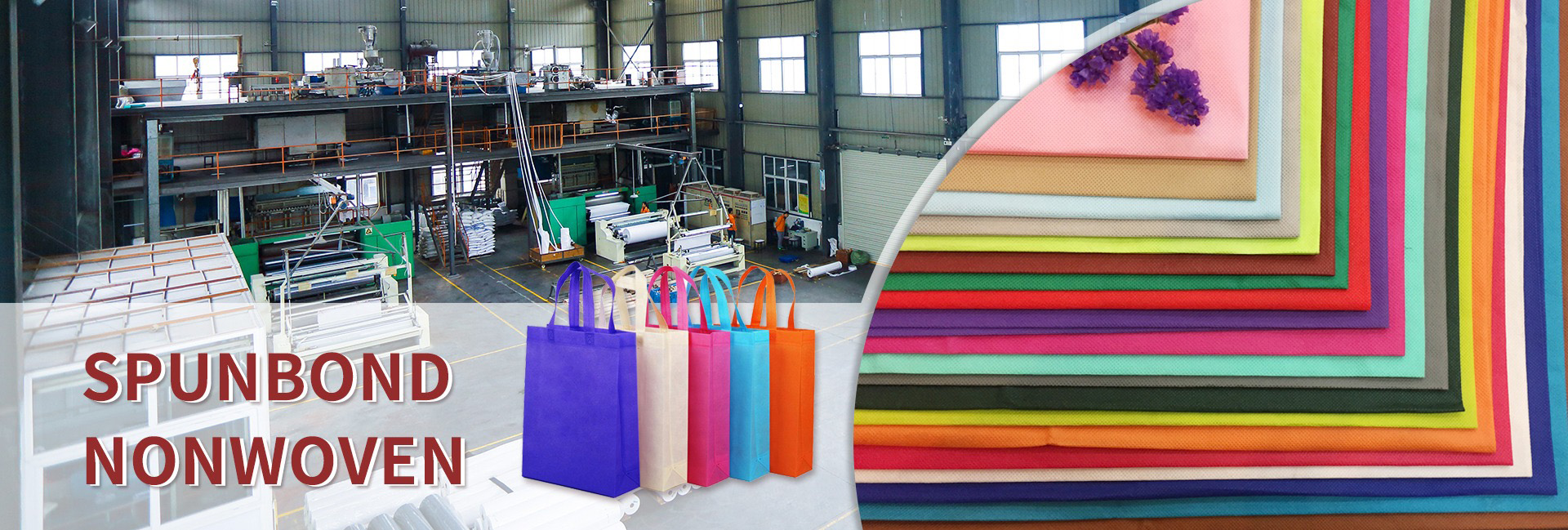
Dongguan Liansheng Non woven Technology Co., Ltd. was established in May 2020. It is a large-scale non-woven fabric production enterprise integrating research and development, production, and sales. It can produce various colors of PP spunbond non-woven fabrics with a width of less than 3.2 meters from 9 grams to 300 grams.
Post time: Apr-12-2026