
Despite the significant advantages of “carbon fiber+spunbond fabric” composite materials, large-scale applications still face three core bottlenecks: interface compatibility, cost structure, and industry standards. A systematic solution can be formed through technological innovation, industrial chain upgrading, and standardized construction to promote the industrialization of materials.
Breaking through the bottleneck of interface compatibility: dual upgrade of modification technology and bonding system
The core issue of insufficient interfacial bonding strength is the mismatch between the surface inertness of carbon fiber and the polarity of spunbond fabric substrate, which requires a coordinated breakthrough from both surface modification and adhesive formulation.
At the surface treatment level, the combination process of electrochemical oxidation and plasma modification can be promoted, which introduces polar groups such as hydroxyl and carboxyl groups through electrochemical oxidation, and further improves the surface roughness through plasma treatment, thereby increasing the interfacial bonding strength between carbon fiber and spunbond fabric by more than 30%.
For high-performance scenarios, the second-generation dry jet wet spinning process developed by Shanxi Coal Chemical Institute can be used to regulate the microcrystalline size to make the internal structure of carbon fibers more regular, reduce interface defects, and enhance bonding stability from the source.
The adhesive system can use two-component modified epoxy resin adhesive, such as MT-201 series carbon fiber impregnated adhesive, which has a tensile strength of 36MPa and a steel steel shear strength of 16MPa, can fully penetrate the fiber gap, and has excellent aging resistance and water resistance.
It can be adapted to different temperature and humidity environments for construction, and can still cure normally at low temperatures (-5~-10 ℃), effectively solving the influence of environmental factors on bonding strength. At the same time, the composite process can be optimized to accurately control the amount of adhesive coating within 300-500g/㎡, and combined with the rolling and exhaust process, to avoid interface delamination caused by residual bubbles.
Optimizing cost structure: parallel localization of raw materials and cost reduction of processes
In response to the problem of high-end carbon fiber dependence on imports and high modification costs of spunbond fabrics, it is necessary to rely on breakthroughs in domestic raw materials and process optimization to make efforts in both directions. At the carbon fiber end, the large-scale application of 48K large fiber bundle carbon fiber is promoted. The ternary aqueous suspension polymerization technology jointly developed by Changchun University of Technology and Jilin Carbon Valley has made the performance of 48K carbon fiber precursor comparable to 12K, reducing the price by one-third.
It has been widely used in rail transit and wind power engineering, and can significantly dilute the cost of composite material raw materials; At the same time, accelerate the localization and mass production of T1000 grade high-performance carbon fiber, improve production efficiency through dry spray wet spinning process, and further lower the price of high-end products.
At the end of the spunbond fabric, blending modification is used instead of coating modification. Low cost functional additives are added to polyester and polypropylene raw materials to achieve anti-static and corrosion-resistant properties, reducing modification costs by more than 40%.
On the process side, promote the integration of automated modular laying and winding molding technology, reduce secondary processing steps, combine the synergistic forming characteristics of carbon fiber and spunbond fabric, shorten production cycles by 25% to 30%, and dilute unit manufacturing costs. In addition, relying on the full industry chain layout of carbon fiber in Jilin City, we aim to achieve integrated support for raw silk, carbonization, and composite processing, reducing logistics and collaboration costs.
Building a standard system: industry university research collaboration to standardize industry development
Based on existing standards, promote the formation of unified norms covering the entire industry chain. Priority should be given to promoting the national standard GB/T 44870-2024 “Terminology, Classification, and Model Compilation Methods for Fiber Carbonization Production Equipment” that has been released.
The simultaneous release of its foreign version can provide a unified basis for composite material production equipment; On this basis, led by leading industry enterprises and in collaboration with universities and research institutes, a special standard for “carbon fiber+spunbond fabric” composite materials has been developed, clarifying performance indicators for different application scenarios – focusing on fatigue and corrosion resistance parameters in the wind power field, strengthening flame retardancy and anti-static requirements in the rail transit field, and refining strength and lightweight thresholds in the aerospace field.
Establish a unified testing method system, refer to the bond strength testing standard in the “Code for Design of Concrete Structure Reinforcement” (GB50367-2006), and supplement testing items such as composite material interface peel strength and long-term weather resistance; Simultaneously building an industry shared testing platform to promote data interoperability between enterprises and accelerate the implementation of standards. Encourage enterprises to participate in international standard setting, transform domestic technology and standards into international discourse power, and break down overseas technological barriers.
The above solutions do not exist in isolation and need to be deeply integrated with the development trend of “multifunctionality, process intelligence, and recycling” of composite materials. For example, interface modification technology can be combined with nanocomposite methods to enhance adhesion while endowing materials with electromagnetic shielding function.
The combination of automated processes and low-cost raw materials can achieve the large-scale implementation of intelligent production lines; Breakthroughs in recycling technology can further optimize the entire lifecycle cost. With the gradual implementation of technical solutions and the deepening of industrial chain collaboration, “carbon fiber+spunbond fabric” composite materials will break through existing application limitations and achieve large-scale substitution in more high-end manufacturing fields.
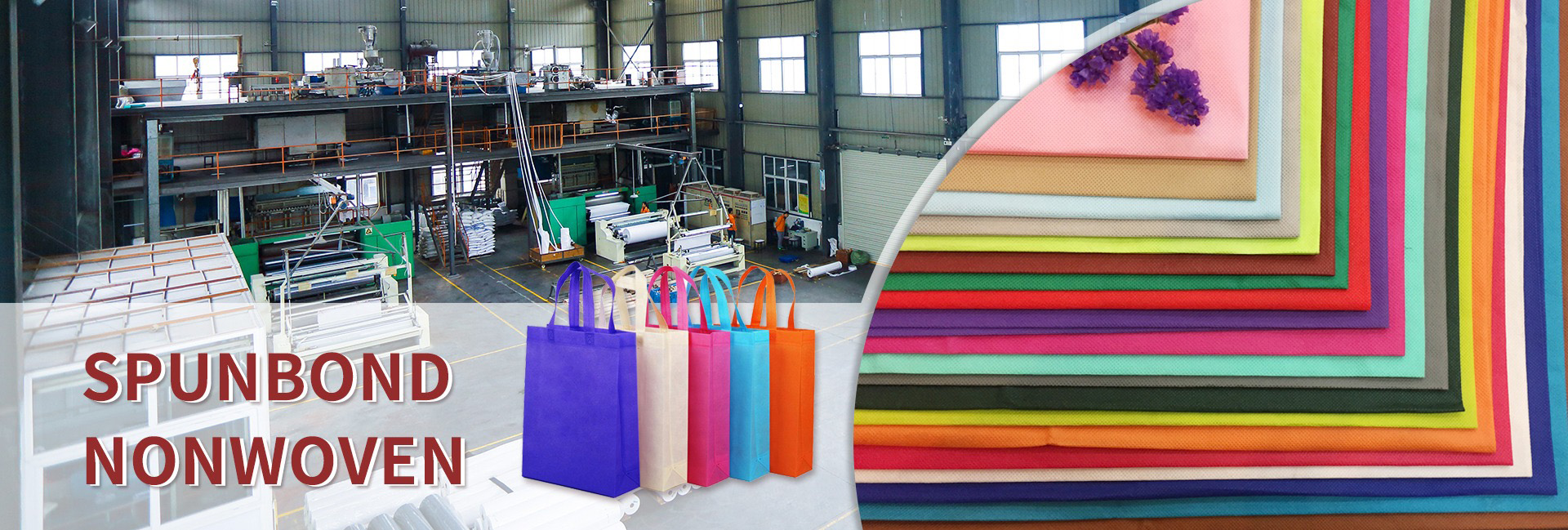
Dongguan Liansheng Non woven Technology Co., Ltd. was established in May 2020. It is a large-scale non-woven fabric production enterprise integrating research and development, production, and sales. It can produce various colors of PP spunbond non-woven fabrics with a width of less than 3.2 meters from 9 grams to 300 grams.
Post time: Jan-22-2026