
Traditional anti slip non-woven fabrics rely on passive physical anti slip structures, which can only reduce the probability of sliding by increasing the friction coefficient, and cannot predict risks or actively warn. There are still safety vulnerabilities in high-risk scenarios such as elderly home care and medical rehabilitation. With the integration of the Internet of Things and flexible electronic technology, “intelligent anti slip non-woven fabric with integrated sensors” has emerged.
Its core breakthrough lies in shifting from “passive protection” to “active perception real-time warning”, providing a full chain solution for sliding risk prevention and control. The answer is clear: The non-woven fabric integrated with sensors has the technical capability of real-time warning of sliding risks, and has been verified in specific scenarios. Behind it is the collaborative innovation of flexible sensing, data processing, and intelligent algorithms.
Core technology logic: How do sensors enable nonwoven fabrics to “sense” sliding risks?
The integration of sensors in non-woven fabrics for real-time warning essentially involves building a closed-loop system of “perception analysis warning”, relying on three major technological supports: “flexible sensor integration”, “multi-dimensional data acquisition”, and “edge intelligent analysis”, to accurately capture characteristic signals before sliding occurs.
1. Sensor integration: Flexible adaptation is a key prerequisite
The flexibility, breathability, and cutting characteristics of non-woven fabrics determine that integrated sensors must have equal adaptability. The current mainstream solution is “in-situ integration of fabric based flexible sensors”, rather than simple stacking of traditional rigid sensors. The core technology path includes two types:
One is to embed conductive materials and sensing units into the fiber structure through layer by layer assembly process in the non-woven fabric production process, such as using multi-layer modification technology of polypyrrole conductive layer, copper nanoparticles, and PDMS hydrophobic coating, to construct a high-sensitivity piezoresistive sensing network while maintaining the breathability of non-woven fabric;
The second is to precisely attach flexible piezoelectric sensors or humidity sensors to the surface of non-woven fabric through adhesive technology, with the sensor thickness controlled at 20-50 μ m to ensure that the anti slip bonding performance of non-woven fabric is not damaged.
This type of flexible sensor can achieve multi-dimensional data collection: pressure sensors capture the pressure distribution and force changes on the contact surface (with a resolution of 0.01N level), humidity sensors monitor the water vapor content on the contact surface (such as bathroom water accumulation and ground sweat), and strain sensors sense the relative displacement trend between non-woven fabric and the contact interface, providing core data support for sliding risk assessment.
2. Data processing: edge computing realizes millisecond response
Real time early warning of sliding risk needs to solve the two core problems of “data delay” and “false alarm rate”. The current mainstream solution is to achieve localized data processing through edge computing technology to avoid delay loss of cloud transmission. The specific logic is as follows: the raw data collected by sensors, such as pressure, humidity, displacement, etc., are preprocessed by a micro processing chip integrated at the edge of non-woven fabric, and environmental noise interference is eliminated through Kalman filtering algorithm. Then, based on deep learning models, sliding risk features (such as uneven pressure distribution, instantaneous displacement mutation, humidity exceeding threshold, etc.) are extracted.
When the monitoring data matches the preset risk model (such as pressure mutation ≥ 30% and displacement trend ≥ 5mm/s in wet environment), the system can trigger the warning mechanism within 0.3-0.8 seconds. For example, the multi-sensor fusion solution integrates pressure and humidity data, and the false alarm rate can be controlled within 3%, which is 65% lower than that of a single sensor, significantly improving the reliability of early warning.
3. Warning output: Multi modal linkage adapted to different scenarios
According to the differences in application scenarios, the warning output adopts a multimodal solution of “local instant reminder+remote linkage”: in home scenarios, voice warnings are issued through integrated micro sound units (such as “slippery ground, please pay attention”), and the mobile APP is linked to push notifications to family members; In medical scenarios, warning signals can be directly connected to the monitoring system of nursing stations, synchronously triggering light warnings around the hospital bed; In industrial scenarios, it is linked with the control system of conveying equipment to achieve equipment speed reduction or shutdown in risk areas.
Scenario based verification: implemented intelligent anti-skid application cases
The intelligent anti slip non-woven fabric with integrated sensors has completed prototype verification and small-scale application in scenarios such as home safety, medical rehabilitation, and industrial transportation, fully demonstrating the practicality of its real-time warning capability.
1. Elderly Home Scene: Bathroom Anti slip Warning System
In response to the high incidence of falls among elderly people in bathroom scenarios, the intelligent anti slip floor mat developed adopts a non-woven fabric substrate integrated with a “pressure sensing network+humidity sensor”. When the ground water thickness is detected to be ≥ 0.5mm (humidity exceeds the standard) and the pressure distribution is uneven when the human body steps on it (gait abnormality), the system can trigger a voice warning within 0.5 seconds and push location risk prompts to children’s mobile phones.
The application data of a pilot community in Hangzhou shows that the system has achieved an accuracy rate of 95% for fall warning in elderly bathrooms, and the incidence of fall accidents in related areas has decreased by 42%. Its core advantage lies in the waterproof and anti fouling properties of non-woven fabric substrate, which can maintain sensing stability even after 5000 cleaning cycles, and is suitable for repeated use at home.
2. Medical rehabilitation scenario: posture monitoring anti slip pad
In the anti slip pad of rehabilitation equipment, strain sensors and inertial measurement units (IMUs) are integrated to monitor the patient’s limb posture and contact pressure distribution in real time. When a patient tilts their body or experiences sudden changes in contact surface pressure due to muscle weakness (a precursor to sliding risk), the system can not only immediately send a warning to the rehabilitation terminal, but also assist in stabilizing posture by adjusting the micro support structure embedded in the anti slip pad. The trial data from a rehabilitation hospital shows that the intelligent anti slip pad can predict the sliding risk 0.8 seconds in advance, reducing accidental slip incidents in rehabilitation training by 60%.
3. Industrial conveying scenario: Slope anti-skid monitoring belt
The intelligent anti-skid non-woven fabric belt used in the industrial slope conveyor line integrates pressure and displacement sensors, which can monitor the contact status between the material and the conveyor belt in real time. When the material shows a displacement trend due to vibration (the sensor detects an instantaneous sliding displacement of ≥ 2mm), the system immediately triggers a speed reduction warning for the conveyor line, and enhances the anti slip force through coating microstructure adjustment. In the application verification of electronic component conveying scenarios, the system reduced the material sliding loss rate from 8% to 1.2%, demonstrating stable warning performance at the industrial level.
Existing technological challenges: key barriers from laboratory to large-scale applications
Although the technical feasibility has been verified, three core challenges still need to be overcome in order to achieve large-scale popularization of non-woven fabrics with integrated sensors:
-Long term stability deficiency: Under high-frequency friction, repeated water washing, or harsh environments such as high temperature and oil stains, the bonding strength between the sensor and non-woven fabric substrate is prone to decrease, resulting in a decline in sensing accuracy. At present, mainstream technologies can achieve performance retention after 5000 cycles of use, but in industrial scenarios, it needs to be increased to over 10000 cycles to meet cost requirements.
-Cost control challenge: The integration cost of flexible sensors and microprocessing chips is relatively high, and the current unit price of intelligent anti slip non-woven fabric is 3-5 times that of traditional products, which limits the popularity of mass consumption scenarios such as home use. How to reduce costs through large-scale production and material localization is the core research direction of the industry.
-System compatibility limitations: Different brands of smart home or industrial control platforms have inconsistent protocols, making it difficult to achieve seamless integration of warning signals for smart anti slip non-woven fabrics. The popularization of the Matter protocol is expected to alleviate this problem, but in the short term, a universal adaptation module still needs to be developed.
Development trend: Multi functional integration and full scene adaptation
In the future, intelligent anti slip non-woven fabrics integrated with sensors will be upgraded towards “multifunctional fusion” and “lightweight integration”:
Firstly, functional superposition, integrating antibacterial, temperature monitoring, energy collection and other functions on the basis of anti slip warning, such as solving sensor endurance problems through solar power supply modules, and adapting to long-term unmanned scenarios;
The second is technological optimization, using graph neural network algorithms to enhance multi scenario adaptability, simulating sliding risks in different environments through digital twin technology, and optimizing warning models in advance;
The third is green transformation, developing biodegradable biobased sensors and water-based conductive coatings to achieve environmental protection throughout the product lifecycle, in line with the trend of green consumption.
Conclusion
The non-woven fabric integrated with sensors has clearly demonstrated the technical capability of real-time warning of sliding risks. Through the collaboration of flexible sensing and intelligent algorithms, it breaks the limitations of traditional anti slip materials’ passive protection and opens up a new anti slip mode of “active warning intelligent intervention”.
Although currently facing barriers such as stability and cost, with the improvement of material technology and the Internet of Things ecosystem, such intelligent materials will be widely popularized in fields such as elderly care, medical rehabilitation, and industrial safety, bringing revolutionary upgrades to anti slip safety protection.
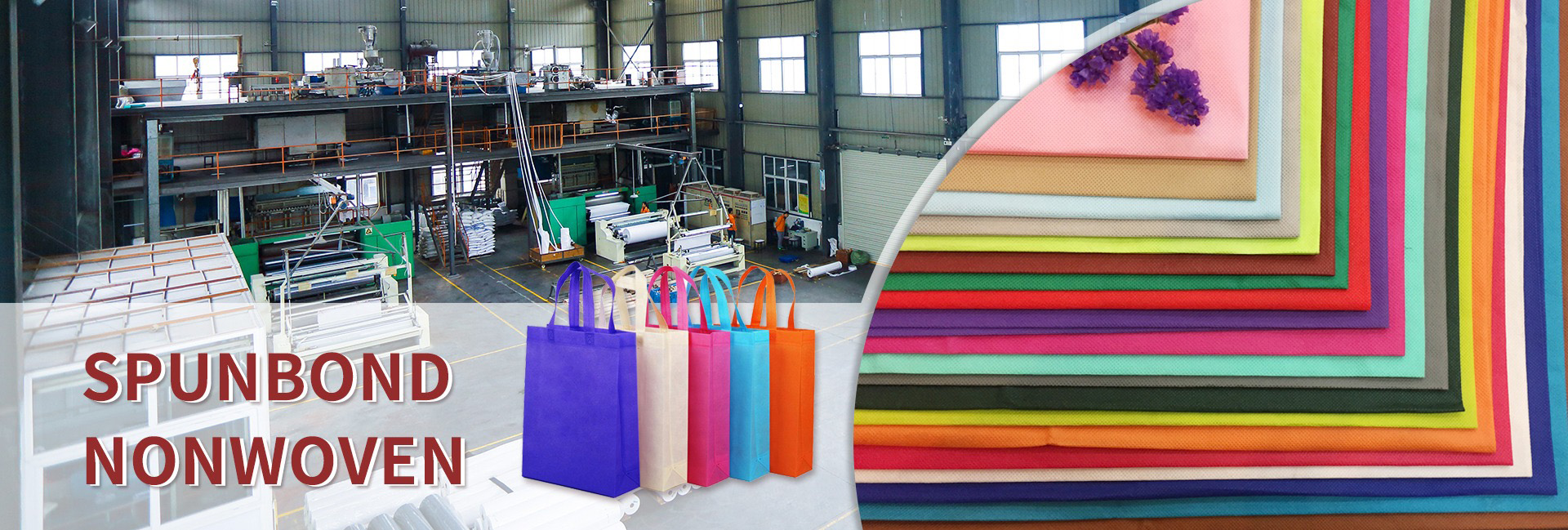
Dongguan Liansheng Non woven Technology Co., Ltd. was established in May 2020. It is a large-scale non-woven fabric production enterprise integrating research and development, production, and sales. It can produce various colors of PP spunbond non-woven fabrics with a width of less than 3.2 meters from 9 grams to 300 grams.
Post time: Jan-04-2026