
The long-term pain point of building enclosure system: resisting the dual erosion of time and environment
The building enclosure system (roof, walls), as the “outer layer” of a building, needs to accompany the building for more than 50 years of service life, and is exposed to the natural environment for a long time, facing multiple erosion tests. The roof needs to withstand continuous exposure to ultraviolet rays, repeated erosion by rainwater, severe temperature fluctuations (the high temperature of the roof can reach 70 ℃ in summer, and the low temperature in the north can be as low as -30 ℃ in winter), accumulation of ice and snow, and freeze-thaw cycles, while also dealing with structural stress caused by base settlement; The wall should resist wind and rain erosion, humidity changes, mold growth, as well as the risk of cracking and peeling of exterior wall coatings or finishes.
Traditional enclosure materials (such as ordinary nonwoven fabrics, fiberglass mesh fabrics, and unmodified synthetic fabrics) often experience rapid aging and failure under these challenges: ultraviolet radiation damages the molecular structure of the material, leading to brittleness and fracture; Damp environment can cause mold and corrosion, weakening mechanical properties; Temperature cycling and structural stress are easy to cause material cracking and layering, and eventually lead to roof leakage, wall seepage, insulation failure and other building diseases. Through targeted technical innovation, anti-aging spunbonded fabric has become the “invisible armor” to solve this pain point.
Protective gene of anti-aging spunbonded fabric: dual empowerment of material modification and structural design
The key reason why anti-aging spunbonded fabric can become the core of long-term protection of building envelope system is that it has been comprehensively optimized from material formula to structural form, and has built a three-dimensional protection system against environmental erosion. In the aspect of material modification, it uses high-strength polypropylene (PP) or polyester (PET) filaments as the base material, and forms a dual protective barrier by precisely adding special anti-aging additives: hindered amine light stabilizers can efficiently absorb ultraviolet energy and convert it into heat energy release, avoiding polymer molecular chain breakage.
According to actual measurement, after 10 years of outdoor exposure, the strength retention rate of high-quality products can still reach more than 85% of the initial value, while the strength attenuation of ordinary materials under the same conditions has exceeded 60%; Four season pentanol ester antioxidants can decompose hydrogen peroxides produced by materials in humid and hot environments, inhibit free radical chain reactions, prevent material oxidation from turning yellow and brittle, and effectively prevent mold and corrosion even in rainy and humid areas in the south. In addition, some high-end products will also undergo surface silane coupling agent treatment to enhance the adhesion with building substrates (such as cement mortar, asphalt, insulation board) and avoid protection failure caused by interlayer peeling.
In structural design, the anti-aging spunbonded fabric adopts the integrated process of spunbonded netting and hot rolling consolidation to form a dense and uniform network structure. This structure is different from the loose overlap of ordinary short fiber non-woven fabrics. The mutual winding and hot melt bonding between the filaments form a strong mechanical system, which not only endows the material with excellent tensile strength and elongation (50% -80%), but also has excellent tear and puncture resistance. The dense mesh structure also has the characteristics of “breathable and impermeable”, which can block the penetration of moisture and discharge the moisture of the base layer, avoiding the accumulation of condensed water that may cause the insulation layer to become damp and the wall to mold; A uniform distribution of pores can form a good interface with substrates such as cement mortar and asphalt, enhance the integrity of the enclosure system, disperse structural stress, and prevent cracking. This dual design of “material modification+structure optimization” keeps the anti-aging spunbonded fabric stable in long-term service and provides lasting protection for the building envelope system.
Protection application of roof system: full chain protection from waterproofing to insulation
As a key part of the building envelope, the roof protection needs to focus on waterproof, thermal insulation, crack resistance and anti-aging. The anti-aging spunbond fabric can achieve long-term protection of the whole chain through multi scene adaptation. In the roof waterproofing system, it mainly serves three functions of “isolation, buffering, and filtration”: as an isolation layer, it can effectively separate the waterproof layer from the base layer, prevent sharp particles in the cement mortar from puncturing the waterproof membrane, and prevent bonding failure caused by differences in thermal expansion coefficients between different materials; As a buffer layer, its good flexibility can absorb the stress caused by the settlement of the base layer, disperse the pressure on the waterproof layer, and reduce the risk of membrane cracking; As an anti filter layer, it can block small particles in the base layer from entering the drainage channel, avoid blockage, ensure smooth roof drainage, and reduce the long-term soaking of the waterproof layer by accumulated water. Compared with traditional isolation materials (such as glass fiber cloth and ordinary non-woven cloth), anti-aging spunbonded cloth has stronger weather resistance, will not crack in the high-temperature exposure and low-temperature freeze-thaw cycle, can maintain long-term structural stability, and extend the service life of the waterproof system from the traditional 10-15 years to more than 30 years.
In the roof insulation system, the anti-aging spunbonded fabric plays a key role as the cladding material and reinforcement layer of the insulation board. It can tightly wrap the insulation board (such as extruded polystyrene board, polystyrene board), prevent the insulation material from aging and powdering due to long-term exposure, and enhance the integrity of the insulation layer, avoiding damage during transportation and construction; Its breathable properties can remove moisture inside the insulation layer, prevent the accumulation of condensed water from causing a decrease in insulation performance, and ensure the long-term stability of building energy efficiency. In addition, in the planting roof system, the anti-aging spunbonded fabric can also be used as the auxiliary material of the anti root puncture layer and drainage layer to resist the damage of plant roots to the waterproof layer, and at the same time guide the rapid drainage of rainwater to protect the safety of the roof structure. Its characteristics of acid and alkali resistance and corrosion resistance can maintain long-term stability in the chemical environment of planting soil and avoid system failure caused by material degradation.
Protection application of wall system: comprehensive guarantee from crack resistance to moisture resistance
The core protection requirements of the wall enclosure system are crack resistance, moisture-proof, thermal insulation, and stable finish. The anti-aging spunbonded fabric has become the key material to solve the wall disease through accurate adaptation. In the external wall insulation system, it serves as a reinforcement layer for the plastering mortar, replacing traditional fiberglass mesh cloth and exhibiting superior crack resistance: its uniform mesh structure can evenly disperse the stress of the plastering mortar, avoiding mortar cracking caused by temperature changes and base settlement. At the same time, its good elongation can adapt to small deformations of the wall, preventing crack generation and propagation; Compared with the glass fiber mesh cloth, the anti-aging spunbonded cloth will not rust and embrittlement due to long-term exposure, nor will it produce glass fiber dust pollution. Moreover, it has a stronger bond with mortar, which can effectively avoid the falling off of the plaster layer and extend the service life of the external wall insulation system.
In the moisture-proof and breathable system of the wall, the anti-aging spunbonded fabric plays an important role as a vapor barrier or breathable layer. As a vapor barrier, it can prevent indoor moisture from penetrating into the insulation layer, avoiding insulation materials from getting damp, moldy, and increasing thermal conductivity, ensuring long-term stability of the insulation effect; As a breathable layer, it can expel moisture inside the wall, reduce indoor humidity, improve living comfort, and prevent structural corrosion caused by condensation inside the wall. In addition, in the new fabricated wall and autoclaved aerated concrete block wall, the anti-aging spunbonded fabric can also be used as the filling layer and reinforcement layer to fill the wall gap, enhance the integrity of the wall, and enhance the ability to resist wind load and earthquake. Its lightweight characteristics will not increase the wall load, while the weather resistance ensures that the wall will not age and fail in long-term use, and ensures the safety of the wall structure.
Long term value throughout the entire lifecycle: collaborative empowerment from construction to operation and maintenance
The value of anti-aging spunbonded fabric in prolonging the service life of building envelope system is not only reflected in the performance advantages of the material itself, but also lies in the collaborative empowerment of its entire life cycle. From a construction perspective, it is lightweight, easy to cut, and easy to lay, which can greatly improve construction efficiency. At the same time, its flexibility and tear resistance reduce the loss rate during the construction process, avoiding secondary procurement and rework of ordinary materials due to their susceptibility to damage; Good compatibility with building substrates allows for perfect integration with cement mortar, asphalt, insulation boards, etc. without the need for special construction techniques, reducing the risk of protection failure caused by improper construction.
From the perspective of operation and maintenance, the long-term stability of anti-aging spunbond fabric has greatly reduced the maintenance cost in the later period of the building. Traditional enclosure materials often need to be repaired or replaced every 5-10 years, while anti-aging spunbonded cloth almost needs no additional maintenance, especially in areas difficult to construct such as roofs and exterior walls. This long-term effectiveness can avoid large-scale maintenance caused by material aging, and reduce the difficulty and cost of operation and maintenance. More importantly, it can fundamentally reduce the occurrence of building diseases, avoid damage to building structures caused by roof water leakage, wall water seepage, insulation failure, etc., extend the overall service life of buildings, and reduce energy consumption. It meets the policy requirements of green buildings and low-carbon development, and becomes the core material for building enclosure systems to achieve the goals of “long-term, energy-saving, and safety”.
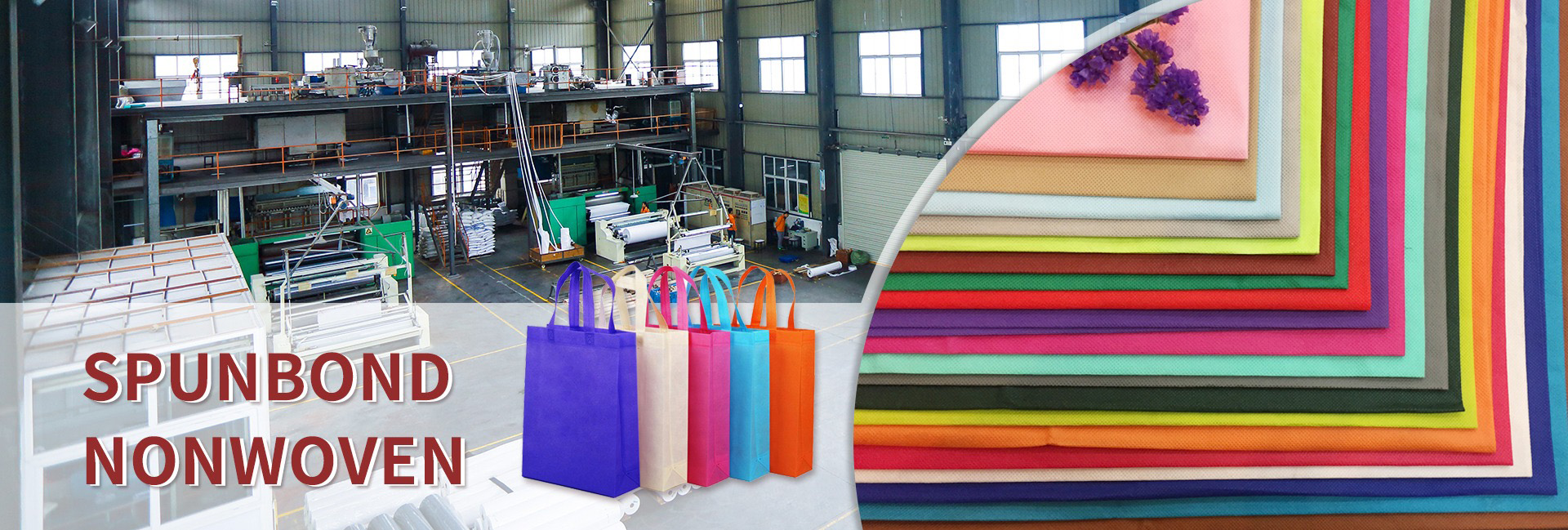
Dongguan Liansheng Non woven Technology Co., Ltd. was established in May 2020. It is a large-scale non-woven fabric production enterprise integrating research and development, production, and sales. It can produce various colors of PP spunbond non-woven fabrics with a width of less than 3.2 meters from 9 grams to 300 grams.
Post time: Feb-25-2026